Kirjojen hintavertailu – 12 859 819 kirjaa ja 27 kauppaa

Kirjailija

Souleymane Bachir Diagne

Kirjat ja teokset yhdessä paikassa: 20 kirjaa, julkaisuja vuosilta 2011–2026, suosituimpiin kuuluu Afrikanische Kunst als Philosophie. Vertaile teosten hintoja ja tarkista saatavuus suomalaisista kirjakaupoista.

20 kirjaa

Kirjojen julkaisuvuodet: 2011–2026.

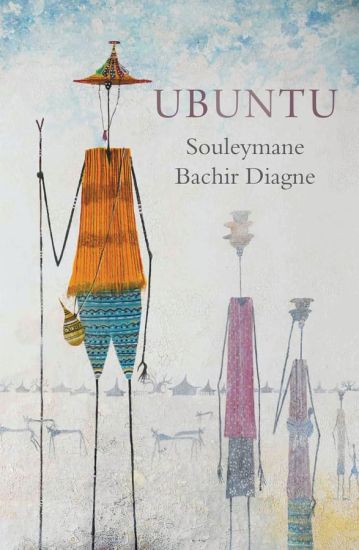
Ubuntu

Ubuntu

Souleymane Bachir Diagne

JOHN WILEY AND SONS LTD
2026
nidottu
Ubuntu, a Bantu word that became the first term from an Indigenous language to enter a political constitution, is host to many meanings: 'humanity', 'fraternity', 'compassion', and even ‘'orming a community'. According to Souleymane Bachir Diagne, all these conceptions come together in the art of making the community better and in the understanding of humanity as a task to be fulfilled. Ubuntu dissolves tribalism, leaving in its stead an embrace of the plural within universality. In this book Diagne recounts how Ubuntu became a dynamic philosophical concept whose humanist potential would rise to the urgent challenge of dismantling apartheid and healing its ravages. This theme is also an opportunity for Diagne to retrace his own intellectual trajectory and venerablecareer, from his childhood in Saint-Louis in West Africa to his present life in New York. The discussion ranges over diverse topics such as postcolonialism, the defence of humanism, the rejection of identity politics, existentialism, and African philosophies. An intellectual autobiography in the form of an engrossing conversation with the historian Françoise Blum, this slim volume is a fascinating portrait of one of our foremost contemporary philosophers and distinguished thinkers in black or Africana studies.
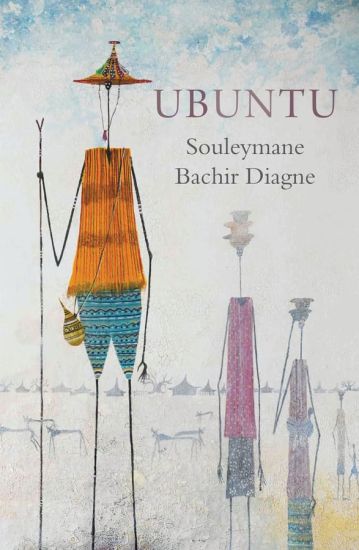
Ubuntu

Ubuntu

Souleymane Bachir Diagne

JOHN WILEY AND SONS LTD
2026
sidottu
Ubuntu, a Bantu word that became the first term from an Indigenous language to enter a political constitution, is host to many meanings: 'humanity', 'fraternity', 'compassion', and even ‘'orming a community'. According to Souleymane Bachir Diagne, all these conceptions come together in the art of making the community better and in the understanding of humanity as a task to be fulfilled. Ubuntu dissolves tribalism, leaving in its stead an embrace of the plural within universality. In this book Diagne recounts how Ubuntu became a dynamic philosophical concept whose humanist potential would rise to the urgent challenge of dismantling apartheid and healing its ravages. This theme is also an opportunity for Diagne to retrace his own intellectual trajectory and venerablecareer, from his childhood in Saint-Louis in West Africa to his present life in New York. The discussion ranges over diverse topics such as postcolonialism, the defence of humanism, the rejection of identity politics, existentialism, and African philosophies. An intellectual autobiography in the form of an engrossing conversation with the historian Françoise Blum, this slim volume is a fascinating portrait of one of our foremost contemporary philosophers and distinguished thinkers in black or Africana studies.

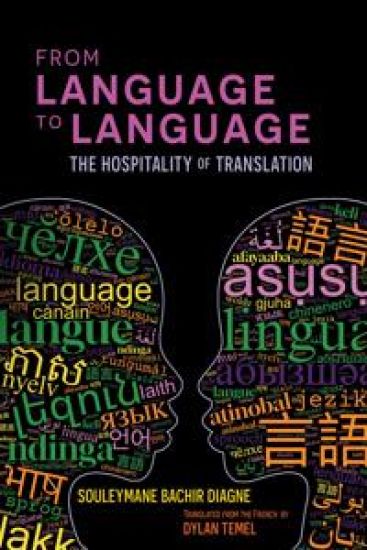
From Language to Language

From Language to Language

Souleymane Bachir Diagne; Dylan Temel

OTHER PRESS LLC
2025
sidottu
In this engaging humanist text, a renowned Senegalese philosopher explores the power of translation to bridge cultural divides. Informed by his own multicultural background--African, French, and American--Souleymane Bachir Diagne interrogates the practice of translation in this thoughtful text. Although translation often produces a relationship of profound inequality between dominant and dominated languages, it can also be a source of dialogue and exchange, including in situations of asymmetry, particularly regarding colonialism, where the interpreter becomes a true cultural mediator. To praise translation, "the language of languages," is to celebrate its plurality and equality, because to translate is to give hospitality in one language to what has been thought in another. It is to create reciprocity, a shared sense of humanity, and to imagine a positive version of the Tower of Babel.
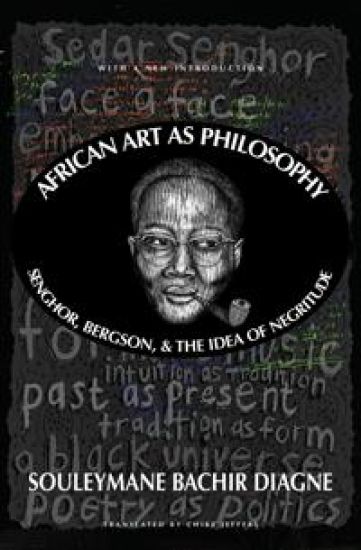
African Art As Philosophy

African Art As Philosophy

Souleymane Bachir Diagne; Chike Jeffers

OTHER PRESS LLC
2023
nidottu
This critically acclaimed study offers a distinct, incisive look at how Senegalese philosopher Senghor sees in African art the most acute expression of Bergson's philosophy. L opold S dar Senghor (1906-2001) was a Senegalese poet and philosopher who in 1960 also became the first president of the Republic of Senegal. In African Art as Philosophy, Souleymane Bachir Diagne uses a unique approach to reading Senghor's influential works, taking as the starting point for his analysis Henri Bergson's idea that in order to understand philosophers, one must find the initial intuition from which every aspect of their work develops. In the case of Senghor, Diagne argues that his primordial intuition is that African art is a philosophy. To further this point, Diagne looks at what Senghor called the "1889 Revolution" (the year Bergson's Time and Free Will was published), as well as the influential writers and publications of that period--specifically, Nietzsche and Rimbaud. The 1889 Revolution, Senghor claims, is what led him to the understanding of the "Vitalism" at the core of African religions and beliefs that found expression in the arts.
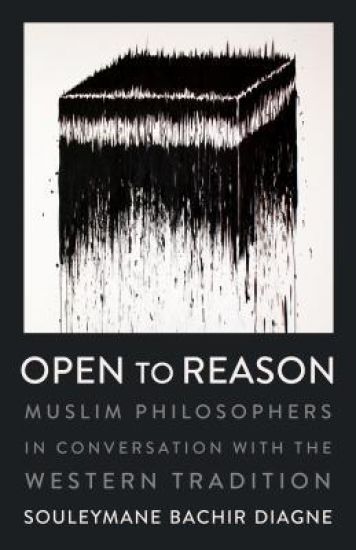
Open to Reason

Open to Reason

Souleymane Bachir Diagne

Columbia University Press
2023
pokkari
What does it mean to be a Muslim philosopher, or to philosophize in Islam? In Open to Reason, Souleymane Bachir Diagne traces Muslims’ intellectual and spiritual history of examining and questioning beliefs and arguments to show how Islamic philosophy has always engaged critically with texts and ideas both inside and outside its tradition. Through a rich reading of classical and modern Muslim philosophers, Diagne explains the long history of philosophy in the Islamic world and its relevance to crucial issues of our own time. From classical figures such as Avicenna to the twentieth-century Sufi master and teacher of tolerance Tierno Bokar Salif Tall, Diagne explores how Islamic thinkers have asked and answered such questions as Does religion need philosophy? How can religion coexist with rationalism? What does it mean to interpret a religious narrative philosophically? What does it mean to be human, and what are human beings’ responsibilities to nature? Is there such a thing as an “Islamic” state, or should Muslims reinvent political institutions that suit their own times? Diagne shows that philosophizing in Islam in its many forms throughout the centuries has meant a commitment to forward and open thinking. A remarkable history of philosophy in the Islamic world as well as a work of philosophy in its own right, this book seeks to contribute to the revival of a spirit of pluralism rooted in Muslim intellectual and spiritual traditions.
African Meditations

African Meditations

Felwine Sarr; Souleymane Bachir Diagne

UNIVERSITY OF MINNESOTA PRESS
2023
nidottu
An influential thinker’s fascinating reflections and meditations on reacclimating to his native Senegal as a young academic after years of study abroad The call to morning prayer. A group run at daybreak along the Corniche in Dakar. A young woman shedding tears on a beach as her friends take a boat to Europe. In African Meditations, paths to enlightenment collide with tales of loss and ruminations, musical gatherings, and the everyday sights and sounds of life in West Africa as a young philosopher and creative writer seeks to establish himself as a teacher upon his return to Senegal, his homeland, after years of study abroad. A unique contemporary portrait of an influential, multicultural thinker on a spiritual quest across continents-reflecting on his multiple literary influences along with French, African Francophone, and Senegalese tribal cultural roots in a homeland with a predominantly Muslim culture-African Meditations is a seamless blend of autobiography, journal entries, and fiction; aphorisms and brief narrative sketches; humor and Zen reflections. Taking us from Saint-Louis to Dakar, Felwine Sarr encounters the rhythms of everyday life as well as its disruptions such as teachers’ strikes and power outages while traversing a semi-surrealistic landscape. As he reacclimates to his native country after a life in France, we get candid glimpses, both vibrant and hopeful, sublime and mundane, into his Zen journey to resecure a foothold in his roots and to navigate academia, even while gleaning something of the good life, of joy, amid the struggles of life in Senegal.
Ex Africa

Ex Africa

Philippe Dagen; Souleymane Bachir Diagne

Gallimard
2021
nidottu
The exhibition aims to show the relationships that exist today and since the end of the 20th century between contemporary and ancient African arts. The notion of primitivism as it was enunciated in 1984 in the exhibition Primitivism at MoMA, which locked the arts of Africa into a subjection to the idea of modern Western art and into the past is definitively over: ideas and forms specific to these arts are now more alive than ever. The catalogue will present the Work of the 20 artists exhibited, together with sketches and photographies to help understand the scope of their work and to go further. It will contain individual interviews which each artist. The exhibition aims to show the relationships that exist today and since the end of the 20th century between contemporary and ancient African arts. The notion of primitivism as it was enunciated in 1984 in the exhibition Primitivism at MoMA, which locked the arts of Africa into a subjection to the idea of modern Western art and into the past is definitively over: ideas and forms specific to these arts are now more alive than ever. The catalog will present the Work of the 20 artists exhibited, together with sketches and photographies to help understand the scope of their work and to go further. It will contain individual interviews which each artist.
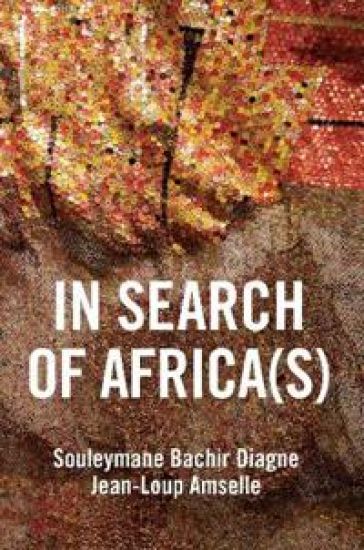
In Search of Africa(s)

In Search of Africa(s)

Souleymane Bachir Diagne; Jean-Loup Amselle

Polity Press
2020
nidottu
This important book by two leading scholars of Africa examines a series of issues that are central to the question of the postcolonial. The postcolonial paradigm, and the more recent decolonial paradigm, raise the issue of the universal: is the postcolonial the first phase of a new universalism, one which would be truly universal because it would be fully inclusive, or is it on the contrary the denial of all universalism, the triumph of the particular and of fragmentation? In addressing this issue Diagne and Amselle also tackle many related themes, such as the concepts of race, culture and identity, the role of languages in philosophy as practised in different cultural areas, the various conceptions of Islam, especially in West Africa, and the outlines of an Africa which can be thought of at the same time as singular and as plural. Each thinker looks back at his writings on these themes, comparing and contrasting them with those of his interlocutor. While Amselle seeks to expose the essentialist and culturalist logics that might underlie postcolonial and decolonial thought, Diagne consistently refuses to adopt the trappings of the Afrocentrist and particularist thinker. He argues instead for a total decentring of all thought, one that rejects all ‘centrisms’ and highlights instead branchings and connections, transfers, analogies and reciprocal influences between cultural places and intellectual fields that may be distant but are not distinct in space and time. This volume is a timely contribution to current debates on the postcolonial question and its new decolonial form. It will be of great interest to students and scholars in a variety of fields, from African studies and Black studies to philosophy, anthropology, sociology and cultural studies, as well as to anyone interested in the debates around postcolonial studies and decolonial thought
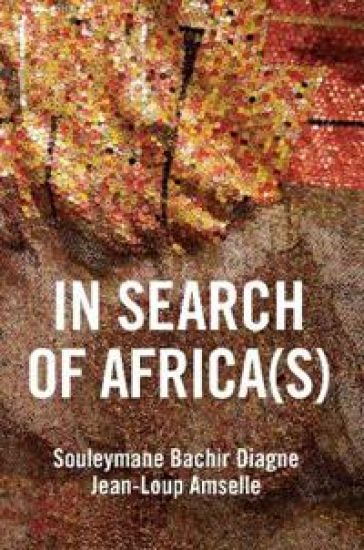
In Search of Africa(s)

In Search of Africa(s)

Souleymane Bachir Diagne; Jean-Loup Amselle

Polity Press
2020
sidottu
This important book by two leading scholars of Africa examines a series of issues that are central to the question of the postcolonial. The postcolonial paradigm, and the more recent decolonial paradigm, raise the issue of the universal: is the postcolonial the first phase of a new universalism, one which would be truly universal because it would be fully inclusive, or is it on the contrary the denial of all universalism, the triumph of the particular and of fragmentation? In addressing this issue Diagne and Amselle also tackle many related themes, such as the concepts of race, culture and identity, the role of languages in philosophy as practised in different cultural areas, the various conceptions of Islam, especially in West Africa, and the outlines of an Africa which can be thought of at the same time as singular and as plural. Each thinker looks back at his writings on these themes, comparing and contrasting them with those of his interlocutor. While Amselle seeks to expose the essentialist and culturalist logics that might underlie postcolonial and decolonial thought, Diagne consistently refuses to adopt the trappings of the Afrocentrist and particularist thinker. He argues instead for a total decentring of all thought, one that rejects all ‘centrisms’ and highlights instead branchings and connections, transfers, analogies and reciprocal influences between cultural places and intellectual fields that may be distant but are not distinct in space and time. This volume is a timely contribution to current debates on the postcolonial question and its new decolonial form. It will be of great interest to students and scholars in a variety of fields, from African studies and Black studies to philosophy, anthropology, sociology and cultural studies, as well as to anyone interested in the debates around postcolonial studies and decolonial thought
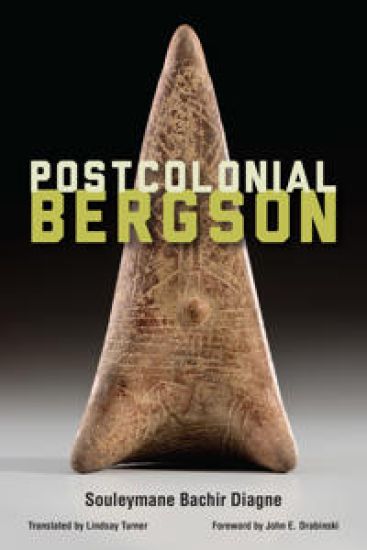
Postcolonial Bergson

Postcolonial Bergson

Souleymane Bachir Diagne; John E. Drabinski

FORDHAM UNIVERSITY PRESS
2019
sidottu
Henri Bergson has been the subject of keen interest within French philosophy ever since being championed by Gilles Deleuze and others. Yet his influence extends well beyond European philosophy, especially within Africa and South Asia. Postcolonial Bergson traces the influence of Bergson's thought through the work of two major figures in the postcolonial struggle, Muhammad Iqbal and Léopold Sédar Senghor. Poets and statesmen as well as philosophers, both of these thinkers—the one Muslim and the other Catholic—played an essential political and intellectual role in the independence of their respective countries. Both found, in Bergson's work, important support for their philosophical, cultural, and political projects. For Iqbal, a founding father of independent Pakistan, Bergson's conceptions of time and creative evolution resonated with the need for the "reconstruction of religious thought in Islam," a religious thought newly able to incorporate innovation and change. For Senghor, Bergsonian ideas of perception, intuition, and élan vital—filtered in part through the work of the French philosopher Pierre Teilhard de Chardin—proved crucial for thinking about African art, as well as foundational for his formulations of African socialism and his visions of an unalienated African future. At a moment of renewed interest in Bergson's philosophy, this book, by a major figure in both French and African philosophy, gives an expanded idea of the political ramifications of Bergson's thought in a postcolonial context.
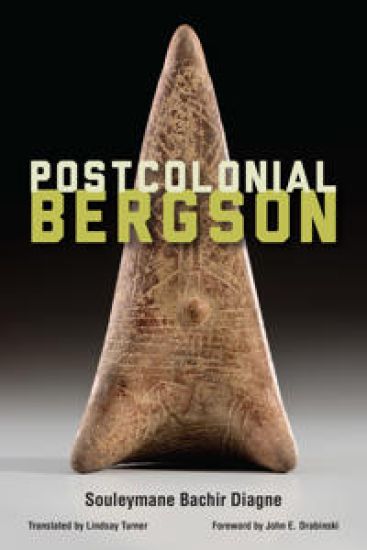
Postcolonial Bergson

Postcolonial Bergson

Souleymane Bachir Diagne; John E. Drabinski

Fordham University Press
2019
pokkari
Henri Bergson has been the subject of keen interest within French philosophy ever since being championed by Gilles Deleuze and others. Yet his influence extends well beyond European philosophy, especially within Africa and South Asia. Postcolonial Bergson traces the influence of Bergson's thought through the work of two major figures in the postcolonial struggle, Muhammad Iqbal and Léopold Sédar Senghor. Poets and statesmen as well as philosophers, both of these thinkers—the one Muslim and the other Catholic—played an essential political and intellectual role in the independence of their respective countries. Both found, in Bergson's work, important support for their philosophical, cultural, and political projects. For Iqbal, a founding father of independent Pakistan, Bergson's conceptions of time and creative evolution resonated with the need for the "reconstruction of religious thought in Islam," a religious thought newly able to incorporate innovation and change. For Senghor, Bergsonian ideas of perception, intuition, and élan vital—filtered in part through the work of the French philosopher Pierre Teilhard de Chardin—proved crucial for thinking about African art, as well as foundational for his formulations of African socialism and his visions of an unalienated African future. At a moment of renewed interest in Bergson's philosophy, this book, by a major figure in both French and African philosophy, gives an expanded idea of the political ramifications of Bergson's thought in a postcolonial context.
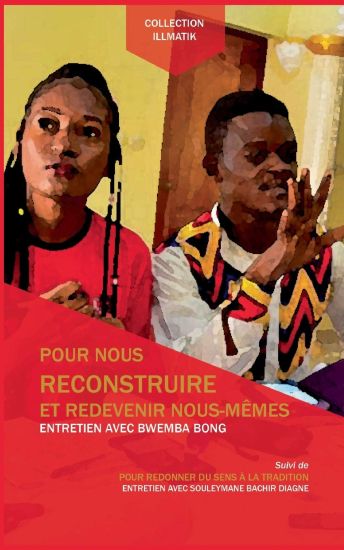
Pour nous reconstruire et redevenir nous-mêmes

Pour nous reconstruire et redevenir nous-mêmes

Bwemba Bong; Souleymane Bachir Diagne

Congo Lobi Lelo
2019
pokkari
La Collection Illmatik de Congo Lobi Lelo a pour ambition de d crypter et de partager les savoirs et les textes que nous consid rons comme importants pour ne pas dire essentiels pour les g n rations Triple A (Afro, ambitieux, activistes). Produites sous forme d'interviews, la Collection Illmatik s'attache produire, proposer et diffuser, travers des formats courts, des id es "africaines" qui nous font avancer.
Open to Reason

Open to Reason

Souleymane Bachir Diagne

Columbia University Press
2018
sidottu
What does it mean to be a Muslim philosopher, or to philosophize in Islam? In Open to Reason, Souleymane Bachir Diagne traces Muslims’ intellectual and spiritual history of examining and questioning beliefs and arguments to show how Islamic philosophy has always engaged critically with texts and ideas both inside and outside its tradition. Through a rich reading of classical and modern Muslim philosophers, Diagne explains the long history of philosophy in the Islamic world and its relevance to crucial issues of our own time. From classical figures such as Avicenna to the twentieth-century Sufi master and teacher of tolerance Tierno Bokar Salif Tall, Diagne explores how Islamic thinkers have asked and answered such questions as Does religion need philosophy? How can religion coexist with rationalism? What does it mean to interpret a religious narrative philosophically? What does it mean to be human, and what are human beings’ responsibilities to nature? Is there such a thing as an “Islamic” state, or should Muslims reinvent political institutions that suit their own times? Diagne shows that philosophizing in Islam in its many forms throughout the centuries has meant a commitment to forward and open thinking. A remarkable history of philosophy in the Islamic world as well as a work of philosophy in its own right, this book seeks to contribute to the revival of a spirit of pluralism rooted in Muslim intellectual and spiritual traditions.
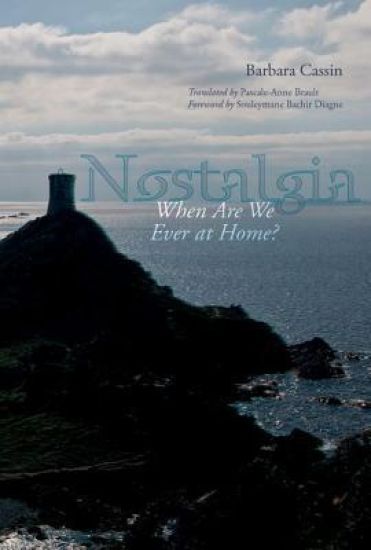
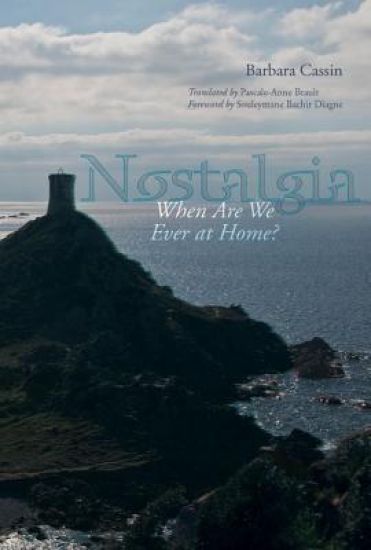
Nostalgia

Nostalgia

Barbara Cassin; Souleymane Bachir Diagne

Fordham University Press
2016
sidottu
Winner, French Voices Grand Prize Nostalgia makes claims on us both as individuals and as members of a political community. In this short book, Barbara Cassin provides an eloquent and sophisticated treatment of exile and of desire for a homeland, while showing how it has been possible for many to reimagine home in terms of language rather than territory. Moving from Homer's and Virgil's foundational accounts of nostalgia to the exilic writings of Hannah Arendt, Cassin revisits the dangerous implications of nostalgia for land and homeland, thinking them anew through questions of exile and language. Ultimately, Cassin shows how contemporary philosophy opens up the political stakes of rootedness and uprootedness, belonging and foreignness, helping us to reimagine our relations to others in a global and plurilingual world.
Nostalgia

Nostalgia

Barbara Cassin; Souleymane Bachir Diagne

Fordham University Press
2016
pokkari

Halvin toimitettuna 28,90 €

Winner, French Voices Grand Prize Nostalgia makes claims on us both as individuals and as members of a political community. In this short book, Barbara Cassin provides an eloquent and sophisticated treatment of exile and of desire for a homeland, while showing how it has been possible for many to reimagine home in terms of language rather than territory. Moving from Homer's and Virgil's foundational accounts of nostalgia to the exilic writings of Hannah Arendt, Cassin revisits the dangerous implications of nostalgia for land and homeland, thinking them anew through questions of exile and language. Ultimately, Cassin shows how contemporary philosophy opens up the political stakes of rootedness and uprootedness, belonging and foreignness, helping us to reimagine our relations to others in a global and plurilingual world.