Kirjojen hintavertailu – 12 859 819 kirjaa ja 27 kauppaa

Kirjailija

Southall Roger

Kirjat ja teokset yhdessä paikassa: 8 kirjaa, julkaisuja vuosilta 2010–2026, suosituimpiin kuuluu New South African Review 2. Vertaile teosten hintoja ja tarkista saatavuus suomalaisista kirjakaupoista.

8 kirjaa

Kirjojen julkaisuvuodet: 2010–2026.

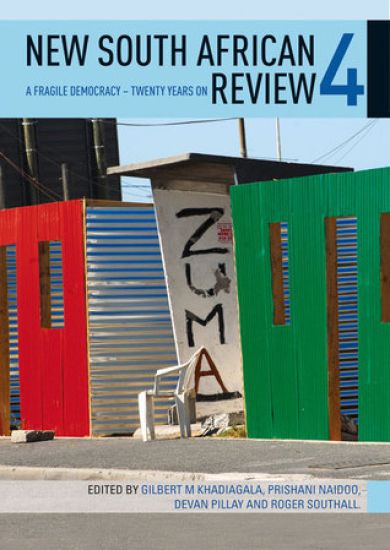
New South African Review 4

New South African Review 4

Clare Ballard; Ahmed Bawa; Claassens Aninka; John G.I. Clarke; Cornelissen Scarlett; Miriam Di Paola; Gottschalk Keith; Greenstein Ran; Kenny Bridget; Khadiagala Gilbert M.; Ian Macun; Mangcu Xolela; Zethu Matebeni; Boitumelo Matlala; Dale T McKinley; Mopeli L. Moshoeshoe; Mosoetsa Sarah; Naidoo Prishani; Pillay Devan; Pons-Vignon Nicolas; Prew Martin; Southall Roger; Justin van der Merwe; Wakeford Jeremy

Wits University Press
2014
nidottu
The death of Nelson Mandela on 5 December 2013 was in a sense a wake-up call for South Africans, and a time to reflect on what has been achieved since `those magnificent days in late April 1994’ (as the editors of this volume put it) `when South Africans of all colours voted for the first time in a democratic election’. In a time of recall and reflection it is important to take account, not only of the dramatic events that grip the headlines, but also of other signposts that indicate the shape and characteristics of a society. The New South African Review looks, every year, at some of these signposts, and the essays in this fourth volume of the series again examine and analyse a broad spectrum of issues affecting the country. They tackle topics as diverse as the state of organised labour; food retailing; electricity generation; access to information; civil courage; the school system; and – looking outside the country to its place in the world – South Africa’s relationships with north-east Asia, with Israel and with its neighbours in the southern African region. Taken together, these essays give a multidimensional perspective on South Africa’s democracy as it turns twenty, and will be of interest to general readers while being particularly useful to students and researchers.
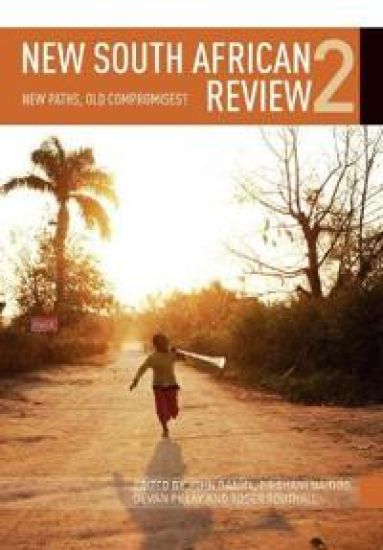
New South African Review 2

New South African Review 2

William Attwell; Leslie Bank; Naidoo Prishani; Patrick Bond; Imraan Buccus; John Daniel; Jane Duncan; Fig David; Hamill James; Janine Hicks; John Hoffman; Paul Hoffman; Malose Langa; Lindsay Don; Clifford Mabhena; Rajohane Matshedisho; Pillay Devan; Saloojee Haroon; Satgar Vishwas; Christopher Saunders; Sharife Khadija; Skinner Kate; Southall Roger; Neil Southern; Karl von Holdt; Edward Webster; Williams Michelle

Wits University Press
2011
nidottu
The second volume of the New South African Review (NSAR) continues a tradition of debate and critical, analytical scholarship about contemporary South Africa. Drawing on authors from academia and beyond, it aims to be informative, discursive and provocative. In this volume, the New Growth Path (NGP) adopted by the South African government in 2010 provides the basis for a debate about whether 'decent work' is the best possible solution to South Africa's problems of low economic growth and high unemployment. Rising inequality is explored against the backdrop of the failings of Black Economic Empowerment (BEE) and Broad-Based Black Economic Empowerment (BBBEE). The NGP's proposals for 'greening the economy' are discussed, with emphasis on the creation of 'green jobs' and biofuels. The volume also includes investigations into the crisis of acid mine drainage on the Witwatersrand, and other persistent environmental challenges. Possibilities for participatory forms of government are surveyed, and civil society activism is explored in relation to the South African Broadcasting Corporation (SABC) and environmental campaigns. The crisis in child care in public hospitals, the difficulties that characterise attempts at building relationships between the police and a township community, and the problems related to the absence of legislation to govern the powers of traditional authorities over land allocation (through the experience of the Eastern Cape) are also featured. Asking whether the NGP reflects a set of new policies or an attempt to re-dress old (com)promises in new clothes, this volume brings together different voices in debate about possibilities for alternatives to neo-liberal and capitalist development in South Africa.
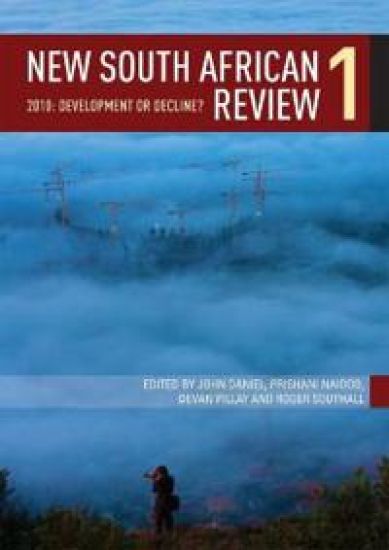
New South African Review 1

New South African Review 1

Atkinson Doreen; David Bruce; Butler Anthony; Scarlett Cornelisson; John Daniel; Graham Gibbon; Gordin Jeremy; Colin Hoag; Kariuki Samuel; Zosa de Sas Kropiwnicki; Loren Landau; Lizle Loots; Kezia Lewins; Makgetla Neva; Marais Hein; Seeraj Mohamed; Mike Muller; Kammila Naidoo; Naidoo Prishani; Pillay Devan; Tara Polzer; Schoeman Maxi; Aurelia Wa Kabwe-Segatti; Selikow Terry-Ann; Louis Reynolds; Southall Roger; Swilling Mark; Vale Peter

Wits University Press
2010
nidottu
Reviving the tradition of critical, analytical scholarship developed by the 1970s and 1980s editions of the South African review, this first volume of the New South African review offers a collection of original surveys of key issues and problems confronting post-apartheid South Africa. Written by a team of engaged social scientists and based often on new research, the volume ranges widely across the implications of the international crisis for the economy, the threats to our fragile ecology of present economic strategies, through to the state of the ANC and the public service, issues around service delivery, migration, HIV/AIDS, land reform, crime, the sexual behavior of our youth, and much more. Posing the provocative question of whether South Africa is embarking upon a long-term decline, the volume simultaneously argues the potential for a society premised upon social equality, social coherence and sustainability. This collection will appeal to a wide audience, national and international, interested in engaging with the multiple dilemmas and challenges facing contemporary South Africa.
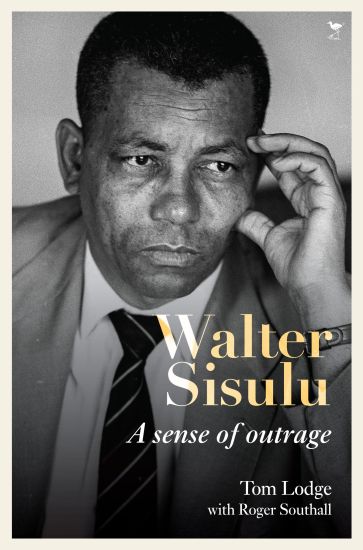
Walter Sisulu

Walter Sisulu

Tom Lodge; Southall Roger

JACANA MEDIA (PTY) LTD
2026
nidottu
Although hailed, alongside Nelson Mandela and Oliver Tambo, as one of the ANC’s holy trinity, Walter Sisulu has remained a relatively neglected figure in the historiography of the struggle for liberation in South Africa. Modest and unassuming, Sisulu was always content to stay in the background in a way that has belied his importance. This nuanced and highly original biography of Walter Sisulu, drafted by political historian Tom Lodge before his untimely death, provides a powerful corrective. Lodge pronounces Walter an exceptional organiser, the most influential planner of the ANC’s mass campaigning during the 1950s, a principled but undoctrinaire communist, and alongside Mandela an advocate of the necessity of armed struggle. He also served as the careful navigator of the ambiguous relationship between the ANC and Umkhontho we Sizwe, and Lodge details how Sisulu’s exceptional grasp of this enabled him to confound the prosecution when he later played a lead role as a defendant in the Rivonia trial. Sentenced to life imprisonment with his fellow trialists, Walter’s became a calming influence amidst the divisive ideological debates which took place on Robben Island, as well as a constant source of strength and support to Mandela. Then, after his release from jail – ahead of Mandela – in 1989, he again demonstrated his prowess as the chief organiser of the ANC as it re-established itself prior to the 1994 elections. In this powerful account of his life, completed by Roger Southall, Lodge provides the detailed analysis of his commitment and contribution to South African freedom that Walter Sisulu deserves.
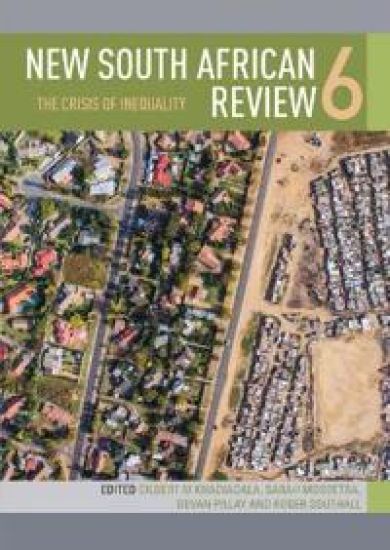
New South African Review 6

New South African Review 6

Kariuki Samuel; Jacqui Ala; Stephanie Allais; Atkinson Doreen; Black David; Sarah Bracking; Cock Jacklyn; Glaser Daryl; Gilad Isaacs; Makgetla Neva; Maharajh Rasigan; Motala Enver; Sonwabile Mnwana; Jana Mudronova; David Neves; Samuel Oloruntoba; Pillay Devan; Southall Roger; Vally Salim; Jo-Ansie van Wyk

Wits University Press
2018
nidottu
Despite the transition from apartheid to democracy, South Africa is the most unequal country in the world. Its extremes of wealth and poverty undermine intensifying struggles for a better life for all. The wide-ranging essays in this sixth volume of the New South African Review demonstrate how the consequences of inequality extend throughout society and the political economy, crippling the quest for social justice, polarising the politics, skewing economic outcomes and bringing devastating environmental consequences in their wake. Contributors survey the extent and consequences of inequality across fields as diverse as education, disability, agrarian reform, nuclear geography and small towns, and tackle some of the most difficult social, political and economic issues. How has the quest for greater equality affected progressive political discourse? How has inequality reproduced itself, despite best intentions in social policy, to the detriment of the poor and the historically disadvantaged? How have shifts in mining and the financialisation of the economy reshaped the contours of inequality? How does inequality reach into the daily social life of South Africans, and shape the way in which they interact? How does the extent and shape of inequality in South Africa compare with that of other major countries of the global South which themselves are notorious for their extremes of wealth and poverty? South African extremes of inequality reflect increasing inequality globally, and The Crisis of Inequality will speak to all those – general readers, policy makers, researchers and students – who are demanding a more equal world.
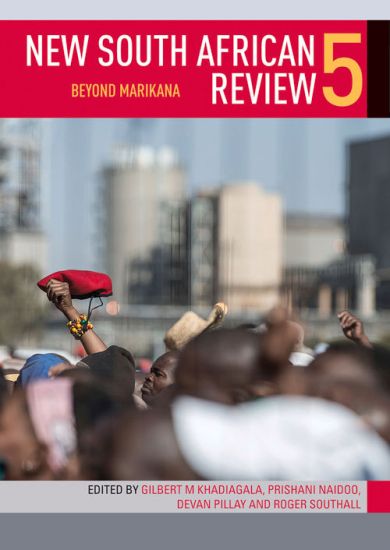
New South African Review 5

New South African Review 5

Naidoo Prishani; Nieftagodien Noor; Paret Marcel; Pillay Devan; Samantha Ashman; Harvey Ross; Crispen Chinguno; Turton Anthony; Southall Roger; Pierre Vos; Samantha Waterhouse; Ivor Sarakinsky; Marks Monique; David Bruce; David Dickinson; Khadiagala Gilbert M.; Garth le Pere; Smith Karen; Rod Alence

Wits University Press
2015
nidottu
This fifth volume in the New South African Review series takes as its starting point the shock wave emanating from the events at Marikana on 16 August 2012 and how it has reverberated throughout politics and society. some of the chapters in the volume refer directly to Marikana. In others, the influence of that fateful day is pervasive if not direct. Marikana has, for instance, made us look differently at the police and at how order is imposed on society. Monique Marks and David Bruce write that the massacre `has come to hold a central place in the analysis of policing, and broader political events since 2012 …’. The chapters highlight a range of current concerns – political, economic and social. David Dickinson’s chapter looks at the life of the poor in a township from within. in contrast, the chapter on foreign policy by Garth le Pere analyses south Africa’s approach to international relations in the Mandela, Mbeki and Zuma eras. Anthony turton’s account, `When gold mining ends’ is a chilling forecast of an impending environmental catastrophe. Both Devan Pillay and noor nieftagodien focus attention on the left and, in different ways, ascribe its rise to a new politics in the wake of Marikana. The essays in Beyond Marikana present a range of topics and perspectives of interest to general readers, but the book will also be a useful work of reference for students and researchers.
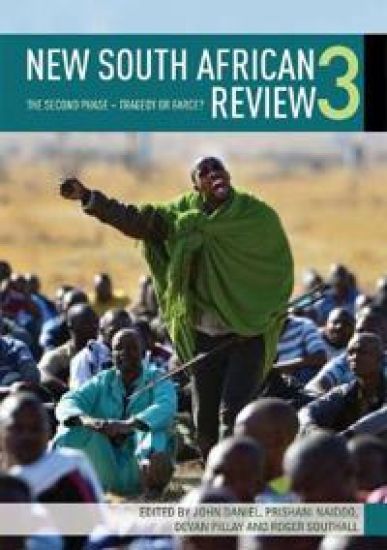
New South African Review 3

New South African Review 3

Stephanie Allais; William Attwell; Booysen Susan; Cock Jacklyn; Daniel John; Fig David; Dick Forslund; Maylam Paul; Julia Moorman; Motala Shireen; Naidoo Prishani; Naidoo Vinothan; Naidu Sanusha; Nicol Martin; Pillay Devan; Marisha Ramdeen; Rispel Laetitia; Southall Roger; Ahmed Veriava; Louise Vincent

Wits University Press
2013
nidottu
Hegel remarks somewhere that all great world-historic facts and personages appear, so to speak, twice. He forgot to add: the first time as tragedy, the second time as farce … (Karl Marx 1852) In the face of the continuing national tragedy of the inequality, poverty and unemployment which have triggered rising working- class discontent around the country, the ANC announced a `second phase’ of the `national democratic revolution’ to deal with the challenges. Ironically, the ANC post-Mangaung has resolved to preserve the core tenets of the minerals-energy-financial complex that defined racial capitalism – while at the same time ratcheting up the revolutionary rhetoric to keep the working class and marginalised onside. If the `first phase’ was a tragedy of the unmet expectations of the majority, is the `second phase’ likely to be a farce? The chapters in this volume are written by experts in their fields and address issues of politics, power and social class; economy, ecology and labour; public policy and social practice; and South Africa beyond its borders. They examine some of these challenges, and indicate that they are as much about the defective content of policies as their poor implementation. The third volume of the New South African Review continues the series by providing in-depth analyses of the key issues facing our country today.
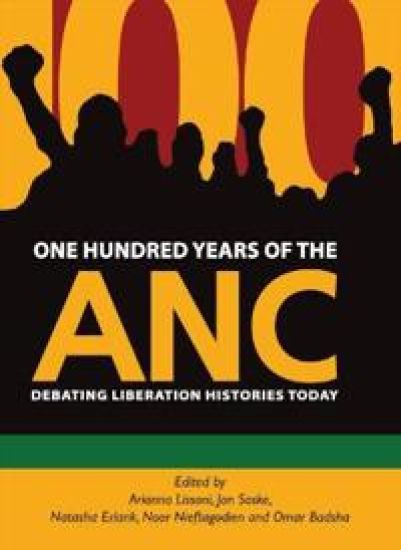
One Hundred Years of the ANC

One Hundred Years of the ANC

Thozama April; Badsha Omar; Barchiesi Franco; Phil Bonner; Booysen Susan; Erlank Natasha; Etherington Norman; Gunner Liz; Lissoni Arianna; Macmillan Hugh; Netshitenzhe Joel; Nieftagodien Noor; Saul John; Shubin Vladimir; Soske Jon; Soudien Crain; Southall Roger; Ineke van Kessel

Wits University Press
2012
nidottu
On 8 January 2012 the African National Congress (ANC) of South Africa, the oldest African nationalist organisation on the continent, celebrated its one hundredth anniversary. This historic event has generated significant public debate within both the ANC and South African society at large. There is no better time to critically reflect on the ANC’s historical trajectory and struggle against colonialism and apartheid than in its centennial year. One Hundred Years of the ANC is a collection of new work by renowned South African and international scholars. Covering a broad chronological and geographical spectrum and using a diverse range of sources, the contributors build upon but also extend the historiography of the ANC by tapping into marginal spaces in ANC history. By moving away from the celebratory mode that has characterised much of the contemporary discussions on the centenary, the contributors suggest that the relationship between the histories of earlier struggles and the present needs to be rethought in more complex terms. Collectively, the book chapters challenge hegemonic narratives that have become an established part of South Africa’s national discourse since 1994. By opening up debate around controversial or obscured aspects of the ANC’s century-long history, One hundred years of the ANC sets out an agenda for future research. The book is directed at a wide readership with an interest in understanding the historical roots of South Africa’s current politics will find this volume informative.