Kirjojen hintavertailu – 12 903 735 kirjaa ja 27 kauppaa

Kirjailija

Spyros Papapetros

Kirjat ja teokset yhdessä paikassa: 8 kirjaa, julkaisuja vuosilta 2012–2025, suosituimpiin kuuluu Werewolf. Vertaile teosten hintoja ja tarkista saatavuus suomalaisista kirjakaupoista.

8 kirjaa

Kirjojen julkaisuvuodet: 2012–2025.

Magic Architecture

Magic Architecture

Frederick Kiesler; Spyros Papapetros

MIT PRESS LTD
2025
sidottu

Halvin toimitettuna 58,40 €

The first publication of artist and architect Frederick Kiesler s epoch-spanning history of human architecture, largely unknown but still relevant. Magic Architecture was the architect Frederick Kiesler s most ambitious book project, an epoch-spanning history of human housing from prehistory to the atomic era and yet it was never published, as Kiesler moved on to other exhibitions and projects. Kiesler s comparative exploration of the quasi-'magical' effects of atomic technology and contemporary telekinetic military systems and the alternative epistemology of magic practices associated with cave drawings and protohistoric subterranean settlements reflects his profoundly interdisciplinary perspective on the evolution of art, architecture, and design. This edition preserves Kiesler s conception of the book as a neo-Vitruvian Renaissance treatise divided into ten parts or books that narrate an alternative history and theory of architecture. Also included are sixty composite illustrations, cut and pasted from books and popular science journals, with elaborate captions. The editors have reassembled the book s text and illustrations from archival material, supplementing them with notes that document the evolution of the work. Introductory essays provide a chronology of Kiesler s research and an interpretation of key themes. Appendixes offer additional textual and visual material gathered by Kiesler for the project.
Werewolf

Werewolf

Caroline O'Donnell; José Ibarra; Cynthia Davidson; Peter Eisenman; Jimenez Lai; Greg Lynn; Spyros Papapetros; Jesse Resier; Kari Weil

Goff Books
2022
nidottu
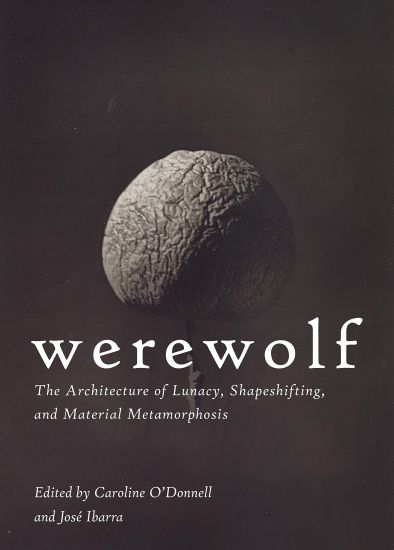
As climate, culture, and technology evolve and become increasingly unpredictable, architecture’s stasis becomes more incongruous. Werewolf explores an emerging but under-investigated branch of architecture that embraces the transformation of form, performance, and the responsiveness to environments and context. These ideas are studied through architectural precedents and framed by critical essays by Jesse Reiser, Greg Lynn, Jimenez Lai, Spyros Papapetros, Kari Weil, as well as the editors. The shift from passive buildings to reactive structures is now imperative, as climate change and political turmoil exacerbate the unpredictability of environments. Werewolf expands on the architect’s agency to critically address political, social, and environmental unrest. Revealing the cunning and agile ways in which architecture can negotiate rather than resist change, this book departs from the fixed Vitruvian man and uses the figure of the werewolf to propose a model where changes of state, mutation, and decomposition are conceptually fundamental.
Pre/architecture

Pre/architecture

Spyros Papapetros

Sternberg Press
2021
nidottu
On the study of prearchitecture that took place after WWII. Can there ever be a world before architecture? Is there an arche--origin, beginning, or authority--that precedes the appearance of architectonics? This book argues that such a pre-architectural state became a central object of investigation by architectural historians and practicing architects in the aftermath of world historical events and major epistemological revolutions. Confronted by the ravages of war and omens of modern architecture's own ending, architects like Frederick Kiesler tried to trace the origins of human design by exploring the foundational techniques of human and animal building through conversation with paleoanthropologists and evolutionary biologists of the first half of the twentieth-century. At the same time, historians like Sigfried Giedion attempted to reinterpret a number of recently discovered prehistoric monuments, if only to corroborate theoretical principles that were already in use by modernist art and architectural critics. After WWII, the narrative of Prearchitecture moves progressively backwards to the middle of the nineteenth century when the term prearchitectonic was coined even before the institutional emergence of prehistory as a discipline of scientific research. Gottfried Semper wrote about the prearchitectonic conditions of peoples from eras preceding the historical civilizations of the Near East, expressed through smaller structures such as ceramics but not yet through monumental structures. For Semper, prearchitectonic elements described not a single temporal period but a general structural condition that survived the inventions of history and of architecture. Ultimately, the study of prehistoric origins could uncover not only the causes of modernity's present crisis, but also the signs of architecture's futures past. By juxtaposing the fossils of prehistory with postwar cosmic anxieties and prognostications of a post-histoire, what is ultimately invented is a pre/post/erous history--a fictional prehistory of future architectonics. Pre-architecture is not simply not architecture; it is what architecture could have become but ultimately disavowed. The same unfulfilled potentialities haunt not only the distant past but also architecture's anxious present that periodically circles back to an aborted prehistory.
Mies Van Der Rohe: Barcelona-1929

Mies Van Der Rohe: Barcelona-1929

Remei Capdevila-Werning; Beatriz Colomina; Juan Jose Lahuerta; Laura Martinez de Guerenu; Dietrich Neumann; Fritz Neumeyer; Spyros Papapetros; Lutz Robbers; Carmen Rodriguez Pedret

Editorial Tenov S.L.
2018
sidottu
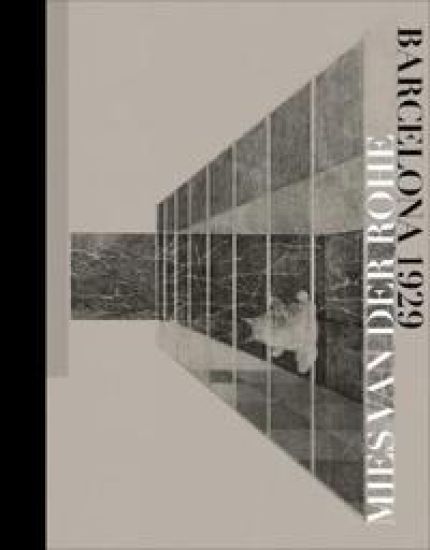
The expert contributors to this lavishly illustrated volume, devoted entirely to Mies van der Rohe's Barcelona Pavilion of 1929, address here for the first time the forgotten contexts of the Pavilion's genesis. Habitually thought of as an abstract, unpolluted, and splendidly isolated building--a precursor of Mies's American period--the Pavilion is revealed here as a thoroughly European work, perhaps less pristine but more authentic. Mies and Lilly Reich were commissioned to design not only the Pavilion but also more than one hundred thousand square feet of German stands spread throughout the Exposition. By examining that work in addition to the Pavilion itself, the contributors present a farreaching reinterpretation of the whole. They also explore connections with the mass media, highlight the work's antecedents and meaning in the history of architecture, and analyze the current pavilion, a reconstruction of the original built in 1986. No other critical study offers a comparable overview of Mies's work in Barcelona.
Richard Hamilton & Siegfried Giedion

Richard Hamilton & Siegfried Giedion

Carson Chan; Esther Choi; Kevin Lotery; Spyros Papapetros; Fanny Singer; Hadas Steiner; Filine Wagner

JRP Ringier
2017
nidottu
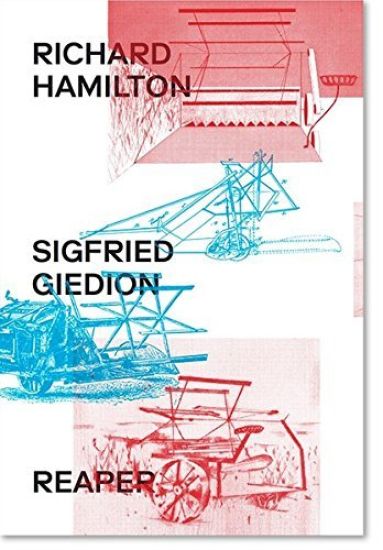
The starting point of this publication is the conceptual encounter between English Pop artist Richard Hamilton (1922-2011) and Swiss historian and architecture critic Sigfried Giedion (1888-1968), famous for his landmark 1941 book, Space, Time & Architecture. In 1949 Richard Hamilton created the Reaper print series as a reaction to Giedion's 1948 book Mechanization Takes Command, in which he describes the mechanization of everyday life. Reproducing Hamilton's complete Reaper series alongside illustrations created by Giedion plus related images, this publication brings together seven essays by renowned international scholars. Among the many topics discussed are Hamilton's early works and exhibition installation practice, postwar British biotechnology and architecture, "Hippie Modernism" and the visual strategy of Giedion's books.
On the Animation of the Inorganic

On the Animation of the Inorganic

Spyros Papapetros

University of Chicago Press
2016
nidottu
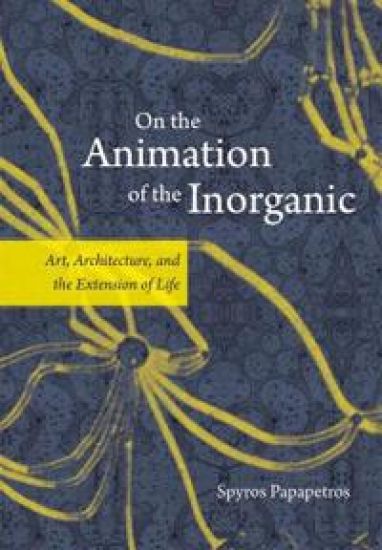
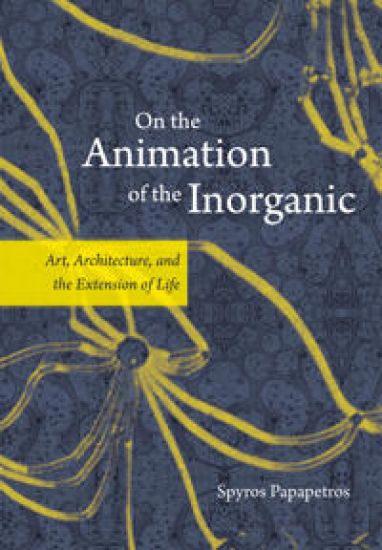
Throughout human history, people have imagined inanimate objects to have intelligence, language, and even souls. In our secular societies today, we still willingly believe that nonliving objects have lives of their own as we find ourselves interacting with computers and other equipment. In On the Animation of the Inorganic, Spyros Papapetros examines ideas about simulated movement and inorganic life during and after the turn of the twentieth century—a period of great technical innovation whose effects continue to reverberate today. Exploring key works of art historians such as Aby Warburg, Wilhelm Worringer, and Alois Riegl, as well as architects and artists like Fernand Léger, Mies van der Rohe, and Salvador Dalí, Papapetros tracks the evolution of the problem of animation from the fin de siècle through the twentieth century. He argues that empathy—the ability to identify with objects of the external world—was repressed by twentieth-century modernist culture, but it returned, projected onto inorganic objects such as machines, automobiles, and crystalline skyscrapers. These modern artifacts, he demonstrates, vibrated with energy, life, and desire of their own and had profound effects on people. Subtle and insightful, this book will change how we view modernist art, architecture, and their histories.
On the Animation of the Inorganic

On the Animation of the Inorganic

Spyros Papapetros

University of Chicago Press
2012
sidottu
Throughout human history, people have imagined inanimate objects to have intelligence, language, and even souls. In our secular societies today, we still willingly believe that nonliving objects have lives of their own as we find ourselves interacting with computers and other equipment. In "On the Animation of the Inorganic", Spyros Papapetros examines ideas about simulated movement and inorganic life during and after the turn of the twentieth century - a period of great technical innovation whose effects continue to reverberate today. Exploring key works of art historians such as Aby Warburg, Wilhelm Worringer, and Alois Riegl, as well as architects and artists like Fernand Leger, Mies van der Rohe, and Salvador Dali, Papapetros tracks the evolution of the problem of animation from the fin de siecle through the twentieth century. He argues that empathy - the ability to identify with objects of the external world - was repressed by twentieth-century modernist culture, but it returned, projected onto inorganic objects such as machines, automobiles, and crystal-line skyscrapers. These modern artifacts, he demonstrates, vibrated with energy, life, and desire of their own and had profound effects on people. Subtle and insightful, this beautifully illustrated book will change how we view modernist art, architecture, and their histories.