Kirjojen hintavertailu – 12 903 725 kirjaa ja 27 kauppaa

Kirjailija

Srinath Perera

Kirjat ja teokset yhdessä paikassa: 6 kirjaa, julkaisuja vuosilta 2015–2024, suosituimpiin kuuluu Cost Studies of Buildings. Vertaile teosten hintoja ja tarkista saatavuus suomalaisista kirjakaupoista.

6 kirjaa

Kirjojen julkaisuvuodet: 2015–2024.

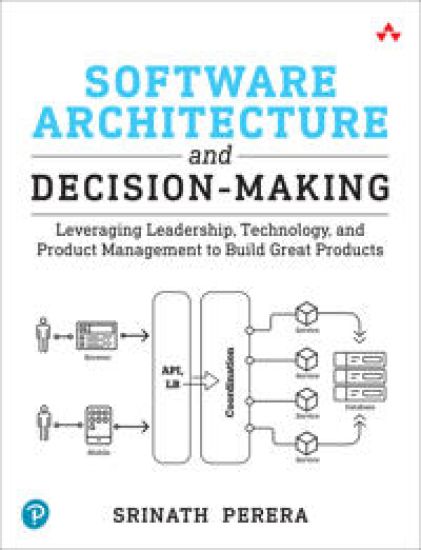
Software Architecture and Decision-Making

Software Architecture and Decision-Making

Srinath Perera

PEARSON EDUCATION (US)
2024
nidottu

Halvin toimitettuna 33,70 €

Leverage leadership knowledge to make better software architecture decisions. Think deeply but implement slowly. The overarching goal of software systems (hence, for software architecture) is to build systems that meet quality standards and that provide the highest return on investment (ROI) in the long run or within a defined period of time. A great product requires a combination of technology, leadership, and product management (including UX). Leadership is primarily about managing uncertainty and making the right judgment. To build great products, technical leaders need to combine technology, leadership, and product management knowledge, and make the right decisions. Many technical mistakes come from the gap between knowledge about these three items and judgment. In Software Architecture and Decision-Making, Srinath Perera explains principles and concepts that software architects must understand deeply and how to employ those principles to manage uncertainty. The questions and principles discussed in this book help manage uncertainty while building software architecture and provide a framework for making decisions. This book is for all technical leaders in the software industry who make holistic judgments about the systems they build and for future leaders learning the craft. Understand the importance of strong decision making with examples from great technical leaders such as the Wright brothers and Kelly JohnsonLeverage five key questions and seven important principles to understand uncertainties during the design process and make strategic architectural decisionsApproach the design systematically, first at the macro level and then the individual service level This definitive guide explains principles and concepts--technical and non-technical alike--that software architects, senior software engineers, and technical leads must understand to manage the inevitable uncertainty involved in building software systems and to drive success of the products for which they are responsible. Register your book for convenient access to downloads, updates, and/or corrections as they become available. See inside book for details.
Cost Studies of Buildings

Cost Studies of Buildings

Allan Ashworth; Srinath Perera

Routledge
2018
sidottu
This practical guide to cost studies of buildings has been updated and revised throughout for the 6th edition. New developments in RICS New Rules of Measurement (NRM) are incorporated throughout the book, in addition to new material on e-business, the internet, social media, building information modelling, sustainability, building resilience and carbon estimating. This trusted and easy to use guide to the cost management role: Focuses on the importance of costs of constructing projects during the different phases of the construction process Features learning outcomes and self-assessment questions for each chapter Addresses the requirements of international readers From introductory data on the construction industry and the history of construction economics, to recommended methods for cost analysis and post-contract cost control, Cost Studies of Buildings is an ideal companion for anyone learning about cost management.
Contractual Procedures in the Construction Industry

Contractual Procedures in the Construction Industry

Allan Ashworth; Srinath Perera

Routledge
2018
sidottu
Contractual Procedures in the Construction Industry 7th edition aims to provide students with a comprehensive understanding of the subject, and reinforces the changes that are taking place within the construction industry. The book looks at contract law within the context of construction contracts, it examines the different procurement routes that have evolved over time and the particular aspects relating to design and construction, lean methods of construction and the advantages and disadvantages of PFI/PPP and its variants. It covers the development of partnering, supply chain management, design and build and the way that the clients and professions have adapted to change in the procurement of buildings and engineering projects. This book is an indispensable companion for students taking undergraduate courses in Building and Surveying, Quantity Surveying, Construction Management and Project Management. It is also suitable for students on HND/C courses in Building and Construction Management as well as foundation degree courses in Building and Construction Management. Key features of the new edition include: A revised chapter covering the concept of value for money in line with the greater emphasis on added value throughout the industry today. A new chapter covering developments in information technology applications (building information modelling, blockchains, data analytics, smart contracts and others) and construction procurement. Deeper coverage of the strategies that need to be considered in respect of contract selection. Improved discussion of sustainability and the increasing importance of resilience in the built environment. Concise descriptions of some the more important construction case laws.
Contractual Procedures in the Construction Industry

Contractual Procedures in the Construction Industry

Allan Ashworth; Srinath Perera

Routledge
2018
nidottu
Contractual Procedures in the Construction Industry 7th edition aims to provide students with a comprehensive understanding of the subject, and reinforces the changes that are taking place within the construction industry. The book looks at contract law within the context of construction contracts, it examines the different procurement routes that have evolved over time and the particular aspects relating to design and construction, lean methods of construction and the advantages and disadvantages of PFI/PPP and its variants. It covers the development of partnering, supply chain management, design and build and the way that the clients and professions have adapted to change in the procurement of buildings and engineering projects. This book is an indispensable companion for students taking undergraduate courses in Building and Surveying, Quantity Surveying, Construction Management and Project Management. It is also suitable for students on HND/C courses in Building and Construction Management as well as foundation degree courses in Building and Construction Management. Key features of the new edition include: A revised chapter covering the concept of value for money in line with the greater emphasis on added value throughout the industry today. A new chapter covering developments in information technology applications (building information modelling, blockchains, data analytics, smart contracts and others) and construction procurement. Deeper coverage of the strategies that need to be considered in respect of contract selection. Improved discussion of sustainability and the increasing importance of resilience in the built environment. Concise descriptions of some the more important construction case laws.
Cost Studies of Buildings

Cost Studies of Buildings

Allan Ashworth; Srinath Perera

Routledge
2015
sidottu
This practical guide to cost studies of buildings has been updated and revised throughout for the 5th edition. New chapters have been added on the RICS New Rules of Measurement (NRM) for order of cost estimating and elemental cost planning, and on the procurement of construction projects.
Cost Studies of Buildings

Cost Studies of Buildings

Allan Ashworth; Srinath Perera

Routledge
2015
nidottu
This practical guide to cost studies of buildings has been updated and revised throughout for the 6th edition. New developments in RICS New Rules of Measurement (NRM) are incorporated throughout the book, in addition to new material on e-business, the internet, social media, building information modelling, sustainability, building resilience and carbon estimating. This trusted and easy to use guide to the cost management role: Focuses on the importance of costs of constructing projects during the different phases of the construction process Features learning outcomes and self-assessment questions for each chapter Addresses the requirements of international readers From introductory data on the construction industry and the history of construction economics, to recommended methods for cost analysis and post-contract cost control, Cost Studies of Buildings is an ideal companion for anyone learning about cost management.