Kirjojen hintavertailu – 12 903 725 kirjaa ja 27 kauppaa
Kirjailija
St Augustine
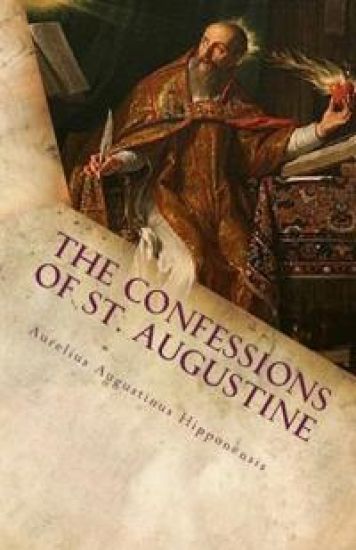
Kirjat ja teokset yhdessä paikassa: 91 kirjaa, julkaisuja vuosilta 1991–2025, suosituimpiin kuuluu The Confessions of St. Augustine. Vertaile teosten hintoja ja tarkista saatavuus suomalaisista kirjakaupoista.
"After I had written 'on the Good of Marriage, ' it was expected that I should write on Holy Virginity; and I did not delay doing so: and that it is God's gift, and how great a gift, and with what humility to be guarded, so far as I was able I set forth in one volume. This book begins."
From the Retractations, Book II. Chap. 60. "Then also I wrote a Book against Lying, the occasion of which work was this. In order to discover the Priscillianist heretics, who think it right to conceal their heresy not only by denial and lies, but even by perjury, it seemed to certain Catholics that they ought to pretend themselves Priscillianists, in order that they might penetrate their lurking places. In prohibition of which thing, I composed this book. It begins: Multa mihi legenda misisti."
The work constitutes an exposition of the several clauses of the so-called Apostles' Creed. The questions concerning the mutual relations of the three Persons in the Godhead are handled with greatest fullness; in connection with which, especially in the use made of the analogies of Being, Knowledge, and Love, and in the cautions thrown in against certain applications of these and other illustrations taken from things of human experience, we come across sentiments which are also repeated in the City of God, the books on the Trinity, and others of his doctrinal writings. The passage referred to in the Retractations is as follows: About the same period, in presence of the bishops, who gave me orders to that effect, and who were holding a plenary Council of the whole of Africa at Hippo-Regius, I delivered, as presbyter, a discussion on the subject of Faith and the Creed. This disputation, at the very pressing request of some of those who were on terms of more than usual intimacy and affection with us, I threw into the form of a book, in which the themes themselves are made the subjects of discourse, although not in a method involving the adoption of the particular connection of words which is given to the competentes to be committed to memory.
Receive, my children, the Rule of Faith, which is called the Symbol (or Creed). And when ye have received it, write it in your heart, and be daily saying it to yourselves; before ye sleep, before ye go forth, arm you with your Creed. The Creed no man writes so as it may be able to be read: but for rehearsal of it, lest haply forgetfulness obliterate what care hath delivered, let your memory be your record-roll: what ye are about to hear, that are ye to believe; and what ye shall have believed, that are about to give back with your tongue. For the Apostle says, "With the heart man believeth unto righteousness, and with the mouth confession is made unto salvation." For this is the Creed which ye are to rehearse and to repeat in answer. These words which ye have heard are in the Divine Scriptures scattered up and down: but thence gathered and reduced into one, that the memory of slow persons might not be distressed; that every person may be able to say, able to hold, what he believes. For have ye now merely heard that God is Almighty? But ye begin to have him for your father, when ye have been born by the church as your Mother.
Containing a particular refutation of the doctrine of these heretics regarding the origin and nature of evil; an exposure of their pretended symbolical customs of the mouth, of the hands, and of the breast; and a condemnation of their superstitious abstinence and unholy mysteries. Lastly, some crimes brought to light among the Manich ans are mentioned.
In the Confessions and the Letters, moreover, the Manich ans figure prominently. The treatises included in the present series may be said to fairly represent Augustin's manner of dealing with Manich ism. The Anti-Manich an writings are found chiefly in vol. VIII. of the Benedictine edition, and in volumes I. and XI. of the Migne reprint. Augustin's personal connection with the sect extending over a period of nine years, and his consummate ability in dealing with this form of error, together with the fact that he quotes largely from Manich an literature, render his works the highest authority for Manich ism as it existed in the West at the close of the fifth century.] Comp. also the Acts of Councils against the Manich ans from the fourth century onwards, in Mansi and Hefele and Hardouin].
This tract was thought spurious by some, but is known to be St. Augustin's by his mention of it in Ep. ccxxxi. ad Darium Comitem. It seems to have been written after 399, from what is said about Idols, 10; for in that year Honorius enacted laws against them. --From Bened. Ed. The reader of Butler's Analogy will recognize many similar turns of thought.
The object of this chapter is to present a rudimentary outline and summary of all that Augustin penned or spoke against those traditional North African Christians whom he was pleased to regard as schismatics. It will be arranged, so far as may be, in chronological order, following the dates suggested by the Benedictine edition. The necessary brevity precludes anything but a very meagre treatment of so considerable a theme. The writer takes no responsibility for the ecclesiological tenets of the great Father, nor will he enter here into any criticism of the text and truth of the documents, upon which the historical argument was so laboriously and peremptorily built, to the utter ignoring of the Donatist archives, and the protests of their scholars against the validity and integrity of their opponents' records. Both parties claimed to be the historic Catholic church; both were little apart in doctrine, worship, and polity; both tended toward externalism in piety; both accused one another of fraud in inventing records. Later Romanism in its bright spirit of selection took much spoil from either camp.
"About the same time, in the East (that is to say, in Palestinian Syria), Pelagius was summoned by certain catholic brethren before a tribunal of bishops, and was heard on his trial by fourteen prelates, in the absence of his accusers, who were unable to be present on the day of the synod. On his condemning the very dogmas which were read from the indictment against him, as assailing the grace of Christ, they pronounced him to be a catholic. But when the Acts of this synod found their way into our hands, I wrote a treatise on them, to prevent the idea gaining ground that, because he had been in a manner acquitted, his opinions also were approved by the bishops; or that the accused could by any chance have escaped condemnation at their hands, unless he had condemned the opinions charged against him. This treatise of mine begins with these words: 'After there came into my hands.'"
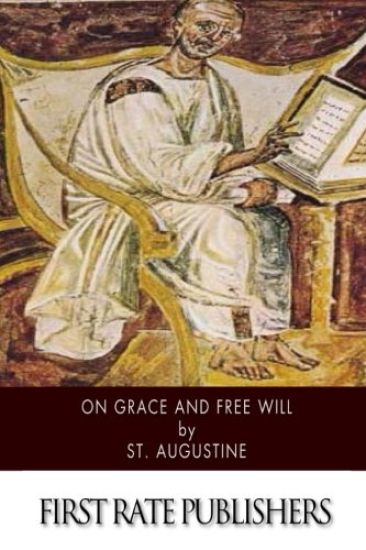
There are some persons who suppose that the freedom of the will is denied whenever God's grace is maintained, and who on their side defend their liberty of will so peremptorily as to deny the grace of God. This grace, as they assert, is bestowed according to our own merits. It is in consequence of their opinions that I wrote the book entitled On Grace and Free Will. This work I addressed to the monks of Adrumetum, in whose monastery first arose the controversy on that subject, and that in such a manner that some of them were obliged to consult me thereon. The work begins with these words: "With reference to those persons who so preach the liberty of the human will."
This is a unique work from one of the preeminent early leaders of the Christian Church. These are wonderful and inspiring writings of St. Augustine that not only teach us some of the intellectual and theological elements of our faith, but also of the passion.
The "City of God" is the masterpiece of the greatest genius among the Latin Fathers, and the best known and most read of his works, except the "Confessions." It embodies the results of thirteen years of intellectual labor and study (from A. D. 413-426). It is a vindication of Christianity against the attacks of the heathen in view of the sacking of the city of Rome by the barbarians, at a time when the old Gr co-Roman civilization was approaching its downfall, and a new Christian civilization was beginning to rise on its ruins. It is the first attempt at a philosophy of history, under the aspect of two rival cities or communities-- the eternal city of God and the perishing city of the world. This was the only philosophy of history known throughout Europe during the middle ages; it was adopted and reproduced in its essential features by Bossuet, Ozanam, Frederick Schlegel, and other Catholic writers, and has recently been officially endorsed, as it were, by the scholarly Pope Leo XIII. in his encyclical letter on the Christian Constitution of States (Immortale Dei, Nov. 1, 1885); for the Pope says that Augustin in his De Civitate Dei, "set forth so clearly the efficacy of Christian wisdom and the way in which it is bound up with the well-being of States, that he seems not only to have pleaded the cause of the Christians of his own time, but to have triumphantly refuted the false charges against Christianity] forever."
In the writings gathered here, Augustine clarifies difficult passages in the Old Testament, from the building of Noah's ark to the struggles of Job, and addresses common questions from the members of his congregation. Each work is introduced and annotated by modern scholars who provide context for Augustine's life and thought at the time of his writing. Augustine of Hippo's intense study of the Scriptures compels us to share his reverence for them. The Bible is not meant to be memorized at face value, unquestioned and unexamined. It is a message from our God, meant to be pored over, wrestled with, and taken to heart--as Augustine did. This learned Church Father initially rejected the Scriptures out of hand as having no literary, theological, or personal value. But then he heard the Word of God proclaimed and explained by Ambrose, bishop of Milan. After his conversion, Augustine never stopped studying the Scriptures, and his notes and commentaries make clear his devotion to the Word of God.
Augustine of Hippo (November 13, 354 - August 28, 430), also known as St. Augustine, was Bishop of Hippo Regius. He was a Latin-speaking philosopher and theologian who lived in the Roman Africa Province. His writings were very influential in the development of Western Christianity. According to his contemporary, Jerome, Augustine "established anew the ancient Faith" In his early years he was heavily influenced by Manichaeism and afterward by the Neo-Platonism of Plotinus. After his conversion to Christianity and baptism (AD 387), Augustine developed his own approach to philosophy and theology, accommodating a variety of methods and different perspectives. He believed that the grace of Christ was indispensable to human freedom, and he framed the concepts of original sin and just war. When the Western Roman Empire was starting to disintegrate, Augustine developed the concept of the Church as a spiritual City of God (in a book of the same name), distinct from the material Earthly City. His thought profoundly influenced the medieval worldview. Augustine's City of God was closely identified with the church, the community that worshipped God. In the Catholic Church and the Anglican Communion, he is a saint and pre-eminent Doctor of the Church, and the patron of the Augustinian religious order; his memorial is celebrated 28 August, the day of his death. He is the patron saint of brewers, printers, theologians, the alleviation of sore eyes, and a number of cities and dioceses. Many Protestants, especially Calvinists, consider him to be one of the theological fathers of Reformation due to his teaching on salvation and divine grace. In the Eastern Orthodox Church he is blessed, and his feast day is celebrated on 15 June. Among the Orthodox, he is called "Blessed Augustine", or "St. Augustine the Blessed". On Grace and Free Will, Augustine's doctrine about the liberum arbitrium or free will and its inability to respond to the will of God without divine grace, is interpreted (mistakenely according to Roman Catholics) in terms of Predestination: grace is irresistible, results in conversion, and leads to perseverance.
Augustine of Hippo (November 13, 354 - August 28, 430), also known as St. Augustine, was Bishop of Hippo Regius. He was a Latin-speaking philosopher and theologian who lived in the Roman Africa Province. His writings were very influential in the development of Western Christianity. According to his contemporary, Jerome, Augustine "established anew the ancient Faith" In his early years he was heavily influenced by Manichaeism and afterward by the Neo-Platonism of Plotinus. After his conversion to Christianity and baptism (AD 387), Augustine developed his own approach to philosophy and theology, accommodating a variety of methods and different perspectives. He believed that the grace of Christ was indispensable to human freedom, and he framed the concepts of original sin and just war. When the Western Roman Empire was starting to disintegrate, Augustine developed the concept of the Church as a spiritual City of God (in a book of the same name), distinct from the material Earthly City. His thought profoundly influenced the medieval worldview. Augustine's City of God was closely identified with the church, the community that worshipped God. In the Catholic Church and the Anglican Communion, he is a saint and pre-eminent Doctor of the Church, and the patron of the Augustinian religious order; his memorial is celebrated 28 August, the day of his death. He is the patron saint of brewers, printers, theologians, the alleviation of sore eyes, and a number of cities and dioceses. Many Protestants, especially Calvinists, consider him to be one of the theological fathers of Reformation due to his teaching on salvation and divine grace. In the Eastern Orthodox Church he is blessed, and his feast day is celebrated on 15 June. Among the Orthodox, he is called "Blessed Augustine", or "St. Augustine the Blessed".