Kirjailija
Stanley Cavell
Kirjat ja teokset yhdessä paikassa: 38 kirjaa, julkaisuja vuosilta 1979–2025, suosituimpiin kuuluu Philosophy and Animal Life. Vertaile teosten hintoja ja tarkista saatavuus suomalaisista kirjakaupoista.
38 kirjaa
Kirjojen julkaisuvuodet: 1979–2025.
This book is Stanley Cavell's definitive expression on Emerson. Over the past thirty years, Cavell has demonstrated that he is the most emphatic and provocative philosophical critic of Emerson that America has yet known. The sustained effort of that labor is drawn together here for the first time into a single volume, which also contains two previously unpublished essays and an introduction by Cavell that reflects on this book and the history of its emergence. Students and scholars working in philosophy, literature, American studies, history, film studies, and political theory can now more easily access Cavell's luminous and enduring work on Emerson. Such engagement should be further complemented by extensive indices and annotations. If we are still in doubt whether America has expressed itself philosophically, there is perhaps no better space for inquiry than reading Cavell reading Emerson.
Reissued with a new essay on Macbeth this famous collection of essays on Shakespeare's tragedies considers these plays as responses to the crisis of knowledge and the emergence of modern skepticism provoked by the new science of the late sixteenth and early seventeenth centuries.
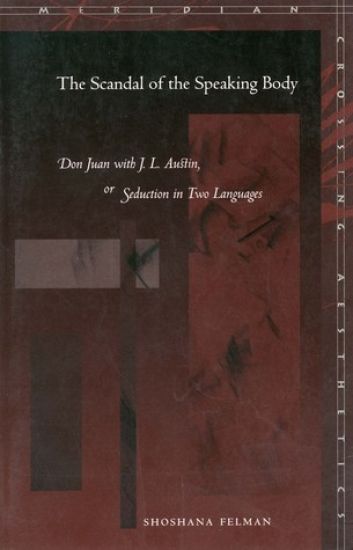
The Scandal of the Speaking Body
Shoshana Felman; Stanley Cavell; Judith Butler
Stanford University Press
2002
pokkari
What is a promise? What are the consequences of the act of promising? In this bold yet subtle meditation, the author contemplates the seductive promise of speech and the seductive promise of love. Imagining an encounter between Molière's Don Juan and J. L. Austin, between a mythical figure of the French classical theater and a twentieth-century philosopher, she explores the relation between speech and the erotic, using a literary text as the ground for a telling encounter between philosophy, linguistics, and Lacanian psychoanalytic theory. In the years since the publication of this book (which the author today calls "the boldest, the most provocative, but also the most playful" she has written), speech act theory has continued to play a central and defining role in the theories of sexuality, gender, performance studies, post-colonial studies, and cultural studies. This book remains topical as readers increasingly discover how multiply relevant the speaking body is. Moving beyond the domain of formal linguistic analysis to address these questions, the author has written a daring and seductive book.
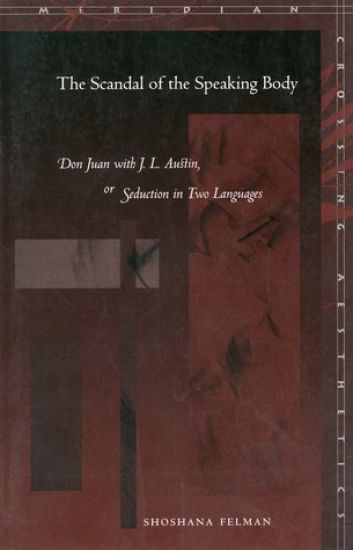
The Scandal of the Speaking Body
Shoshana Felman; Stanley Cavell; Judith Butler
Stanford University Press
2002
sidottu
What is a promise? What are the consequences of the act of promising? In this bold yet subtle meditation, the author contemplates the seductive promise of speech and the seductive promise of love. Imagining an encounter between Molière's Don Juan and J. L. Austin, between a mythical figure of the French classical theater and a twentieth-century philosopher, she explores the relation between speech and the erotic, using a literary text as the ground for a telling encounter between philosophy, linguistics, and Lacanian psychoanalytic theory. In the years since the publication of this book (which the author today calls "the boldest, the most provocative, but also the most playful" she has written), speech act theory has continued to play a central and defining role in the theories of sexuality, gender, performance studies, post-colonial studies, and cultural studies. This book remains topical as readers increasingly discover how multiply relevant the speaking body is. Moving beyond the domain of formal linguistic analysis to address these questions, the author has written a daring and seductive book.
Stanley Cavell, einer der originellsten und provokantesten Denker der amerikanischen Gegenwartsphilosophie, findet in den letzten Jahren immer grossere internationale Aufmerksamkeit. Gemessen am Mainstream der analytischen Philosophie ist er ein recht atypischer Autor; er setzt sich nicht nur mit Wittgenstein, Austin und Kant, sondern auch mit Nietzsche, Heidegger und Derrida auseinander und diskutiert das Phantastische der Philosophie. Er interpretiert Dichter wie Shakespeare und Beckett, schreibt aber auch brillante Studien uber Fotografie und Film. Die Uberfulle der Themen und das Nebeneinanderbestehen werden dem orthodoxen analytischen Philosopen ungewohnlich, ja suspekt vorkommen ..." (Davide Sparti) Der vorliegende Band bietet einen reprasentativen Querschnittdurch Stanley Cavells philosophische und kunsttheoretische Essays."
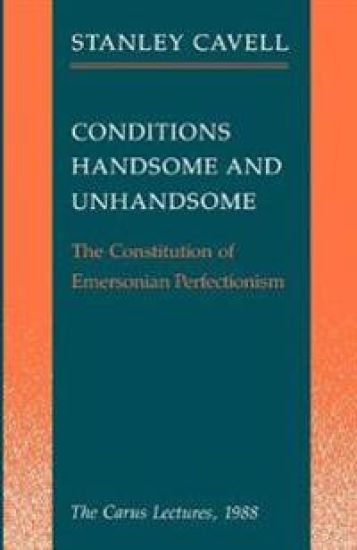
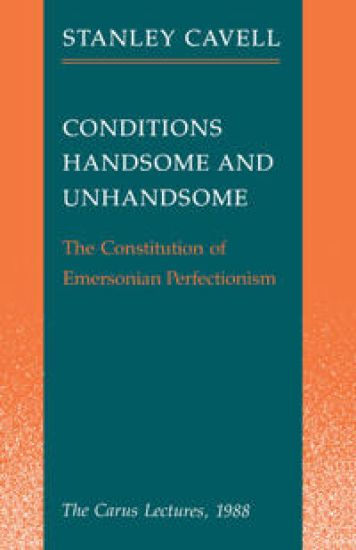
In these lectures, Stanley Cavell situates Emerson at the intersection of three crossroads: a place where both philosophy and literature pass; where the two traditions of English and German philosophy shun one another; where the cultures of America and Europe unsettle one another. The tone of Cavell's writing is set in the introduction when he asks "Is Moral Perfectionism inherently elitist? Some idea of being true to oneself - or to the humanity in oneself, or of the soul as on a journey (upward or onward) that begins by finding oneself lost to the world, and requires a refusal of society, perhaps above all of democratic, levelling society, in the name of something often called culture - is familiar from Plato's "Republic" to works so different from one another as Heidegger's "Being and Time" and G. B. Shaw's "Pygmalion". What the question means, and what I will mean in proposing that there is a perfectionism that happily consents to democracy, and whose criticism it is the honor of democracy not only to tolerate but to honor, called for by the democratic aspiration, it is the principal task of these Carus lectures to clarify".
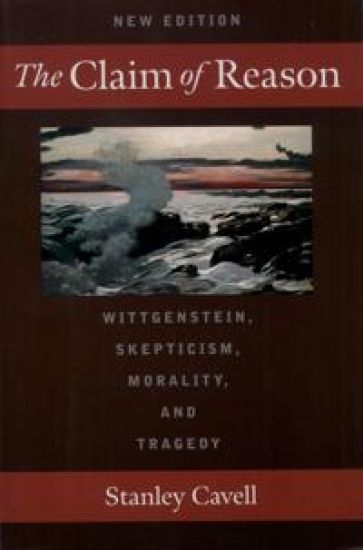
This reissue of an American philosophical classic includes a new preface by Cavell, in which he discusses the work's reception and influence. The work fosters a fascinating relationship between philosophy and literature both by augmenting his philosophical discussions with examples from literature and by applying philosophical theories to literary texts. Cavell also succeeds in drawing some very important parallels between the British analytic tradition and the continental tradition, by comparing scepticism as understood in Descartes, Hume, and Kant with philosophy of language as practiced by Wittgenstein and Austin.
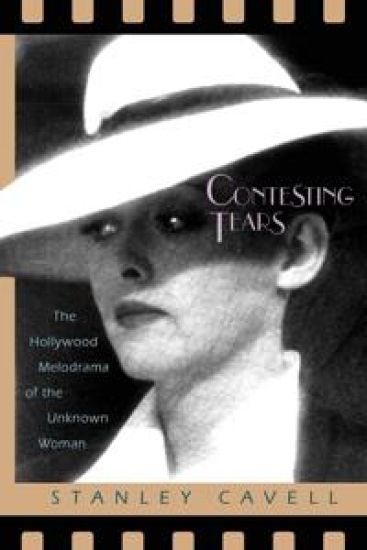
Stanley Cavell identified a genre of classic American films that engaged these questions in his study of comedies of remarriage, "Pursuits of Happiness". With "Contesting Tears", Cavell demonstrates that a contrasting genre, which he calls "the melodrama of the unknown woman," shares a surprising number and weave of concerns with those comedies. Cavell provides close readings of four melodramas he finds definitive of the genre: "Letter from an Unknown Woman", "Gaslight", "Now Voyager", and "Stella Dallas".
Contesting Tears
Stanley Cavell
University of Chicago Press
1997
nidottu
Halvin toimitettuna 33,30 €
Stanley Cavell identified a genre of classic American films that engaged these questions in his study of comedies of remarriage, "Pursuits of Happiness". With "Contesting Tears", Cavell demonstrates that a contrasting genre, which he calls "the melodrama of the unknown woman," shares a surprising number and weave of concerns with those comedies. Cavell provides close readings of four melodramas he finds definitive of the genre: "Letter from an Unknown Woman", "Gaslight", "Now Voyager", and "Stella Dallas".
This book is an invitation to the life of philosophy in the United States, as Emerson once lived it and as Stanley Cavell now lives it—in all its topographical ambiguity. Cavell talks about his vocation in connection with what he calls voice—the tone of philosophy—and his right to take that tone, and to describe an anecdotal journey toward the discovery of his own voice.
Frye maintains that Shakespeare's comedy is widely misunderstood and underestimated, and that the four romances--Pericles, Cymbeline, The Winter's Tale, and The Tempest--are the inevitable culmination of the poet's career.
In this most recent collection of his writing, Cavell provides extraordinary careful and sustained readings of Emerson's "Fate", Derrida's response to J. L. Austin in "Signature Event Context", and Wittgenstein's Philosophical Investigations .
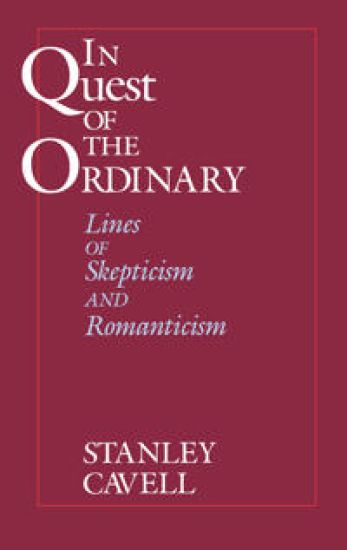
These lectures by one of the most influential and original philosophers of the twentieth century constitute a sustained argument for the philosophical basis of romanticism, particularly in its American rendering. Through his examination of such authors as Emerson, Thoreau, Poe, Wordsworth, and Coleridge, Stanley Cavell shows that romanticism and American transcendentalism represent a serious philosophical response to the challenge of skepticism that underlies the writings of Wittgenstein and Austin on ordinary language.
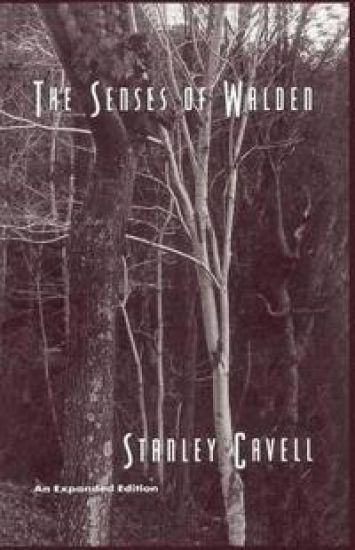
Stanley Cavell, one of America's most distinguished philosophers, has written an invaluable companion volume to Walden, a seminal book in our cultural heritage. This expanded edition includes two essays on Emerson.
In these three lectures, Cavell situates Emerson at an intersection of three crossroads: a place where both philosophy and literature pass; where the two traditions of English and German philosophy shun one another; where the cultures of America and Europe unsettle one another. "Cavell's 'readings' of Wittgenstein and Heidegger and Emerson and other thinkers surely deepen our understanding of them, but they do much more: they offer a vision of what life can be and what culture can mean... These profound lectures are a wonderful place to make [Cavell's] acquaintance."--Hilary Putnam
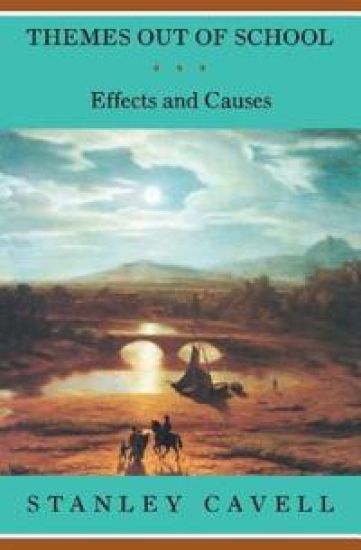
In the first essay of this book, Stanley Cavell characterizes philosophy as a "willingness to think not about something other than what ordinary human beings think about, but rather to learn to think undistractedly about things that ordinary human beings cannot help thinking about, or anyway cannot help having occur to them, sometimes in fantasy, sometimes as a flash across a landscape." Fantasies of film and television and literature, flashes across the landscape of literary theory, philosophical discourse, and French historiography give Cavell his starting points in these twelve essays. Here is philosophy in and out of "school," understood as a discipline in itself or thought through the works of Shakespeare, Molière, Kierkegaard, Thoreau, Brecht, Makavejev, Bergman, Hitchcock, Astaire, and Keaton.
Pursuits of Happiness
Stanley Cavell
Harvard University Press
1984
nidottu
Halvin toimitettuna 38,60 €
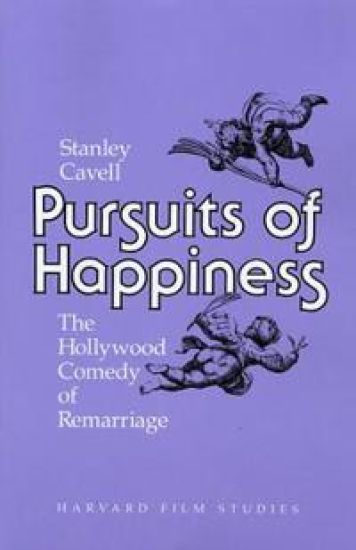
During the ’30s and ’40s, Hollywood produced a genre of madcap comedies that emphasized reuniting the central couple after divorce or separation. Their female protagonists were strong, independent, and sophisticated. Here, Stanley Cavell names this new genre of American film—“the comedy of remarriage”—and examines seven classic movies for their cinematic techniques and for such varied themes as feminism, liberty, and interdependence. Included are Adam’s Rib, The Awful Truth, Bringing Up Baby, His Girl Friday, It Happened One Night, The Lady Eve, and The Philadelphia Story.
Stanley Cavell looks closely at America's most popular art and our perceptions of it. His explorations of Hollywood's stars, directors, and most famous films—as well as his fresh look at Godard, Bergman, and other great European directors—will be of lasting interest to movie-viewers and intelligent people everywhere.