
Kirjailija
Stanley Hauerwas
Kirjat ja teokset yhdessä paikassa: 124 kirjaa, julkaisuja vuosilta 1977–2025, suosituimpiin kuuluu Plough Quarterly No. 9. Vertaile teosten hintoja ja tarkista saatavuus suomalaisista kirjakaupoista.
124 kirjaa
Kirjojen julkaisuvuodet: 1977–2025.
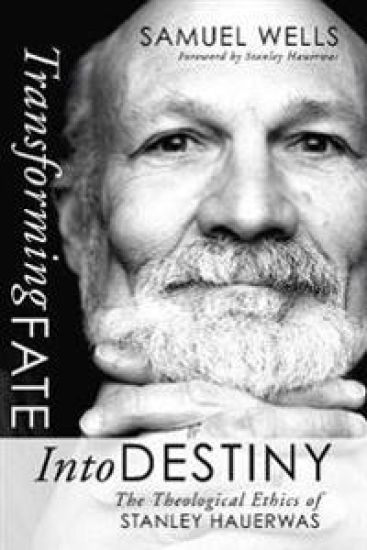
Stanley Hauerwas is a distinctive and controversial theologian. His work demands attention in every debate on theological ethics today. His project is to transform Christian ethics from the fate of the individual in crisis to the destiny of the Church in its faithfulness. In this critical evaluation of Hauerwas' work, Samuel Wells sets out the drama and debate of Hauerwas' new agenda. He agrees that the Christian story is at the heart of the Church's practice. Yet he goes beyond Hauerwas. He draws attention to the neglect, in narrative ethics, of the way the Church's story ends. Wells intends that Christians finally see their lives in the context, not of blind fate, but of divine destiny.
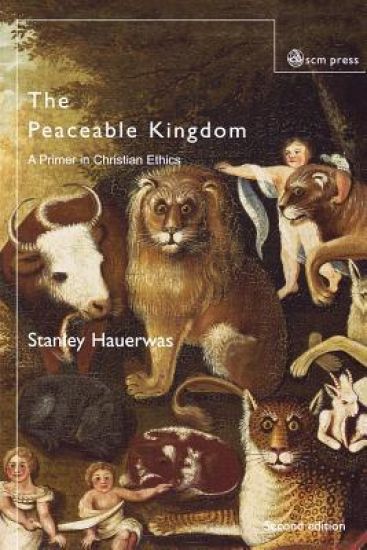
In this classic work, Stanley Hauerwas presents an overall introduction to the themes and method that have distinguished his vision of Christian ethics. Rather than survey ethical thinkers or quandaries he develops one straightforward account of a Christian ethic, systematically displaying ideas introduced in his previous works and emphasizing peaceableness as a hallmark of Christian life.
""If anything, these prayers are plain. They are so because I discovered I could not pray differently than I speak. In other words, I thought it would be a mistake to try to assume a different identity when I prayed. I figured (Texans 'figure') that God could take it, because God did not need to be protected. I think I learned this over the years by praying the Psalms in church. God does not want us to come to the altar different from how we live the rest of our lives. Therefore I do not try to be pious or use pious language in these prayers. I try to speak plainly, yet I hope with some eloquence, since nothing is more eloquent than simplicity."" So writes Stanley Hauerwas in the introduction to this collection of prayers, as inimitable as the widely respected (and argued with) theologian himself. Originally prayed in Hauerwas' divinity school classroom - on a variety of occasions including war, births, Yom Kippur and the death of a beloved cat - they not only display an invigorating faith but demonstrate how late-modern Christians can pray with all the passion, turbulence and life of the ancient psalmists.
Recent conflicts, such as the Persian Gulf War of the 1990s and the war against the Taliban in Afghanistan in 2001 show that the idea of what constitutes a 'just war' remains a crucial issue in politics and ethics today. With a new foreword by noted theologian and ethicist Stanley Hauerwas, this classic text on war and the ethics of modern statecraft written at the height of the Vietnam era in 1968 speaks to a new generation of readers. In defending just war against Christian pacifism and arguing against those who maintain that the end justifies the means in the conduct of a war, Ramsey joins a line of theological reasoning that traces its antecedents to Saint Augustine and Saint Thomas Aquinas. Ramsey argues that decisions regarding war must be governed by 'political prudence.' Whether a particular war should be fought, and at what level of violence, depends, Ramsey writes, on one's count of the moral costs and benefits. Characterized by a sophisticated yet back-to-basics approach, his analysis begins with the assumption that force is a fact in political life which must either be reckoned with or succumbed to. He then grapples with modern challenges to traditional moral principles of 'just conduct' in war, the 'morality of deterrence,' and a 'just war theory of statecraft.'
This work slashes through the tangled undergrowth which Christianity in America has become, to clear a space for those to whom theology still matters. The author engages, often critically, with the thought of major theological and philosophical figures such as Martin Luther King.
Wilderness Wanderings slashes through the tangled undergrowth that Christianity in America has become to clear a space for those for whom theology still matters. Writing to a generation of Christians that finds itself at once comfortably ?at home? yet oddly fettered and irrelevant in America, Stanley Hauerwas challenges contemporary Christians to reimagine what it might mean to ?break back into Christianity? in a world that is at best semi-Christian. While the myth that America is a Christian nation has long been debunked, a more urgent constructive task remains; namely, discerning what it may mean for Christians approaching the threshold of the twenty-first century to be courageous in their convictions. Ironically, reclaiming the church's identity and mission may require relinquishing its purported ?gains??which often amount to little more than a sense of comfort, the seduction of feeling ?at ease in Zion?? to take up again the risk and adventure of life ?on the way.? Accordingly, this book gives no comfort to the religious right or left, which continues to think Christianity can be made compatible with the sentimentalities of democratic liberalism. Such a re-visioned church will not establish itself through conquest or in a reconstituted Christendom, but rather must develop within its own life the patient, attentive skills of a wayfaring people. At least a church seasoned by a peripatetic life stands a better chance of noticing the changing directions of God's leading. The wilderness, therefore, ought not to appear to contemporary Christians in America as a foreboding and frightening possibility but as an opportunity to rediscover the excitement and spirit, but also the rigorous discipline, of faithful itinerancy. At such a crucial time as this, Hauerwas challenges Christians to eschew the insidious dangers that attend too permanent a habitation in a place called America and to assume instead the holy risks and hazards characteristic of people called out, set apart, and led by God. Wilderness Wanderings is a clarion call for Christians to relinquish the impermanent citizenship of a home that can never be the church's final resting place and confidently take up a course of life the horizons of which are as wide and expansive as the God who promises to lead. The book engages, often quite critically, with major theological and philosophical figures, such as Reinhold Niebuhr, Martha Nussbaum, Jeff Stout, Tristram Engelhardt, Iris Murdoch, John Milbank, and Martin Luther King Jr. These interrogations illumine why theology must reclaim its own politics and ethics. Intent on avoiding abstraction, Hauerwas intervenes in current debates around medicine, the culture wars, and race.
Christians Among the Virtues
Stanley Hauerwas; Charles Pinches
University of Notre Dame Press
1997
nidottu
Christians among the Virtues investigates the distinctiveness of virtues as illuminated by Christian practice, using a discussion of Aristotle's ethics together with the work of significant contemporary scholars such as Alasdair MacIntyre and Martha Nussbaum. Hauerwas and Pinches converse with, learn from, and also critically engage powerful and explicitly non-Christian accounts of virtues, and then form a specifically Christian account of certain key virtues, including obedience, hope, courage, and patience. This book will deepen the current public debate about virtue by showing how different traditions and practices yield distinctive understandings of the virtues, and by articulating the particularity of virtues informed by Christian practice. Hauerwas and Pinches begin with a discussion of Aristotle's account of happiness, virtue, and friendship, and explore how the temporal character of life threatens the possibility of being virtuous. The authors then contrast this idea with the Christian recognition of our temporal limitations as a call to virtue, rather than a threat. In the second section, the authors address a work by John Casey which attempts to present an account of the virtues purged of their Christian heritage. This analysis, as well as the critical readings of MacIntyre and Nussbaum, will be of particular interest to philosophers and theologians alike. The authors bring a theological voice to the popular and philosophical debates about virtue. While the work encourages Christians to think about what is unique to Christian virtue, its specificity does not limit its applicability but opens up and deepens the debate over the particular interpretations of virtues: calling on others to present more specific articulations of what it means to be courageous, obedient, hopeful, and patient, and to contrast those accounts with the Christian interpretations presented by the authors. In this respect, Christians among the Virtues is the first work in what could be called the "second stage" of the recovery of the virtues—the work of understanding the difference among interpretations of the virtues in the light of different practices and traditions.
Stanley Hauerwas and William H. Willimon return with spirited offensive strategies for feisty resident aliens. A resident alien knows who the enemy is, and here is a guide to the Christian initiation, practice, and discipline that is required for a people at war with the world. Some Christian liberals think that resident aliens are sectarian, and that they wish to withdraw from engagement with the world. God forbid! The book is thus full of stories of resident aliens who have been baptized, trained, and conditioned -- like Marines in boot camp -- to be new citizens and find a new home in the distinctly Christian community. Some Christian conservatives want a "to do" list that lays out the program for becoming a congregation or small group of resident aliens. Or perhaps they want a list of beliefs that might be defended. You won't find that here, for these desires are what ails the disestablished church. A list of options and choices, or an elective program for "wannabe" resident aliens, is an accommodation to the false god of freedom. Resident aliens are imitated and understood by telling their stories, by enfleshing their practices in the narrative that becomes part of the unfolding Christian story.
God knows it is hard to make God boring, Stanley Hauerwas writes, but American Christians, aided and abetted by theologians, have accomplished that feat. Whatever might be said about Hauerwas-and there is plenty-no one has ever accused him of being boring, and in this book he delivers another jolt to all those who think that Christian theology is a matter of indifference to our secular society. At once Christian theology and social criticism, this book aims to show that the two cannot be separated. In this spirit, Hauerwas mounts a forceful attack on current sentimentalities about the significance of democracy, the importance of the family, and compassion, which appears here as a literally fatal virtue. In this time of the decline of religious knowledge, when knowing a little about a religion tends to do more harm than good, Hauerwas offers direction to those who would make Christian discourse both useful and truthful. Animated by a deep commitment, his essays exhibit the difference that Christian theology can make in the shaping of lives and the world.
Why does a good and all-powerful God allow us to experience pain and suffering? According to Stanley Hauerwas, asking this question is a theological mistake. Drawing heavily on stories of ill and dying children to illustrate and clarify his discussion of theological-philosophical issues, Hauerwas explores why we so fervently seek explanations for suffering and evil, and he shows how modern medicine has become a god to which we look (in vain) for deliverance from the evils of disease and mortality.
God knows it is hard to make God boring, Stanley Hauerwas writes, but American Christians, aided and abetted by theologians, have accomplished that feat. Whatever might be said about Hauerwas-and there is plenty-no one has ever accused him of being boring, and in this book he delivers another jolt to all those who think that Christian theology is a matter of indifference to our secular society. At once Christian theology and social criticism, this book aims to show that the two cannot be separated. In this spirit, Hauerwas mounts a forceful attack on current sentimentalities about the significance of democracy, the importance of the family, and compassion, which appears here as a literally fatal virtue. In this time of the decline of religious knowledge, when knowing a little about a religion tends to do more harm than good, Hauerwas offers direction to those who would make Christian discourse both useful and truthful. Animated by a deep commitment, his essays exhibit the difference that Christian theology can make in the shaping of lives and the world.
Some fourteen years after its initial publication, this important and influential book, with a new, substantial, and candid introduction by the author, is available in a reasonably priced paperback edition. In this volume Hauerwas assesses recent interest in the "ethics of character" and suggests areas in his own work that now call for some corrective and/or further work.
This provocative critique of the uses and abuses of Scripture in the American church shows how liberal (historical-critical) and fundamentalist (literal) approaches to biblical scholarship have corrupted our use of the Bible. Hauerwas argues that the Bible can only be understood in the midst of a disciplined community of people, where the story is actually lived out by dedicated practitioners.
Against the Nations is Stanley Hauerwas's most wide-ranging and sustained effort to develop a uniquely Christian ethic. The book moves from such general themes as "Keeping Theological Ethics Theological" and "Keeping Theological Ethics Imaginative" to the application of these themes to such diverse topics as the Holocaust, Jonestown, the reality of the Kingdom, the reality of the Church, the democratic state, nuclear war, and disarmament.
Preaching to Strangers
William H. Willimon; Stanley Hauerwas
Westminster/John Knox Press,U.S.
1992
nidottu
These twelve sermons by renowned author and pastor William Willimon, with responses by theologian Stanley Hauerwas, demonstrate the fruitfulness and difficulty of the interaction between theologians and practicing pastors. In this book, the authors suggest an intriguing way to think about theological work within the church. In this intriguing book, the authors suggest a new way to think about theological work within the church.
After Christendom? How the Church Is to Behave If Freedom, Justice, and a Christian Nation Are Bad Ideas
Stanley Hauerwas
Abingdon Press
1991
pokkari
Liberal/conservative and modern/postmodern concepts define contemporary theological debate. Yet what if these categories are grounded in a set of assumptions about what it means to be the church in the world, presuming we must live as though God's existence does not matter? What if our theological discussion distracts us from the fact that the church is no longer able to shape the desires and habits of Christians? Hauerwas wrestles with these and similar questions constructing a theological politics necessary for the church to be the church in the world. In so doing, he challenges liberal notions of justice and freedom.
Selected by Christianity Today as one of the 100 most important books on religion of the twentieth century. Leading theological ethicist Stanley Hauerwas shows how discussions of Christology and the authority of scripture involve questions about what kind of community the church must be to rightly tell the stories of God. He challenges the dominant assumption of contemporary Christian social ethics that there is a special relation between Christianity and some form of liberal democratic social system.