
Kirjojen hintavertailu – 12 903 732 kirjaa ja 27 kauppaa

Kirjailija

Stanley Henning

Kirjat ja teokset yhdessä paikassa: 2 kirjaa, julkaisuja vuosilta 2016–2018, suosituimpiin kuuluu Henning's Scholarly Works on Chinese Combative Traditions. Vertaile teosten hintoja ja tarkista saatavuus suomalaisista kirjakaupoista.

2 kirjaa

Kirjojen julkaisuvuodet: 2016–2018.

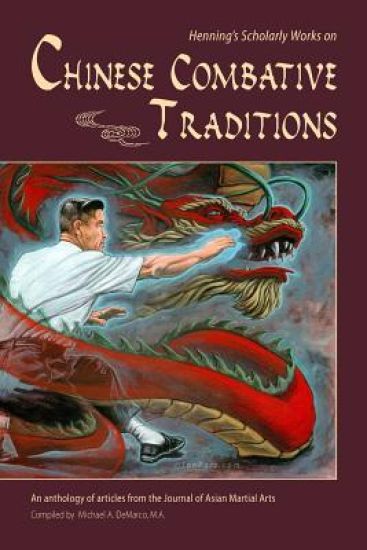
Henning's Scholarly Works on Chinese Combative Traditions

Henning's Scholarly Works on Chinese Combative Traditions

Stanley Henning

Independently Published
2018
nidottu
What we think are Asian martial arts is usually derived by Hollywood images, fanciful novels, and a superficial idea of what role combative played in the long histories of Far Eastern countries. There are only a few people in the world who can truly be called scholars in this field. A leading figure in the USA for the study of Chinese martial traditions is Stanley Henning. This special anthology is a collection of Henning's superb articles that were previously published in the Journal of Asian Martial Arts, including one he co-wrote with Marnix Wells-a leading British scholar on Chinese martial traditions. Henning has little patience for those who miss the original essence of practical martial arts, and who fell under the enticement of "flowery boxing." True combative arts are not play, although they influenced other practices. In the fifteen chapters included here, you'll find a strong historic base for what the martial arts meant in old China and how they changed over the centuries. In order to understand martial arts as they were evolving over dynastic periods, it is necessary to look at the political and social settings, technology, and even geography and linguistics. When it comes to research, Henning presents clear facts and accurate conclusions. At the same time, he wisely states what is open to debate and requires further research. Why is the chapter on Korean martial arts included in this anthology?-Because the Chinese had tremendous influence on their neighbors, including Japan and Korea. Thanks to a few scholars like Henning and Wells, we are getting a clearer picture of just how much Chinese martial arts have influenced the fighting arts in other countries. Leading scholars are having an impact on how Asian martial traditions are perceived, understood, and practiced. Henning introduces the "new wave" of Chinese scholars who have presented their findings in various articles and books, opening new vistas for all interested in this growing field of study-at least for those who ready Chinese. Fortunately Henning's work is in English This anthology is not an easy read for those unfamiliar with Chinese history, the various dynasties, the terminology and variety of martial systems. However, it will no doubt benefit the serious scholar of Chinese martial arts, and hopefully others will likewise benefit by patiently reading each chapter to broaden their understanding of the rich martial culture of China.
Taekyon

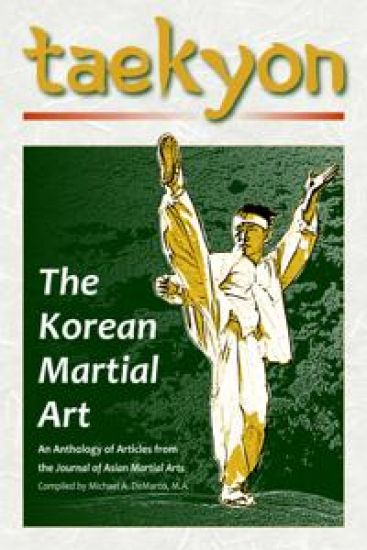
Taekyon

Stanley Henning; Robert Young; Willy Pieter; Ouyang Yung

VIA MEDIA PUBLISHING COMPANY,US
2016
nidottu
When people discuss Korean martial arts, they rarely mention taekyon. They are usually totally unfamiliar with the name because there hasn't been much written about it. The four chapters in this anthology give an excellent overview of taekyon as a system noted for it's dance-like qualities and combative style, especially for leg techniques. Taekyon stands unique as it represents most closely to a pure Korean martial tradition. Chapter one by Stanley Henning gives a detailed overview of martial arts in Korea. From the beginning, Korean martial arts were intertwined with those of China. Even the historical references to Korean martial arts are all in Chinese. The author concludes that traditional Korean martial arts are but a vague memory, with taekyon being the sole survivor. In the next chapter, Robert Young skillfully presents what is known about taekyon. With over 150 years of verifiable history, taekyon is the most thoroughly documented of Korean martial arts. Its skills and techniques greatly differ from those of other modern Korean styles. It is the only plausible candidate for the descendant of ancient subak. This well-researched chapter includes theory and techniques and lineage chart. Dr. Willy Pieter expands upon the historical development of Korean martial sports as presented by Young. There is an emphasis on the hwarang ("flower boy") and their presence in Korean culture and martial traditions in particular. The etymology of Korean martial systems are questioned. The final chapter by Yung Ouyang offers a fuller picture of what taekyon represents as a moving art. Traditionally, taekyon was a game as well as a martial art, so many did not credit taekyon for its combative elements. It has largely been ignored by those interested in the fighting arts. It is gaining recognition as a legitimate heir to the traditional Korean martial arts, but is also undergoing influences from Japanese traditions and Western sports. Taekyon deserves to be recognized for its uniqueness among the martial arts of Asia. This anthology will serve as solid reference for all interested in the Korean combative traditions, and especially taekyon for its aesthetic appeal as a form of dance and graceful yet powerful combative method.