

Kirjailija
Stanley Krippner
Kirjat ja teokset yhdessä paikassa: 31 kirjaa, julkaisuja vuosilta 1982–2026, suosituimpiin kuuluu Ecstatic Soul Retrieval. Vertaile teosten hintoja ja tarkista saatavuus suomalaisista kirjakaupoista.
31 kirjaa
Kirjojen julkaisuvuodet: 1982–2026.

Since prehistoric times all cultures report encounters with strange beings and crafts from the sky as well as stories of extra-planetary experiences--that is, travel to other planets, moons, and stars. In the case of modern accounts, these benevolent alien-human interactions bear striking resemblance to one another, even among people with no knowledge of other alien-human claims. And all experiences marked a spiritual turning point in the person's life, providing a loss of the fear of death, enhanced spiritual insights, a connection to cosmic consciousness, or increased motivation to be of service to humanity. Exploring the veracity of ET contact and extra-planetary experience (XPE) using rigorous scientific protocols, Thomas Streicher interviews seven renowned people who have experienced XPE, including astronaut Edgar Mitchell, Norma Milanovich, and Stanford-tested remote viewer Ingo Swann, and shares the positive spiritual effects of XPE on their lives. Exposing the failings of classic debunking arguments against ET contact, Streicher shows these experiences are not contrived hallucinations but genuine transformative spiritual awakenings akin to near-death and out-of-body experiences.

Post-Traumatic Stress Disorder
Stanley Krippner; Daniel B. Pitchford Ph.D.; Jeannine A. Davies Ph.D.
Greenwood Press
2012
sidottu
Three distinguished experts share cutting-edge insights on Post-Traumatic Stress Disorder (PTSD), showing why it occurs, how it affects the development and existence of those it impacts, and how it can be treated. Post-Traumatic Stress Disorder is a comprehensive and thoughtful examination of the nature, causes, and treatment of PTSD. Drawing on the vast experience of its team of authors, the book details the insidious nature and history of PTSD, from the internal and external factors that cause this form of suffering to the ways it manifests itself psychologically and socially. The most cutting-edge research on treatment, intervention, and prevention is thoroughly discussed, as are the spiritual and psychological strengths that can emerge when one progresses beyond the label of "disorder." The book begins with a historical review of the topic. Subsequent chapters offer in-depth exploration of the significant foundations, function, impacts, and treatments associated with PTSD. Each chapter addresses practical issues, incorporating case studies that bring the information to life and ensure an appreciation of the myriad social, psychological, and biological experiences surrounding PTSD. This book answers complex questions like "How does PTSD manifest itself?" and more critically: "How can its effects be mitigated or overcome?" Finally, it discusses how PTSD survivors can move beyond post-traumatic stress to post-traumatic strengths.

Shamanism can be described as a group of techniques by which its practitioners enter the "spirit world," purportedly obtaining information that is used to help and to heal members of their social group. Despite a resurgence of interest in shamanism and shamanic states of consciousness, these phenomena are neither well-defined nor sufficiently understood. This multi-disciplinary study draws on the fields of psychology, philosophy and anthropology with the aim of demystifying shamanism. The authors analyse conflicting perspectives regarding shamanism, the epistemology of shamanic states of consciousness, and the nature of the mental imagery encountered during these states.

Since 1990, U. S. Veterans' centers have treated more than 1.6 million PTSD-affected men and women, including an estimated 100,000 from the Gulf War and an untallied total from the Iraq and Afghanistan fronts. The number also includes World War II veterans, because PTSD does not fade easily. Sufferers may experience the traumatic events in flashbacks that may seem as real as when they first occurred. Using firsthand accounts, the authors offer insights into the realities of PTSD and combat trauma, and how symptoms may pervade even the most mundane of daily activities and cause sufferers to experience withdrawal, depression, violence, rage, and even suicide. In a new epilogue, the authors offer data about treatments and resources that both PTSD sufferers and their families and friends will value.
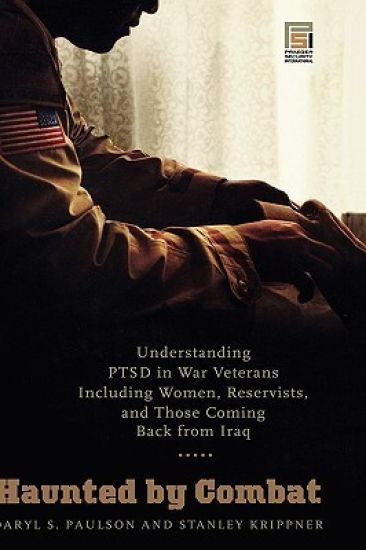
Across history, the condition has been called soldier's heart, shell shock, or combat fatigue. It is now increasingly common as our service men and women return from Iraq, Afghanistan, and other ongoing combat zones. Since 1990, Veterans' centers here have treated more than 1.6 million affected men and women, including an estimated 100,000 from the Gulf War and an untallied total from the Iraq front and fighting in Afghanistan. The number also includes some 35,000 World War II veterans, because PTSD does not fade easily. Regardless of the months, years, and even decades that have passed, the traumatic events can flash back as seemingly real as they were when they occurred. In Haunted by Combat Paulson and Krippner range across history and into current experiences and treatments for this haunting disorder. They take us into the minds of PTSD-affected veterans, as they struggle against the traumatic events lingering in their minds, sometimes exploding into violent behavior. The authors explain how and why PTSD develops—and how we can help service members take the steps to heal today.

Extraordinary Dreams and How to Work with Them
Stanley Krippner; Fariba Bogzaran; Andre Percia de Carvalho
State University of New York Press
2002
pokkari
Discusses extraordinary dreams and offers suggestions for interpreting and appreciating your own extraordinary dreams. From visions of a past life to glimpses of the future, history is full of accounts of unusual dreams. This fascinating book explores historical, scientific, and cross-cultural research on these sorts of extraordinary dreams, and offers practical suggestions on how to work with them-either individually or as a member of a dream group-to enhance one's intellectual, emotional, and spiritual health. Each chapter is devoted to a particular type of dream, and presents a summary of research data on their nature. Specific categories of dreams discussed include creative, lucid, out-of-body, pregnancy, healing, collective, telepathic, clairvoyant, precognitive, past-life, initiation, and spiritual visitation dreams, as well as dreams within dreams. Entertaining and instructive, this book points the way to an expanded conception of human potential for the twenty first century.

Practical and provocative, this book serves as a guide for those who want a deeper look into the human psyche and a more encompassing vision of the less predictable aspects of the mind.


Advances in Parapsychological Research
Stanley Krippner
Kluwer Academic/Plenum Publishers
1982
sidottu