Kirjojen hintavertailu – 12 903 735 kirjaa ja 27 kauppaa

Kirjailija

Stanley O. Ikenberry

Kirjat ja teokset yhdessä paikassa: 4 kirjaa, julkaisuja vuosilta 2009–2015, suosituimpiin kuuluu Bridging Divides. Vertaile teosten hintoja ja tarkista saatavuus suomalaisista kirjakaupoista.

4 kirjaa

Kirjojen julkaisuvuodet: 2009–2015.

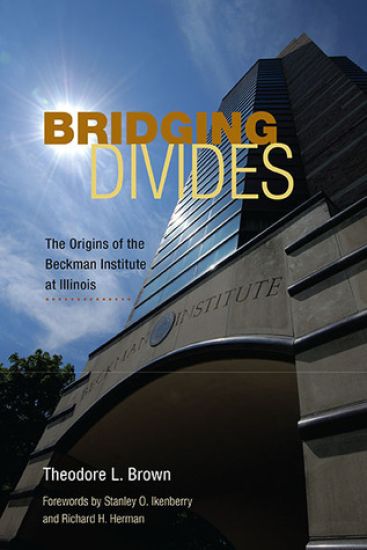
Bridging Divides

Bridging Divides

Theodore L. Brown; Stanley O. Ikenberry; Richard H. Herman

University of Illinois Press
2009
sidottu
Bridging Divides offers a first-hand account of the origins of the Beckman Institute for Advanced Science and Technology, an interdisciplinary research institute at the University of Illinois at Urbana-Champaign devoted to leading-edge research in the physical sciences, computation, engineering, biology, behavior, cognition, and neuroscience. The book follows the progress of the Beckman Institute's creation, from the initial conceptualization of a large, multi-disciplinary institute; through proposal formulation; to the architectural design and actual construction of its state-of-the-art building, made possible by the largest gift made to any public university at the time: a $40 million contribution from Illinois alumnus and founder of Beckman Instruments, Inc., Arnold O. Beckman and his wife Mabel M. Beckman. Theodore L. Brown, the founding director of the Beckman Institute, brings an insider's personal perspective on its conception and its early operations. The evolution of a physical facility that matched a developing sense of what multidisciplinary and interdisciplinary research might be was a vital ingredient in the Institute's development. In addition, because the Institute represented a dramatic departure from traditional university organization, many challenges involving its administration and faculty had to be overcome. A celebration of the Beckman Institute's first twenty years of operation since the building's completion in 1989, Bridging Divides provides an informative look back at the history of this groundbreaking interdisciplinary research center. The book also includes forewords by Stanley O. Ikenberry, former president of the University of Illinois, and Richard H. Herman, chancellor of the University of Illinois at Urbana-Champaign.
Using Evidence of Student Learning to Improve Higher Education

Using Evidence of Student Learning to Improve Higher Education

George D. Kuh; Stanley O. Ikenberry; Natasha A. Jankowski; Timothy Reese Cain; Peter T. Ewell; Pat Hutchings; Jillian Kinzie

John Wiley Sons Inc
2015
sidottu
American higher education needs a major reframing of student learning outcomes assessment Dynamic changes are underway in American higher education. New providers, emerging technologies, cost concerns, student debt, and nagging doubts about quality all call out the need for institutions to show evidence of student learning. From scholars at the National Institute for Learning Outcomes Assessment (NILOA), Using Evidence of Student Learning to Improve Higher Education presents a reframed conception and approach to student learning outcomes assessment. The authors explain why it is counterproductive to view collecting and using evidence of student accomplishment as primarily a compliance activity. Today's circumstances demand a fresh and more strategic approach to the processes by which evidence about student learning is obtained and used to inform efforts to improve teaching, learning, and decision-making. Whether you're in the classroom, an administrative office, or on an assessment committee, data about what students know and are able to do are critical for guiding changes that are needed in institutional policies and practices to improve student learning and success. Use this book to: Understand how and why student learning outcomes assessment can enhance student accomplishment and increase institutional effectivenessShift the view of assessment from being externally driven to internally motivatedLearn how assessment results can help inform decision-makingUse assessment data to manage change and improve student success Gauging student learning is necessary if institutions are to prepare students to meet the 21st century needs of employers and live an economically independent, civically responsible life. For assessment professionals and educational leaders, Using Evidence of Student Learning to Improve Higher Education offers both a compelling rationale and practical advice for making student learning outcomes assessment more effective and efficient.
Five Dimensions of Quality

Five Dimensions of Quality

Linda Suskie; Stanley O. Ikenberry

John Wiley Sons Inc
2014
sidottu
Meet calls for increased quality and understand accreditation expectations Author Linda Suskie is internationally recognized for her work in higher education assessment, and she is a former vice president of a major regional accreditor. In Five Dimensions of Quality: A Common Sense Guide to Accreditation and Accountability in Higher Education she provides a simple, straightforward model for understanding and meeting the calls for increased quality in higher education ever-present in today's culture. Whether your institution is seeking accreditation or not, the five dimensions she outlines will help you to identify ways to improve institutional quality and demonstrate that quality to constituents. For those wading through the accreditation process, which has become more difficult in recent years due to increasing regulation and pressure for greater accountability, Suskie offers expert guidance on understanding the underlying principles of the expectations of accrediting bodies. Using the model presented here, which is much easier to understand than the sometimes complex resources provided by individual accrediting bodies, American colleges and universities can understand what they need to do to earn and maintain their regional accreditation as well as improve overall institutional quality for their students. You'll be able to: Identify ways to improve institutional qualityDemonstrate the quality of your institution to internal and external constituentsAvoid wasting time and energy on misguided institutional processes to comply with accreditation requirements By focusing on why colleges and universities should take particular actions rather than only on what those actions should be, Five Dimensions of Quality gives them the knowledge and strategies to prepare for a successful review. It is an ideal resource for leaders, accreditation committee members, and everyone on campus.
Prioritizing Academic Programs and Services

Prioritizing Academic Programs and Services

Robert C. Dickeson; Stanley O. Ikenberry

John Wiley Sons Inc
2010
sidottu
Prioritizing Academic Programs and Services REVISED AND UPDATED Increasing economic concerns make the new edition of this best-selling classic an invaluable resource for those who want and need to implement a proven step-by-step approach to reallocating resources in tough times. Thoroughly revised and updated, Prioritizing Academic Programs and Services includes new recommendations from the field, communication strategies for more successful campus implementation, a new section on the sources of hidden costs, and a Prioritization Process and Implementation workbook designed to help administrators avoid costly mistakes. This book includes access to additional content online, including models for prioritization from a variety of campuses. Based on the author's extensive consulting experience, this necessary and timely resource offers the best advice for addressing the current economic concerns affecting most colleges and universities. Praise for Prioritizing Academic Programs and Services "For more than a decade, higher education leaders have turned to Dickeson's practical guide to academic program assessment. These newly expanded approaches are just in time for today's competitive environment." ? SUZANNE SHIPLEY, president, Shepherd University "Dickeson provides a compelling rationale for program prioritization as well as a practical planning structure that promotes alignment between programs, resources, and university mission. Presidents and provosts can use his approach to frame campus discussions around the future of the institution and away from legacy programs whose time has passed." ? KYLE R. CARTER, provost and senior vice chancellor, Western Carolina University "Dickeson's approach ensures that critical decisions regarding academic programs and resource allocation are aligned with strategic goals and institutional mission. As one of the early adopters of the process that he proposes, I am convinced that it is a powerful and practical tool for any college or university committed to remaining focused, resilient, vital, and relevant in a dynamic and increasingly challenging environment." ? DAVID MAXWELL, president, Drake University