Kirjojen hintavertailu – 12 903 724 kirjaa ja 27 kauppaa

Kirjailija

Stanley Rachman

Kirjat ja teokset yhdessä paikassa: 7 kirjaa, julkaisuja vuosilta 1974–2014, suosituimpiin kuuluu The Treatment of Obsessions. Vertaile teosten hintoja ja tarkista saatavuus suomalaisista kirjakaupoista.

7 kirjaa

Kirjojen julkaisuvuodet: 1974–2014.

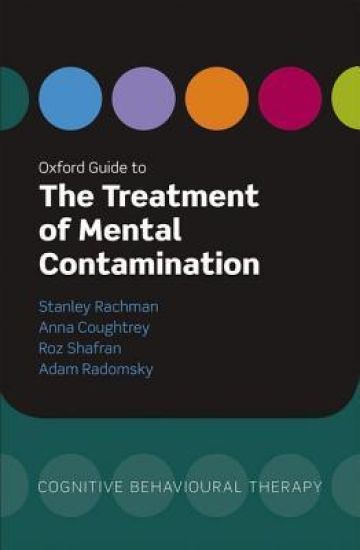
Oxford Guide to the Treatment of Mental Contamination

Oxford Guide to the Treatment of Mental Contamination

Stanley Rachman; Anna Coughtrey; Roz Shafran; Adam Radomsky

Oxford University Press
2014
nidottu
A fear of contamination drives the most common manifestation of obsessive compulsive disorders(OCD), compulsive washing. OCD is a distressing anxiety disorder that affects 1-2 percent of the population and can be disabling. Intense and complex forms of the disorder benefit from advanced analyses of contamination and its treatment. This book, part of a series on modern psychological treatments published by OUP, provides a detailed account of the nature and causes of the various forms of a fear of contamination and their consequences. Methods of treatment are described and fully illustrated by case histories. The inclusion of original analyses and explanations of a newly recognised form of the fear, mental contamination, is an important feature of the book and will enable therapists to expand their ability to assess and treat the abnormal fears of contamination. Written by clinicians with extensive experience, this volume is valuable for all clinical psychologists and psychotherapists with an interest in OCD
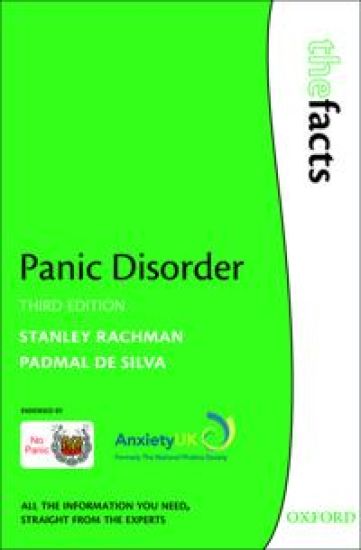
Panic Disorder: The Facts

Panic Disorder: The Facts

Stanley Rachman; Padmal de Silva

Oxford University Press
2009
nidottu
Panic disorder is a remarkably common psychological condition, characterized by sudden attacks of intense fear and panic. Approximately 3% of the population will experience some aspects of panic disorder during their lifetime. Incredibly distressing, it can have an adverse effect on most aspects of the person's life, especially if chronic. This new edition of Panic Disorder: The Facts includes valuable new information on treatment and discusses the relationship between panic disorder and other anxiety conditions. It also assesses the evidence for the available treatments, drawing from the latest scientific research. Up-to-date information on the nature, symptoms, causes, theories and treatment of panic disorder is provided, all in non-technical language. The chapters on treatment give a detailed account of psychological therapy and also discuss drug treatment. Numerous personal accounts are given throughout the book, highlighting various aspects of panic disorder and its treatment and management. Though mainly intended for sufferers of panic disorder, and their families and friends, it will also be of interest to the general reader, and to health care workers who have to deal with this problem. Clearly written by two leading experts, the book will remain a valuable source of information for anyone affected by this disorder.
Obsessive-Compulsive Disorder

Obsessive-Compulsive Disorder

Stanley Rachman; Padmal de Silva

Oxford University Press
2009
nidottu
Obsessive-compulsive disorder (OCD) is a relatively common psychological problem. The symptoms - which can be seriously disabling in extreme cases - can include excessive hand-washing or other cleaning rituals, repeated checking, extreme slowness and unwanted, repugnant intrusive thoughts. This book covers the nature, symptoms, causes and theories of OCD. It discusses the treatments that are available and provides valuable practical advice to those who may need help. Numerous case histories are given throughout the book, highlighting various aspects of the disorder and its treatment. There are in-depth sections on scrupulosity, culture and OCD, mental pollution, OCD in children and on the similarities and differences between childhood OCD and autistic disorder. This fourth edition has been updated with succinct explanations of recent research, information on treatment advances and the recent expansion of treatment services for anxiety disorders, including OCD, in the NHS. In this updated fourth edition, Stanley Rachman gives a clear account of the nature of obsessive-compulsive problems which will prove useful for sufferers and their families, as well as general readers interested in finding out about the disorder.
The Fear of Contamination

The Fear of Contamination

Stanley Rachman

Oxford University Press
2006
nidottu
From a leading figure in the field of psychotherapy, this new book is the first dedicated to the topic of the fear of contamination. The fear of contamination is the driving force behind compulsive washing, the most common manifestation of obsessive compulsive disorder. It is one of the most extraordinary of all human fears. People who have an abnormally elevated fear of contamination over-estimate the probability and the potential seriousness of becoming contaminated. They believe that they are more susceptible than other people to contamination. People who labour under the illusion that they are particularly vulnerable to contamination are persistently anxious, excessively vigilant and highly avoidant. The fear is complex, powerful, probably universal, easily provoked, intense, and difficult to control. Usually it is caused by physical contact with a contaminant and spreads rapidly and widely. When a person feels contaminated it drives a strong urge to remove the contamination, usually by washing. The fear and subsequent urges over-ride other behaviour. A fear of contamination can also be established mentally and without physical contact. The fear can arise after exposure to violation, physical or non-physical, and from self-contamination. The book starts by defining the disorder, before considering the various manifestations of this fear, examining both mental contamination and contact contamination, and feelings of disgust. Most significantly, it develops a theory for how this problem can be treated, providing clinical guidelines - based around cognitive behavioural techniques.
The Fear of Contamination

The Fear of Contamination

Stanley Rachman

Oxford University Press
2006
sidottu
From a leader in the field of psychotherapy, this new book is the first dedicated to the topic of the fear of contamination. The fear of contamination is the driving force behind compulsive washing, the most common manifestation of obsessive compulsive disorder. This is one of the most extraordinary of all human fears. It is complex, powerful, probably universal, easily provoked, intense, and difficult to control. Usually the fear is caused by physical contact with a contaminant and spreads rapidly and widely. The book starts by defining the disorder, before considering the various manifestations of this fear, examining both mental contamination and contact contamination, and feelings of disgust. Most significantly, it develops a theory for how this problem can be treated, providing clinical guidelines - based around cognitive behavioural techniques.
The Treatment of Obsessions

The Treatment of Obsessions

Stanley Rachman

Oxford University Press
2003
nidottu

Halvin toimitettuna 122,20 €

In the past decade, important progress has been made in understanding the spectrum of obsessive-compulsive disorders; however, most advances in treatment have been directed at the compulsive element of the behaviour. It is estimated that for as many as one in three patients presenting with obsessive-compulsive disorder, the primary problem is the obsessions. Obsessions are repetitive, unwanted thoughts, images or impulses. This book describes how to conduct the first, specific cognitive treatment for obsessions, and provides a comprehensive account of the underlying cognitive theory and supporting experimental evidence. The book discusses patient assessment procedures, provides a detailed explanation of the specific technique, anticipates possible patient reactions and suggests tactics for dealing with them, and explores methods for assessing progress. Throughout, there are helpful case studies to illustrate aspects of the technique and the book closes with a 'tool kit' of forms and charts to allow the therapist to plan and record treatment sessions. This will be essential reading for all members of the mental health team involved in applying cognitive therapies, as well as those in patient support organizations and academics interested in abnormal psychologies.
Wirkungen der Psychotherapie

Wirkungen der Psychotherapie

Stanley Rachman; J.C. Brengelmann

Steinkopff Darmstadt
1974
nidottu
Therapeuten aller Art entwickeln ein ziemlich genaues und erstaunlich sicheres GefUhl hinsichtlich der Veranderung, die sie im Patienten be- wirken oder nicht bewirken. Dieses GefUhl korrespondiert aber nicht notwendigerweise mit den tatsachlichen Veranderungen. Es gibt ge- niigend Untersuchungen, die zeigen, daB Therapeuten oft dazu neigen, die Wirksamkeit ihrer Behandlung eher zu iiberschiitzen als zu gering einzuschiitzen. Die GefUhle oder Verhaitensweisen, mit denen sich der Therapeut befaBt, sind offensichtlich so subtil oder komplex, daB sie sich der Beurteilung des Therapeuten zurn groBen Teil entziehen. In diesem Milieu kommt es nach bekannten psychologischen Regeln leicht zur Fehleinschiitzung, die zwei Funktionen haben kann. Einmal fUhrt sie zur Selbstbestatigung des Therapeuten und zur Sicherstellung der kontinuierlichen Bereitwilligkeit zur Ausiibung schwieriger therapeuti- scher Aufgaben. Zum anderen wird es gerade deswegen schwerfallen, den Therapeuten zu einer kritischen Untersuchung und Bewertung seiner selbst zu bringen. So ist es nicht verwunderlich, daB die Publikation von HANS-JURGEN EYSENCK iiber die Bewertung der Effekte der Psychotherapie im Jahre 1952 dem Bruch eines sorgfaltig gehegten Tabus gleichkam. Seine der- zeitige Feststellung enthielt die provokative These, daB die Besserungs- rate in der Behandlung von Neurotikern fUr die Psychoanalyse 44% betragt, fUr die eklektisch durchgefUhrte Psychotherapie 64% und fUr den allgemeinen praktischen Arzt 72%. Es ist nicht nur diese inverse Beziehung zwischen psychotherapeutischer Spezialkenntnis und Wirk- samkeit der Behandlung, die eine sehr intensive Kritik der gesamten Psychotherapie auslosten.