Kirjailija
Staughton Lynd
Kirjat ja teokset yhdessä paikassa: 18 kirjaa, julkaisuja vuosilta 1980–2022, suosituimpiin kuuluu Solidarity Unionism At Starbucks. Vertaile teosten hintoja ja tarkista saatavuus suomalaisista kirjakaupoista.
18 kirjaa
Kirjojen julkaisuvuodet: 1980–2022.
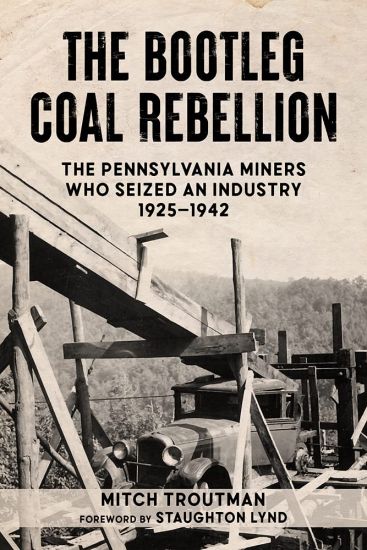
Told with great intimacy and compassion, The Bootleg Coal Rebellion uncovers a long-buried history of resistance and resilience among depression-era miners in Pennsylvania, who sunk their own mines on company grounds and fought police, bankers, coal companies and courts to form a union that would safeguard not just their livelihoods, but protect their collective autonomy as citizens and workers for decades. Community and Labor organizer Mitch Troutman brings this explosive and accessible American tale to life through the bootleggers' own words. Scholars, historians, organizers and activists will celebrate this story of the people who literally seized mountains and stood their ground to create the Equalization movement, the miners' union democracy movement, and the Communist-led Unemployed Councils of the anthracite region. This epic story of work, love and community stands as a testament to the power of collective action; a story that is sorely needed as communities today rise to confront neoliberal policies ravaging our planet.

From the famous strike of 1892, through the century-long fight for a union and union democracy, Homestead Steel Mill--the Final Ten Years: USWA Local 1397 and the Fight for Union Democracy is a case history on the vitality of organized labor in the twentieth century and an insider's portrait of the union at the U. S. Steel's Homestead Works, specifically the workers, activists, and insurgents that made up the radically democratic Rank and File Caucus from 1977 to 1987. Developing its own "inside-outside" approach to unionism, the Caucus drastically expanded their sphere of influence so that, in addition to fighting for their own rights as workers, they fought to help stop the closures of other steel plants, opposed U. S. imperialism in Central America, fought for civil rights, and built strategic coalitions with local environmental groups. Mike Stout chronicles his experience in the takeover and restructuring of the union's grievance procedure at Homestead by regular workers and put at the service of its thousands of members. The Rank and File Caucus was a profound experiment in democracy that was aided by the 1397 Rank and File newspaper--an ultimate expression of truth, democracy, and free speech that guaranteed every union member a valuable voice.
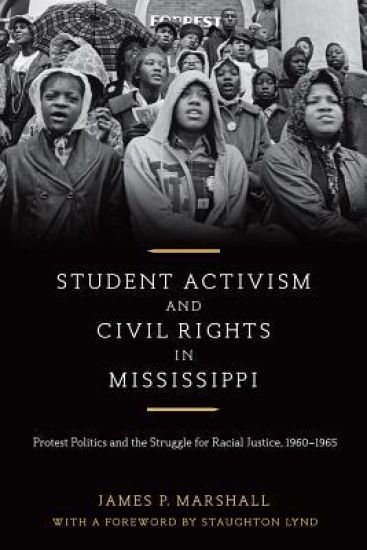
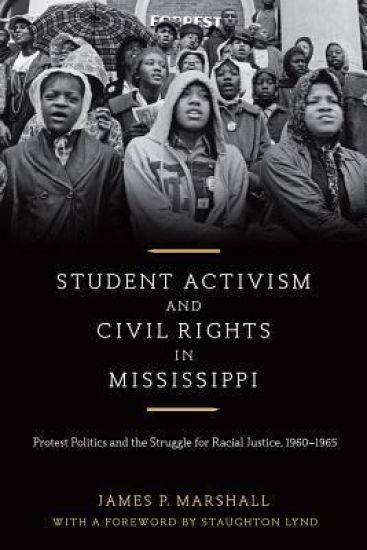
Student Activism and Civil Rights in Mississippi
James P. Marshall; Staughton Lynd
Louisiana State University Press
2016
nidottu
In the 1890s, Mississippi society still drew a sharp line between its African American and white communities by creating a repressive racial system that ensured white supremacy by legally segregating black residents and removing their basic citizenship and voting rights. Over the ensuing decades, white residents suppressed African Americans who dared defy that system with an array of violence, terror, and murder. In 1960, students supporting civil rights moved into Mississippi and challenged this repressive racial order by encouraging African Americans to reassert the rights guaranteed under the Fourteenth and Fifteenth Amendments to the United States Constitution. The ensuing social upheaval changed the state forever. In Student Activism and Civil Rights in Mississippi, James P. Marshall, a former civil rights activist, tells the complete story of the quest for civil rights in Mississippi. Using a voluminous array of sources as well as his own memories, Marshall weaves together an astonishing account of student protestors and local activists who risked their lives for equality, standing between southern resistance and federal inaction. Their efforts, and the horrific violence inflicted on them, helped push many non-southerners and the federal government into action, culminating in the passage of the 1964 Civil Rights Act and the 1965 Voting Rights Act -- measures that destroyed legalized segregation and disfranchisement. Ultimately, Marshall contends, student activism in Mississippi helped forge a consensus by reminding the American public of its forgotten promises and by educating the nation to the fact that African Americans in the South deserved to live as free and equal citizens.
Plough Quarterly No. 5
Thomas Merton; Jonathan Wilson-Hartgrove; R. R. Reno; Staughton Lynd; Johann Christoph Arnold; Cat Carter Cat Carter; Dorothy Day; Ethan Hughes; Tom Cornell; Jeannette Rankin; Peace Pilgrim; Dietrich Bonhoeffer
Plough Publishing House
2015
pokkari
The diverse contributors to this issue of Plough Quarterly focus on what it means to be a peacemaker. Peacemaking, they show, is a riskier and more ambitious undertaking than we may have imagined. Today we must wage peace where thousands of children are being murdered by militias or forced to fight as soldiers. We need peacemakers in divided cities from Paris to Baltimore, peacemakers in a culture with little tolerance for Christian witness, and peacemakers in churches riven by ideological fights and petty grudges, not to mention making peace with our spouses, and with ourselves. Hear from active peacemakers on the frontlines of these battles and explore insights on peacemaking from Thomas Merton, Dorothy Day, Badshah Khan, Jeannette Rankin, Charles Spurgeon, André Trocmé, Peace Pilgrim, Albert Schweitzer, Dietrich Bonhoeffer, and Eberhard Arnold. And as always, Plough Quarterly includes world-class art by the likes of Marc Chagall, Egon Schiele, Lisa Toth, Carl Larsson, Ben Shahn, Mikalojus Konstantinas Ciurlionis, Paul Klee, Antonello da Messina, and others. Plough Quarterly features stories, ideas, and culture for people eager to put their faith into action. Each issue brings you in-depth articles, interviews, fiction, poetry, book reviews, and art to help you put Jesus’ message into practice and find common cause with others.
In the 1960s, historians on both sides of the Atlantic began to challenge the assumptions of their colleagues and push for an understanding of history from below.' In this collection Staughton Lynd, himself one of the pioneers of this approach, laments the passing of fellow luminaries David Montgomery, E. P. Thompson, Alfred Young and Howard Zinn, and makes the case that contemporary academics and activists alike should take more seriously the stories and perspectives of Native Americans, slaves, rank-and-file workers and other still-too-frequently marginalised voices.'
As bureaucratic labor unions are currently under assault throughout the world, most have surrendered the achievements of the mid-20th century, when the working class was a militant force for change. As unions implode and weaken, workers are independently forming their own unions, rooted in the tradition of syndicalism and autonomism--and unions rooted in the tradition of self-directed action are auguring a new period of class struggle throughout the world. In Africa, Asia, the Americas, and Europe, workers are rejecting leaders and forming authentic class-struggle unions rooted in sabotage, direct action, and striking to achieve concrete gains. This is the first book to compile workers struggles on a global basis, examining the formation and expansion of radical unions in the Global South and Global North. The tangible evidence marshaled in this book serves as a handbook for understanding the formidable obstacles and concrete opportunities for workers challenging neoliberal capitalism, even as the unions of the old decline and disappear. Contributors include Au Loong-Yu, Bai Ruixue, Arup K. Sen, Shawn Hattingh, Piotr Bizyukov and Irina Olimpieva, Genese M. Sodikoff, Aviva Chomsky, Dario Bursztyn, Gabriel Kuhn, Erik Forman, Steven Manicastri, and Jack Kirkpatrick.
Student Activism and Civil Rights in Mississippi
James P. Marshall; Staughton Lynd
Louisiana State University Press
2013
sidottu
In 1960, Mississippi society still drew a sharp line between its African American and white communities. In the 1890s, the state had created a repressive racial system that ensured white supremacy by legally segregating black residents and removing their basic citizenship and voting rights. Over the ensuing decades, white residents suppressed African Americans who dared challenge that system with an array of violence, terror, and murder. In 1960, students supporting civil rights moved into Mississippi and challenged this repressive racial order by encouraging African Americans to reassert the rights guaranteed them under the Fourteenth and Fifteenth Amendments to the United States Constitution. The ensuing social upheaval changed the state forever. In Student Activism and Civil Rights in Mississippi, James P. Marshall, a former civil rights activist, tells the complete story of the quest for civil rights in Mississippi. Using a voluminous array of sources as well as his own memories, Marshall weaves together an astonishing account of student protestors and local activists who risked their lives for equality, standing between southern resistance and federal inaction. Their efforts, and the horrific violence inflicted on them, helped push many non-southerners and the federal government into action, culminating in the passage of the 1964 Civil Rights Act and the 1965 Voting Rights Act- measures that destroyed legalized segregation and disfranchisement. Ultimately, Marshall contends, student activism in Mississippi helped forge a consensus by reminding the American public of its forgotten promises and by educating the nation that African Americans in the South deserved to live as free and equal citizens.
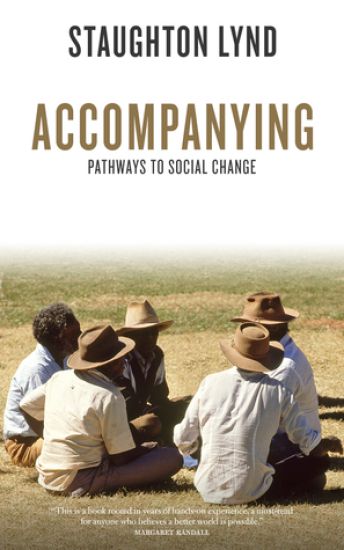
To better understand the impact of social movements in recent years, this analysis distinguishes strategies of social change into two parts: organizing, which is characteristic of the 1960s movement in the United States, and accompaniment, which was articulated by Archbishop Oscar Romero of El Salvador. Both are valuable tools for understanding and promoting social movements; in accompaniment, the promoter of social change and his or her oppressed colleague view themselves as two experts, each bringing indispensable experience to a shared project. Together, as equals, they seek to create what the Zapatistas call "another world." The author applies the distinction between accompaniment and organizing to five social movements in which he has taken part: the labor and civil rights movements, the antiwar movement, prisoner insurgencies, and the movement sparked by Occupy Wall Street. Also included are the experiences of the author's wife Alice Lynd, a partner in these efforts, who has been a draft counselor and advocate for prisoners in maximum-security confinement.
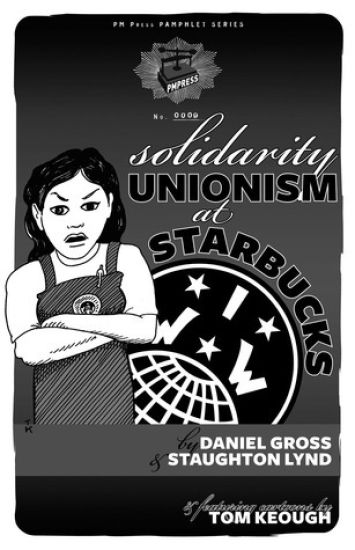
Legendary legal scholar Staughton Lynd teams up with influential labor organizer Daniel Gross in this exposition on solidarity unionism, the do-it-yourself workplace organizing system that is rapidly gaining prominence around the country and around the world. Lynd and Gross make the audacious argument that workers themselves on the shop floor, not outside union officials, are the real hope for labor's future. Utilizing the principles of solidarity unionism, any group of co-workers, like the workers at Starbucks, can start building an organization to win an independent voice at work without waiting for a traditional trade union to come and "organize" them. Indeed, in a leaked recording of a conference call, the nation's most prominent union-busting lobbyist coined a term, "the Starbucks problem," as a warning to business executives about the risk of working people organizing themselves and taking direct action to improve issues at work. Combining history and theory with the groundbreaking practice of the model by Starbucks workers, Lynd and Gross make a compelling case for solidarity unionism as an effective, resilient, and deeply democratic approach to winning a voice on the job and in society.
Intellectual Origins of American Radicalism
Staughton Lynd; David Waldstreicher
Cambridge University Press
2009
sidottu
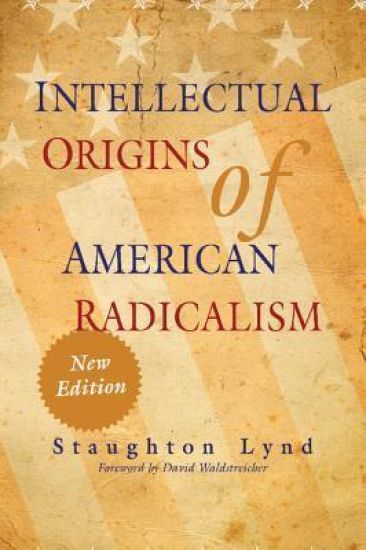
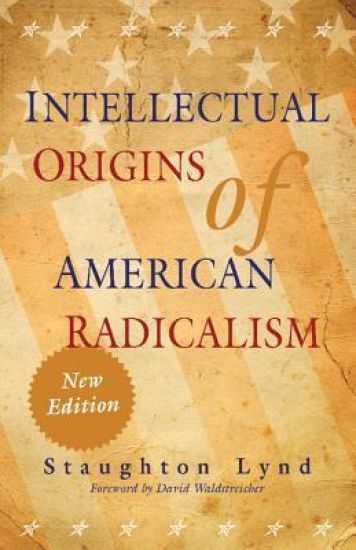
Now an established classic, Intellectual Origins of American Radicalism was the first book to explore this alternative current of American political thought. Stemming back to the seventeenth-century English Revolution, many questioned private property, the sovereignty of the nation-state, and slavery, and affirmed the common man's ability to govern. By the time of the American Revolution, Thomas Paine was the great exemplar of the alternative intellectual tradition. In the nineteenth century, the antislavery movement took hold of Thomas Paine's ideas and fashioned them into an ideology that ultimately justified civil war. This updated edition contains a preface by the author, which describes the inquiries that he undertook in his books of the 1960s and their conclusions. David Waldstreicher has contributed a new historiographical essay that discusses the book's lasting importance and contrasts its ideas with the work of Bernard Bailyn and Gordon Wood.
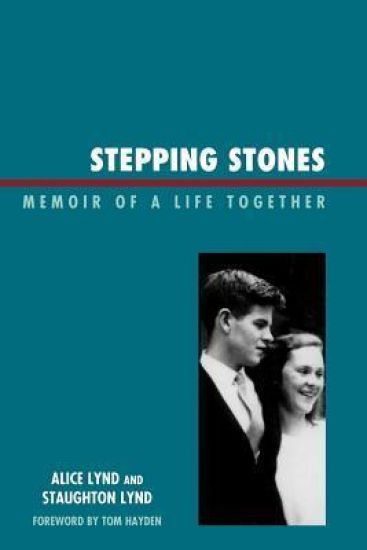
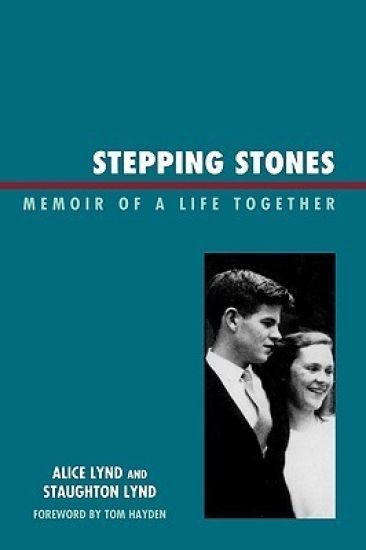
Stepping Stones is a joint memoir by two longtime participants in movements for social change in the United States. Staughton and Alice Lynd have worked for racial equality, against war, with workers and prisoners, and against the death penalty. Coming from similar ethical backgrounds but with very different personalities, the Lynds spent three years in an intentional community in Northeast Georgia during the 1950s. There they experienced a way of living that they later sought to carry into the larger society. Both were educated to be teachers—Staughton as a professor of history and Alice as a teacher of preschool children. But both sought to address the social problems of their times through more than their professions. After being involved in the Southern civil rights movement and the movement against the war in Vietnam in the 1960s, both Staughton and Alice became lawyers. In the Youngstown, Ohio, area they helped workers to create a variety of rank-and-file organizations. After retirement, they became advocates for prisoners who were sentenced to death or confined under supermaximum security conditions. Through trips to Central America in the 1980s, Staughton and Alice became familiar with the concept of “accompaniment.” To them, accompaniment means placing themselves at the side of the poor and oppressed, not as dispensers of charity or as guilty fugitives from the middle class, but as equals in a joint process to which each person brings an essential kind of expertise. Throughout, the Lynds, who became Quakers in the early 1960s, have been committed to nonviolence. Their story will encourage young people seeking lives of public service in the cause of creating a better world.
Intellectual Origins of American Radicalism
Staughton Lynd; David Waldstreicher
Cambridge University Press
2009
pokkari
Now an established classic, Intellectual Origins of American Radicalism was the first book to explore this alternative current of American political thought. Stemming back to the seventeenth-century English Revolution, many questioned private property, the sovereignty of the nation-state, and slavery, and affirmed the common man's ability to govern. By the time of the American Revolution, Thomas Paine was the great exemplar of the alternative intellectual tradition. In the nineteenth century, the antislavery movement took hold of Thomas Paine's ideas and fashioned them into an ideology that ultimately justified civil war. This updated edition contains a preface by the author, which describes the inquiries that he undertook in his books of the 1960s and their conclusions. David Waldstreicher has contributed a new historiographical essay that discusses the book's lasting importance and contrasts its ideas with the work of Bernard Bailyn and Gordon Wood.
Stepping Stones is a joint memoir by two longtime participants in movements for social change in the United States. Staughton and Alice Lynd have worked for racial equality, against war, with workers and prisoners, and against the death penalty. Coming from similar ethical backgrounds but with very different personalities, the Lynds spent three years in an intentional community in Northeast Georgia during the 1950s. There they experienced a way of living that they later sought to carry into the larger society. Both were educated to be teachers—Staughton as a professor of history and Alice as a teacher of preschool children. But both sought to address the social problems of their times through more than their professions. After being involved in the Southern civil rights movement and the movement against the war in Vietnam in the 1960s, both Staughton and Alice became lawyers. In the Youngstown, Ohio, area they helped workers to create a variety of rank-and-file organizations. After retirement, they became advocates for prisoners who were sentenced to death or confined under supermaximum security conditions. Through trips to Central America in the 1980s, Staughton and Alice became familiar with the concept of “accompaniment.” To them, accompaniment means placing themselves at the side of the poor and oppressed, not as dispensers of charity or as guilty fugitives from the middle class, but as equals in a joint process to which each person brings an essential kind of expertise. Throughout, the Lynds, who became Quakers in the early 1960s, have been committed to nonviolence. Their story will encourage young people seeking lives of public service in the cause of creating a better world.
Class Conflict, Slavery, and the United States Constitution
Staughton Lynd
Praeger Publishers Inc
1980
sidottu