
Kirjojen hintavertailu – 12 859 828 kirjaa ja 27 kauppaa

Kirjailija

Stef Proost

Kirjat ja teokset yhdessä paikassa: 3 kirjaa, julkaisuja vuosilta 1999–2026, suosituimpiin kuuluu Spatial Economics. Vertaile teosten hintoja ja tarkista saatavuus suomalaisista kirjakaupoista.

3 kirjaa

Kirjojen julkaisuvuodet: 1999–2026.

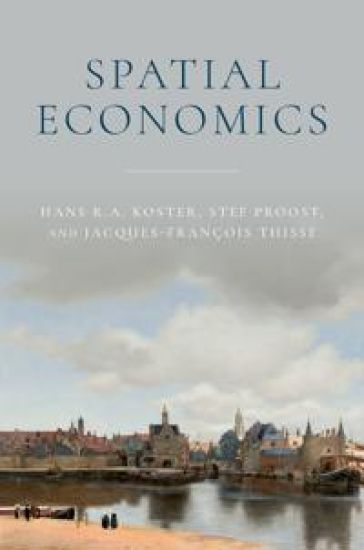
Spatial Economics

Spatial Economics

Hans R. A. Koster; Stef Proost; Jacques-François Thisse

OXFORD UNIVERSITY PRESS INC
2026
nidottu
An authoritative and cutting-edge exploration of how land, transportation, and economic forces shape cities, regions, and the distribution of economic activities from a local to a global scale. Land, by its very nature, is immobile and unproduced, creating competition for prime locations that drives disparities in economic outcomes. Transportation, meanwhile, serves as the mechanism for overcoming spatial frictions but imposes costs that influence where firms and individuals choose to locate. Together, these factors explain the emergence and persistence of cities, regional disparities, and even global patterns of economic concentration. In Spatial Economics, Hans R. A. Koster, Stef Proost, and Jacques-François Thisse explore how cities, regions, and the global economy are shaped by the interplay between location, land use, and transportation. The authors examine why economic activities are clustered in large metropolitan areas and dispersed in vast areas, driven by the balance between the gains from concentration and various congestion and pollution costs. Blending classical theories with modern data and modeling approaches, the book addresses urbanization, spatial inequality, and the effects of policies like infrastructure investments and land regulations. Accessible yet rigorous, it offers valuable insights for understanding the geographic organization of economic activity in today's interconnected world.
Spatial Economics

Spatial Economics

Hans R. A. Koster; Stef Proost; Jacques-François Thisse

OXFORD UNIVERSITY PRESS INC
2026
sidottu
An authoritative and cutting-edge exploration of how land, transportation, and economic forces shape cities, regions, and the distribution of economic activities from a local to a global scale. Land, by its very nature, is immobile and unproduced, creating competition for prime locations that drives disparities in economic outcomes. Transportation, meanwhile, serves as the mechanism for overcoming spatial frictions but imposes costs that influence where firms and individuals choose to locate. Together, these factors explain the emergence and persistence of cities, regional disparities, and even global patterns of economic concentration. In Spatial Economics, Hans R. A. Koster, Stef Proost, and Jacques-François Thisse explore how cities, regions, and the global economy are shaped by the interplay between location, land use, and transportation. The authors examine why economic activities are clustered in large metropolitan areas and dispersed in vast areas, driven by the balance between the gains from concentration and various congestion and pollution costs. Blending classical theories with modern data and modeling approaches, the book addresses urbanization, spatial inequality, and the effects of policies like infrastructure investments and land regulations. Accessible yet rigorous, it offers valuable insights for understanding the geographic organization of economic activity in today's interconnected world.
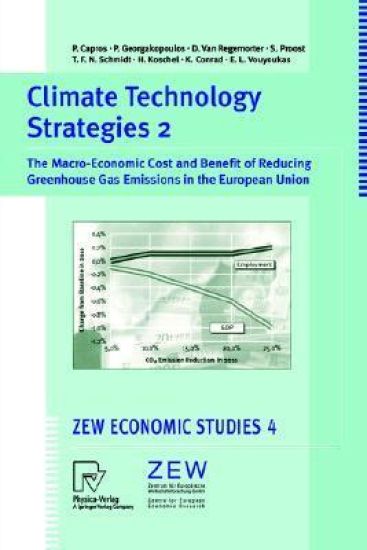
Climate Technology Strategies 2

Climate Technology Strategies 2

Pantelis Capros; Panagiotis Georgakopoulos; Denise van Regemorter; Stef Proost; Tobias F.N. Schmidt; Henrike Koschel; Klaus Conrad; E.Lakis Vouyoukas

Physica-Verlag GmbH Co
1999
nidottu
Climate technology becomes more and more relevant in international environmental policy negotiations. At the Kyoto conference binding emission reduction targets have been established for several regions of the world. The major challenge is how to realize these reduction goals with minimum costs without generating new distributional and social difficulties. The book analyses the macroeconomic structural and distributional impacts of greenhouse gas mitigation strategies for the EU and the member states.