Kirjojen hintavertailu – 12 903 725 kirjaa ja 27 kauppaa
Kirjailija
Stefan Berger
Kirjat ja teokset yhdessä paikassa: 87 kirjaa, julkaisuja vuosilta 1988–2026, suosituimpiin kuuluu Schatten über Talrim. Vertaile teosten hintoja ja tarkista saatavuus suomalaisista kirjakaupoista.
During the Cold War, Britain had an astonishing number of contacts and connections with one of the Soviet Bloc’s most hard-line regimes: the German Democratic Republic. The left wing of the British Labour Party and the Trade Unions often had closer ties with communist East Germany than the Communist Party of Great Britain (CPGB). There were strong connections between the East German and British churches, women’s movements, and peace movements; influential conservative politicians and the Communist leadership in the GDR had working relationships; and lucrative contracts existed between business leaders in Britain and their counterparts in East Germany. Based on their extensive knowledge of the documentary sources, the authors provide the first comprehensive study of Anglo-East German relations in this surprisingly under-researched field. They examine the complex motivations underlying different political groups’ engagement with the GDR, and offer new and interesting insights into British political culture during the Cold War.
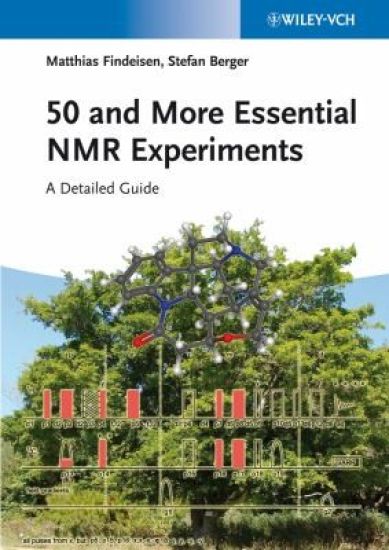
This book is the perfect link for learning how to perform the experiments after only having studied theory. In eight chapters more than 50 essential NMR experiments are described in detail. Special focus is put on the organic set of NMR spectra (1H, 13C-APT, COSY, NOESY, HSQC and HMBC). Different chapters deal with advanced organic NMR, selective methods, heteronuclear NMR, relaxation and diffusion measurements, organic applications and maintenance. Every experiment has a section providing the reader with the purpose and scope of the specific experiment. Every experiment is concluded with the spectrum as it is obtained under the conditions described. Questions and comments enable the reader to check their understanding. The authors are very experienced and the whole book is in full color, which enhances the reading experience and makes the spectra and other figures easier to understand. This book is strongly recommended for all students and researchers who are involved in the structural elucidation of chemical compounds both in practical education and in pursuing research, in particular if they handle an NMR spectrometer.
During the Cold War, Britain had an astonishing number of contacts and connections with one of the Soviet Bloc’s most hard-line regimes: the German Democratic Republic. The left wing of the British Labour Party and the Trade Unions often had closer ties with communist East Germany than the Communist Party of Great Britain (CPGB). There were strong connections between the East German and British churches, women’s movements, and peace movements; influential conservative politicians and the Communist leadership in the GDR had working relationships; and lucrative contracts existed between business leaders in Britain and their counterparts in East Germany. Based on their extensive knowledge of the documentary sources, the authors provide the first comprehensive study of Anglo-East German relations in this surprisingly under-researched field. They examine the complex motivations underlying different political groups’ engagement with the GDR, and offer new and interesting insights into British political culture during the Cold War.
Studienarbeit aus dem Jahr 2008 im Fachbereich Geschichte Europa - and. L nder - Mittelalter, Fr he Neuzeit, Note: 1,5, Universit t Hamburg (Geschichtswissenschaft), Veranstaltung: Geschichte in Hamburg, 8 Quellen im Literaturverzeichnis, Sprache: Deutsch, Abstract: Die Gr ndung der Hamburger Bank war ein wichtiger Meilenstein in der Entwicklung eines stabilen Geld- und Kreditwesens in Hamburg und Grundlage f r den einzigartigen wirtschaftlichen Aufschwung in der Hansestadt. In dieser Ausarbeitung soll die Entstehungsgeschichte der Hamburger Bank n her beleuchtet werden. Dazu wird zun chst kurz das wirtschaftliche Umfeld Hamburgs im Mittelalter und der Neuzeit betrachtet um herauszufinden, welche Faktoren f r die Gr ndung der Bank im Jahre 1619 entscheidend waren. Die Gr nde f r die Schlie ung der Bank im Jahre 1875 werden im Schlussteil dargestellt, bevor die Arbeit mit einem Fazit schlie t.
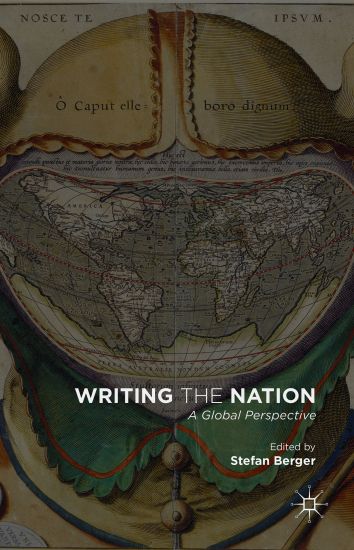
This book brings together experts on national history writing from all five continents to discuss the role of history in the making of national identities in a transnational and comparative way. The institutionalization and professionalisation of history writing is analysed in the context of history's increasing nationalization.
This book brings together experts on national history writing from all five continents to discuss the role of history in the making of national identities in a transnational and comparative way. The institutionalization and professionalisation of history writing is analysed in the context of history's increasing nationalization.
This book brings together experts on national history writing from all five continents to discuss the role of history in the making of national identities in a transnational and comparative way. The institutionalization and professionalisation of history writing is analysed in the context of history's increasing nationalization.
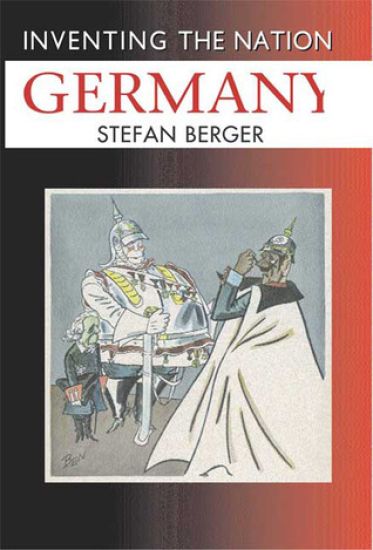
'What is a German's fatherland?', asked Ernst Moritz Arndt at the beginning of the nineteenth century. This has arguably been the central question of modern German history. Germans did not have a united fatherland until 1871, and, thereafter, major political events in 1918, 1933, 1945, 1968 and 1989 ensured that the answers to Arndt's question proliferated and diverged with breath-taking speed. Germany explains the diverse ways in which national identity has been constructed over more than three centuries. It focuses on the plurality of contested definitions of 'Germanness'. The themes covered include the struggles between democratic and non-democratic inventions of the nation, the construction of the racial nation under Nazism, economic definitions of the nation, foreigners and 'Germanness', the nation as a 'community of memory', the gendering of the national discourse, the federal nature of German nationalism and the impact of war on the construction of a German national identity. This is a fundamental reappraisal of Germany's history from a perspective available only now that the dust from the demolished Berlin Wall is settling in a reunited Germany.
'What is a German's fatherland?', asked Ernst Moritz Arndt at the beginning of the nineteenth century. This has arguably been the central question of modern German history. Germans did not have a united fatherland until 1871, and, thereafter, major political events in 1918, 1933, 1945, 1968 and 1989 ensured that the answers to Arndt's question proliferated and diverged with breath-taking speed. Germany explains the diverse ways in which national identity has been constructed over more than three centuries. It focuses on the plurality of contested definitions of 'Germanness'. The themes covered include the struggles between democratic and non-democratic inventions of the nation, the construction of the racial nation under Nazism, economic definitions of the nation, foreigners and 'Germanness', the nation as a 'community of memory', the gendering of the national discourse, the federal nature of German nationalism and the impact of war on the construction of a German national identity. This is a fundamental reappraisal of Germany's history from a perspective available only now that the dust from the demolished Berlin Wall is settling in a reunited Germany.
This work-book will guide you safely, in step-by-step descriptions, through every detail of the NMR experiments within, beginning with 1D routine experiments and ending with a series of advanced 3D experiments on a protein: *Which experiment can best yield the desired information?*How must the chosen experiment be performed? *How does one read the required information from the spectrum? *How does this particular pulse sequence work? *Which other experiments give similar information? This third edition of the book, following its two highly successful predecessors, has been revised and expanded to 206 experiments. They are organized in 15 chapters, covering test procedures and routine spectra, variable temperature measurements, the use of auxiliary reagents, 1D multipulse experiments, spectra of heteronuclides, and the application of selective pulses. The second and third dimensions are introduced using pulsed field gradients, and experiments on solid state materials are described. A key part describes 3D experiments on the protein ubiquitin with 76 amino acids. What is new in this third edition? 1. 24 new experiments have been inserted into the 14 chapters that were in the 2nd edition, e.g., alpha/beta-SELINCOR-TOCSY, WET, DOSY, ct-COSY, HMSC, HSQC with adiabatic pulses, HETLOC. J-resolved HMBC, (1,1)- and (1,n)-ADEQUATE, STD, REDOR, and HR-MAS. 2. 20 new protein NMR experiments have been specially devised and are collected in the newly added Chapter 15, ProteinNMR, for which one needs a special model sample: fully 13C- and 15N-labeled human ubiquitin. Techniques used include the constant time principle, the PEP method, filters, gradient selection, and the echo/anti-echo procedure. The guide has been written by experts in this field, following the principle of learning by doing: all the experiments have been specially performed for this book, exactly as described and shown in the spectra that are reproduced. Being a reference source and work-book for the NMR laboratory as well as a textbook, it is a must for every scientist working with NMR, as well as for students preparing for their laboratory courses.