Kirjojen hintavertailu – 12 859 818 kirjaa ja 27 kauppaa

Kirjailija

Stefan Bouzarovski

Kirjat ja teokset yhdessä paikassa: 7 kirjaa, julkaisuja vuosilta 2015–2020, suosituimpiin kuuluu Energy Poverty. Vertaile teosten hintoja ja tarkista saatavuus suomalaisista kirjakaupoista.

7 kirjaa

Kirjojen julkaisuvuodet: 2015–2020.

Energy Poverty

Energy Poverty

Stefan Bouzarovski

Saint Philip Street Press
2020
pokkari
EVALUATE is a multi-sited study, involving extensive research across a variety of cities and countries. Focusing primarily on four Central andEastern European cities (Budapest, Gdańsk, Prague and Skopje) the projecthas undertaken a customized survey with 2435 households, supplementedwith insights from in-depth household interviews, 'energy diaries'and energy efficiency audits in the homes of approximately 160 householdsliving in the four cities. EVALUATE has entailed 195 expert interviewsin a much wider range of sites across the world, as well as an analysisof micro-data from national and European Union surveys of energy poverty. It has led to more than 200 dissemination activities, while laying thebasis for the European Energy Poverty Observatory as well as a newEuropean Co-operation for Science and Technology Action on 'EuropeanEnergy Poverty: Agenda Co-Creation and Knowledge Innovation' This work was published by Saint Philip Street Press pursuant to a Creative Commons license permitting commercial use. All rights not granted by the work's license are retained by the author or authors.
Energy Poverty

Energy Poverty

Stefan Bouzarovski

Saint Philip Street Press
2020
sidottu
EVALUATE is a multi-sited study, involving extensive research across a variety of cities and countries. Focusing primarily on four Central andEastern European cities (Budapest, Gdańsk, Prague and Skopje) the projecthas undertaken a customized survey with 2435 households, supplementedwith insights from in-depth household interviews, 'energy diaries'and energy efficiency audits in the homes of approximately 160 householdsliving in the four cities. EVALUATE has entailed 195 expert interviewsin a much wider range of sites across the world, as well as an analysisof micro-data from national and European Union surveys of energy poverty. It has led to more than 200 dissemination activities, while laying thebasis for the European Energy Poverty Observatory as well as a newEuropean Co-operation for Science and Technology Action on 'EuropeanEnergy Poverty: Agenda Co-Creation and Knowledge Innovation' This work was published by Saint Philip Street Press pursuant to a Creative Commons license permitting commercial use. All rights not granted by the work's license are retained by the author or authors.
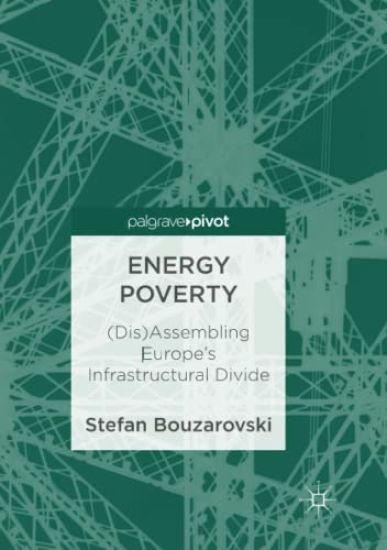
Energy Poverty

Energy Poverty

Stefan Bouzarovski

Springer International Publishing AG
2019
nidottu
This open access book aims to consolidate and advance debates on European and global energy poverty by exploring the political and infrastructural drivers and implications of the condition across a variety of spatial scales. It highlights the need for a geographical conceptualization of the different ways in which household-level energy deprivation both influences and is contingent upon disparities occurring at a wider range of spatial scales. There is a strong focus on the relationships among energy transformation, institutional change and place-based factors in determining the nature and location of energy-related injustices. The book also explores how patterns and structures of energy poverty have changed over time, as evidenced by some of the common measures used to describe the condition. In part, this means investigating the makeup of energy poor demographics across various social and spatial cleavages. More broadly, it also argues that energy sector reconfigurations are bothreflected in and shaped by various domains of social and political organization, especially in terms of creating poverty-relevant outcomes.
Energy and Society

Energy and Society

Gavin Bridge; Stewart Barr; Stefan Bouzarovski; Michael Bradshaw; Ed Brown; Harriet Bulkeley; Gordon Walker

Routledge
2018
nidottu
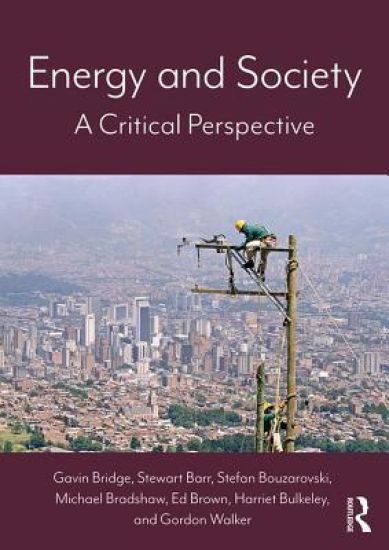
Energy and Society is the first major text to provide an extensive critical treatment of energy issues informed by recent research on energy in the social sciences. Written in an engaging and accessible style it draws new thinking on uneven development, consumption, vulnerability and transition together to illustrate the social significance of energy systems in the global North and South. The book features case studies, examples, discussion questions, activities, recommended reading and more, to facilitate its use in teaching. Energy and Society deploys contemporary geographical concepts and approaches but is not narrowly disciplinary. Its critical perspective highlights connections between energy and significant socio-economic and political processes, such as globalisation, urban isation, international development and social justice, and connects important issues that are often treated in isolation, such as resource availability, energy security, energy access and low-carbon transition. Co-authored by leading researchers and based on current research and thinking in the social sciences, Energy and Society presents a distinctive geographical approach to contemporary energy issues. It is an essential resource for upperlevel undergraduates and Master’s students in geography, environmental studies, urban studies, energy studies and related fields.
Energy and Society

Energy and Society

Gavin Bridge; Stewart Barr; Stefan Bouzarovski; Michael Bradshaw; Ed Brown; Harriet Bulkeley; Gordon Walker

Routledge
2018
sidottu
Energy and Society is the first major text to provide an extensive critical treatment of energy issues informed by recent research on energy in the social sciences. Written in an engaging and accessible style it draws new thinking on uneven development, consumption, vulnerability and transition together to illustrate the social significance of energy systems in the global North and South. The book features case studies, examples, discussion questions, activities, recommended reading and more, to facilitate its use in teaching. Energy and Society deploys contemporary geographical concepts and approaches but is not narrowly disciplinary. Its critical perspective highlights connections between energy and significant socio-economic and political processes, such as globalisation, urban isation, international development and social justice, and connects important issues that are often treated in isolation, such as resource availability, energy security, energy access and low-carbon transition. Co-authored by leading researchers and based on current research and thinking in the social sciences, Energy and Society presents a distinctive geographical approach to contemporary energy issues. It is an essential resource for upperlevel undergraduates and Master’s students in geography, environmental studies, urban studies, energy studies and related fields.
Energy Poverty

Energy Poverty

Stefan Bouzarovski

Springer International Publishing AG
2018
sidottu
This open access book aims to consolidate and advance debates on European and global energy poverty by exploring the political and infrastructural drivers and implications of the condition across a variety of spatial scales. It highlights the need for a geographical conceptualization of the different ways in which household-level energy deprivation both influences and is contingent upon disparities occurring at a wider range of spatial scales. There is a strong focus on the relationships among energy transformation, institutional change and place-based factors in determining the nature and location of energy-related injustices. The book also explores how patterns and structures of energy poverty have changed over time, as evidenced by some of the common measures used to describe the condition. In part, this means investigating the makeup of energy poor demographics across various social and spatial cleavages. More broadly, it also argues that energy sector reconfigurations are bothreflected in and shaped by various domains of social and political organization, especially in terms of creating poverty-relevant outcomes.
Retrofitting the City

Retrofitting the City

Stefan Bouzarovski

I.B. Tauris
2015
sidottu
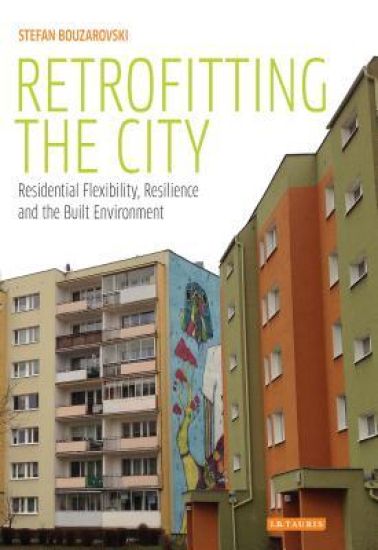
Cities are responsible for three-quarters of the world s energy consumption. If we are to reduce our demands on the planet s resources how can we make our urban areas more energy efficient? One way is to refit existing buildings with more thermally efficient building materials. But such retrofitting involves significant issues of social acceptance and public participation. Retrofitting the City provides an important corrective to the assumptions that have been made concerning the ability of people and places to cope with such residential transformation. Drawing upon case studies from a number of European cities that have undergone far-reaching change in their built environments, the author shows that supposedly inadaptable people and places show a strong, if often hidden, degree of flexibility in responding to economic change and building transformation."