Kirjojen hintavertailu – 12 903 725 kirjaa ja 27 kauppaa

Kirjailija

Stefan Fränzle

Kirjat ja teokset yhdessä paikassa: 5 kirjaa, julkaisuja vuosilta 2005–2016, suosituimpiin kuuluu Vorzeichenwechsel. Vertaile teosten hintoja ja tarkista saatavuus suomalaisista kirjakaupoista.

5 kirjaa

Kirjojen julkaisuvuodet: 2005–2016.

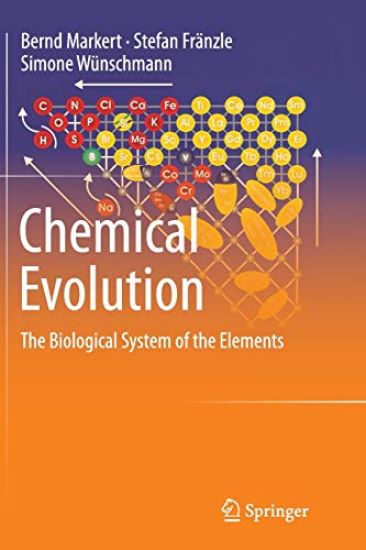
Chemical Evolution

Chemical Evolution

Bernd Markert; Stefan Fränzle; Simone Wünschmann

Springer International Publishing AG
2016
nidottu
This book is written for researchers and students interested in the function and role of chemical elements in biological or environmental systems. Experts have long known that the Periodic System of Elements (PSE) provides only an inadequate chemical description of elements of biological, environmental or medicinal importance. This book explores the notion of a Biological System of the Elements (BSE) established on accurate and precise multi-element data, including evolutionary aspects, representative sampling procedures, inter-element relationships, the physiological function of elements and uptake mechanisms. The book further explores the concept Stoichiometric Network Analysis (SNA) to analyze the biological roles of chemical species. Also discussed is the idea of ecotoxicological identity cards which give a first-hand description of properties relevant for biological and toxicological features of a certain chemical element and its geo biochemically plausible speciation form. The focus of this book goes beyond both classical bioinorganic chemistry and toxicology.
Chemical Evolution

Chemical Evolution

Bernd Markert; Stefan Fränzle; Simone Wünschmann

Springer International Publishing AG
2015
sidottu
This book is written for researchers and students interested in the function and role of chemical elements in biological or environmental systems. Experts have long known that the Periodic System of Elements (PSE) provides only an inadequate chemical description of elements of biological, environmental or medicinal importance. This book explores the notion of a Biological System of the Elements (BSE) established on accurate and precise multi-element data, including evolutionary aspects, representative sampling procedures, inter-element relationships, the physiological function of elements and uptake mechanisms. The book further explores the concept Stoichiometric Network Analysis (SNA) to analyze the biological roles of chemical species. Also discussed is the idea of ecotoxicological identity cards which give a first-hand description of properties relevant for biological and toxicological features of a certain chemical element and its geo biochemically plausible speciation form. The focus of this book goes beyond both classical bioinorganic chemistry and toxicology.
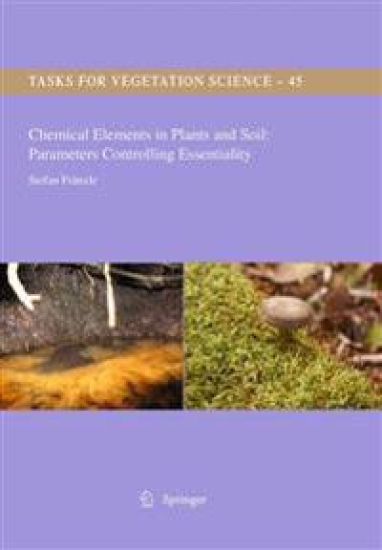
Chemical Elements in Plants and Soil: Parameters Controlling Essentiality
Earlier works on plant essential elements have revealed a series of complicated, counter-intuitive relationships among various chemical elements in different plant species, due to both unlike usage of certain elements in plants and to different carriers effecting resorption and transport. In an attempt to provide a more coherent theory behind plant mineral nutrition, this groundbreaking book adopts a very different approach from the existing literature, presenting an explanation of the essentiality of chemical elements in biological systems and the application of stoichiometric network analysis (SNA) to the biological system of elements. Starting with data from biochemical environmental analysis, and a discussion of the phenomena involved in metal ion partition and autocatalytic behaviour, conditions and criteria controlling the partition of metals into biomass are investigated. Several rules are derived and investigated in terms of their interaction both in comparisons among contemporary organisms and in terms of evolution. This allows the construction, for example of a map which directly traces the biological feature of essentiality to parameters of coordination chemistry. The book will have worldwide appeal for researchers interested in fields such as soil/plant interactions, bioinorganic chemistry, plant nutrition, phytomining, bioremediation, biogeochemistry, nutrient cycling, soil chemistry, and cellular physiology.
Chemical Elements in Plants and Soil: Parameters Controlling Essentiality
Earlier works on plant essential elements have revealed a series of complicated, counter-intuitive relationships among various chemical elements in different plant species, due to both unlike usage of certain elements in plants and to different carriers effecting resorption and transport. In an attempt to provide a more coherent theory behind plant mineral nutrition, this groundbreaking book adopts a very different approach from the existing literature, presenting an explanation of the essentiality of chemical elements in biological systems and the application of stoichiometric network analysis (SNA) to the biological system of elements. Starting with data from biochemical environmental analysis, and a discussion of the phenomena involved in metal ion partition and autocatalytic behaviour, conditions and criteria controlling the partition of metals into biomass are investigated. Several rules are derived and investigated in terms of their interaction both in comparisons among contemporary organisms and in terms of evolution. This allows the construction, for example of a map which directly traces the biological feature of essentiality to parameters of coordination chemistry. The book will have worldwide appeal for researchers interested in fields such as soil/plant interactions, bioinorganic chemistry, plant nutrition, phytomining, bioremediation, biogeochemistry, nutrient cycling, soil chemistry, and cellular physiology.
Vorzeichenwechsel

Vorzeichenwechsel

Bernd Markert; Stefan Fränzle; Maik Hosang

Peter Lang AG
2005
nidottu
Ausgehend von unterschiedlichen Erfahrungsbereichen wie etwa Wissenschaft, Politik etc. und deren jeweiligen Herausforderungen fur ethisch verantwortetes Entscheiden und Handeln werden Theorie- und Handlungsprinzipien formuliert. Diese werden formal begrundet und unter Berucksichtigung gewachsener kultureller, religioeser und demokratischer Traditionen sowie der Bedurfnisse des Einzelnen, der Gemeinschaft und Umwelt als Bausteine eines Gesamtkonzeptes verantwortlicher deutscher und europaischer Politik verwendet. Dieses Konzept erlaubt, gesellschaftliche Problemstellungen systematisch unter Ruckgriff auf natur- und religionswissenschaftliche Einsichten in eigener Verantwortung zu bewaltigen. Grundrechte, Subsidiaritat und Nachstenliebe stehen dabei im Mittelpunkt.