
Kirjojen hintavertailu – 12 859 819 kirjaa ja 27 kauppaa

Kirjailija

Stefan Gronert

Kirjat ja teokset yhdessä paikassa: 2 kirjaa, julkaisuja vuosilta 2017–2019, suosituimpiin kuuluu Louisa Clement: Remote Control. Vertaile teosten hintoja ja tarkista saatavuus suomalaisista kirjakaupoista.

2 kirjaa

Kirjojen julkaisuvuodet: 2017–2019.

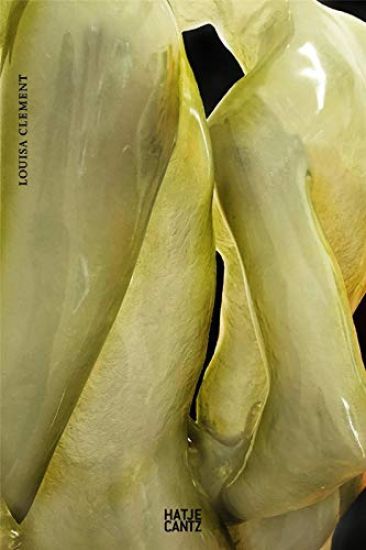
Louisa Clement: Remote Control

Louisa Clement: Remote Control

Stefan Gronert; Andreas Beitin

Hatje Cantz
2019
nidottu
The photographs, videos, installations, sculptures, and new VR works by Louisa Clement (*1987) deal with phenomena related to a sense of disturbance in times of political and social inse- curity. Clement’s investigations prove to be as seductive as they are cryptic: What is a human being in a digital age in which the body’s integrity is increasingly questioned through vehement medical and technological interventions? In an almost surreal manner, Clement’s detailed photographs conjure up a new image of the body that also represents the ambivalent vision of a “new human being.” With the help of her photographs, taken with smartphone cameras, she examines not only the medium’s ability to reproduce images, but also the reality of the technologically modifi ed human. This publication is a companion to Louisa Clem- ent’s fi rst museum exhibition.
Sigmar Polke

Sigmar Polke

Stefan Gronert

Afterall Publishing
2017
pokkari
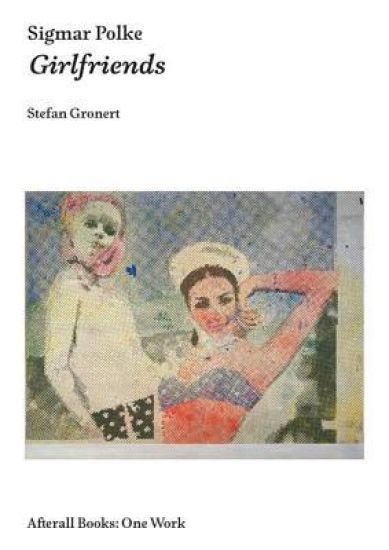
An illustrated exploration of Girlfriends (1965/66), one of Sigmar Polke's important early paintings. The artist Sigmar Polke (1941-2010) worked across a broad range of media-including photography, painting, printmaking, sculpture, and film-and in styles that varied from abstract expressionism to Pop. This volume in Afterall's One Work series offers an illustrated exploration of Freundinnen (Girlfriends 1965/66), one of Polke's important early paintings. Taken from a found image of two young women, and using the raster dots also found in mass media reproductions, Girlfriends offers a statement about the use and social function of images. Stefan Gronert approaches Girlfriends through its deliberate and elusive ambiguity, providing technical detail and historical background that allow some of the work's motivation and depth to become clearer. Gronert analyzes Polke's relationship to his tutors and peers, especially Gerhard Richter; describes the art historical context in which Polke worked; and discusses some of the social and political issues to which Girlfriends refers. Considering such topics as the distinction between Polke and Alain Jacquet in their use of photographed material, between Polke's use of the raster technique and that of Roy Lichtenstein, and the feminist discourse of the time, Gronert draws on a variety of critical interpretations of Polke's work, including some material that has not yet been translated into English.