
Kirjailija
Stefan Müller
Kirjat ja teokset yhdessä paikassa: 97 kirjaa, julkaisuja vuosilta 1984–2026, suosituimpiin kuuluu Bamberger Bibliothek 1 Buchners Lesebuch Latein A 1. Lektüretraining. Vertaile teosten hintoja ja tarkista saatavuus suomalaisista kirjakaupoista.
Nimi esiintyy myös muodoissa: Stefan Muller
97 kirjaa
Kirjojen julkaisuvuodet: 1984–2026.



This book introduces formal grammar theories that play a role in current linguistic theorizing (Phrase Structure Grammar, Transformational Grammar/Government & Binding, Generalized Phrase Structure Grammar, Lexical Functional Grammar, Categorial Grammar, Head-Driven Phrase Structure Grammar, Construction Grammar, Tree Adjoining Grammar). The key assumptions are explained and it is shown how the respective theory treats arguments and adjuncts, the active/passive alternation, local reorderings, verb placement, and fronting of constituents over long distances. The analyses are explained with German as the object language. The second part of the book compares these approaches with respect to their predictions regarding language acquisition and psycholinguistic plausibility. The nativism hypothesis, which assumes that humans posses genetically determined innate language-specific knowledge, is critically examined and alternative models of language acquisition are discussed. The second part then addresses controversial issues of current theory building such as the question of flat or binary branching structures being more appropriate, the question whether constructions should be treated on the phrasal or the lexical level, and the question whether abstract, non-visible entities should play a role in syntactic analyses. It is shown that the analyses suggested in the respective frameworks are often translatable into each other. The book closes with a chapter showing how properties common to all languages or to certain classes of languages can be captured. The book is a translation of the German book Grammatiktheorie, which was published by Stauffenburg in 2010. This book is a new edition of http: //langsci-press.org/catalog/book/25, http: //langsci-press.org/catalog/book/195 and http: //langsci-press.org/catalog/book/255.

This book introduces formal grammar theories that play a role in current linguistic theorizing (Phrase Structure Grammar, Transformational Grammar/Government & Binding, Generalized Phrase Structure Grammar, Lexical Functional Grammar, Categorial Grammar, Head-Driven Phrase Structure Grammar, Construction Grammar, Tree Adjoining Grammar). The key assumptions are explained and it is shown how the respective theory treats arguments and adjuncts, the active/passive alternation, local reorderings, verb placement, and fronting of constituents over long distances. The analyses are explained with German as the object language. The second part of the book compares these approaches with respect to their predictions regarding language acquisition and psycholinguistic plausibility. The nativism hypothesis, which assumes that humans posses genetically determined innate language-specific knowledge, is critically examined and alternative models of language acquisition are discussed. The second part then addresses controversial issues of current theory building such as the question of flat or binary branching structures being more appropriate, the question whether constructions should be treated on the phrasal or the lexical level, and the question whether abstract, non-visible entities should play a role in syntactic analyses. It is shown that the analyses suggested in the respective frameworks are often translatable into each other. The book closes with a chapter showing how properties common to all languages or to certain classes of languages can be captured. The book is a translation of the German book Grammatiktheorie, which was published by Stauffenburg in 2010. This book is a new edition of http: //langsci-press.org/catalog/book/25, http: //langsci-press.org/catalog/book/195 and http: //langsci-press.org/catalog/book/255.

Alkohol, Drogen, Medikamente - nicht selten fuhren Suchtmittel zu Storungen im Arbeitsverhaltnis. Nicht nur die Arbeitsleistung, sondern auch die Sicherheit im Betrieb kann beeintrachtigt werden. Das neue Handbuch erlautert: Wirkweise von Suchtmitteln und Anzeichen fur einen Missbrauch Arbeitsrechtliche Moglichkeiten fur Suchtmittekontrollen und -verbote Rechtsfolgen von Abhangigkeit und Missbrauch Handlungspflichten des Arbeitgebers Betriebliches Eingliederungsmanagement Sanktionsmoglichkeiten wie Beschaftigungsverbot, Schadensersatz, Kundigung Mitbestimmungsrechte des Betriebsrats Datenschutzaspekte Das Werk enthalt sowohl Hinweise fur Arbeitgeber als auch fur Arbeitnehmer und daruber hinaus zahlreiche praxisrelevante Musterformulierungen fur den Umgang mit der schwierigen und heiklen Materie.

Ein effizientes und gesetzeskonform handelndes Management braucht unternehmensgrößen-, rechtsform- und branchenübergreifend eine Entscheidungsunterstützung durch relevante Informationen. Dafür stellt das Controlling vielseitige Ansätze, Instrumente und Techniken bereit und generiert die entsprechenden Kennzahlen. In der Gesamtheit können diese als Managementinstrumente bezeichnet werden. Nach einer grundlegenden thematischen Einführung arbeitet dieses Buch ein integriertes Controlling für das Gesamtunternehmen heraus. Die Autoren analysieren detailliert die Bereiche Erfolgs-, Finanz-, Risiko- und Erfolgspotenzial-Controlling und entwerfen die komprimierte Konzeption eines Management-Cockpits auf Basis von Kennzahlen. Neben quantitativen Informationen werden verstärkt auch qualitative und strategische Aspekte berücksichtigt. Durch viele Beispiele und eine ausführliche Fallstudie wird Controllingwissen anwendungsorientiert vermittelt. Für die 3. Auflage wurde dasWerk vollständig aktualisiert, verstärkt auch die juristischen Implikationen berücksichtigt und mit einem ausführlich beschriebenen Beispiel um das Thema Unternehmensbewertung erweitert.


This book introduces formal grammar theories that play a role in current linguistic theorizing (Phrase Structure Grammar, Transformational Grammar/Government & Binding, Generalized Phrase Structure Grammar, Lexical Functional Grammar, Categorial Grammar, Head-Driven Phrase Structure Grammar, Construction Grammar, Tree Adjoining Grammar). The key assumptions are explained and it is shown how the respective theory treats arguments and adjuncts, the active/passive alternation, local reorderings, verb placement, and fronting of constituents over long distances. The analyses are explained with German as the object language. The second part of the book compares these approaches with respect to their predictions regarding language acquisition and psycholinguistic plausibility. The nativism hypothesis, which assumes that humans posses genetically determined innate language-specific knowledge, is critically examined and alternative models of language acquisition are discussed. The second part then addresses controversial issues of current theory building such as the question of flat or binary branching structures being more appropriate, the question whether constructions should be treated on the phrasal or the lexical level, and the question whether abstract, non-visible entities should play a role in syntactic analyses. It is shown that the analyses suggested in the respective frameworks are often translatable into each other. The book closes with a chapter showing how properties common to all languages or to certain classes of languages can be captured. The book is a translation of the German book Grammatiktheorie, which was published by Stauffenburg in 2010. The following quotes are taken from reviews: With this critical yet fair reflection on various grammatical theories, M ller fills what was a major gap in the literature. Karen Lehmann, Zeitschrift f r Rezen-sio-nen zur ger-man-is-tis-chen Sprach-wis-senschaft, 2012 Stefan M ller's recent introductory textbook, Gr

Mission: Rom
Michael Lobe; Stefan Müller; Benjamin Färber
Buchner, C.C. Verlag
2019
lehtivihko, moniste


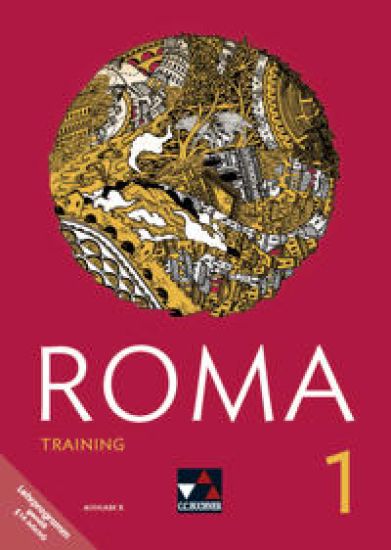
Roma B 1 Training
Michael Meier; Christian Müller; Stefan Müller
Buchner, C.C. Verlag
2018
lehtivihko, moniste

Bilanzierung nach Handelsrecht, Steuerrecht und IFRS
Rudolf Federmann; Stefan Müller
Schmidt, Erich Verlag
2018
nidottu

This book introduces formal grammar theories that play a role in current linguistic theorizing (Phrase Structure Grammar, Transformational Grammar/Government & Binding, Generalized Phrase Structure Grammar, Lexical Functional Grammar, Categorial Grammar, Head-Driven Phrase Structure Grammar, Construction Grammar, Tree Adjoining Grammar). The key assumptions are explained and it is shown how the respective theory treats arguments and adjuncts, the active/passive alternation, local reorderings, verb placement, and fronting of constituents over long distances. The analyses are explained with German as the object language. The second part of the book compares these approaches with respect to their predictions regarding language acquisition and psycholinguistic plausibility. The nativism hypothesis, which assumes that humans posses genetically determined innate language-specific knowledge, is critically examined and alternative models of language acquisition are discussed. The second part then addresses controversial issues of current theory building such as the question of flat or binary branching structures being more appropriate, the question whether constructions should be treated on the phrasal or the lexical level, and the question whether abstract, non-visible entities should play a role in syntactic analyses. It is shown that the analyses suggested in the respective frameworks are often translatable into each other. The book closes with a chapter showing how properties common to all languages or to certain classes of languages can be captured. The book is a translation of the German book Grammatiktheorie, which was published by Stauffenburg in 2010. The following quotes are taken from reviews: With this critical yet fair reflection on various grammatical theories, M ller fills what was a major gap in the literature. Karen Lehmann, Zeitschrift f r Rezen-sio-nen zur ger-man-is-tis-chen Sprach-wis-senschaft, 2012 Stefan M ller's recent introductory textbook, Gram-m
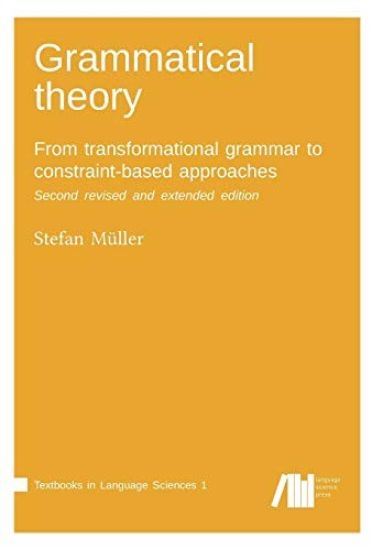
This book introduces formal grammar theories that play a role in current linguistic theorizing (Phrase Structure Grammar, Transformational Grammar/Government & Binding, Generalized Phrase Structure Grammar, Lexical Functional Grammar, Categorial Grammar, Head-Driven Phrase Structure Grammar, Construction Grammar, Tree Adjoining Grammar). The key assumptions are explained and it is shown how the respective theory treats arguments and adjuncts, the active/passive alternation, local reorderings, verb placement, and fronting of constituents over long distances. The analyses are explained with German as the object language. The second part of the book compares these approaches with respect to their predictions regarding language acquisition and psycholinguistic plausibility. The nativism hypothesis, which assumes that humans posses genetically determined innate language-specific knowledge, is critically examined and alternative models of language acquisition are discussed. The second part then addresses controversial issues of current theory building such as the question of flat or binary branching structures being more appropriate, the question whether constructions should be treated on the phrasal or the lexical level, and the question whether abstract, non-visible entities should play a role in syntactic analyses. It is shown that the analyses suggested in the respective frameworks are often translatable into each other. The book closes with a chapter showing how properties common to all languages or to certain classes of languages can be captured. The book is a translation of the German book Grammatiktheorie, which was published by Stauffenburg in 2010. The following quotes are taken from reviews: With this critical yet fair reflection on various grammatical theories, M ller fills what was a major gap in the literature. Karen Lehmann, Zeitschrift f r Rezen-sio-nen zur ger-man-is-tis-chen Sprach-wis-senschaft, 2012 Stefan M ller's recent introductory textbook, Gram-m
This book introduces formal grammar theories that play a role in current linguistic theorizing (Phrase Structure Grammar, Transformational Grammar/Government & Binding, Generalized Phrase Structure Grammar, Lexical Functional Grammar, Categorial Grammar, Head-Driven Phrase Structure Grammar, Construction Grammar, Tree Adjoining Grammar). The key assumptions are explained and it is shown how the respective theory treats arguments and adjuncts, the active/passive alternation, local reorderings, verb placement, and fronting of constituents over long distances. The analyses are explained with German as the object language. The second part of the book compares these approaches with respect to their predictions regarding language acquisition and psycholinguistic plausibility. The nativism hypothesis, which assumes that humans posses genetically determined innate language-specific knowledge, is critically examined and alternative models of language acquisition are discussed. The second part then addresses controversial issues of current theory building such as the question of flat or binary branching structures being more appropriate, the question whether constructions should be treated on the phrasal or the lexical level, and the question whether abstract, non-visible entities should play a role in syntactic analyses. It is shown that the analyses suggested in the respective frameworks are often translatable into each other. The book closes with a chapter showing how properties common to all languages or to certain classes of languages can be captured. The book is a translation of the German book Grammatiktheorie, which was published by Stauffenburg in 2010. The following quotes are taken from reviews: With this critical yet fair reflection on various grammatical theories, M ller fills what was a major gap in the literature. Karen Lehmann, Zeitschrift f r Rezen-sio-nen zur ger-man-is-tis-chen Sprach-wis-senschaft, 2012 Stefan M ller's recent introductory textbook, Gram-m