Kirjojen hintavertailu – 12 903 735 kirjaa ja 27 kauppaa

Kirjailija

Stefanie Fishel

Kirjat ja teokset yhdessä paikassa: 4 kirjaa, julkaisuja vuodelta 2025, suosituimpiin kuuluu Thinking World Politics Otherwise. Vertaile teosten hintoja ja tarkista saatavuus suomalaisista kirjakaupoista.

4 kirjaa

Institutionalising Multispecies Justice

Institutionalising Multispecies Justice

Danielle Celermajer; Anthony Burke; Stefanie Fishel; Erin Fitz-Henry; Nicole Rogers; David Schlosberg; Christine Winter

Cambridge University Press
2025
sidottu
Multispecies Justice (MSJ) is a theory and practice seeking to correct the defects making dominant theories of justice incapable of responding to current and emerging planetary disruptions and extinctions. Multispecies Justice starts with the assumption that justice is not limited to humans but includes all Earth others, and the relationships that enable their functioning and flourishing. This Element describes and imagines a set of institutions, across all scales and in different spheres, that respect, revere, and care for the relationships that make life on Earth possible and allow all natural entities, humans included, to flourish. It draws attention to the prefigurative work happening within societies otherwise dominated by institutions characterised by Multispecies Injustice, demonstrating historical and ongoing practices of MSJ in different contexts. It then sketches speculative possibilities that expand on existing institutional reforms and are more fundamentally transformational. This title is also available as Open Access on Cambridge Core.
Thinking World Politics Otherwise

Thinking World Politics Otherwise

Rhys Crilley; Nivi Manchanda; Laura J. Shepherd; Cai Wilkinson; Caitlin Biddolph; Stefanie Fishel

Oxford University Press
2025
nidottu

Halvin toimitettuna 49,10 €

Thinking World Politics Otherwise is a different kind of textbook. It includes a variety of critical approaches and perspectives that seek to challenge and rethink orthodox understandings of International Relations. Moving away from traditional approaches based on theoretical and historical schools of thought, Thinking World Politics Otherwise brings together prominent voices in the field that recognize the importance of engaging with global politics from a range of perspectives and through a variety of cutting-edge approaches. It provides students with the opportunity to become familiar with a wide spectrum of approaches, issues, and cases that have been historically marginalized in the discipline. Key Features · Includes a variety of approaches that have been historically marginalized in the discipline. · Each section editor, as an expert in the approach represented in their section, provides an introduction to the section to give readers an overview of the approach. · Diverse topics and chapters, ranging from understanding how the everyday shapes our view of the world to a planetary examination of international mobility, provides students with a wide range of learning opportunities. · Also available as an e-book with functionality, navigation features, and links that offer extra learning support. Digital formats and resources Thinking World Politics Otherwise is available for students and institutions to purchase in a variety of formats and is supported by online resources. The e-book offers a mobile experience and convenient access along with self-test multiple choice questions, functionality tools, navigation features, and links that offer extra learning support: www.oxfordtextbooks.co.uk/ebooks The digital version, available on Politics Trove, is also accompanied by online resources. These include: For lecturers: - PowerPoint slides with a deck for each chapter to help build lecture materials
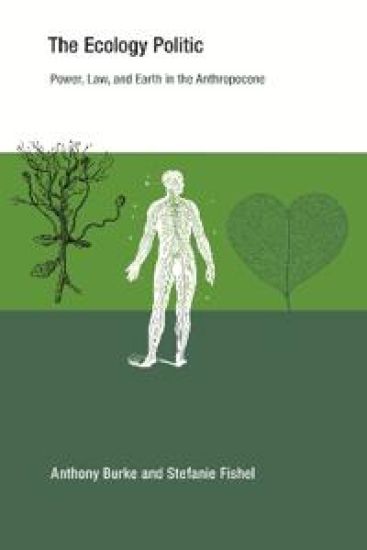
The Ecology Politic

The Ecology Politic

Anthony Burke; Stefanie Fishel

MIT PRESS LTD
2025
nidottu
A compelling proposal for new international law and institutions to address the planetary crisis that improves biodiversity protection, supports Indigenous peoples, and prevents catastrophic climate change. In The Ecology Politic, Anthony Burke and Stefanie Fishel contend that the roots of our planetary crisis lie in the modern state: in its destructive entanglement with capitalism and its colonial legacies of extraction and oppression. This, in turn, has shaped global governance and international law, as they continue to fail to curb global heating, deforestation, and extinction. In a far-reaching critique of the foundational political theory of the modern state--the Body-Politic--the authors insist that nothing less than a radically different model of the polity--an Ecology Politic--is needed if we are to escape this impasse. Burke and Fishel argue that the international rule of law enacts a sovereign ban of nature that appropriates nonhuman lives for profit and use while denying them political and legal standing. We fail because we rely on the very institutions, worldviews, and systems that generated the crisis to solve it. The authors reconsider political power, agency, scale, and democracy in the Anthropocene and assert a biospheric ethic that values the entangled planetary structure of matter, energy, and life. Further, they argue for more-than-human beings to be represented in an ecological democracy that flows across borders. In short, they imagine a polity whose fundamental purpose is to protect planetary ecosystems and nurture interlocking systems of social and ecological justice.
Institutionalising Multispecies Justice

Institutionalising Multispecies Justice

Danielle Celermajer; Anthony Burke; Stefanie Fishel; Erin Fitz-Henry; Nicole Rogers; David Schlosberg; Christine Winter

Cambridge University Press
2025
pokkari
Multispecies Justice (MSJ) is a theory and practice seeking to correct the defects making dominant theories of justice incapable of responding to current and emerging planetary disruptions and extinctions. Multispecies Justice starts with the assumption that justice is not limited to humans but includes all Earth others, and the relationships that enable their functioning and flourishing. This Element describes and imagines a set of institutions, across all scales and in different spheres, that respect, revere, and care for the relationships that make life on Earth possible and allow all natural entities, humans included, to flourish. It draws attention to the prefigurative work happening within societies otherwise dominated by institutions characterised by Multispecies Injustice, demonstrating historical and ongoing practices of MSJ in different contexts. It then sketches speculative possibilities that expand on existing institutional reforms and are more fundamentally transformational. This title is also available as Open Access on Cambridge Core.