Kirjojen hintavertailu – 12 903 725 kirjaa ja 27 kauppaa

Kirjailija

Stefanos Geroulanos

Kirjat ja teokset yhdessä paikassa: 10 kirjaa, julkaisuja vuosilta 2010–2025, suosituimpiin kuuluu Transparency in Postwar France. Vertaile teosten hintoja ja tarkista saatavuus suomalaisista kirjakaupoista.

10 kirjaa

Kirjojen julkaisuvuodet: 2010–2025.

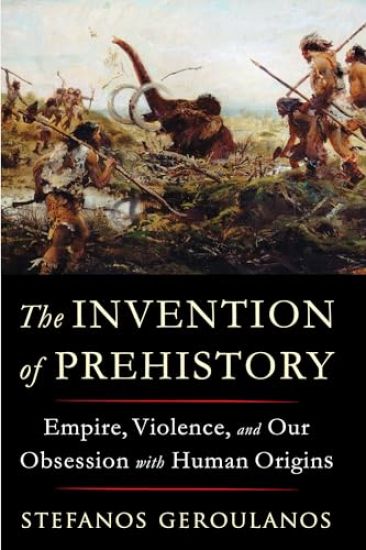
The Invention of Prehistory

The Invention of Prehistory

Stefanos Geroulanos

WW NORTON CO
2025
nidottu

Halvin toimitettuna 22,40 €

Books about the origins of humanity dominate bestseller lists, while national newspapers present breathless accounts of new archaeological findings and speculate about what those findings tell us about our earliest ancestors. We are obsessed with prehistory—and, in this respect, our current era is no different from any other in the last three hundred years. In this coruscating work, acclaimed historian Stefanos Geroulanos demonstrates how claims about the earliest humans not only shaped Western intellectual culture, but gave rise to our modern world. The very idea that there was a human past before recorded history only emerged with the Enlightenment, when European thinkers began to reject faith-based notions of humanity and history in favour of supposedly more empirical ideas about the world. From the “state of nature” and Romantic notions of virtuous German barbarians to theories about Neanderthals, killer apes and a matriarchal paradise where women ruled, Geroulanos captures the sheer variety and strangeness of the ideas that animated many of the major thinkers of the eighteenth and nineteenth centuries, including Jean-Jacques Rousseau, Charles Darwin and Karl Marx. Yet as Geroulanos shows, such ideas became, for the most part, the ideological foundations of repressive regimes and globe-spanning empires. Deeming other peoples “savages” allowed for guilt-free violence against them; notions of “killer apes” who were our evolutionary predecessors made war seem natural. The emergence of modern science only accelerated the West’s imperialism. The Nazi obsession with race was rooted in archaeological claims about prehistoric IndoGermans; the idea that colonialised peoples could be “bombed back to the Stone Age” was made possible by the technology of flight and the anthropological idea that civilisation advanced in stages. As Geroulanos argues, accounts of prehistory tell us more about the moment when they are proposed than about the deep past—and if we hope to start improving our future, we would be better off setting aside the search for how it all started. A necessary, timely, indelible account of how the quest for understanding the origins of humanity became the handmaiden of war and empire, The Invention of Prehistory will forever change how we think about the deep past.

The Invention of Prehistory

The Invention of Prehistory

Stefanos Geroulanos

WW NORTON CO
2024
sidottu

Halvin toimitettuna 26,90 €

Books about the origins of humanity dominate best-seller lists, while national newspapers present breathless accounts of new archaeological findings and speculate about what those findings tell us about our earliest ancestors. In this coruscating work, acclaimed historian Stefanos Geroulanos demonstrates how claims about the earliest humans not only shaped Western intellectual culture but gave rise to our modern world. The very idea that there was a human past before recorded history only emerged with the Enlightenment, when European thinkers began to reject faith-based notions of humanity and history in favour of supposedly more empirical ideas about the world. From the “state of nature” and Romantic notions of virtuous German barbarians to theories about Neanderthals, killer apes and a matriarchal paradise where women ruled, Geroulanos captures the sheer variety and strangeness of the ideas that animated many of the major thinkers of the eighteenth and nineteenth centuries, including Jean-Jacques Rousseau, Charles Darwin and Karl Marx. Yet as Geroulanos shows, such ideas became, for the most part, the ideological foundations of repressive regimes and globe-spanning empires. Deeming other peoples “savages” allowed for guilt-free violence against them; notions of “killer apes” who were our evolutionary predecessors made war seem natural. The emergence of modern science only accelerated the West’s imperialism. The Nazi obsession with race was rooted in archaeological claims about prehistoric IndoGermans; the idea that colonialised peoples could be “bombed back to the Stone Age” was made possible by the technology of flight and the anthropological idea that civilisation advanced in stages. As Geroulanos argues, accounts of prehistory tell us more about the moment when they are proposed than about the deep past—and if we hope to start improving our future, we would be better off setting aside the search for how it all started. A necessary, timely, indelible account of how the quest for understanding the origins of humanity became the handmaiden of war and empire, The Invention of Prehistory will forever change how we think about the deep past.

The Human Body in the Age of Catastrophe

The Human Body in the Age of Catastrophe

Stefanos Geroulanos; Todd Meyers

University of Chicago Press
2018
pokkari
The injuries suffered by soldiers during WWI were as varied as they were brutal. How could the human body suffer and often absorb such disparate traumas? Why might the same wound lead one soldier to die but allow another to recover? In The Human Body in the Age of Catastrophe, Stefanos Geroulanos and Todd Meyers uncover a fascinating story of how medical scientists came to conceptualize the body as an integrated yet brittle whole. Responding to the harrowing experience of the Great War, the medical community sought conceptual frameworks to understand bodily shock, brain injury, and the wildly divergence between patients. Geroulanos and Meyers carefully trace how this emerging constellation of concepts became essential for thinking about integration, individuality, fragility, and collapse far beyond medicine: in fields as diverse as anthropology, political economy, psychoanalysis, and cybernetics. Moving effortlessly between the history of medicine and intellectual history, The Human Body in the Age of Catastrophe is an intriguing look into the conceptual underpinnings of the world the Great War ushered in.
The Human Body in the Age of Catastrophe

The Human Body in the Age of Catastrophe

Stefanos Geroulanos; Todd Meyers

University of Chicago Press
2018
sidottu
The injuries suffered by soldiers during WWI were as varied as they were brutal. How could the human body suffer and often absorb such disparate traumas? Why might the same wound lead one soldier to die but allow another to recover? In The Human Body in the Age of Catastrophe, Stefanos Geroulanos and Todd Meyers uncover a fascinating story of how medical scientists came to conceptualize the body as an integrated yet brittle whole. Responding to the harrowing experience of the Great War, the medical community sought conceptual frameworks to understand bodily shock, brain injury, and the wildly divergence between patients. Geroulanos and Meyers carefully trace how this emerging constellation of concepts became essential for thinking about integration, individuality, fragility, and collapse far beyond medicine: in fields as diverse as anthropology, political economy, psychoanalysis, and cybernetics. Moving effortlessly between the history of medicine and intellectual history, The Human Body in the Age of Catastrophe is an intriguing look into the conceptual underpinnings of the world the Great War ushered in.
Transparency in Postwar France

Transparency in Postwar France

Stefanos Geroulanos

Stanford University Press
2017
pokkari
This book returns to a time and place when the concept of transparency was met with deep suspicion. It offers a panorama of postwar French thought where attempts to show the perils of transparency in politics, ethics, and knowledge led to major conceptual inventions, many of which we now take for granted. Between 1945 and 1985, academics, artists, revolutionaries, and state functionaries spoke of transparency in pejorative terms. Associating it with the prying eyes of totalitarian governments, they undertook a critical project against it—in education, policing, social psychology, economic policy, and the management of information. Focusing on Sartre, Lacan, Canguilhem, Lévi-Strauss, Leroi-Gourhan, Foucault, Derrida, and others, Transparency in Postwar France explores the work of ethicists, who proposed that individuals are transparent neither to each other nor to themselves, and philosophers, who clamored for new epistemological foundations. These decades saw the emergence of the colonial and phenomenological "other," the transformation of ideas of normality, and the effort to overcome Enlightenment-era humanisms and violence in the name of freedom. These thinkers' innovations remain centerpieces for any resistance to contemporary illusions that tolerate or enable power and social coercion.
Transparency in Postwar France

Transparency in Postwar France

Stefanos Geroulanos

STANFORD UNIVERSITY PRESS
2017
sidottu
This book returns to a time and place when the concept of transparency was met with deep suspicion. It offers a panorama of postwar French thought where attempts to show the perils of transparency in politics, ethics, and knowledge led to major conceptual inventions, many of which we now take for granted. Between 1945 and 1985, academics, artists, revolutionaries, and state functionaries spoke of transparency in pejorative terms. Associating it with the prying eyes of totalitarian governments, they undertook a critical project against it—in education, policing, social psychology, economic policy, and the management of information. Focusing on Sartre, Lacan, Canguilhem, Lévi-Strauss, Leroi-Gourhan, Foucault, Derrida, and others, Transparency in Postwar France explores the work of ethicists, who proposed that individuals are transparent neither to each other nor to themselves, and philosophers, who clamored for new epistemological foundations. These decades saw the emergence of the colonial and phenomenological "other," the transformation of ideas of normality, and the effort to overcome Enlightenment-era humanisms and violence in the name of freedom. These thinkers' innovations remain centerpieces for any resistance to contemporary illusions that tolerate or enable power and social coercion.
An Atheism That Is not Humanist Emerges in French Thought

An Atheism That Is not Humanist Emerges in French Thought

Stefanos Geroulanos

Stanford University Press
2010
pokkari
French philosophy changed dramatically in the second quarter of the twentieth century. In the wake of World War I and, later, the Nazi and Soviet disasters, major philosophers such as Kojève, Levinas, Heidegger, Koyré, Sartre, Merleau-Ponty, and Hyppolite argued that man could no longer fill the void left by the "death of God" without also calling up the worst in human history and denigrating the dignity of the human subject. In response, they contributed to a new belief that man should no longer be viewed as the basis for existence, thought, and ethics; rather, human nature became dependent on other concepts and structures, including Being, language, thought, and culture. This argument, which was to be paramount for existentialism and structuralism, came to dominate postwar thought. This intellectual history of these developments argues that at their heart lay a new atheism that rejected humanism as insufficient and ultimately violent.
An Atheism That Is not Humanist Emerges in French Thought

An Atheism That Is not Humanist Emerges in French Thought

Stefanos Geroulanos

Stanford University Press
2010
sidottu
French philosophy changed dramatically in the second quarter of the twentieth century. In the wake of World War I and, later, the Nazi and Soviet disasters, major philosophers such as Kojève, Levinas, Heidegger, Koyré, Sartre, Merleau-Ponty, and Hyppolite argued that man could no longer fill the void left by the "death of God" without also calling up the worst in human history and denigrating the dignity of the human subject. In response, they contributed to a new belief that man should no longer be viewed as the basis for existence, thought, and ethics; rather, human nature became dependent on other concepts and structures, including Being, language, thought, and culture. This argument, which was to be paramount for existentialism and structuralism, came to dominate postwar thought. This intellectual history of these developments argues that at their heart lay a new atheism that rejected humanism as insufficient and ultimately violent.