Kirjojen hintavertailu – 12 859 827 kirjaa ja 27 kauppaa

Kirjailija

Stephan Lessenich

Kirjat ja teokset yhdessä paikassa: 18 kirjaa, julkaisuja vuosilta 1997–2024, suosituimpiin kuuluu Theorien des Sozialstaats zur Einführung. Vertaile teosten hintoja ja tarkista saatavuus suomalaisista kirjakaupoista.

18 kirjaa

Kirjojen julkaisuvuodet: 1997–2024.

Ageing as Future

Ageing as Future

Frieder R. Lang; Stephan Lessenich; Klaus Rothermund

Springer International Publishing AG
2024
nidottu
Contemporary societies are aging – but what does that mean? Is this something bad? And can societies age as a whole? By bringing together psychological, gerontological, and sociological findings, this open access book opens up a hitherto unique, multifaceted, and realistic view of the phenomenon of old age and the process of aging. The volume is based on the results of the project “Ageing as Future”, a long-term project network (2007-2021) involving a total of more than 30 scientists worldwide. The focus of the project was threefold: A first issue was concerned with how views on aging influence development in old age; secondly, the project analyzed determinants and consequences of provision for old age; and thirdly, it investigated the different ways in which aging is shaped by managing time in old age. For more than a decade, the authors conducted quantitative and qualitative studies, involving large samples from three different continents. The results show that one-sided views of old age – whether negative stereotypes or positive exaggerations – do not do justice to the complexity of the experience of aging. Based on these results, the authors plead for individual and societal acceptance of the social fact of aging – and for the right to live an autonomous and dignified life in old age just as in other phases of life. Ageing as Future: A study by the Volkswagen Foundation presents findings from a unique large international study that are of interest to aging researchers around the world: academically, socio-politically, practically, and personally. Whether old or young, the book encourages one to question one's own views of aging. When reading this book, it becomes obvious that old age is a highly diverse experience, depending on a host of societal and individual factors.
Ageing as Future

Ageing as Future

Frieder R. Lang; Stephan Lessenich; Klaus Rothermund

Springer International Publishing AG
2024
sidottu
Contemporary societies are aging – but what does that mean? Is this something bad? And can societies age as a whole? By bringing together psychological, gerontological, and sociological findings, this open access book opens up a hitherto unique, multifaceted, and realistic view of the phenomenon of old age and the process of aging. The volume is based on the results of the project “Ageing as Future”, a long-term project network (2007-2021) involving a total of more than 30 scientists worldwide. The focus of the project was threefold: A first issue was concerned with how views on aging influence development in old age; secondly, the project analyzed determinants and consequences of provision for old age; and thirdly, it investigated the different ways in which aging is shaped by managing time in old age. For more than a decade, the authors conducted quantitative and qualitative studies, involving large samples from three different continents. The results show that one-sided views of old age – whether negative stereotypes or positive exaggerations – do not do justice to the complexity of the experience of aging. Based on these results, the authors plead for individual and societal acceptance of the social fact of aging – and for the right to live an autonomous and dignified life in old age just as in other phases of life. Ageing as Future: A study by the Volkswagen Foundation presents findings from a unique large international study that are of interest to aging researchers around the world: academically, socio-politically, practically, and personally. Whether old or young, the book encourages one to question one's own views of aging. When reading this book, it becomes obvious that old age is a highly diverse experience, depending on a host of societal and individual factors.

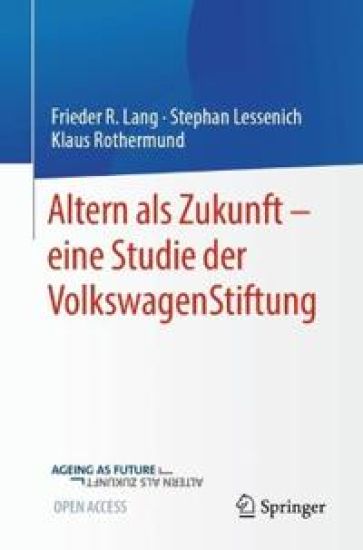
Altern als Zukunft – eine Studie der VolkswagenStiftung

Altern als Zukunft – eine Studie der VolkswagenStiftung

Frieder R. Lang; Stephan Lessenich; Klaus Rothermund

Springer-Verlag Berlin and Heidelberg GmbH Co. KG
2022
nidottu
Deutschland altert – aber was heißt das? Ist das schlimm? Und kann eine Gesellschaft überhaupt als Ganzes altern? In einer Zusammenführung von psychologischen, gerontologischen und soziologischen Erkenntnissen eröffnet dieses Open Access Buch einen bislang einzigartigen, vielseitigen und realistischen Blick auf das Phänomen des Alters und den Prozess des Alterns. Schwerpunkte des Projekts Altern als Zukunft waren Forschungen zu Altersbildern, zur Vorsorge für das Alter sowie zum Zeithandeln im Alter. Über ein Jahrzehnt lang führten die Autoren hierzu quantitative und qualitative Untersuchungen in drei Kontinenten durch. Die Ergebnisse zeigen, dass vereinseitigende Sichtweisen auf das Alter – seien es negative Stereotypen oder positive Überhöhungen – der Komplexität von Alternserfahrungen nicht gerecht werden. Das Buch richtet sich an alle, die sich für das Altern interessieren: wissenschaftlich, gesellschaftspolitisch, praktisch und persönlich. Ob alt oder jung, das Buch regt dazu an, eigene Sichtweisen zu hinterfragen. Eines wird deutlich: das ‚eine‘ Alter gibt es nicht – und Altern ist unsere Zukunft. Altern als Zukunft plädiert für die individuelle wie gesellschaftliche Akzeptanz der sozialen Tatsache des Alterns – und für das Recht, im höheren Alter genauso selbstbestimmt leben zu können wie in anderen Altersphasen auch.
Living Well at Others' Expense

Living Well at Others' Expense

Stephan Lessenich

Polity Press
2019
sidottu
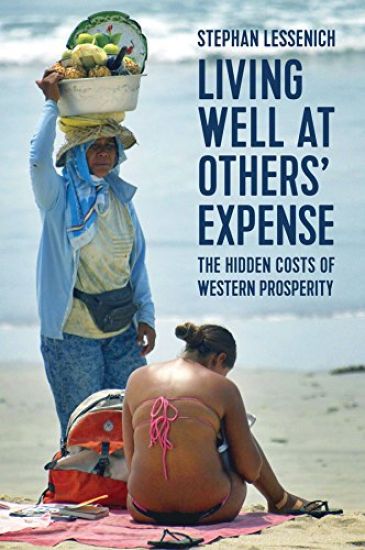
At the heart of developed societies lies an insatiable drive for wealth and prosperity. Yet in a world ruled by free-market economics, there are always winners and losers. The benefits enjoyed by the privileged few come at the expense of the many. In this important new book, Stephan Lessenich shows how our wealth and affluence are built overwhelmingly at the expense of those in less-developed countries and regions of the world. His theory of ‘externalization’ demonstrates how the negative consequences of our lifestyles are directly transferred onto the world’s poorest. From the destruction of habitats caused by the massive increase in demand for soy and palm oil to the catastrophic impact of mining, Lessenich shows how the Global South has borne the brunt of our success. Yet, as we see from the mass movements of people across the world, we can no longer ignore the environmental and social toll of our prosperity. Lessenich’s highly original account of the structure and dynamics of global inequality highlights the devastating consequences of the affluent lifestyles of the West and reminds us of our far-reaching political responsibilities in an increasingly interconnected world.
Claus Offe and the Critical Theory of the Capitalist State

Claus Offe and the Critical Theory of the Capitalist State

Jens Borchert; Stephan Lessenich

Routledge
2018
nidottu
Back in 1972, German political sociologist Claus Offe published a book on the Structural Problems of Late Capitalism which, for almost two decades, inspired and stimulated an international and transdisciplinary debate on the role of the state in contemporary capitalism. An academic debate which, paradoxically, began to wane as the issues about which Offe had been writing became even more prominent: the "Contradictions of the Welfare State" (the title of a collection of Offe’s main contributions to the debate published in English in 1984) and democratic capitalism’s reality of the permanent "crises of crisis management". Since 2008, it has again become a widely shared diagnosis that advanced capitalism is in crisis. However, there is either scholarly disagreement or (more often so) mere perplexity when it comes to understanding this crisis and to explaining the prevalent patterns in dealing with it. In this volume, Jens Borchert and Stephan Lessenich critically combine a reconstruction Claus Offe’s approach to state theory with an analysis of the current constellation of democratic capitalism based on that same theory. In doing so, they expertly argue that his relational approach to state theory is much better equipped analytically to grasp the contradictory dynamics of the financial crisis and its political regulation than competing contributions. This is why systematically revisiting the theory of "late capitalism" is not only of a historical concern, but constitutes an essential contribution to a political sociology of our time.
Claus Offe and the Critical Theory of the Capitalist State

Claus Offe and the Critical Theory of the Capitalist State

Jens Borchert; Stephan Lessenich

Routledge
2016
sidottu
Back in 1972, German political sociologist Claus Offe published a book on the Structural Problems of Late Capitalism which, for almost two decades, inspired and stimulated an international and transdisciplinary debate on the role of the state in contemporary capitalism. An academic debate which, paradoxically, began to wane as the issues about which Offe had been writing became even more prominent: the "Contradictions of the Welfare State" (the title of a collection of Offe’s main contributions to the debate published in English in 1984) and democratic capitalism’s reality of the permanent "crises of crisis management". Since 2008, it has again become a widely shared diagnosis that advanced capitalism is in crisis. However, there is either scholarly disagreement or (more often so) mere perplexity when it comes to understanding this crisis and to explaining the prevalent patterns in dealing with it. In this volume, Jens Borchert and Stephan Lessenich critically combine a reconstruction Claus Offe’s approach to state theory with an analysis of the current constellation of democratic capitalism based on that same theory. In doing so, they expertly argue that his relational approach to state theory is much better equipped analytically to grasp the contradictory dynamics of the financial crisis and its political regulation than competing contributions. This is why systematically revisiting the theory of "late capitalism" is not only of a historical concern, but constitutes an essential contribution to a political sociology of our time.
Sociology, Capitalism, Critique

Sociology, Capitalism, Critique

Hartmut Rosa; Stephan Lessenich; Klaus Dörre

Verso Books
2015
sidottu
Three radical perspectives on the critique of capitalismFor years, the critique of capitalism was lost from public discourse; the very word "capitalism" sounded like a throwback to another era. Nothing could be further from the truth today. In this new intellectual atmosphere, Sociology, Capitalism, Critique is a contribution to the renewal of critical sociology, founded on an empirically grounded diagnosis of society's ills. The authors, Germany's leading critical sociologists - Klaus Dörre, Stephan Lessenich, and Hartmut Rosa - share a conviction that ours is a pivotal period of renewal, in which the collective endeavour of academics can amount to an act of intellectual resistance, working to prevent any regressive development that might return us to neoliberal domination. The authors discuss key issues, such as questions of accumulation and expropriation; discipline and freedom; and the powerful new concepts of activation and acceleration. Their politically committed sociology, which takes the side of the losers in the current crisis, places society's future well-being at the centre of their research. Their collective approach to this project is a conscious effort to avoid co-optation in the institutional practices of the academy. These three differing but complementary perspectives serve as an insightful introduction to the contemporary themes of radical sociology in capitalism's post-crisis phase.
Sociology, Capitalism, Critique

Sociology, Capitalism, Critique

Hartmut Rosa; Stephan Lessenich; Klaus Dörre

Verso Books
2015
nidottu
For years, the critique of capitalism was lost from public discourse; the very word "capitalism" sounded like a throwback to another era. Nothing could be further from the truth today. In this new intellectual atmosphere, Sociology, Capitalism, Critique is a contribution to the renewal of critical sociology, founded on an empirically grounded diagnosis of society's ills. The authors, Germany's leading critical sociologists-Klaus Dörre, Stephan Lessenich, and Hartmut Rosa-share a conviction that ours is a pivotal period of renewal, in which the collective endeavour of academics can amount to an act of intellectual resistance, working to prevent any regressive development that might return us to neoliberal domination. The authors discuss key issues, such as questions of accumulation and expropriation; discipline and freedom; and the powerful new concepts of activation and acceleration. Their politically committed sociology, which takes the side of the losers in the current crisis, places society's future well-being at the centre of their research. Their collective approach to this project is a conscious effort to avoid co-optation in the institutional practices of the academy. These three differing but complementary perspectives serve as an insightful introduction to the contemporary themes of radical sociology in capitalism's post-crisis phase.
Soziologie - Kapitalismus - Kritik

Soziologie - Kapitalismus - Kritik

Klaus Dörre; Stephan Lessenich; Hartmut Rosa

SUHRKAMP VERLAG
2012
pokkari
Einst gehörte es zu den zentralen Aufgaben der Soziologie, die moderne Gesellschaft über die sozialen Voraussetzungen und Konsequenzen ihrer Krisenhaftigkeit aufzuklären. Diesem heute oft vernachlässigten Anliegen fühlen sich die Autoren dieses Bandes verpflichtet und stellen die Frage nach dem zeitdiagnostischen Potential soziologischer Analyse in den Mittelpunkt einer Debatte. Zeitdiagnostisch fundierte Gesellschaftskritik, so eine ihrer Thesen, gehört zum Kerngeschäft der Soziologie. Eine zweite besagt, daß jede Gesellschaftskritik der Gegenwart notwendig auch Kapitalismuskritik sein muß. Anhand von drei unterschiedlichen, aber komplementären Perspektiven auf aktuelle Prozesse der Landnahme, der Aktivierung und der Beschleunigung wird eine soziologische Kritik der Gegenwartsgesellschaft entfaltet, die zugleich Ansatzpunkte für politisches Handeln aufzeigt.
Lessenich, S: Neuerfindung des Sozialen

Lessenich, S: Neuerfindung des Sozialen

Stephan Lessenich

TRANSCRIPT VERLAG
2008
nidottu
Der Sozialstaat befindet sich in einer Phase nachhaltiger Umbrüche. Dies ist mittlerweile Allgemeingut. Doch wie dieser Wandel, ja diese ? Krise? näher zu bestimmen ist - darüber herrscht alles andere als Klarheit. Die vorherrschenden Diskurse über die Demontage bzw. den ?neoliberalen? Rückzug des Sozialstaats greifen zu kurz. Dieses Buch schlägt dagegen vor, den Wandel vom (ver-)sorgenden zum aktivierenden und investiven Sozialstaat als fundamentale Achsenverschiebung im Verhältnis zwischen Individuum und Gesellschaft zu verstehen: als Neuerfindung des Sozialen. Es zeigt die Konturen einer ? Aktivgesellschaft?, in der Mobilität, Flexibilität und Produktivität zu politischen Steuerungsformeln individuellen Selbstzwangs verkommen. Nicht länger das Wohlergehen der einzelnen Bürger steht im Vordergrund, sondern vielmehr die Wohlfahrt der ?gesellschaftlichen Gemeinschaft?. Damit wird nicht weniger als das Grundversprechen der Moderne aufgegeben: ein selbstbestimmtes Leben zu führen.
Sozialmodell Europa

Sozialmodell Europa

Andreas Aust; Sigrid Leitner; Stephan Lessenich

Vs Verlag Fur Sozialwissenschaften
2000
nidottu
Das vierte "Jahrbuch für Europa- und Nordamerika-Studie" greift die politisch wie wissenschaftlich hochaktuelle Diskussion rund um das "Europäische Sozialmodell" auf. Es versucht zu klären, was darunter konkret zu verstehen ist und wie die Zukunft des "Europäischen Sozialmodells" einzuschätzen ist: Existiert das Modell und wird es überleben?