Kirjojen hintavertailu – 12 859 819 kirjaa ja 27 kauppaa

Kirjailija

Stephanie Allais

Kirjat ja teokset yhdessä paikassa: 3 kirjaa, julkaisuja vuosilta 2013–2023, suosituimpiin kuuluu Transitioning Vocational Education and Training in Africa. Vertaile teosten hintoja ja tarkista saatavuus suomalaisista kirjakaupoista.

3 kirjaa

Kirjojen julkaisuvuodet: 2013–2023.

Transitioning Vocational Education and Training in Africa

Transitioning Vocational Education and Training in Africa

Simon McGrath; George Openjuru Ladaah; Heila Lotz-Sisitka; Stephanie Allais; Jacques Zeelen; Volker Wedekind; Presha Ramsarup; David Monk; Luke Metelerkamp; Jo-Anna Russon; Bonaventure Kyaligonja; Glen Robbins; Scovia Adrupio; David Ocan; Kenneth Nyeko; Adoye Primo; Palesa Molebatsi; Themba Tshabalala; Sidney Muhangi; Maxwell Openjuru

Bristol University Press
2023
nidottu
EPDF and EPUB available Open Access under CC-BY-NC-ND licence. The transition to more just and sustainable development requires radical change across a wide range of areas and particularly within the nexus between learning and work. This book takes an expansive view of vocational education and training that goes beyond the narrow focus of much of the current literature and policy debate. Drawing on case studies across rural and urban settings in Uganda and South Africa, the book offers a new way of seeing this issue through an exploration of the multiple ways in which people learn to have better livelihoods. Crucially, it explores learning that takes place informally online, within farmers’ groups, and in public and private educational institutions. Offering new insights and ways of thinking about this field, the book draws out clear implications for theory, policy and practice in Africa and beyond.
New South African Review 6

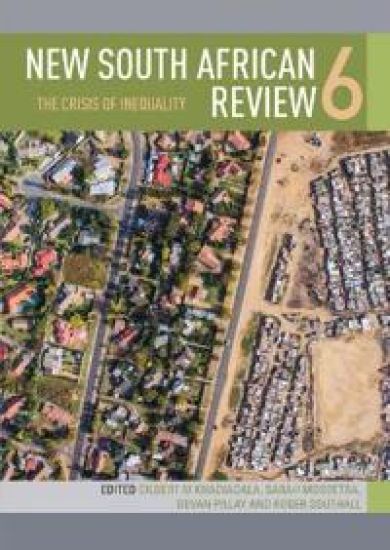
New South African Review 6

Kariuki Samuel; Jacqui Ala; Stephanie Allais; Atkinson Doreen; Black David; Sarah Bracking; Cock Jacklyn; Glaser Daryl; Gilad Isaacs; Makgetla Neva; Maharajh Rasigan; Motala Enver; Sonwabile Mnwana; Jana Mudronova; David Neves; Samuel Oloruntoba; Pillay Devan; Southall Roger; Vally Salim; Jo-Ansie van Wyk

Wits University Press
2018
nidottu
Despite the transition from apartheid to democracy, South Africa is the most unequal country in the world. Its extremes of wealth and poverty undermine intensifying struggles for a better life for all. The wide-ranging essays in this sixth volume of the New South African Review demonstrate how the consequences of inequality extend throughout society and the political economy, crippling the quest for social justice, polarising the politics, skewing economic outcomes and bringing devastating environmental consequences in their wake. Contributors survey the extent and consequences of inequality across fields as diverse as education, disability, agrarian reform, nuclear geography and small towns, and tackle some of the most difficult social, political and economic issues. How has the quest for greater equality affected progressive political discourse? How has inequality reproduced itself, despite best intentions in social policy, to the detriment of the poor and the historically disadvantaged? How have shifts in mining and the financialisation of the economy reshaped the contours of inequality? How does inequality reach into the daily social life of South Africans, and shape the way in which they interact? How does the extent and shape of inequality in South Africa compare with that of other major countries of the global South which themselves are notorious for their extremes of wealth and poverty? South African extremes of inequality reflect increasing inequality globally, and The Crisis of Inequality will speak to all those – general readers, policy makers, researchers and students – who are demanding a more equal world.
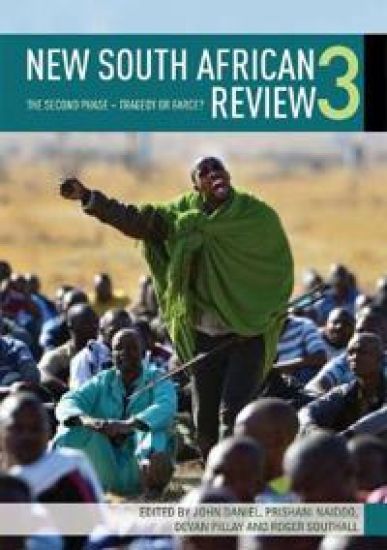
New South African Review 3

New South African Review 3

Stephanie Allais; William Attwell; Booysen Susan; Cock Jacklyn; Daniel John; Fig David; Dick Forslund; Maylam Paul; Julia Moorman; Motala Shireen; Naidoo Prishani; Naidoo Vinothan; Naidu Sanusha; Nicol Martin; Pillay Devan; Marisha Ramdeen; Rispel Laetitia; Southall Roger; Ahmed Veriava; Louise Vincent

Wits University Press
2013
nidottu
Hegel remarks somewhere that all great world-historic facts and personages appear, so to speak, twice. He forgot to add: the first time as tragedy, the second time as farce … (Karl Marx 1852) In the face of the continuing national tragedy of the inequality, poverty and unemployment which have triggered rising working- class discontent around the country, the ANC announced a `second phase’ of the `national democratic revolution’ to deal with the challenges. Ironically, the ANC post-Mangaung has resolved to preserve the core tenets of the minerals-energy-financial complex that defined racial capitalism – while at the same time ratcheting up the revolutionary rhetoric to keep the working class and marginalised onside. If the `first phase’ was a tragedy of the unmet expectations of the majority, is the `second phase’ likely to be a farce? The chapters in this volume are written by experts in their fields and address issues of politics, power and social class; economy, ecology and labour; public policy and social practice; and South Africa beyond its borders. They examine some of these challenges, and indicate that they are as much about the defective content of policies as their poor implementation. The third volume of the New South African Review continues the series by providing in-depth analyses of the key issues facing our country today.