Kirjojen hintavertailu – 12 903 725 kirjaa ja 27 kauppaa

Kirjailija

Stephanie Döpper

Kirjat ja teokset yhdessä paikassa: 6 kirjaa, julkaisuja vuosilta 2019–2024, suosituimpiin kuuluu Keramikassemblagen Der Spaten Bronzezeit Aus Dem Konigspalast Von Qatna Und Eine Vergleich Betrachtung Zeitgleicher Keramik Westsyriens Und Der Levant. Vertaile teosten hintoja ja tarkista saatavuus suomalaisista kirjakaupoista.

Nimi esiintyy myös muodoissa: Stephanie Dopper

6 kirjaa

Kirjojen julkaisuvuodet: 2019–2024.

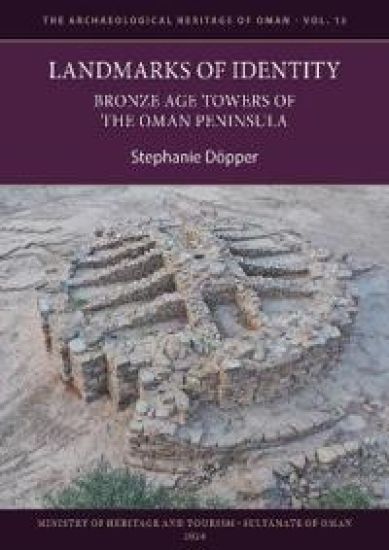
Landmarks of Identity: Bronze Age Towers of the Oman Peninsula
Five thousand years ago, in the Early Bronze Age, monumental stone and mud-brick structures known as towers appeared on the landscape of the Oman Peninsula. Since then, they have served as distinctive landmarks of identity for the people of the region. Despite many years of archaeological research and intensive excavations of some of them, much remains unknown about these impressive structures. This book aims to update the long-standing discussions on these towers and to assess their chronological depth of more than a millennium, with the first of them constructed as early as the end of the 4th millennium BCE and the last substantial building activities at the beginning of the 2nd millennium BCE. The book also reassesses their possible functions, such as defence, refuge, demarcation of property, residence of elites, involvement in complex irrigation systems, arenas for cultic practices, in the light of recent archaeological research. The book will also provide a richly illustrated catalogue with extensive bibliography, research history and coordinates of all the nearly hundred towers known to date in the Sultanate of Oman and the United Arab Emirates, creating a record for researchers and visitors alike.
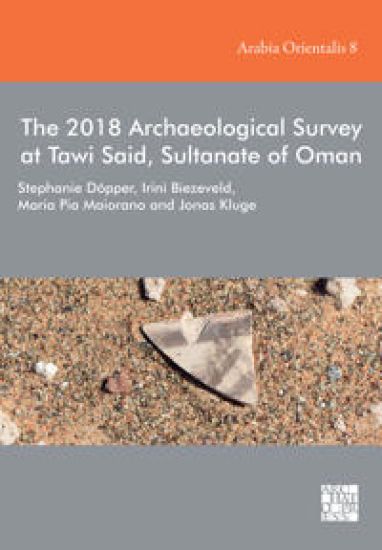
The 2018 Archaeological Survey at Tawi Said, Sultanate of Oman

The 2018 Archaeological Survey at Tawi Said, Sultanate of Oman

Stephanie Döpper; Irini Biezeveld; Maria Pia Maiorano; Jonas Kluge

Archaeopress
2024
sidottu
This book outlines the results of the 2018 archaeological survey at Tawi Said, located on the edge of the Sharqiyah desert in the Sultanate of Oman. The surveyed area of 150 x 125 m yielded close to 8,600 artifacts, with pottery sherds comprising the majority of the finds. Additional discoveries include shells, lithic tools, copper production waste, jewellery and fragments of soft-stone vessels. Of particular interest are two stamp seals, one of which bears a resemblance to the seals of Dilmun style. Two significant phases are attested by the finds from Tawi Said: the Wadi Suq period (2000-1600 BCE) and the Late Islamic period (1650-1970 CE). Together with other discoveries, the Dilmun-inspired stamp seal illustrates the interconnectedness of Tawi Said in interregional exchange during the Wadi Suq period. The connectivity of the Late Islamic period is similarly evidenced by imported pottery, glass bangles and other artefacts. The absence of architectural remains suggests that Tawi Said was a temporary place used by mobile groups throughout its existence.
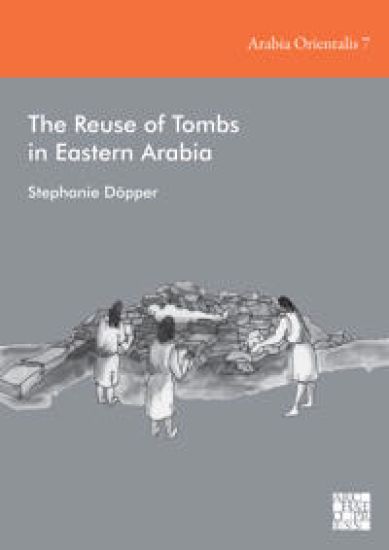
The Reuse of Tombs in Eastern Arabia

The Reuse of Tombs in Eastern Arabia

Stephanie Döpper

Archaeopress
2023
sidottu
People in the past were always confronted with surviving remains from previous periods, and reacted to and engaged with them in varying ways. One activity through which this becomes visible is the reuse of tombs. If this reuse is an intentional reference to the past, it explicitly communicates meaning and thus cultural memory. In Eastern Arabia, however, this phenomenon received little attention in archaeological research, often having been discounted by the excavators as a disturbance to the first use of a tomb. This book will investigate reuse of tombs from the beginning of the Early Bronze Age until the end of the Sasanian period in order to understand the underlying purposes and social context of this practice. In Eastern Arabia, where the adding of new burials to the original content of the tomb is common, such reuse might have functioned to make sense of the present, to give orientation in new situations and to help shape a cultural identity. Reuse occurred more often in the Iron Age and Samad/PIR periods than in all other periods investigated, combined. These are also times of visible social hierarchies. The resulting tensions made counter-measures that both promoted social cohesion and group identity and legitimised the role of the elites necessary. This might have been achieved through creating cultural memory by reusing old tombs.
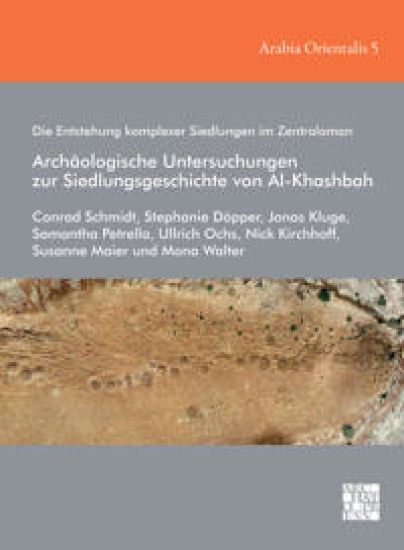
Die Entstehung komplexer Siedlungen im Zentraloman: Archäologische Untersuchungen zur Siedlungsgeschichte von Al-Khashbah

Die Entstehung komplexer Siedlungen im Zentraloman: Archäologische Untersuchungen zur Siedlungsgeschichte von Al-Khashbah

Conrad Schmidt; Stephanie Döpper; Jonas Kluge; Samantha Petrella; Ullrich Ochs; Nick Kirchhoff; Susanne Maier; Mona Walter

Archaeopress
2021
sidottu
Der vorliegende Sammelband präsentiert die Ergebnisse des 2015 und darüber hinaus vom Institut für die Kulturen des Alten Orients der Universität Tübingen durchgeführten Surveys in Al-Khashbah, einem der größten frühbronzezeitlichen Fundorte auf der Omanischen Halbinsel. Zehn Monumentalgebäude, 273 Gräber sowie weitere Bauwerke aus der Hafit- (3100–2700 v. Chr.) und Umm an-Nar-Zeit (2700–2000 v. Chr.) konnten hier dokumentiert werden. Dadurch ist Al-Khashbah prädestiniert für die Untersuchung der Anfänge komplexer Siedlungen und Gesellschaftsstrukturen im nördlichen Inner-Oman am Übergang vom 4. zum 3. Jahrtausend v. Chr., denn viele der bislang der Umm an-Nar-Zeit zugeschriebenen Errungenschaften, so zum Beispiel die Monumentalarchitektur und das Schmelzen von Kupfer, sind hier bereits in der vorausgehenden Hafit-Zeit nachweisbar. In der Umm an-Nar-Zeit setzt sich die Entwicklung Al-Khashbahs kontinuierlich fort, wodurch der Fundplatz zusätzlich an Bedeutung gewinnt. Nach den Ergebnissen des Surveys scheint die Kupferproduktion vor Ort in dieser Zeit aber keine Rolle mehr zu spielen. Aus den auf die frühe Bronzezeit folgenden Epochen des 2. und 1. Jahrtausends v. Chr. sowie des 1. und 2. Jahrtausends n. Chr. gibt es in Al-Khashbah nur äußerst wenige Befunde. Erst im 18.–20. Jahrhundert n. Chr. erfährt der Ort eine intensive Wiederbelebung, wovon insbesondere die alte Lehmziegelsiedlung im Norden der Palmenoase, eine kleine Siedlung im Osten des Untersuchungsgebiets, eine Reihe von Bewässerungsanlagen, mehrere Friedhöfe, Petroglyphen sowie zahlreiche an der Oberfläche gefundene spätislamische Keramikscherben zeugen.
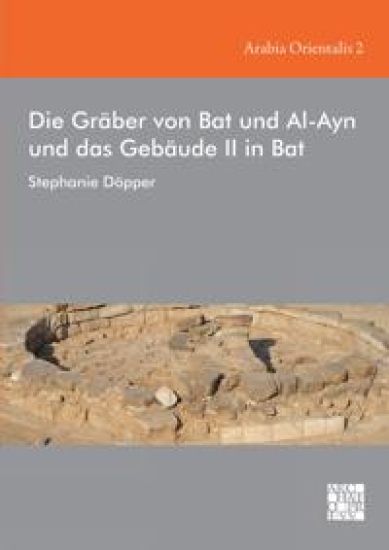
Die Graber Von Bat Und Al-Ayn Und Das Gebaude II in Bat
The Early Bronze Age in third-millennium-BC Eastern Arabia was a period of fundamental change, which is apparent in the development of social complexity, the exploitation of new resources and the emergence of new modes of life. Hallmarks of this period include monumental structures, so-called towers, and stone-built circular tombs. The second volume of the series Arabia Orientalis is dedicated to the archaeological investigation of the Early Bronze Age necropolises of the UNESCO world heritage sites Bat and Al-Ayn in the Sultanate of Oman, as well as the monumental tower structure Building II at Bat. It encompasses detailed reports on the architecture and stratigraphy, as well as the find assemblages from the excavated buildings, including pottery and small finds, along with anthropological as well as anthracological studies. The publication presents insights into changing burial customs, as well as the function of the monumental tower structures. Three out of the four excavated Hafit- and Umm an-Nar-period tombs in the necropolises featured evidence for reuse at later times, especially during the Samad period, where new inhumations were placed into the Bronze Age tombs. The early Umm an-Nar tower Building II is surrounded by a large ditch system that might have served as protection against flooding from the nearby wadi.
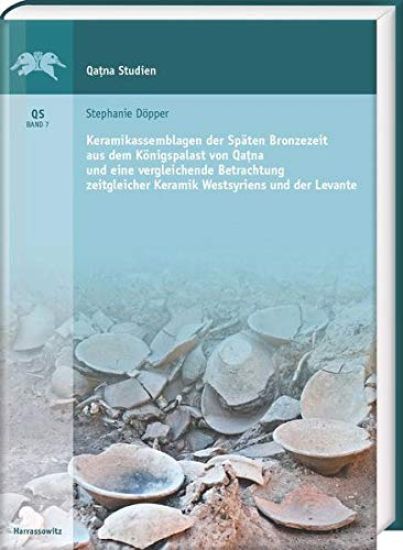
Keramikassemblagen Der Spaten Bronzezeit Aus Dem Konigspalast Von Qatna Und Eine Vergleich Betrachtung Zeitgleicher Keramik Westsyriens Und Der Levant
English Summary: In Volume 7 of the Qatna-Studien series Stephanie Dopper presents late Bronze Age pottery from areas G, DK, BU and Tombeau II in the Royal Palace of Qatna in Syria. The ceramic assemblages are presented and evaluated in great detail in numerous tables, diagrams and in a catalog of ceramic drawings. In addition to presenting the methodology applied, particular attention is paid to comparing the ceramic assemblages with each other, as well as to their functional and chronological classification. Thus far it has been assumed that the similarity of ceramic assemblages stems from them having a similar chronological position, meaning that ceramic assemblages from different localities can therefore be related to each other. This assumption is questioned on the basis of a standardized classification of more than 20,000 diagnostic pottery shards from more than 50 sites in Western Syria and the Levant. Using the extensive ceramic corpus correspondence analyses were carried out in order to determine the degree of similarity between the classified assemblages. This analysis demonstrated that within a relatively short time frame, such as the Late Bronze Age in Western Syria and the Levant, the similarities and differences between ceramic assemblages result from predominantly regional and functional rather than chronological factors. German Description: Stephanie Dopper prasentiert in Band 7 der Qatna-Studien die spatbronzezeitliche Keramik der Bereiche G, DK, BU und Tombeau II des Konigspalastes von Qatna, Syrien. In zahlreichen Tabellen, Diagrammen und einem Katalog der Keramikzeichnungen werden die Keramikassemblagen umfassend vorgestellt und detailliert ausgewertet. Besonderes Augenmerk liegt dabei neben der Darstellung der angewandten Methodik auf dem Vergleich der Keramikassemblagen untereinander sowie auf ihrer funktionalen und chronologischen Einordnung. Bislang wurde angenommen, dass die Ahnlichkeit von Keramikassemblagen durch eine ahnliche chronologische Stellung begrundet ist und darauf aufbauend Keramikassemblagen verschiedener Fundorte miteinander in Beziehung gesetzt werden konnen. Diese Annahme wird auf der Grundlage einer einheitlichen Klassifikation von mehr als 20.000 diagnostischen Keramikscherben aus uber 50 Fundorten Westsyriens und der Levante hinterfragt. Anhand des umfassenden Keramikkorpus wurden Korrespondenzanalysen durchgefuhrt, um den Grad der Ahnlichkeit zwischen den typologisierten Assemblagen festzustellen. Dabei hat sich gezeigt, dass innerhalb eines relativ kurzen zeitlichen Rahmens wie der Spatbronzezeit Westsyriens und der Levante Ahnlichkeiten und Unterschiede zwischen Keramikassemblagen vorwiegend auf regionale und funktionale und kaum auf chronologische Aspekte zuruckzufuhren sind.