Kirjojen hintavertailu – 12 903 725 kirjaa ja 27 kauppaa

Kirjailija

Stephanie Kirk

Kirjat ja teokset yhdessä paikassa: 5 kirjaa, julkaisuja vuosilta 2016–2025, suosituimpiin kuuluu Sor Juana In?de la Cruz and the Gender Politics of Knowledge in Colonial Mexico. Vertaile teosten hintoja ja tarkista saatavuus suomalaisista kirjakaupoista.

5 kirjaa

Kirjojen julkaisuvuodet: 2016–2025.

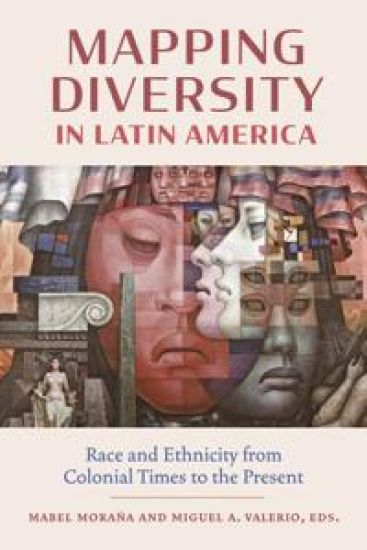
Mapping Diversity in Latin America

Mapping Diversity in Latin America

Bárbara I. Abadía-Rexach; Gonzalo Aguiar; Marta Elena Casaus Arzú; Amber Brian; Patricia Arroyo Calderón; Ignacio López-Calvo; Ariel Camejo; Marcel Velázquez Castro; Mónica Díaz; Christian Elguer; Tracy Devine Guzmán; Ruth Hill; Ariana Huberman; Stephanie Kirk; Agustin Lao-Montes; Mariselle Meléndez; Bahia Munem; Carlos Alberto Valderrama Renteria; Iván Fernando Rodrigo Mendizábal; Jorge Daniel Vásquez

VANDERBILT UNIVERSITY PRESS
2025
nidottu
Mapping Diversity in Latin America offers ample critical coverage of recent approaches to the historical study of race and ethnicity in Latin America since the arrival of Spanish and Portuguese colonizers to the present. Bringing together the work of leading scholars, this volume presents readers with a thorough and updated examination of the formation and evolution of ideas surrounding race and ethnicity, social movements, and political processes in Latin America that provides multiple routes for future research on the topic. The book’s nineteen chapters establish the basis for a productive comparative analysis of racial developments in the whole continent to allow for a combination of diachronic and synchronic study of regional processes. Both the scope of the book and the historical and geocultural coverage on these topics are unique in the field of Latin American Studies. Taking an interdisciplinary approach to understanding issues of collective identity, otherness, alterity, and the like, Mapping Diversity in Latin America sheds light on histories that have been traditionally overlooked in texts on race in Latin America, such as the rich history of diasporic Asian, Syrian Lebanese, and Jewish communities, and the more recent emergence of Latinx populations in the United States. The book includes a critical examination of fundamental concepts such as mestizaje, mulataje, creolization, negritud, and blanquitud, as well as critical and theoretical approaches to the study of these issues in postcolonial societies.
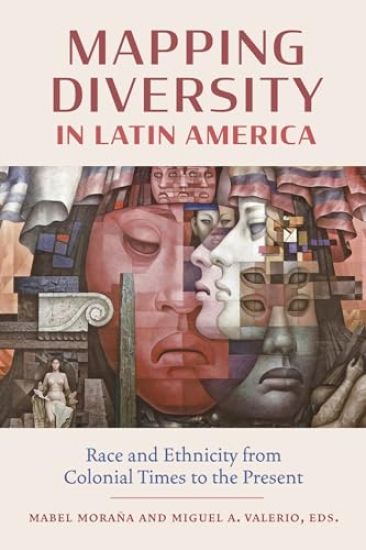
Mapping Diversity in Latin America

Mapping Diversity in Latin America

Bárbara I. Abadía-Rexach; Gonzalo Aguiar; Marta Elena Casaus Arzú; Amber Brian; Patricia Arroyo Calderón; Ignacio López-Calvo; Ariel Camejo; Marcel Velázquez Castro; Mónica Díaz; Christian Elguer; Tracy Devine Guzmán; Ruth Hill; Ariana Huberman; Stephanie Kirk; Agustin Lao-Montes; Mariselle Meléndez; Bahia Munem; Carlos Alberto Valderrama Renteria; Iván Fernando Rodrigo Mendizábal; Jorge Daniel Vásquez

VANDERBILT UNIVERSITY PRESS
2025
sidottu
Mapping Diversity in Latin America offers ample critical coverage of recent approaches to the historical study of race and ethnicity in Latin America since the arrival of Spanish and Portuguese colonizers to the present. Bringing together the work of leading scholars, this volume presents readers with a thorough and updated examination of the formation and evolution of ideas surrounding race and ethnicity, social movements, and political processes in Latin America that provides multiple routes for future research on the topic. The book’s nineteen chapters establish the basis for a productive comparative analysis of racial developments in the whole continent to allow for a combination of diachronic and synchronic study of regional processes. Both the scope of the book and the historical and geocultural coverage on these topics are unique in the field of Latin American Studies. Taking an interdisciplinary approach to understanding issues of collective identity, otherness, alterity, and the like, Mapping Diversity in Latin America sheds light on histories that have been traditionally overlooked in texts on race in Latin America, such as the rich history of diasporic Asian, Syrian Lebanese, and Jewish communities, and the more recent emergence of Latinx populations in the United States. The book includes a critical examination of fundamental concepts such as mestizaje, mulataje, creolization, negritud, and blanquitud, as well as critical and theoretical approaches to the study of these issues in postcolonial societies.
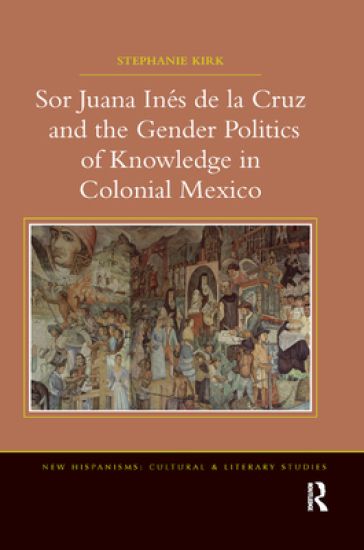
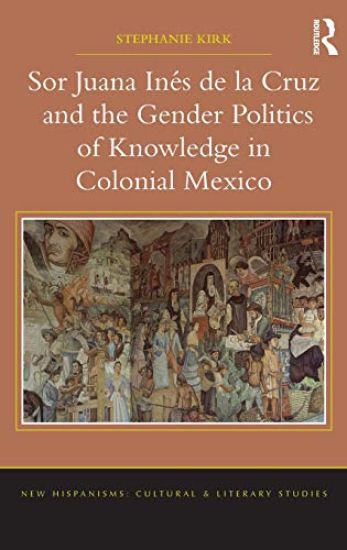
Sor Juana In?de la Cruz and the Gender Politics of Knowledge in Colonial Mexico
Each of the book's five chapters evokes a colonial Mexican cultural and intellectual sphere: the library, anatomy and medicine, spirituality, classical learning, and publishing and printing. Using an array of literary texts and historical documents and alongside secondary historical and critical materials, the author Stephanie Kirk demonstrates how Sor Juana used her poetry and other works to inscribe herself within the discourses associated with these cultural institutions and discursive spheres and thus challenge the male exclusivity of their precepts and precincts. Kirk illustrates how Sor Juana subverted the masculine character of erudition, writing herself into an all-male community of scholars. From there, Sor Juana clearly questions the gender politics at play in her exclusion, and undermines what seems to be the inextricable link previously forged between masculinity and institutional knowledge. Sor Juana Inés de la Cruz and the Gender Politics of Knowledge in Colonial Mexico opens up new readings of her texts through the lens of cultural and intellectual history and material culture in order to shed light on the production of knowledge in the seventeenth-century colonial Mexican society of which she was both a product and an anomaly.
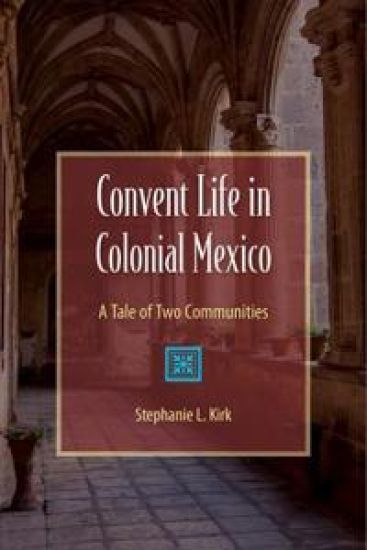
Convent Life in Colonial Mexico

Convent Life in Colonial Mexico

Stephanie Kirk

University Press of Florida
2018
nidottu
The Catholic Church produced an enormous volume of written material designed to ensure the servility of nuns. Reading this body of proscriptive literature alongside nuns' own writings, Kirk finds that practice often diverged from theory. She analyzes how seventeenth- and eighteenth-century nuns formed alliances and friendships in defiance of Church authorities' efforts to contain and control them. In the Mexican convents that form the basis of Kirk's study, nuns developed a powerful, counterhegemonic spirit of female solidarity, establishing communities that made possible a surprising degree of productive autonomy, despite official promotion of oppressive ideas about gender and religiosity. Kirk also examines the motivations and discursive structures behind the Church's desire to regulate all aspects of convent life. Drawing on a rich and diverse body of literature that includes little-known texts, religious tracts, and didactic manuals on convent behavior, historical artifacts including Inquisition documents, letters, sermons, and official decrees, as well as poetry and inspirational religious biographies of exemplary nuns, Kirk's methodology is a departure from studies of the early modern nun as religious writer, focusing instead on the nun as historical agent. Kirk frames her study with well-regarded theory on discourse and gender, including works by Roland Barthes, Judith Butler, Michel Foucault, and Joan Scott. Addressing such important questions as the relationship between power and gender, female colonial agency and authorship, early modern subjectivity, and conflicting gender ideologies, Kirk demonstrates that both sides - the nuns and the Church authorities - are shown to manipulate, through conflicting discourses, the nuances of power and resistance. This first in-depth study of the positive community dynamics of female religious in the early modern Spanish world, as seen through their own words, will appeal to scholars of colonial, Latin American, women's, and religious studies.
Sor Juana Inés de la Cruz and the Gender Politics of Knowledge in Colonial Mexico
Each of the book's five chapters evokes a colonial Mexican cultural and intellectual sphere: the library, anatomy and medicine, spirituality, classical learning, and publishing and printing. Using an array of literary texts and historical documents and alongside secondary historical and critical materials, the author Stephanie Kirk demonstrates how Sor Juana used her poetry and other works to inscribe herself within the discourses associated with these cultural institutions and discursive spheres and thus challenge the male exclusivity of their precepts and precincts. Kirk illustrates how Sor Juana subverted the masculine character of erudition, writing herself into an all-male community of scholars. From there, Sor Juana clearly questions the gender politics at play in her exclusion, and undermines what seems to be the inextricable link previously forged between masculinity and institutional knowledge. Sor Juana Inés de la Cruz and the Gender Politics of Knowledge in Colonial Mexico opens up new readings of her texts through the lens of cultural and intellectual history and material culture in order to shed light on the production of knowledge in the seventeenth-century colonial Mexican society of which she was both a product and an anomaly.