
Kirjojen hintavertailu – 12 903 725 kirjaa ja 27 kauppaa

Kirjailija

Stephanie Lawson

Kirjat ja teokset yhdessä paikassa: 22 kirjaa, julkaisuja vuosilta 1991–2026, suosituimpiin kuuluu LEICESTER YOUNG POL & INT REL 2017 PCK. Vertaile teosten hintoja ja tarkista saatavuus suomalaisista kirjakaupoista.

22 kirjaa

Kirjojen julkaisuvuodet: 1991–2026.

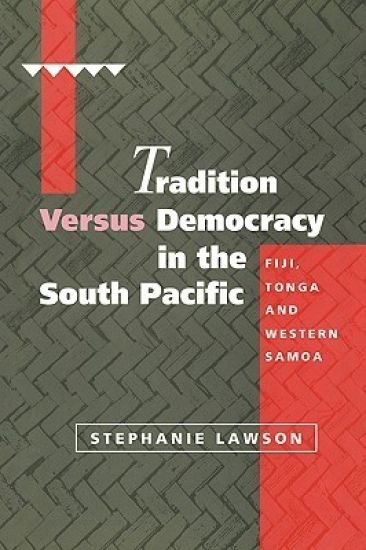
Tradition versus Democracy in the South Pacific

Tradition versus Democracy in the South Pacific

Stephanie Lawson

Cambridge University Press
1996
sidottu
Much recent literature on non-Western traditions celebrates the renaissance of indigenous cultures. Others have been more critical of this renaissance, especially with respect to its political implications. This study analyses the assertion of ‘tradition’ by indigenous elites, looking especially at the way it is used to differentiate ‘the West’ from the ‘non-West’. This is important to contemporary discussion about the validity of democracy outside the West and problems concerning universalism and relativism. The discussion of Fiji focuses on constitutional development and the traditionalist emphasis on chiefly legitimacy. The rise of the Pro-Democracy Movement in Tonga is considered against the background of a conservative political order that has so far resisted pressure for reform. The move to universal suffrage in Western Samoa is seen not as a rejection of traditional ways in favour of democratic norms, but as a means of preserving important aspects of traditional culture.

The Failure of Democratic Politics in Fiji

The Failure of Democratic Politics in Fiji

Stephanie Lawson

Clarendon Press
1991
sidottu
In 1987 two military coups in Fiji undermined institutions previously thought to be democratic in character. The coup leader, Colonel Sitiveni Rabuka, claimed that the coups were necessary in order to protect the rights of indigenous Fijians against the demands of the large Indian community. Combining the techniques of the historian, the anthropologist, and the political theorist, Stephanie Lawson discusses the contemporary political situation in Fiji from both a historical and a theoretical viewpoint, and tracing the sources of the current divisions in Fiji to the well-intentioned, but in the end misguided, ambitions of colonial administrators to protect the way of life of indigenous Fijians. Dr Lawson's analysis reveals many ironies. The very presence in Fiji of a large Indian community, now made a scapegoat by the coup leaders, is a result of the desire of colonial administrators to avoid forcing the indigenous population to become landless labourers, while at the same time securing a source of labour for a plantation-based agricultural system. She argues that post-colonial political institutions, themselves shaped by generations of colonial administrators, exacerbated and possibly created the very tensions between the indigenous population and Indians that they were designed to temper. Dr Lawson demonstrates why race was never really an issue in recent events but why Rabuka could plausibly claim that it was. She comes to the provocative but convincing conclusion that Fiji has never really been a democracy in the Western sense of the word.