Kirjojen hintavertailu – 12 859 829 kirjaa ja 27 kauppaa

Kirjailija

Stephanie Olsen

Kirjat ja teokset yhdessä paikassa: 3 kirjaa, julkaisuja vuosilta 2014–2015, suosituimpiin kuuluu Juvenile Nation. Vertaile teosten hintoja ja tarkista saatavuus suomalaisista kirjakaupoista.

3 kirjaa

Kirjojen julkaisuvuodet: 2014–2015.

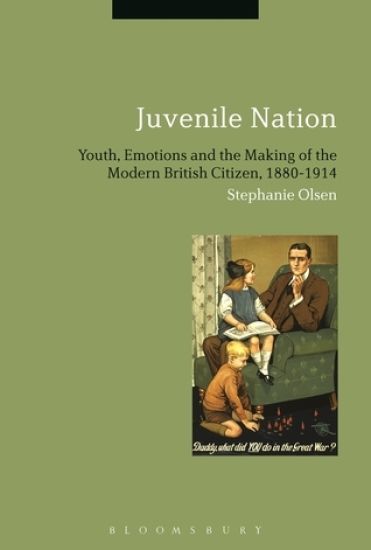
Juvenile Nation

Juvenile Nation

Stephanie Olsen

Bloomsbury Academic
2015
nidottu
In the first five months of the Great War, one million men volunteered to fight. Yet by the end of 1915, the British government realized that conscription would be required. Why did so many enlist, and conversely, why so few? Focusing on analyses of widely felt emotions related to moral and domestic duty, Juvenile Nation broaches these questions in new ways. Juvenile Nation examines how religious and secular youth groups, the juvenile periodical press, and a burgeoning new group of child psychologists, social workers and other ‘experts’ affected society’s perception of a new problem character, the ‘adolescent’. By what means should this character be turned into a ‘fit’ citizen? Considering qualities such as loyalty, character, temperance, manliness, fatherhood, and piety, Stephanie Olsen discusses the idea of an ‘informal education’, focused on building character through emotional control, and how this education was seen as key to shaping the future citizenry of Britain and the Empire. Juvenile Nation recasts the militarism of the 1880s onwards as part of an emotional outpouring based on association to family, to community and to Christian cultural continuity. Significantly, the same emotional responses explain why so many men turned away from active militarism, with duty to family and community perhaps thought to have been best carried out at home. By linking the historical study of the emotions with an examination of the individual’s place in society, Olsen provides an important new insight on how a generation of young men was formed.
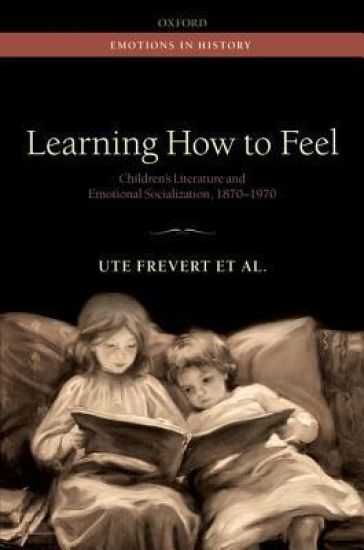
Learning How to Feel

Learning How to Feel

Ute Frevert; Pascal Eitler; Stephanie Olsen; Uffa Jensen; Margrit Pernau; Daniel Brückenhaus; Magdalena Beljan; Benno Gammerl; Anja Laukötter; Bettina Hitzer; Jan Plamper; Juliane Brauer; Joachim C. Häberlen

Oxford University Press
2014
sidottu
Learning How to Feel explores the ways in which children and adolescents learn not just how to express emotions that are thought to be pre-existing, but actually how to feel. The volume assumes that the embryonic ability to feel unfolds through a complex dialogue with the social and cultural environment and specifically through reading material. The fundamental formation takes place in childhood and youth. A multi-authored historical monograph, Learning How to Feel uses children's literature and advice manuals to access the training practices and learning processes for a wide range of emotions in the modern age, circa 1870-1970. The study takes an international approach, covering a broad array of social, cultural, and political milieus in Britain, Germany, India, Russia, France, Canada, and the United States. Learning How to Feel places multidirectional learning processes at the centre of the discussion, through the concept of practical knowledge. The book innovatively draws a framework for broad historical change during the course of the period. Emotional interaction between adult and child gave way to a focus on emotional interactions among children, while gender categories became less distinct. Children were increasingly taught to take responsibility for their own emotional development, to find 'authenticity' for themselves. In the context of changing social, political, cultural, and gender agendas, the building of nations, subjects and citizens, and the forging of moral and religious values, Learning How to Feel demonstrates how children were provided with emotional learning tools through their reading matter to navigate their emotional lives.
Juvenile Nation

Juvenile Nation

Stephanie Olsen

Bloomsbury Academic
2014
sidottu
In the first five months of the Great War, one million men volunteered to fight. Yet by the end of 1915, the British government realized that conscription would be required. Why did so many enlist, and conversely, why so few? Focusing on analyses of widely felt emotions related to moral and domestic duty, Juvenile Nation broaches these questions in new ways. Juvenile Nation examines how religious and secular youth groups, the juvenile periodical press, and a burgeoning new group of child psychologists, social workers and other ‘experts’ affected society’s perception of a new problem character, the ‘adolescent’. By what means should this character be turned into a ‘fit’ citizen? Considering qualities such as loyalty, character, temperance, manliness, fatherhood, and piety, Stephanie Olsen discusses the idea of an ‘informal education’, focused on building character through emotional control, and how this education was seen as key to shaping the future citizenry of Britain and the Empire. Juvenile Nation recasts the militarism of the 1880s onwards as part of an emotional outpouring based on association to family, to community and to Christian cultural continuity. Significantly, the same emotional responses explain why so many men turned away from active militarism, with duty to family and community perhaps thought to have been best carried out at home. By linking the historical study of the emotions with an examination of the individual’s place in society, Olsen provides an important new insight on how a generation of young men was formed.