Kirjojen hintavertailu – 12 859 818 kirjaa ja 27 kauppaa

Kirjailija

Stephanie Phetsamay Stobbe

Kirjat ja teokset yhdessä paikassa: 4 kirjaa, julkaisuja vuosilta 2015–2027, suosituimpiin kuuluu Cœurs En Liberté. Vertaile teosten hintoja ja tarkista saatavuus suomalaisista kirjakaupoista.

4 kirjaa

Kirjojen julkaisuvuodet: 2015–2027.

Cœurs En Liberté

Cœurs En Liberté

Duschinsky Peter; Colleen Lundy; Molloy Michael; Allan Moscovitch; Stephanie Phetsamay Stobbe

McGill-Queens University Press
2027
Nidottu
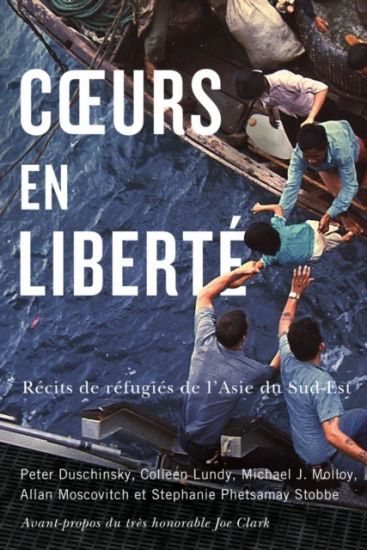
Entre 1975 et 1997, quelque trois millions de personnes en provenance du Vietnam, du Cambodge et du Laos ont fui les atrocités commises dans leur pays d'origine, et plus de 210 000 d'entre elles se sont réinstallées au Canada. Bien que cette histoire soit connue en partie, peu d'ouvrages ont été écrits à ce sujet, en particulier du point de vue des personnes réfugiées elles-mêmes. Cœurs en liberté est un riche recueil d’histoires orales basé sur des entretiens avec 145 anciens réfugiés, qui partagent des récits profondément émouvants sur l’oppression, les camps de concentration, le génocide et les fuites périlleuses par voie terrestre et maritime. Ces survivants reviennent sur leurs premières impressions du Canada : la neige et le froid inhabituels, la gentillesse inattendue des voisins et quelques expériences de racisme. À travers leurs expériences, nous découvrons les forces et les faiblesses des programmes d’accueil des réfugiés du Canada. Ces récits révèlent que l’attachement des réfugiés au Canada s’est renforcé au fil des ans et que les politiques de multiculturalisme ont facilité ce processus. La population canadienne a joué un rôle décisif dans le premier mouvement massif de personnes réfugiées grâce à des programmes de parrainage privé alors nouvellement créés – un rôle pour lequel les Nations Unies ont décerné la médaille Nansen au peuple canadien en 1986. À l’heure où nous évaluons les avantages des politiques et des programmes d’immigration et d’accueil des réfugiés, Cœurs en liberté documente la vie et les contributions de personnes qui ont subi les pires excès de la guerre pour reconstruire leur vie au Canada.
Hearts of Freedom

Hearts of Freedom

Peter Duschinsky; Colleen Lundy; Michael J. Molloy; Allan Moscovitch; Stephanie Phetsamay Stobbe; Joe Clark

MCGILL-QUEEN'S UNIVERSITY PRESS
2025
nidottu
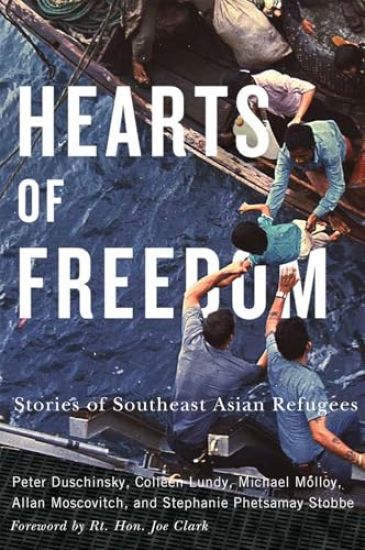
Between 1975 and 1997 some three million Vietnamese, Cambodians, and Laotians fled atrocities in their home countries, with over 210,000 resettling in Canada. While this history is partly known to some Canadians, little has been written about it, especially from the perspectives of the refugees themselves. Hearts of Freedom is a rich oral history based on interviews with 145 former refugees, sharing deeply moving accounts of oppression, concentration camps, genocide, and perilous escapes over land and sea. Survivors reflect on their first impressions of Canada – the unfamiliar snow and cold, the unexpected kindness of neighbours, and occasional encounters with racism. Through their experiences, we come to understand the strengths and weaknesses of Canada's refugee programs. These stories reveal how refugees' attachment to Canada grew over the years and how multiculturalism policies facilitated that. Ordinary Canadians played a decisive role in the first mass refugee movement through newly created private sponsorship programs – a role for which the United Nations awarded the Nansen Medal to the Canadian people in 1986. Coming at a time when we are assessing the benefits of immigration and refugee policies and programs, Hearts of Freedom documents the lives and contributions of people who have suffered the worst excesses of war to rebuild their lives in Canada.
Conflict Resolution and Peacebuilding in Laos

Conflict Resolution and Peacebuilding in Laos

Stephanie Phetsamay Stobbe

Routledge
2016
nidottu
Using the case study of Laos, a small landlocked country in Southeast Asia that has seen some of the world’s most brutal forms of poverty and violence, this book examines the power of traditional and indigenous conflict resolution systems as a tool for social justice. It explores how the conflict resolution mechanisms build infrastructures that support social harmony, and address larger scale conflicts within communities, nations and international arenas. The book discusses how over centuries, foreign powers have polarised and used the ethnic groups of Laos to support their own agendas, and how in spite of this, the Lao people have consistently managed to recreate the peace and harmony that support their social relationships, whether that is within groups or between many distinct groups. Through the development and use of appropriate grassroots conflict resolution structures that do not require a formal court system and exists outside the political arena, they have been successful in resolving conflicts within and across cultural groups. The book shows that the conflict resolution systems of Laos are embedded in the fabric of ordinary, everyday life, and operate independently of the hierarchical structures that dominate governing institutions. Highlighting how peace continues to work its way into existence, through elaborate mediation systems and rituals that bring people together, this book will be of use to students and scholars of Southeast Asian Politics, Peace Studies and War and Conflict Studies.
Conflict Resolution and Peacebuilding in Laos

Conflict Resolution and Peacebuilding in Laos

Stephanie Phetsamay Stobbe

Routledge
2015
sidottu
Using the case study of Laos, a small landlocked country in Southeast Asia that has seen some of the world’s most brutal forms of poverty and violence, this book examines the power of traditional and indigenous conflict resolution systems as a tool for social justice. It explores how the conflict resolution mechanisms build infrastructures that support social harmony, and address larger scale conflicts within communities, nations and international arenas. The book discusses how over centuries, foreign powers have polarised and used the ethnic groups of Laos to support their own agendas, and how in spite of this, the Lao people have consistently managed to recreate the peace and harmony that support their social relationships, whether that is within groups or between many distinct groups. Through the development and use of appropriate grassroots conflict resolution structures that do not require a formal court system and exists outside the political arena, they have been successful in resolving conflicts within and across cultural groups. The book shows that the conflict resolution systems of Laos are embedded in the fabric of ordinary, everyday life, and operate independently of the hierarchical structures that dominate governing institutions. Highlighting how peace continues to work its way into existence, through elaborate mediation systems and rituals that bring people together, this book will be of use to students and scholars of Southeast Asian Politics, Peace Studies and War and Conflict Studies.