Kirjojen hintavertailu – 12 859 828 kirjaa ja 27 kauppaa

Kirjailija

Stephanie Pitts

Kirjat ja teokset yhdessä paikassa: 5 kirjaa, julkaisuja vuosilta 2005–2020, suosituimpiin kuuluu A Century of Change in Music Education. Vertaile teosten hintoja ja tarkista saatavuus suomalaisista kirjakaupoista.

5 kirjaa

Kirjojen julkaisuvuodet: 2005–2020.

A Century of Change in Music Education
Published in 2000. Education in our schools is a constant feature of media headlines, often blamed for many of society’s ills. Perceived throughout the ages as civilizing force, music has a fundamental role to play in education, yet the last twenty years have seen a consistent erosion of the time and money made available to music teachers in our schools. This book is a timely reminder of how we have arrived at the current debates and challenges of music education. Stephanie Pitts charts the history of music teaching in British secondary schools over the course of the twentieth century. Each chapter looks at a significant period of music education history in which the ideas and practices of a generation were established, and refined. The main educational publications of each decade are examined, from the early by MacPherson, Somervell and Yorke Trotter to the more recent thinking of Paynter and Swanwick. The shifting perceptions of music in the school curriculum are nowhere better highlighted than in the changing focus on children’s engagement with music, from the musical appreciation lessons of the 1920’s and 1930’s to the post-war concentration on performance and the 1970’s emphasis on improvisation and composition. There and many other trends are discussed in the book, allowing today’s music educators to see their own practice in its historical context.

A Century of Change in Music Education
Published in 2000. Education in our schools is a constant feature of media headlines, often blamed for many of society’s ills. Perceived throughout the ages as civilizing force, music has a fundamental role to play in education, yet the last twenty years have seen a consistent erosion of the time and money made available to music teachers in our schools. This book is a timely reminder of how we have arrived at the current debates and challenges of music education. Stephanie Pitts charts the history of music teaching in British secondary schools over the course of the twentieth century. Each chapter looks at a significant period of music education history in which the ideas and practices of a generation were established, and refined. The main educational publications of each decade are examined, from the early by MacPherson, Somervell and Yorke Trotter to the more recent thinking of Paynter and Swanwick. The shifting perceptions of music in the school curriculum are nowhere better highlighted than in the changing focus on children’s engagement with music, from the musical appreciation lessons of the 1920’s and 1930’s to the post-war concentration on performance and the 1970’s emphasis on improvisation and composition. There and many other trends are discussed in the book, allowing today’s music educators to see their own practice in its historical context.
Becoming a Successful Early Career Researcher

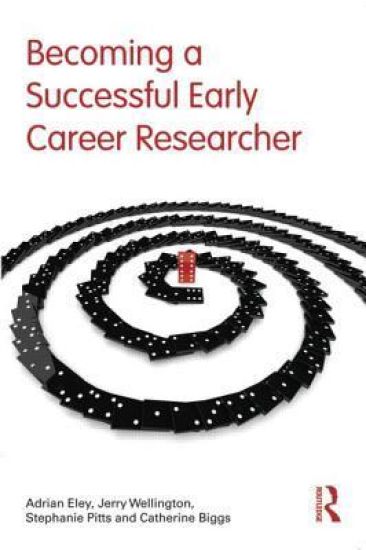
Becoming a Successful Early Career Researcher

Adrian Eley; Jerry Wellington; Stephanie Pitts; Catherine Biggs

Routledge
2012
nidottu
Not that long ago there were fairly clear divisions between researchers at different stages throughout their career, starting with doctoral students then progressing to postdoctoral workers and finishing with academic staff. However, more recently the term Early Career Researcher (ECR) has been introduced partly as a response to their growing importance which has been reflected by their increased respect and status shown by national, international and funding bodies. There are several common features of an ECR’s job including the need to establish a professional identity and develop into an independent researcher, competing for grants and increasing one’s output of research publications; this book offers proven practical advice to help ECRs kick-start a successful academic career. With advice on:Choosing research topicsMaking best use of a Research Supervisor/MentorDeveloping your research writingGetting published: journals and booksWriting a research grant/fellowshipBecoming a supervisorBecoming a teacher, andDeveloping your career This guide will help academics at the start of their career no matter what discipline they are engaged in… Arts, Humanities, Sciences or Social Sciences. For example, in sciences and engineering, ECRs are commonly part of a large research team and often have to work in collaborative groups; requiring strong interpersonal skills but can lead to tension in the interaction with one’s supervisor or mentor. In contrast, in the arts and humanities and perhaps the social sciences, an ECR is more likely to be an independent scholar with a requirement to work alone, leading to a different type of relationship (but not necessarily any less stressful) with one’s supervisor or mentor. Using case studies from across the subject areas to illustrate key points and give suitable examples this vital guide will help all early career academics.
Becoming a Successful Early Career Researcher

Becoming a Successful Early Career Researcher

Adrian Eley; Jerry Wellington; Stephanie Pitts; Catherine Biggs

Routledge
2012
sidottu
Not that long ago there were fairly clear divisions between researchers at different stages throughout their career, starting with doctoral students then progressing to postdoctoral workers and finishing with academic staff. However, more recently the term Early Career Researcher (ECR) has been introduced partly as a response to their growing importance which has been reflected by their increased respect and status shown by national, international and funding bodies. There are several common features of an ECR’s job including the need to establish a professional identity and develop into an independent researcher, competing for grants and increasing one’s output of research publications; this book offers proven practical advice to help ECRs kick-start a successful academic career. With advice on:Choosing research topicsMaking best use of a Research Supervisor/MentorDeveloping your research writingGetting published: journals and booksWriting a research grant/fellowshipBecoming a supervisorBecoming a teacher, andDeveloping your career This guide will help academics at the start of their career no matter what discipline they are engaged in… Arts, Humanities, Sciences or Social Sciences. For example, in sciences and engineering, ECRs are commonly part of a large research team and often have to work in collaborative groups; requiring strong interpersonal skills but can lead to tension in the interaction with one’s supervisor or mentor. In contrast, in the arts and humanities and perhaps the social sciences, an ECR is more likely to be an independent scholar with a requirement to work alone, leading to a different type of relationship (but not necessarily any less stressful) with one’s supervisor or mentor. Using case studies from across the subject areas to illustrate key points and give suitable examples this vital guide will help all early career academics.
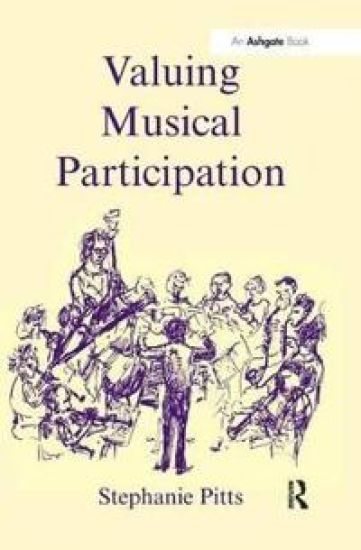
Valuing Musical Participation

Valuing Musical Participation

Stephanie Pitts

Ashgate Publishing Limited
2005
sidottu
Increasingly, it is becoming evident that those involved in socio-musical studies must focus their investigative lens on musical practice and articulation of the self, on music and community involvement and on music as a social medium for social relationships. What motivates people to be involved in musical performance, and how do they articulate these needs and drives? What do performers gain from their involvement in musical activities? How do audience members perceive their relationship to the performer, the music and the event? These questions and many more are addressed here with the benefit of detailed empirical work, including case studies of a chamber music festival and a contemporary music summer school. Pitts investigates the value of musical participation for performers and audience members in a range of contexts, using a multi-disciplinary approach to place new empirical data in the framework of existing theory and literature. Themes examined include: the shared musical experience; the social structures of performing societies; how people identify with music; the values implicit in musical preferences; the social responsibilities of the performer; the audience view of concerts and festivals; the social power of music and educational implications and responsibilities. Pitts draws upon literature from musicology, sociology and psychology of music, ethnomusicology, music education and community music to demonstrate the diversity of enquiry about musical behaviours. The conclusions of the book are based upon empirical evidence gleaned through case studies, with the data integrated thematically throughout, to enable a greater depth of discussion than individual studies usually permit.