Kirjojen hintavertailu – 12 859 818 kirjaa ja 27 kauppaa
Kirjailija
Stephen Alford
Kirjat ja teokset yhdessä paikassa: 9 kirjaa, julkaisuja vuosilta 1998–2025, suosituimpiin kuuluu The Early Elizabethan Polity. Vertaile teosten hintoja ja tarkista saatavuus suomalaisista kirjakaupoista.
Stephen Alford; Henrik Berggren; Matthew Hefler; Ronan Mainprize; Clare Mulley; Rose Mary Sheldon; Martin Neuding Skoog; Oliver Soden; Jonathan Sumption; Rikard Westerberg; Alastair Benn; Jack Dickens; Helen Fry; Paul Lay; Alec Marsh; Owen Matthews; James Snell; DJ Taylor; Douglas Waller
From the acclaimed author of The Watchers, the untold story of Robert Cecil - the ultimate Tudor spy-master'Alford triumphs… in recreating the historical moment. By immersing himself in Cecil’s vast archive, he draws the reader deep into his working environment, capturing the closeness of his study and the chaos of the court… this is turn-of-century England as it really was – dangerous, gritty, on a knife edge' - The Times *Shortlisted for the Elizabeth Longford Prize for Historical Biography 2025*Robert Cecil, statesman and spymaster, lived through an astonishingly threatening period in English history. Queen Elizabeth had no clear successor and enemies both external and internal threatened to destroy England as a Protestant state, most spectacularly with the Spanish Armada and the Gunpowder Plot. Cecil stood at the heart of the Tudor and then Stuart state, a vital figure in managing the succession from Elizabeth I to James I & VI, warding off military and religious threats and steering the decisions of two very different but equally wilful and hard-to-manage monarchs. The promising son of Queen Elizabeth’s chief minister Lord Burghley, for Cecil there was no choice but politics, and he became supremely skilled in the arts of power, making many rivals and enemies. All His Spies is a wonderfully engaging and original work of history. Many readers are familiar with the great events of this tumultuous time, but All His Spies shows how easily these dramas could have turned out very differently. Cecil’s sureness of purpose, his espionage network and good luck all conspired to keep England uninvaded and to create a new ‘British’ monarchy which has endured to the present day.
From the acclaimed author of The Watchers, the untold story of Robert Cecil - the ultimate Tudor spy-master'Alford triumphs… in recreating the historical moment. By immersing himself in Cecil’s vast archive, he draws the reader deep into his working environment, capturing the closeness of his study and the chaos of the court… this is turn-of-century England as it really was – dangerous, gritty, on a knife edge' - The Times *Shortlisted for the Elizabeth Longford Prize for Historical Biography 2025*Robert Cecil, statesman and spymaster, lived through an astonishingly threatening period in English history. Queen Elizabeth had no clear successor and enemies both external and internal threatened to destroy England as a Protestant state, most spectacularly with the Spanish Armada and the Gunpowder Plot. Cecil stood at the heart of the Tudor and then Stuart state, a vital figure in managing the succession from Elizabeth I to James I & VI, warding off military and religious threats and steering the decisions of two very different but equally wilful and hard-to-manage monarchs. The promising son of Queen Elizabeth’s chief minister Lord Burghley, for Cecil there was no choice but politics, and he became supremely skilled in the arts of power, making many rivals and enemies. All His Spies is a wonderfully engaging and original work of history. Many readers are familiar with the great events of this tumultuous time, but All His Spies shows how easily these dramas could have turned out very differently. Cecil’s sureness of purpose, his espionage network and good luck all conspired to keep England uninvaded and to create a new ‘British’ monarchy which has endured to the present day.
'Consistently illuminating ... Like all the best stories, it is about the timeless tides of power and influence ... trade deals can sometimes be sexy, thrilling and epic' Sinclair McKay, SpectatorLife in Europe was fundamentally changed in the 16th century by the astonishing discoveries of the New World and of direct sea routes to Asia. To start with England was hardly involved and London remained a gloomy, introverted medieval city. But as the century progressed something extraordinary happened. Stephen Alford's evocative, original and fascinating new book uses the same skills that made his widely praised The Watchers so successful, bringing to life the network of merchants, visionaries, crooks and sailors who changed London forever. In a sudden explosion of energy English ships were suddenly found all over the world - trading with Russia and the Levant, exploring Virginia and the Arctic, and fanning out across the Indian Ocean. London's Triumph is above all about the people who made this possible - the families, the guild members, the money-men who were willing to risk huge sums and sometimes their own lives in pursuit of the rare, exotic and desirable. Their ambitions fuelled a new view of the world - initiating a long era of trade and empire, the consequences of which we still live with today.
The acclaimed and enthralling story of the dark side of Elizabethan rule, from Stephen AlfordElizabeth I's reign is known as a golden age, yet to much of Europe she was a 'Jezebel' and heretic who had to be destroyed. The Watchers is a thrilling portrayal of the secret state that sought to protect the Queen; a shadow world of spies, codebreakers, agent provocateurs and confidence-men who would stop at nothing to defend the realm. Reviews:'Forget Le Carré, Deighton and the rest - this is more enthralling than any modern spy fiction' Daily Telegraph'Absorbing and closely documented ... Alford vividly evokes this murky world of codes, ciphers, invisible ink, intercepted letters, aliases, disguises, forgeries and instructions to burn after reading ... flowing narrative [and] crisp judments ... engrossing' Guardian'[Alford] has brought a dash of le Carré to the 16th century' The Times (Book of the Week)'A vivid and staggeringly well-researched portrait of the sinister side of Elizabethan England ... This is a spectacular book. It sheds new light on plots that most historians have ceased to explore and brings less famous conspiracies to the attention of the general reading public' Herald'Fascinating ... If you want to know the inside story of this struggle, the dark heart of calculation and the fight for survival, then this is the book to read. I know no better' SpectatorAbout the author:Stephen Alford is the author of the acclaimed biography Burghley: William Cecil at the Court of Elizabeth I and a Fellow of the Royal Historical Society. He taught for fifteen years at Cambridge University, where he was a Senior Lecturer in the Faculty of History and a Fellow of King's College. He is now Professor of Early Modern British History in the University of Leeds.
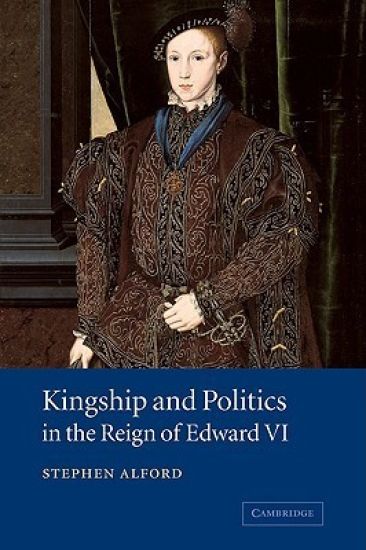
This book offers a reappraisal of the kingship and politics of the reign of Edward VI, the third Tudor king of England who reigned from the age of nine in 1547 until his death in 1553. The reign has often been interpreted as a period of political instability, mainly because of Edward's age, but this account challenges the view that the king's minority was a time of political faction. It shows how Edward was shaped and educated from the start for adult kingship, and how Edwardian politics evolved to accommodate a maturing and able young king. The book also explores the political values of the men around the king, and tries to reconstruct the relationships of family and association that bound together the governing elite in the king's Council, his court, and in the universities. It also assesses the impact of Edward's reign on Elizabethan politics.
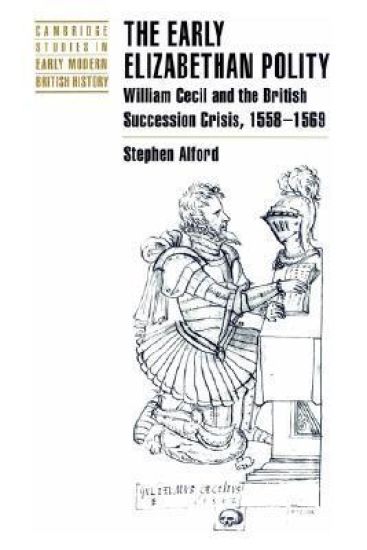
Traditionally historians have argued that the court of Elizabeth I (1558–1603) was factional, divided between competing subjects who were manipulated by their Queen. This book provides a different account: of councillors who were united by two connected dangers, namely Catholic opposition to Protestant England and Elizabeth’s refusal to marry or to settle England’s succession. This new account of the first decade of Elizabeth’s reign investigates three main areas. It challenges the notion that Elizabeth I and her councillors agreed on policy, and that the Queen and her secretary, William Cecil, formed an inseparable political partnership; it establishes the importance of rhetorical training and the relationship between education and Elizabethan debates on the issue of service to the Queen, balanced against service to the Commonwealth; and it deals with the radical political conditions of the first decade, and argues that the origins of later Elizabethan crises lay in the 1560s.
This book offers a reappraisal of the kingship and politics of the reign of Edward VI, the third Tudor king of England who reigned from the age of nine in 1547 until his death in 1553. The reign has often been interpreted as a period of political instability, mainly because of Edward's age, but this account challenges the view that the king's minority was a time of political faction. It shows how Edward was shaped and educated from the start for adult kingship, and how Edwardian politics evolved to accommodate a maturing and able young king. The book also explores the political values of the men around the king, and tries to reconstruct the relationships of family and association that bound together the governing elite in the king's Council, his court, and in the universities. It also assesses the impact of Edward's reign on Elizabethan politics.
Traditionally historians have argued that the court of Elizabeth I (1558–1603) was factional, divided between competing subjects who were manipulated by their Queen. This book provides a different account: of councillors who were united by two connected dangers, namely Catholic opposition to Protestant England and Elizabeth's refusal to marry or to settle England's succession. This alternative account of the first decade of Elizabeth's reign investigates three main areas. It challenges the notion that Elizabeth I and her councillors agreed on policy, and that the Queen and her secretary, William Cecil, formed an inseparable political partnership; it establishes the importance of rhetorical training and the relationship between education and Elizabethan debates on the issue of service to the Queen, balanced against service to the Commonwealth; and it deals with the radical political conditions of the first decade, and argues that the origins of later Elizabethan crises lay in the 1560s.