Kirjojen hintavertailu – 12 859 827 kirjaa ja 27 kauppaa

Kirjailija

Stephen Banks

Kirjat ja teokset yhdessä paikassa: 6 kirjaa, julkaisuja vuosilta 2010–2019, suosituimpiin kuuluu What Are the Odds?. Vertaile teosten hintoja ja tarkista saatavuus suomalaisista kirjakaupoista.

6 kirjaa

Kirjojen julkaisuvuodet: 2010–2019.

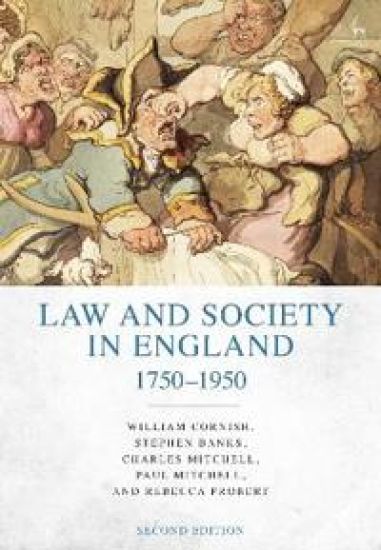
Law and Society in England 1750-1950

Law and Society in England 1750-1950

William Cornish; Stephen Banks; Charles Mitchell; Paul Mitchell; Rebecca Probert

Hart Publishing
2019
nidottu
Law and Society in England 1750–1950 is an indispensable text for those wishing to study English legal history and to understand the foundations of the modern British state. In this new updated edition the authors explore the complex relationship between legal and social change. They consider the ways in which those in power themselves imagined and initiated reform and the ways in which they were obliged to respond to demands for change from outside the legal and political classes. What emerges is a lively and critical account of the evolution of modern rights and expectations, and an engaging study of the formation of contemporary social, administrative and legal institutions and ideas, and the road that was travelled to create them. The book is divided into eight chapters: Institutions and Ideas; Land; Commerce and Industry; Labour Relations; The Family; Poverty and Education; Accidents; and Crime. This extensively referenced analysis of modern social and legal history will be invaluable to students and teachers of English law, political science, and social history.
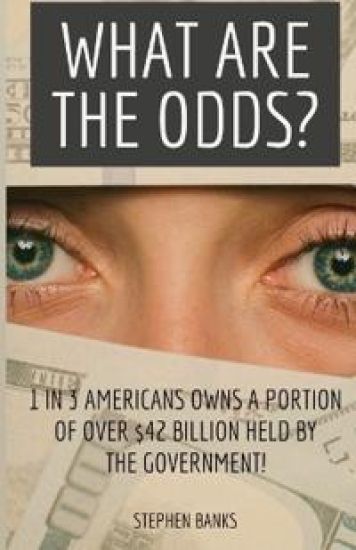
What Are the Odds?

What Are the Odds?

Ami Raiza; Moe Izad; Stephen Banks

Independently Published
2019
pokkari
I am of the many who do not necessarily pay attention to commercials on TV, but I found myself paying attention to a commercial from my State's Attorney General one great day. Once I finished the commercial, I visited the website provided on the commercial. I searched my name to find that I was owed back wages from a company I worked at few years back for $79.79. I was amazed and I proceeded to search the names of my family members. I was able to find my mother was owed a refund of $247.75 by Citibank. With excitement, I began informing my friends and anyone who would listen to me about this great website. As the years went by, this website had faded from my memory until recently. As I was thinking of ways to raise money for my business venture, I had it come to me as an idea and means to raise funds for the business. I realized that putting this information together on an eBook can benefit many people and that with enough sales, I can possibly fund my business venture. I hope that you can appreciate my efforts and that you find this eBook very resourceful. Whether you live in the United States, Canada, Australia or New Zealand, this eBook can give you the resources you need to claim your lost money. Please leave your reviews and any ideas or suggestions you may have for me. I appreciate any feedback. Thank you once again for your support.
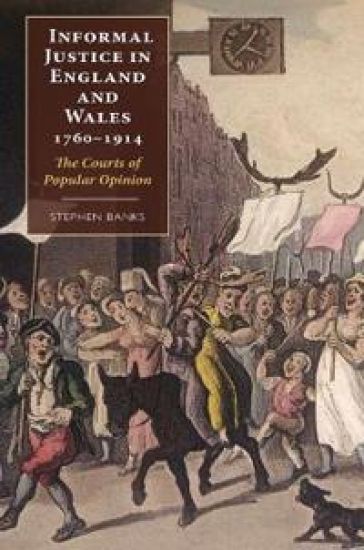
Informal Justice in England and Wales, 1760-1914
A study of law, wrongdoing and justice as conceived in the minds of the ordinary people of England and Wales from the later eighteenth century to the First World War. Shortlisted for the 2015 Katharine Briggs Award This is a study of law, wrongdoing and justice as conceived in the minds of the ordinary people of England and Wales from the later eighteenth century to the First World War. Official justice was to become increasingly centralised with declining traditional courts, emerging professional policing and a new prison estate. However, popular concepts of what was, or should be, contained within the law were often at variance with its formal written content. Communities continued to hold mock courts, stage shaming processions and burn effigies of wrongdoers. The author investigates those justice rituals, the actors, the victims and the offences that occasioned them. He also considers the role such practices played in resistive communities trying to preserve their identity and assert their independence. Finally, whilst documenting the decline of popular justice traditions this book demonstrates that they were nevertheless important in bequeathing a powerful set of symbols and practices to the nascent labour movement. This book will be of interest to scholars and students of legal history and criminal justice as well as social and cultural history in what could be considered a very long nineteenth century. Stephen Banks is an associate professor in criminal law, criminal justice and legal history at the University of Reading, co-director of the Forum for Legal and Historical Research and author of A Polite Exchange of Bullets: The Duel and the English Gentleman, 1750-1850 (The Boydell Press, 2010).
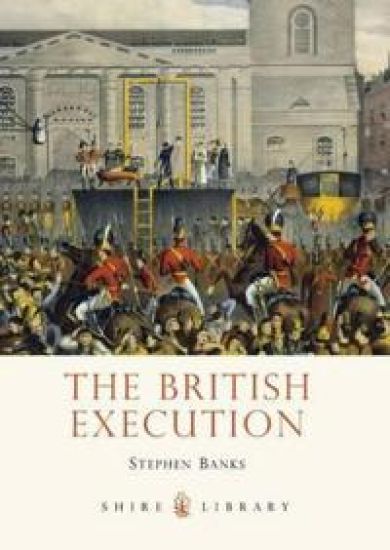
The British Execution

The British Execution

Stephen Banks

Shire Publications
2013
nidottu
An illustrated introduction to the death penalty and the means of capital punishment in England since Tudor times. Executions have played a crucial – if grisly and controversial – part in British history and provided the bloody climax to many a life, from Mary, Queen of Scots, Charles I and Dick Turpin to untold thousands of anonymous wretches whose names are now forgotten. With the help of numerous illustrations, Stephen Banks details the history of formal execution in Britain, examining the fates of the grandest monarchs, the highest-profile gentlemen, the most learned heretics and the most petty of criminals. He looks also at the crowds, spectacle and grim pageantry that surrounded these events, helping us to understand their morbid but undeniable fascination and detailing the process that led to capital punishment’s abolition in Britain.
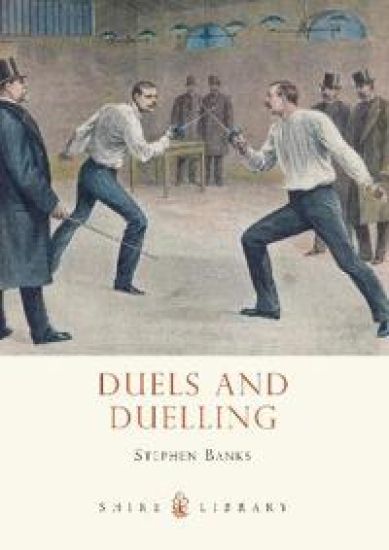
Duels and Duelling

Duels and Duelling

Stephen Banks

Shire Publications
2012
nidottu
An illustrated guide to the history of the duel and trial by combat in Britain and abroad. A duel could result from any challenge to a gentleman's honour, from minor insult to major accusation. At a prearranged time, two men at odds would meet, armed either with swords or pistols, to engage in a formal and sometimes fatal exchange. Gentlemen considered it their prerogative to fight, despite the illegality of duelling, and figures as prominent as the Duke of Wellington and Georges Clemenceau defended their honour in this way. Why did participants flout the law, what codes were followed, what were the changing roles of the seconds, and what were the consequences for victims and victors? Stephen Banks answers these questions and examines the evolution from Norman trials-by-combat to the formalised duel, analysing the custom's decline in England by Victorian times and its final disappearance from Europe by the twentieth century.
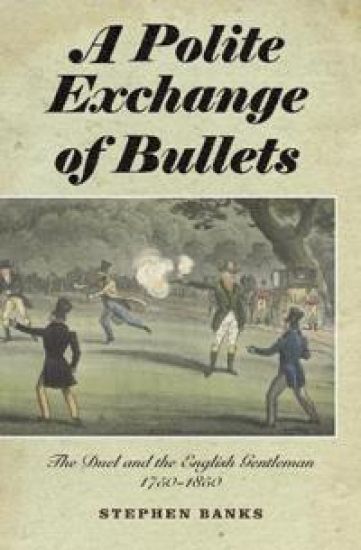
A Polite Exchange of Bullets

A Polite Exchange of Bullets

Stephen Banks

The Boydell Press
2010
sidottu
Explores why minor slights to certain kinds of gentlemen led to duels in order for honour to be satisfied, and how such ideas about honour changed over time. This book, the most comprehensive study of the English pistol duel yet undertaken, examines what it meant to be a man of honour in eighteenth and nineteenth century England. A thorough survey of the incidence and distribution of duelling, both socially and geographically, identifies those sub-groups of gentlemen most likely to duel. The author considers the mores and manners of such groups and asks why it was that within specific professions, minor slightscould only be requited by a demand for satisfaction. In doing so, the author rejects those traditional histories of duelling which have failed to engage with the internal dynamics and internal logic of the phenomenon itself. Too often historians have explained the rise of opposition to duelling in terms of social and cultural change whilst at the same time treating the duel as though its ideological content had become irrevocably fixed in the early seventeenth century. Honour culture too had a social and an intellectual history and the author outlines those conflicts of ideas within the culture of honour itself that did much to hasten the demise of the English duel. A Polite Exchange of Bullets will be welcomed as a fresh approach to an important social phenomenon by all those interested in duelling and in English social and cultural history. STEPHEN BANKS is a lecturer in criminal law at Reading University Law School and co-director of The Forum of Legal and Historical Research.