Kirjojen hintavertailu – 12 903 725 kirjaa ja 27 kauppaa
Kirjailija
Stephen Bann
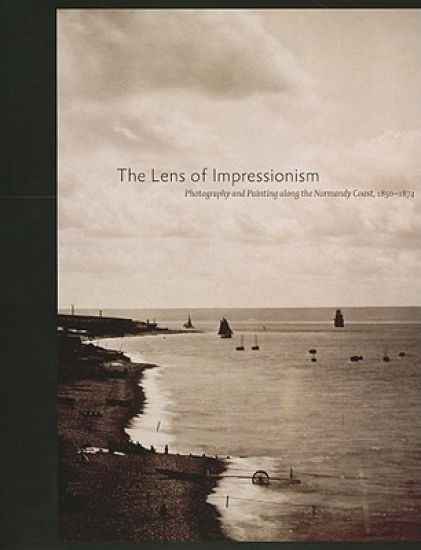
Kirjat ja teokset yhdessä paikassa: 10 kirjaa, julkaisuja vuosilta 1990–2020, suosituimpiin kuuluu Aubenas, S: Lens of Impressionism. Vertaile teosten hintoja ja tarkista saatavuus suomalaisista kirjakaupoista.
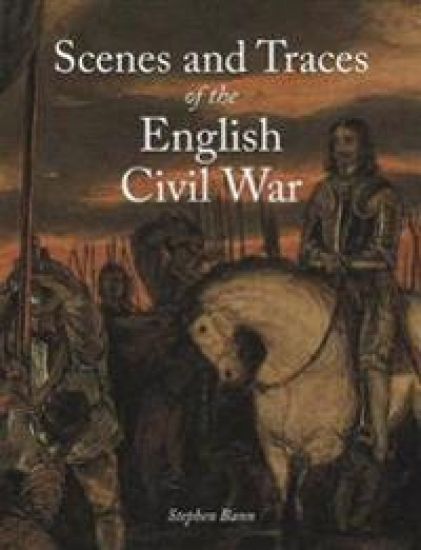
The English Civil War has become a frequent point of reference in contemporary political debate. A bitter and bloody series of conflicts, it shook the very foundations of seventeenth-century Britain. This is the first attempt to portray the visual legacy of this period, as passed down, revisited and periodically reworked over two and a half centuries of subsequent English history. Highly regarded art historian Stephen Bann deftly interprets the mass of visual evidence accessible today, from ornate tombs and statues to surviving sites of vandalism and iconoclasm, public signage and historical paintings of subjects, events and places.
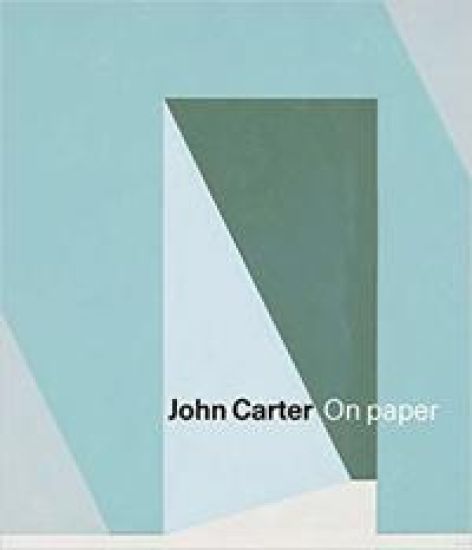
John Carter, the important post-war abstract sculptor, presents his works on paper. Reveals the beauty of his mathematically rigorous explorations. John Carter RA has made some of the most beautiful and lucid artworks of the last fifty years. The apparent simplicity and directness of his abstract reliefs belie an ambiguity that extends even to their definition, as Carter seeks subtly to reimagine the relationship between sculpture and painting. Carter is best known for his 'wall objects', shallow sculptures based on abstract mathematical formulae. He begins each work with notebook sketches, moving on to larger, measured drawings. It is these drawings - taken from throughout Carter's career - that this book presents. Each drawing is a fascinating model of colour abstraction, with commentary by the artist. Carter's drawings reveal the originality of his mind and the love of exactitude and clarity that drives his practice. His singular contribution to the post-war flowering of British abstraction can clearly be seen here.
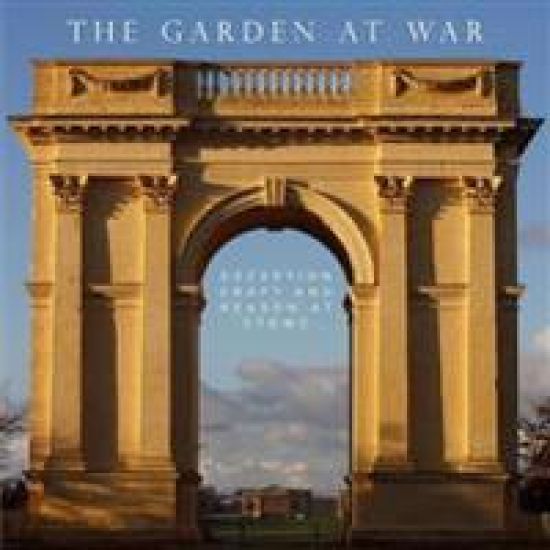
Stowe isn’t a garden of flowers or shrubs; it’s a garden of ideas. This important new collection of essays and artwork brings together ideas from some of the leading thinkers on landscape design, exploring the gardens at Stowe as a site of conflict between order and disorder. At Stowe, 250 acres of parkland offer a complex web of views, pathways, statues, inscriptions, urns and ideas. Unlike its French floricultural precursors, Stowe presents sudden shifts of scene, abrupt revelations, as well as spots at which to stop to absorb the visual effect. There is natural beauty in the gardens of Stowe, but they serve a larger purpose than to please the eye. Beneath this facade of bucolic idyll lies a deeply important suggestion of man’s relationship to nature. Accompanying an exhibition of historic and contemporary art at Stowe House, The Garden at War explores the gardens at Stowe, built by a general, as a site of perpetual conflict in which the preconditions of destruction and creation are inescapable. If nature is understood to be original, then the garden is an ordered but un-orderly condition; a re ordered vision of the natural order, a vision of nature disciplined by human action in a attempt to advance and yield control. Starting with works by the preeminent neoclassical painters Nicolas Poussin and Claude Lorrain – whose distinct pictorial visions gave rise to an unmistakable relationship between the garden, the viewer and the natural world – the publication brings together an arrangement of interpretations and theories exploring metaphors and meanings within the very practice of gardening itself. An introduction by the pre-eminent critic Stephen Bann and an essay by the foremost garden historian John Dixon Hunt lead on to newly commissioned illustrations by artist Gary Hincks, a previously unpublished interview with the Scottish conceptual artist and gardener Ian Hamilton Finlay, and a new discussion of conflict in the work of Richard Long.
These letters to (and from) Finlay's friend, the English poet and scholar, Stephen Bann, centre on the initial development of the garden at Stonypath, near Edinburgh, later to become the world renowned 'Little Sparta'. They cover Finlay's turn away from poetry towards sculpture and garden design, and the thinking behind, and consequences of, this development. This book, edited, introduced and annotated by Bann himself as was Midway, its companion volume of letters, completes the portrait of the man who is now recognized not only as a great poet, but also as a major artist and one of the most original garden designers of modern times. "... Bann's superb two volume set of Finlay's correspondence... These handsomely printed volumes, amply footnoted, with biographical and historical commentary leading readers up and down the stony path, are an extended conversation with one of twentieth-century Britain's most unexpected artists." -Times Literary Supplement Read the full review here
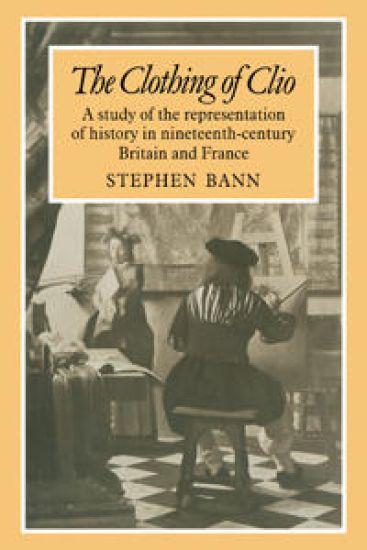
Originally published in 1984, The Clothing of Clio is concerned with the wide variety of ways in which the past was represented in Britain and France in the nineteenth century. This was a period of unprecedented historical-mindedness, in which novelists, poets, painters, collectors, as well as historians, took the past as their subject matter. Dr Bann argues that the concrete vision of the past should be studied across the whole field of representation. He shows that, with the advent of the nineteenth century, there comes into existence a historical poetics - a set of linguistic procedures in the broadest sense employed to communicate and enhance the 'reality' of the past - which can be understood primarily through techniques of rhetorical analysis. This highly original and provocative study will interest a wide range of readers including professional historians and historiographers, as well as any serious reader concerned with the broad cultural issues of nineteenth-century Europe.
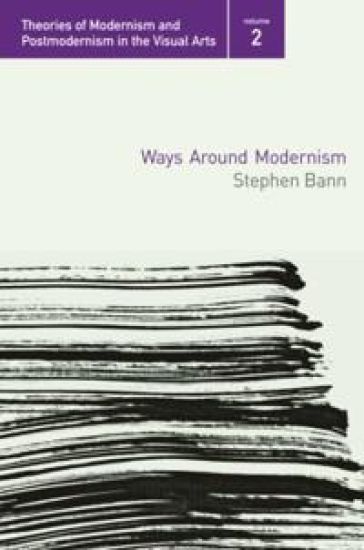
Stephen Bann examines the arguments for the centrality of French modernist painting. He begins by focusing particularly on the notion of the modernist break, as it has been interpreted with regard to painters like Manet and Ingres. He argues that ‘curiosity’, with its origins in the seventeenth-century world-view can be a valid concept for understanding some aspects of contemporary art that contest the modern, suggesting ways of sidetracking the modern by adopting a lengthier historical view.
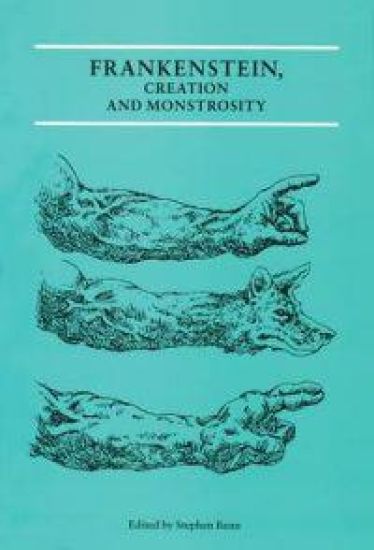
In "Frankenstein" Mary Shelley revived for the Romantic period the link between scientific experiment and natural magic, and made her own contribution to the debate on the difference between "creation" and "production". These essays examine the place of the monster in Western visual culture.
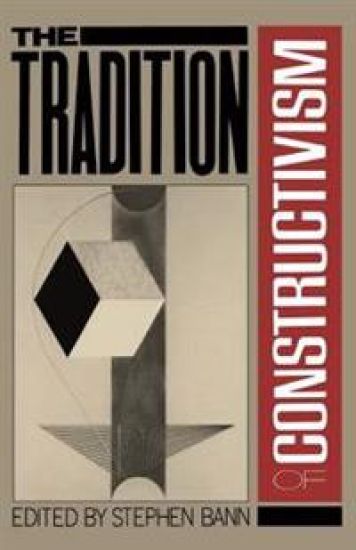
With these words the sculptors Naum Gabo and Antoine Pevsner pronounced the official birth of constructivist art, the most revolutionary, challenging, and enigmatic of twentieth-century artistic movements. Since the time of their "Realistic Manifesto," constructivism has spread throughout the world, opposing personal, expressionistic art with abstraction and formal construction. In this book, Stephen Bann has collected the most important constructivist documents, including the writings of EI Lissitzky, Theo Van Doesburg, Hans Richter, Victor Vasarely, and Charles Biederman,many of which have never before been available in English,and supplemented them with a critical introduction, a chronology of constructivism, and an invaluable bibliography of close to four hundred items. This volume is illustrated with thirty-eight constructivist prints, paintings, drawings, and sculptures, some of them are rare and previously unpublished.