Kirjojen hintavertailu – 12 903 725 kirjaa ja 27 kauppaa

Kirjailija

Stephen Barber

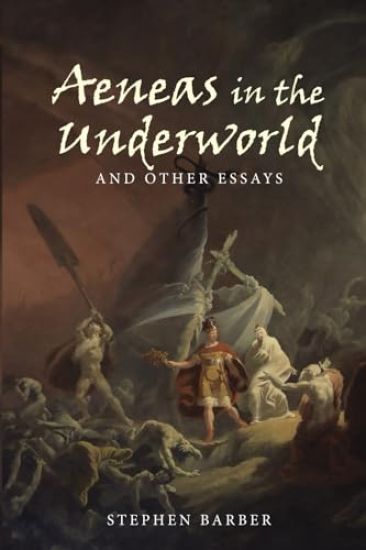
Kirjat ja teokset yhdessä paikassa: 32 kirjaa, julkaisuja vuosilta 2001–2025, suosituimpiin kuuluu Aeneas in the Underworld and Other Essays. Vertaile teosten hintoja ja tarkista saatavuus suomalaisista kirjakaupoista.

32 kirjaa

Kirjojen julkaisuvuodet: 2001–2025.

Into the Wastelands

Into the Wastelands

Stephen Barber

Diaphanes AG
2025
nidottu
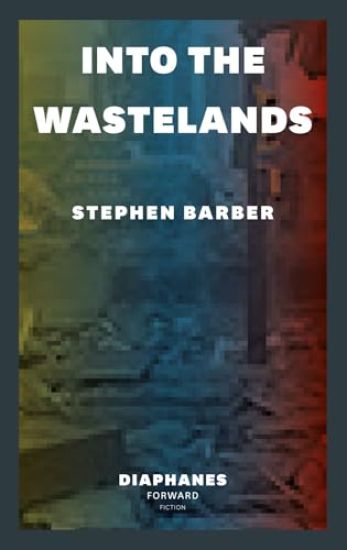
“Only the wastelands can save us now.” An urban investigator has been commissioned by a global corporation to determine how cities worldwide are being engulfed and destroyed by the wastelands that are mysteriously appearing at their heart. They are being "wastelanded," generating turmoil and catastrophic technological meltdown in every global megalopolis. Throughout his inquiries he discovers that the world’s cities are becoming apocalyptic, experiencing ecocide. The investigator himself will have to travel to the "true north" to escape that endpoint. Today, urban imaginaries and speculative fictions often depict abandoned wastelands and ruinous cities that hold the expansive potential to engulf all urban and environmental space and render it entirely apocalyptic. In his novel Into the Wastelands Stephen Barber examines urgent aspects of our wasted realities through fictional narratives: How does the figure of the proliferating, infinitely expansive wasteland enable us to understand that point of rupture for urban futures? Does the wasteland allow us to accurately assess the contemporary dynamic between the apocalyptic and the urban?
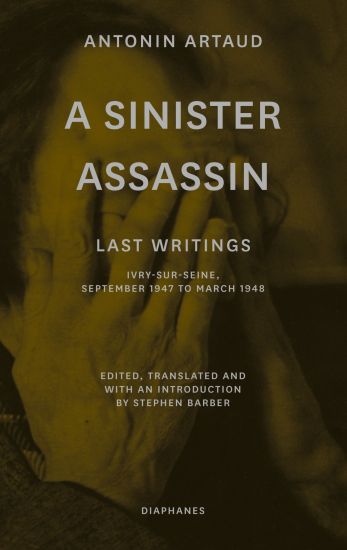
A Sinister Assassin – Last Writings, Ivry–Sur–Seine, September 1947 to March 1948
A Sinister Assassin contains original translations of Antonin Artaud’s last writings and interviews, most never previously available in English. A Sinister Assassin presents translations of Antonin Artaud’s largely unknown final work of 1947–48, revealing new insights into his obsessions with human anatomy, sexuality, societal power, creativity, and ill-will—notably, preoccupations of the contemporary world. Artaud’s last conception of performance is that of a dance-propelled act of autopsy, generating a ”body without organs” which negates malevolent microbial epidemics. This book assembles Artaud’s crucial writings and press interviews from September 1947 to March 1948, undertaken at a decrepit pavilion in the grounds of a convalescence clinic in Ivry-sur-Seine, on the southern edge of Paris, as well as in-transit through Paris’s streets. It also draws extensively on Artaud’s manuscripts and original interviews with his friends, collaborators, and doctors throughout the 1940s, illuminating the many manifestations of Artaud’s final writings: the contents of his last, death-interrupted notebook; his letters; his two final key texts; his glossolalia; the magazine issue which collected his last fragments; and the two extraordinary interviews he gave to national newspaper journalists in the final days of his life, in which he denounces and refuses both his work’s recent censorship and his imminent death. Edited, translated, and with an introduction by Stephen Barber, A Sinister Assassin illuminates Artaud’s last, most intensive, and terminal work for the first time.
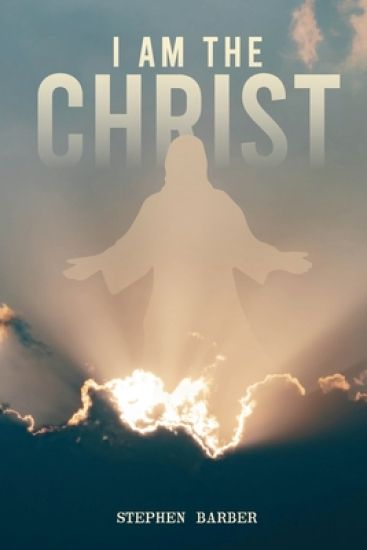
I Am the Christ

I Am the Christ

Stephen Barber

New Harbor Press
2023
pokkari
The world has the right to know the truth. Did Jesus really come to lead everyone into the presence of God; will those who fail to follow Jesus see eternal life? This book examines the spiritual fitness of Jesus. What were his qualifications? Was he God? Was he capable of leading? The Resurrection of Life hinges upon trusting in the work of Christ; the Resurrection of Death hinges upon rejecting his work. Everyone needs to be aware of just how different these two resurrections will be. Prudence cries out demanding everyone to take the time to consider the difference.
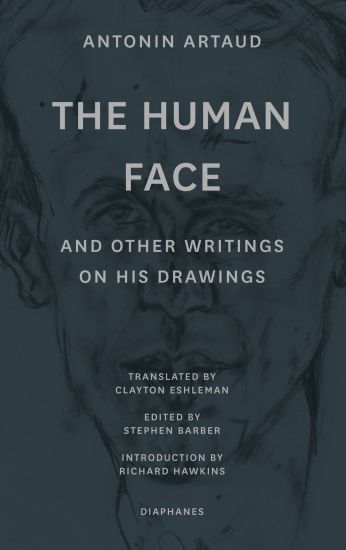
"The Human Face" and Other Writings on His Drawings

"The Human Face" and Other Writings on His Drawings

Antonin Artaud; Stephen Barber; Clayton Eshleman; Richard Hawkins

Diaphanes
2023
nidottu
The first comprehensive collection in English of Antonin Artaud’s writings on his artworks. The many major exhibitions of Antonin Artaud’s drawings and drawn notebook pages in recent years—at New York’s Museum of Modern Art, Vienna’s Museum Moderner Kunst, and Paris’s Centre Georges Pompidou—have entirely transformed our perception of his work, reorienting it toward the artworks of his final years. This volume collects all three of Artaud’s major writings on his artworks. “The Human Face” (1947) was written as the catalog text for Artaud’s only gallery exhibition of his drawings during his lifetime, focusing on his approach to making portraits of his friends at the decrepit pavilion in the Paris suburbs where he spent the final year of his life. “Ten years that language is gone” (1947) examines the drawings Artaud made in his notebooks—his main creative medium at the end of his life—and their capacity to electrify his creativity when language failed him. “50 Drawings to assassinate magic” (1948), the residue of an abandoned book of Artaud’s drawings, approaches the act of drawing as part of the weaponry deployed by Artaud at the very end of his life to combat malevolent assaults and attempted acts of assassination. Together, these three extraordinary texts—pitched between writing and image—project Artaud’s ferocious engagement with the act of drawing.
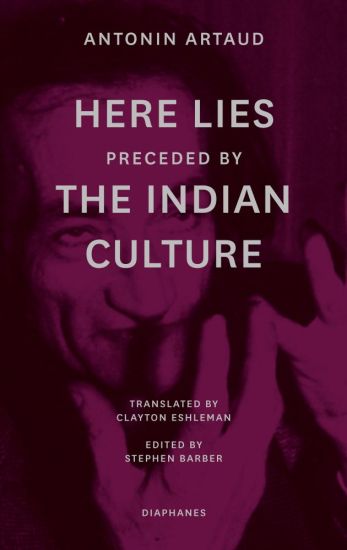
"Here Lies" preceded by "The Indian Culture"

"Here Lies" preceded by "The Indian Culture"

Antonin Artaud; Stephen Barber; Clayton Eshleman

Diaphanes AG
2022
nidottu
“Here Lies” preceded by “The Indian Culture” collects two of Antonin Artaud’s foremost poetic works from the last period of his life. He wrote both works soon after his release from the psychiatric hospital of Rodez and his return to Paris, and they were published during the flurry of intensive activity and protests against his work’s censorship. The Indian Culture is the first and most ambitious work of Artaud’s last period. It deals with his travels in Mexico in 1936 where Artaud sets aside his usual preoccupations with peyote and the Tarahumara people’s sorcerers to directly anatomize his obsessions with gods, corporeality, and sexuality. Here Lies is Artaud’s final declaration of autonomy for his own body from its birth to its imminent death, won at the cost of multiple battles against the infiltrating powers amassed to steal that birth and death away from him. Both works demonstrate Artaud’s final poetry as a unique amalgam of delicate linguistic invention and ferociously obscene invective. “Here Lies” preceded by “The Indian Culture” was translated by the award-winning translator Clayton Eshleman, widely seen as the preeminent translator into English of Artaud’s work, with its profound intensity and multiply nuanced language. For the first time since its first publication, this bilingual edition presents the two works in one volume, as Artaud originally intended. This edition also features a contextual afterword by Stephen Barber as well as new material, previously untranslated into English.
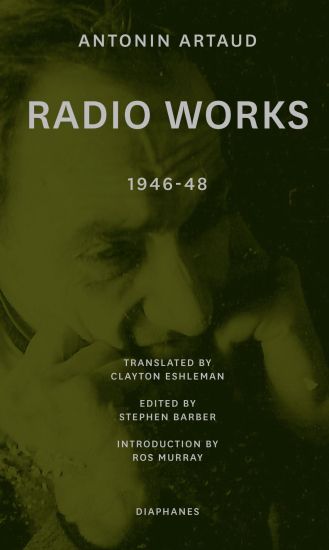
Radio Works: 1946–48

Radio Works: 1946–48

Antonin Artaud; Stephen Barber; Clayton Eshleman; Ros Murray

Diaphanes AG
2022
nidottu
Following his release from the Rodez asylum, Antonin Artaud decided he wanted his new work to connect with a vast public audience, and he chose to record radio broadcasts in order to carry through that aim. That determination led him to his most experimental and incendiary project, To Have Done with the Judgement of God, 1947-48, in which he attempted to create a new language of texts, screams, and cacophonies: a language designed to be heard by millions, aimed, as Artaud said, for “road-menders.” In the broadcast, he interrogated corporeality and introduced the idea of the “body without organs,” crucial to the later work of Deleuze and Guattari. The broadcast, commissioned by the French national radio station, was banned shortly before its planned transmission, much to Artaud’s fury. This volume collects all of the texts for To Have Done with the Judgement of God, together with several of the letters Artaud wrote to friends and enemies in the short period between his work’s censorship and his death. Also included is the text of an earlier broadcast from 1946, Madness and Black Magic, written as a manifesto prefiguring his subsequent broadcast. Clayton Eshleman’s extraordinary translations of the broadcasts activate these works in their extreme provocation.
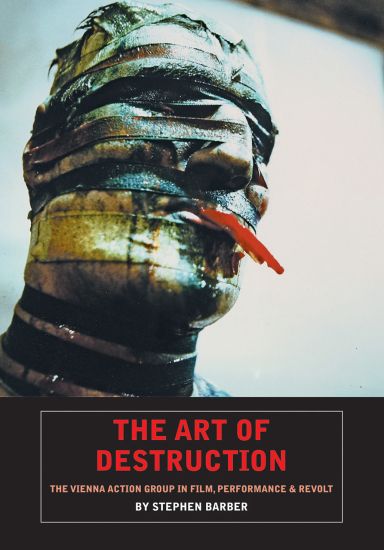
The Art Of Destruction

The Art Of Destruction

Stephen Barber

Solar Books
2020
nidottu
The iconoclastic work of the Vienna Action Group is now more contemporary than ever before, and THE ART OF DESTRUCTION provides a comprehensive introduction to that work in both film and performance. Fully illustrated and annotated, and including an extensive filmography, this is a book of compelling interest to all students of film, art and performance, and for all readers engaged with questioning social and corporate cultures.
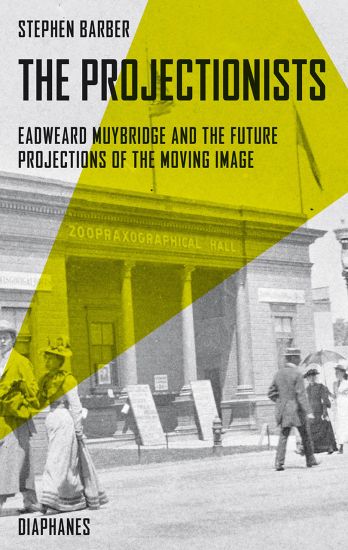
The Projectionists – Eadweard Muybridge and the Future Projections of the Moving Image
Eadweard Muybridge is among the seminal originators of the contemporary world’s visual form. Projectionists examines mostly unknown aspects of Muybridge’s work: his period as a touring projectionist who enthralled audiences with unprecedented moving-images and his creation of a moving-image auditorium—long before cinemas—in which to project his work at the 1893 World’s Columbian Exposition. That auditorium was both a catastrophe and a vital precursor for the following century’s manias for projection. Based on new research into his travels, audiences, auditoria, and projectors, Projectionists explores Muybridge’s initiating role in moving-image projection and also maps his driving inspiration for subsequent filmmakers preoccupied with the volatile entity of projection, from 1890s Berlin to contemporary Japan, via further World’s Exposition events and cinemas’ overheated projection-boxes.
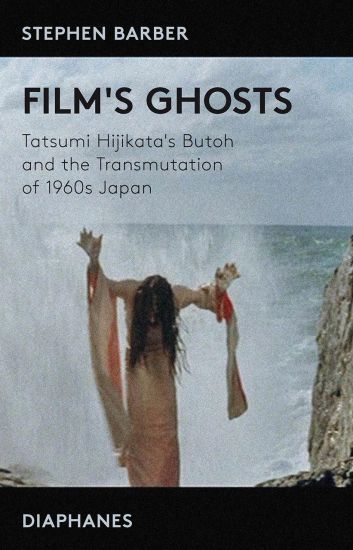
Film's Ghosts – Tatsumi Hijikata's Butoh and the Transmutation of 1960s Japan
Tokyo during the 1960s was in a state of uproar, full of protests, riots, and insurrection. Tatsumi Hijikata—the initiator of the “Butoh” performance art and the seminal figure in Japan’s experimental arts culture of the 1960s—created his most famous works in the context of that turmoil, his experimental film projects and his horror and erotic films uniquely invoking the intensity of the decade. Based on original interviews with Hijikata’s collaborators as well as new research, Film’s Ghosts illuminates Hijikata’s work against the backdrop of 1960s urban culture in Tokyo. This will be an essential book for readers engaged with film and performance, urban cultures and architecture, and Japan’s experimental art and its histories.
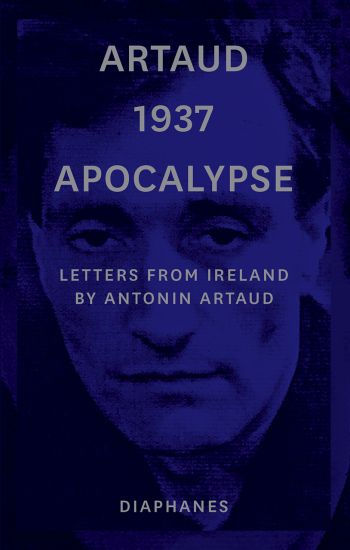
Artaud 1937 Apocalypse – Letters from Ireland August to 21 September 1937

Artaud 1937 Apocalypse – Letters from Ireland August to 21 September 1937

Antonin Artaud; Stephen Barber

Diaphanes AG
2019
nidottu

Halvin toimitettuna 19,60 €

Antonin Artaud’s journey to Ireland in 1937 marked an extraordinary—and apocalyptic—turning point in his life and career. After publishing the manifesto The New Revelations of Being about the “catastrophic immediate-future,” Artaud abruptly left Paris for Ireland, remaining there for six weeks without money. Traveling first to the isolated island of Inishmore off Ireland’s western coast, then to Galway, and finally to Dublin, Artaud was eventually arrested as an undesirable alien, beaten by the police, and summarily deported back to France. On his return, he spent nine years in asylums, remaining there through the entire span of World War II. During his fateful journey, Artaud wrote letters to friends in Paris which included several “magic spells,” intended to curse his enemies and protect his friends from the city’s forthcoming incineration and the Antichrist’s appearance. (To André Breton, he wrote: “It’s the Unbelievable—yes, the Unbelievable—it’s the Unbelievable which is the truth.”) This book collects all of Artaud’s surviving correspondence from his time in Ireland, as well as photographs of the locations he traveled through. Featuring an afterword and notes by the book’s translator, Stephen Barber, this edition marks the seventieth anniversary of Artaud’s death.
Guiseley Terriers: A Small Part of a Great War

Guiseley Terriers: A Small Part of a Great War

Stephen Barber

Pen Sword Military
2018
sidottu
After the Battle of the Lys in April 1918, Field-Marshal Sir Douglas Haig said of the 147th (Territorial) Brigade: 'I desire to express my appreciation of the very valuable and gallant services performed by troops of the 49th (West Riding) Division since the entry of the 147th Brigade into the Battle of Armenti res. The courage and determination showed by this division has played no small part in checking the enemy's advance and I wish to convey to General Cameron and all the officers and men under his command my thanks for all they have done.' In April 1918, the 'Saturday night soldiers' from Bingley, Guiseley, Haworth, Keighley, Settle and Skipton halted the German advance at a critical time in the war during the German spring offensive. Haig's 'Backs to the Wall' order had just been issued when the 1/6th Duke of Wellington's Regiment was sent to the front-line at Armenti res. After nearly four years at the front, they had been transformed from part-time enthusiastic amateurs to battle hardened veterans, having fought in some of the Great War's major battles, including suffering the effects of mustard gas at Nieuport. It was a source of pride to the men of the battalion that they had never given up ground to the enemy, unless ordered to by a higher authority, and only then reluctantly. Using newspaper archives, war diary extracts, personal accounts and previously unpublished photographs, Stephen Barber retraces the formation and history of the 1/6th Duke of Wellington's Regiment from the creation of the Volunteer Rifle Corps in 1860, to its mobilisation in the Great War. A day-by-day account of their movements and actions over the four-year period culminates in the pursuit of the retreating German Army at Famars, on 1 November 1918.
White Noise Ballrooms

White Noise Ballrooms

Stephen Barber

Diaphanes AG
2018
nidottu
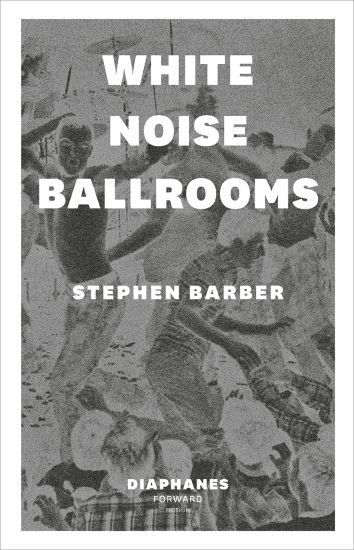
“The devil is at our heels . . . . at the heart of the city’s aberrations.” Picture a lost city in northern England during the momentous winter of 1978—the final winter before the onset of the Thatcher era, at the peak of the punk rock movement. A notorious serial killer—the Yorkshire Ripper—terrorizes the city’s women, unhindered by an aimless police force. Violent outbursts of gang warfare transect the city’s streets while an immense insane asylum overlooks the chaos from the outskirts. This innovative and disturbing novel follows a group of teens as they engulf themselves in punk-rock cacophonies and the accompanying riots that erupt in the city’s decrepit hotel ballrooms and subterranean nightclubs. Written in a captivating, immersive first-person voice that meshes raw corporeality and urban insurgency, White Noise Ballrooms deploys recent history to piercingly illuminate the contemporary moment.
Berlin Bodies

Berlin Bodies

Stephen Barber

Reaktion Books
2017
nidottu
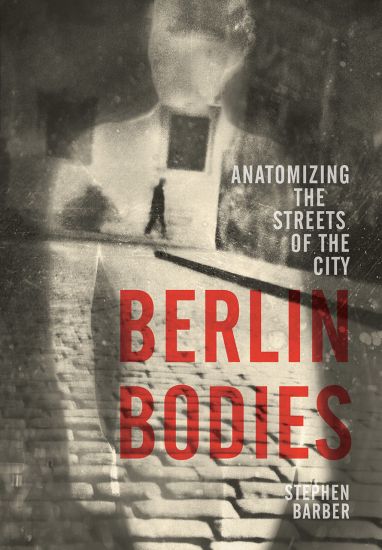
The capital of Germany and home to 3.5 million people, Berlin has a rich, colourful and fascinating history. It rapidly developed into a major urban centre at the end of the nineteenth century, and today is a site where the scars of history sit alongside ultra-modern urban developments. Berlin has always been a place where people have had a close relation-ship with the fabric of the city, and as such it is the perfect lens with which to examine this relationship, and how that process has shaped the modern city. Berlin Bodies is the first cultural history of the human body in Berlin, spanning the twentieth century and the contemporary scene today. Stephen Barber explores previously neglected material from the city's audio and visual archives to examine how people interacted with the streets, buildings, squares and spaces of Berlin. He takes a deeper look into riots, ruins, nightclubs, crowds, architectural experiments, citywide spectacles, film, art and performances, which have all affected the structure of the city and the people who inhabit it. Berlin Bodies is an innovative approach to examining the modern city space, and how people interact with it. Based on a quarter-century of close observations of Berlin, this book will be compelling reading for those interested in cities, space, visual and digital media, as well as those who see Berlin as a rich source of insights into modern urban cultures.
Westminster, Governance and the Politics of Policy Inaction
This book shows how political inaction has shaped the politics, economy and society we recognize today, despite the fact that policymakers are incentivised to act and to be seen to act decisively. Politicians make decisions which affect our lives every day but in our combative Westminster system, are usually only held to account for those which change something. But what about decisions to do nothing? What about policy which is discarded in favour of an alternative? What about opposition for naked political advantage? This book argues that not only is policy inaction an overlooked part of British politics but also that it is just as important as active policy and can have just as significant an impact on society. Addressing the topic for perhaps the first time, it offers a provocative analysis of ‘do nothing’ politics. It shows why politicians are rarely incentivized to do nothing, preferring hyperactivity. It explores the philosophical and structural drivers of inaction when it happens and highlights the contradictions in behavior. It explains why Attlee and Thatcher enjoyed lasting policy legacies to this day, and considers the nature of opposition and the challenge of holding ‘do nothing’ policy decisions to account.