Kirjojen hintavertailu – 12 903 725 kirjaa ja 27 kauppaa

Kirjailija

Stephen Bogener

Kirjat ja teokset yhdessä paikassa: 3 kirjaa, julkaisuja vuosilta 2003–2019, suosituimpiin kuuluu Llano Estacado. Vertaile teosten hintoja ja tarkista saatavuus suomalaisista kirjakaupoista.

3 kirjaa

Kirjojen julkaisuvuodet: 2003–2019.

Llano Estacado

Llano Estacado

Stephen Bogener; William Tydeman; Barry Lopez

Texas Tech Press,U.S.
2011
sidottu
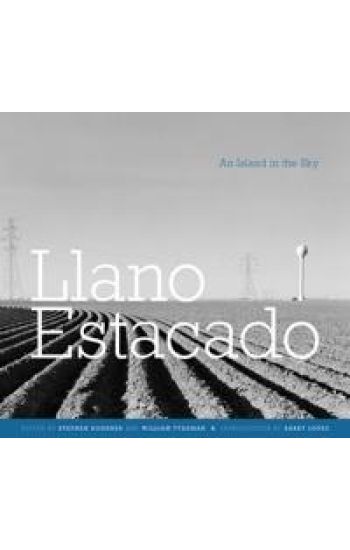
Stand at the rim of Palo Duro Canyon or look down from any vista along the caprock, and let your imagination take over. Beneath an endless canopy of blue, you find yourself at the edge of an enormous island of rippling grassland that stretches from the New Mexico borderlands down through the Texas Panhandle. The Llano Estacado, Coronado’s legendary “staked plains,” comprises all or part of thirty-three counties in Texas and four in New Mexico. It covers approximately 32,000 square miles of arid prairie used primarily today for ranching and farming. It lies atop the vast Ogalalla Aquifer—its primary source of water—and partially covers the oil-bearing Permian Basin. Its population, outside of four mid-sized cities, is sparse. The Llano has always required and appealed to discerning eyes. The artists and writers gathered here are hardly the first to have felt the pull of this place or the urgency to capture its essence. Yet the idiosyncrasies and ideals, the successes and failures, the strangeness and beauty and power of the land and its people beckon fresh discovery. Look at the Llano with eyes open to possibility, and you will encounter the unexpected, a keener understanding of the ways in which landscape and life are always inescapably intertwined, thrumming, as Barry Lopez suggests, the eternal questions: Where are we? And where do we go from here?
Ditches Across the Desert

Ditches Across the Desert

Stephen Bogener

Texas Tech Press,U.S.
2019
nidottu
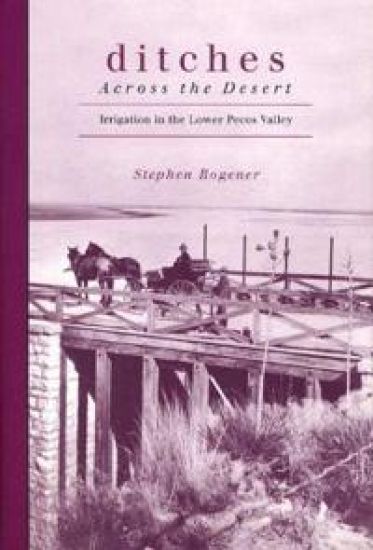
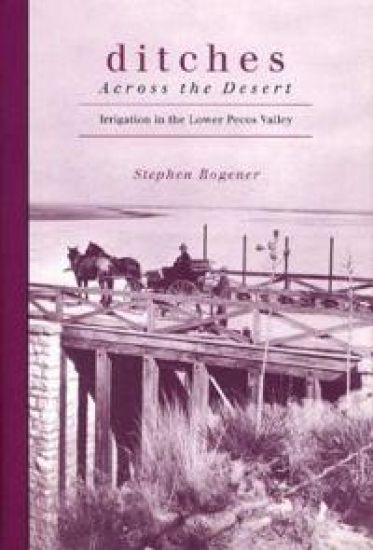
Settlement of the West came slowly, based on advances in technology and the harnessing of nature, especially water. Early on, the arid Pecos country seemed to have too little water to make it tamable. With the downturn in ranching in southeastern New Mexico and West Texas in the late 1870s, however, promoter Charles Eddy joined lawman Pat Garrett in a grandiose scheme. They would dam the Pecos River, build irrigation canals, and turn the area into an agricultural oasis. Many Americans, including Western lawmakers, considered irrigation to be America at its best. Wealthy easterners invested in its development in the great traditions of American capitalism. Farmers laboring side by side to transform the desert into productive cropland represented the ideals of Jeffersonian yeoman democracy. These people, and the change of the Pecos Valley from rustic cattle territory to towns and irrigated farmland, formed the framework for this rich story of the American West. Today the once formidable Pecos River has become a mere shadow of its former self. Dammed in many places for irrigation, its springs pumped dry in others, the Pecos today leads a precarious existence. Yet the contest over its water continues.
Ditches Across the Desert

Ditches Across the Desert

Stephen Bogener

Texas Tech Press,U.S.
2003
sidottu
'One of the most thoroughly researched, detailed histories of any irrigated region in the American West' - ""American Historical Review"". 'Recommended ... A worthy addition to recent studies of water administration in the West' - ""Western Historical Quarterly"". 'A welcomed and excellent study that adds much to our knowledge of water development projects in southeastern New Mexico in the context of the history of the campaign for national reclamation' - ""Journal of Southern History"". Settlement of the West came slowly, based on advances in technology and the harnessing of nature, especially water. Early on, the arid Pecos country seemed to have too little water to make it tamable. With the downturn in ranching in southeastern New Mexico and West Texas in the late 1870s, however, promoter Charles Eddy joined lawman Pat Garrett in a grandiose scheme. They would dam the Pecos River, build irrigation canals, and turn the area into an agricultural oasis. This book illuminates the myriad personalities and interests that combined and clashed over the Pecos Valley reservoirs and canals. Many Americans, including western lawmakers, considered irrigation to be America at its best. Wealthy easterners invested in its development in the great traditions of American capitalism. Farmers laboring side by side to transform the desert into productive cropland represented the ideals of Jeffersonian yeoman democracy. These people, and the change of the Pecos Valley from rustic cattle territory to towns and irrigated farmland, form the framework for this rich story of the American West. By the end of the nineteenth century, investors led by James John Hagerman had poured more than $2.5 million into the Pecos ditches. Following episodes of violence, a natural disaster, and the financial downturn of 1893, settlers and capitalists deserted the valley, making its future uncertain. A series of financial reorganizations to raise much-needed capital attracted a major railroad to the valley, but the heyday of corporate irrigation was over. Instead, the irrigators turned to the federal government, and the U. S. Reclamation Service, although reluctant to rehabilitate the valleys irrigation system, agreed to take on the project and began a long, sometimes contentious relationship with water users in the valley. Today the once formidable Pecos River has become a mere shadow of its former self. Dammed in many places for irrigation, its springs pumped dry in others, the Pecos today leads a precarious existence. Yet the contest over its water within New Mexico and between New Mexico and Texas through the Pecos River Compact continues.