Kirjojen hintavertailu – 12 859 829 kirjaa ja 27 kauppaa

Kirjailija

Stephen Coleman

Kirjat ja teokset yhdessä paikassa: 18 kirjaa, julkaisuja vuosilta 2003–2026, suosituimpiin kuuluu The Internet and Democratic Citizenship. Vertaile teosten hintoja ja tarkista saatavuus suomalaisista kirjakaupoista.

18 kirjaa

Kirjojen julkaisuvuodet: 2003–2026.

The Internet and Democratic Citizenship

The Internet and Democratic Citizenship

Stephen Coleman; Jay G. Blumler

Cambridge University Press
2009
sidottu
Relations between the public and holders of political authority are in a period of transformative flux. On the one side, new expectations and meanings of citizenship are being entertained and occasionally acted upon. On the other, an inexorable impoverishment of mainstream political communication is taking place. This book argues that the Internet has the potential to improve public communications and enrich democracy, a project that requires imaginative policy-making. This argument is developed through three stages: first exploring the theoretical foundations for renewing democratic citizenship, then examining practical case studies of e-democracy, and finally, reviewing the limitations of recent policies designed to promote e-democracy and setting out a radical, but practical proposal for an online civic commons: a trusted public space where the dispersed energies, self-articulations and aspirations of citizens can be rehearsed, in public, within a process of ongoing feedback to the various levels and centers of governance: local, national and transnational.
The Internet and Democratic Citizenship

The Internet and Democratic Citizenship

Stephen Coleman; Jay G. Blumler

Cambridge University Press
2009
pokkari
Relations between the public and holders of political authority are in a period of transformative flux. On the one side, new expectations and meanings of citizenship are being entertained and occasionally acted upon. On the other, an inexorable impoverishment of mainstream political communication is taking place. This book argues that the Internet has the potential to improve public communications and enrich democracy, a project that requires imaginative policy-making. This argument is developed through three stages: first exploring the theoretical foundations for renewing democratic citizenship, then examining practical case studies of e-democracy, and finally, reviewing the limitations of recent policies designed to promote e-democracy and setting out a radical, but practical proposal for an online civic commons: a trusted public space where the dispersed energies, self-articulations and aspirations of citizens can be rehearsed, in public, within a process of ongoing feedback to the various levels and centers of governance: local, national and transnational.
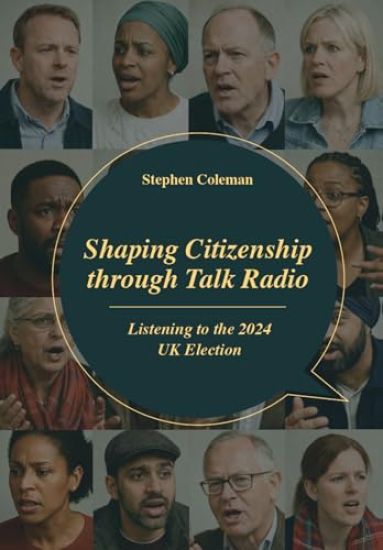
Shaping Citizenship through Talk Radio
This is a book about how to have an inclusive, reflective and civil national conversation. It asks whether the mass media can contribute to meaningful public debate in the run-up to an election. Talk radio in the United States is said to have contributed to a political atmosphere in which the loudest, crudest and simplest arguments prevail. Is there a different model of public talk that can contribute to a kinder, wiser, more empathetic democracy? In the run-up to the 2024 UK general election, Stephen Coleman listened to callers to the BBC’s daily phone-in show in the hope of finding answers to these questions. In this year-long study, we see the public expressing its mood, telling its stories and testing its arguments. Shaping Citizenship through Talk Radio argues that even in a time of democratic anxiety and rising division, people are still finding ways to talk, listen, and act together. It explains why democracies need reliable public spaces that help citizens connect and communicate across their differences. Reporting on what he found, Coleman also proposes a way forward for a more empathetic democratic discourse. Stephen Coleman is Emeritus Professor of Political Communication at the University of Leeds, UK.
How People Talk About Politics

How People Talk About Politics

Stephen Coleman

BLOOMSBURY PUBLISHING PLC
2022
nidottu
During the Brexit referendum campaign it became clear how easily national conversations around politics could become raucous and bitter. This book explores the nature of talking about politically contentious issues and how our society can begin to develop a more constructive culture of political talk. Uniquely, this study focuses on citizens own experiences and reflections on developing, practising and evaluating their own political voices. Based on seventy in-depth interviews with a diverse range of people, Stephen Coleman explores the intricate nature of interpersonal political talk and what this means for public attitudes towards politics and how people negotiate their political identities. Engaging with a broad range of subjects from Political Communication to Sociology this book offers valuable insight into how the public can discuss politically turbulent topics in a meaningful and constructive way.
The Ethics of Artificial Uteruses

The Ethics of Artificial Uteruses

Stephen Coleman

Routledge
2020
nidottu
Ectogenesis, the gestation of the foetus outside of the human body, will not for much longer be in the realm of science fiction; a number of projects attempting to develop ectogenetic technology are currently under way. This book examines the ethical implications of the development of ectogenesis. Examining the implications for abortion ethics in particular, this book also deals with the ethical objections to developing such a technology and the uses to which it may be put, such as creating embryos to supply donor organs for transplantation. The development of the artificial uterus may well be similar to cloning: a sudden technological advance with dramatic ethical implications, thrust suddenly into the public eye.
Capturing the Mood of Democracy

Capturing the Mood of Democracy

Stephen Coleman; Jim Brogden

Springer Nature Switzerland AG
2020
sidottu
This book is about what it means to speak of a political mood. Can the electorate be in a mood? How do they express it? How can moods be captured in a meaningful way? This book attempts to answer those questions by looking at one city during the December 2019 British general election. This is not a book about campaign strategies, target voters, turnouts and poll swings. It is about how people feel. The research approach is ethnographic. The telling of the story is lyrical. It may not be hard political science but it contributes significantly to an understanding of the health of contemporary democracy. Focusing upon the ways that voters and non-voters perform their enthusiasm or indifference, the stories that they tell, and photographic images of Bradford in what is supposed to be a vital democratic moment, this book invites readers to engage with the affective texture of an election.
How People Talk About Politics

How People Talk About Politics

Stephen Coleman

I.B. Tauris
2020
sidottu
During the Brexit referendum campaign it became clear how easily national conversations around politics could become raucous and bitter. This book explores the nature of talking about politically contentious issues and how our society can begin to develop a more constructive culture of political talk. Uniquely, this study focuses on citizens own experiences and reflections on developing, practising and evaluating their own political voices. Based on seventy in-depth interviews with a diverse range of people, Stephen Coleman explores the intricate nature of interpersonal political talk and what this means for public attitudes towards politics and how people negotiate their political identities. Engaging with a broad range of subjects from Political Communication to Sociology this book offers valuable insight into how the public can discuss politically turbulent topics in a meaningful and constructive way.
The Ethics of Artificial Uteruses

The Ethics of Artificial Uteruses

Stephen Coleman

CRC Press Inc
2017
sidottu
Ectogenesis, the gestation of the foetus outside of the human body, will not for much longer be in the realm of science fiction; a number of projects attempting to develop ectogenetic technology are currently under way. This book examines the ethical implications of the development of ectogenesis. Examining the implications for abortion ethics in particular, this book also deals with the ethical objections to developing such a technology and the uses to which it may be put, such as creating embryos to supply donor organs for transplantation. The development of the artificial uterus may well be similar to cloning: a sudden technological advance with dramatic ethical implications, thrust suddenly into the public eye.
Can The Internet Strengthen Democracy?

Can The Internet Strengthen Democracy?

Stephen Coleman

Polity Press
2017
sidottu
From its inception as a public communication network, the Internet was regarded by many people as a potential means of escaping from the stranglehold of top-down, stage-managed politics. If hundreds of millions of people could be the producers as well as receivers of political messages, could that invigorate democracy? If political elites fail to respond to such energy, where will it leave them? In this short book, internationally renowned scholar of political communication, Stephen Coleman, argues that the best way to strengthen democracy is to re-invent it for the twenty-first century. Governments and global institutions have failed to seize the opportunity to democratise their ways of operating, but online citizens are ahead of them, developing practices that could revolutionise the exercise of political power.
Can The Internet Strengthen Democracy?

Can The Internet Strengthen Democracy?

Stephen Coleman

Polity Press
2017
nidottu
From its inception as a public communication network, the Internet was regarded by many people as a potential means of escaping from the stranglehold of top-down, stage-managed politics. If hundreds of millions of people could be the producers as well as receivers of political messages, could that invigorate democracy? If political elites fail to respond to such energy, where will it leave them? In this short book, internationally renowned scholar of political communication, Stephen Coleman, argues that the best way to strengthen democracy is to re-invent it for the twenty-first century. Governments and global institutions have failed to seize the opportunity to democratise their ways of operating, but online citizens are ahead of them, developing practices that could revolutionise the exercise of political power.
The Mediated City

The Mediated City

Stephen Coleman; Thumim Nancy; Birchall Chris; Firmstone Julie; Moss Giles; Katy Parry; Stamper Judith; Jay G. Blumler

Zed Books Ltd
2016
sidottu
How does news circulate in a major post-industrial city? And how in turn are identities and differences formed and mediated through this circulation? This seminal work is the first to offer an empirical examination, and trace a city’s pattern of, news circulation. Encompassing a comprehensive range of practices involved in producing, circulating and consuming ‘news’ and recognizing the various ways in which individuals and groups may find out, follow and discuss local issues and events, The Mediated City critiques thinking that takes the centrality of certain news media as an unquestioned starting point. By doing so, it opens up a discussion: do we know what news is? What types of media constitute it? And why does it matter?
How Voters Feel

How Voters Feel

Stephen Coleman

Cambridge University Press
2014
pokkari
This book sets out to unearth the hidden genealogies of democracy, and particularly its most widely recognized, commonly discussed and deeply symbolic act, voting. By exploring the gaps between voting and recognition, being counted and feeling counted, having a vote and having a voice and the languor of count taking and the animation of account giving, there emerges a unique insight into how it feels to be a democratic citizen. Based on a series of interviews with a variety of voters and non-voters, the research attempts to understand what people think they are doing when they vote; how they feel before, during and after the act of voting; how performances of voting are framed by memories, narratives and dreams; and what it means to think of oneself as a person who does (or does not) vote. Rich in theory, this is a contribution to election studies that takes culture seriously.
How Voters Feel

How Voters Feel

Stephen Coleman

Cambridge University Press
2013
sidottu
This book sets out to unearth the hidden genealogies of democracy, and particularly its most widely recognized, commonly discussed and deeply symbolic act, voting. By exploring the gaps between voting and recognition, being counted and feeling counted, having a vote and having a voice and the languor of count taking and the animation of account giving, there emerges a unique insight into how it feels to be a democratic citizen. Based on a series of interviews with a variety of voters and non-voters, the research attempts to understand what people think they are doing when they vote; how they feel before, during and after the act of voting; how performances of voting are framed by memories, narratives and dreams; and what it means to think of oneself as a person who does (or does not) vote. Rich in theory, this is a contribution to election studies that takes culture seriously.
Military Ethics

Military Ethics

Stephen Coleman

Oxford University Press Inc
2012
Nidottu
Military Ethics: An Introduction with Case Studies provides an accessible introduction to the ethical issues faced by today's junior and mid-ranking military personnel. Offering an exceptionally practical perspective, it includes more than fifty engaging case studies--personal, historical, and fictional accounts--that give students a birds-eye view of various real-world ethical dilemmas. Opening with an introduction to ethics and an overview of ethical theory, the book goes on to discuss ethical problems related to: the use and misuse of power and authority; discrimination and proportionality in traditional conflicts, irregular wars, and humanitarian military interventions; supreme emergency, terrorism, and responses to terrorism; and much more. Military Ethics is enhanced by suggestions for further reading, an abbreviation key, an extensive bibliography, and an appendix including a list of the international treaties that make up the Law of Armed Conflict. A companion website at www.oup.com/us/coleman features lecture notes, additional case studies, and discussion questions.
The Media and The Public

The Media and The Public

Stephen Coleman; Karen Ross

Wiley-Blackwell (an imprint of John Wiley Sons Ltd)
2010
nidottu
The Media and the Public explores the ways a range of media, from the press to television to the Internet, have constructed and represented the public. Provides a new synthesis of recent research exploring the relationship between media and their publicsIdentifies ways in which different publics are subverting the gatekeeping of mainstream media in order to find a voice and communicate with othersSituates contemporary media-public discourse and relationships in an historical context in order to show the origin of contemporary public/political engagementCreates a theoretical expansion on the role of the media in accessing or denying the articulation of public voices, and the ways in which publics are harnessing new media formats to produce richer and more complex forms of political engagement
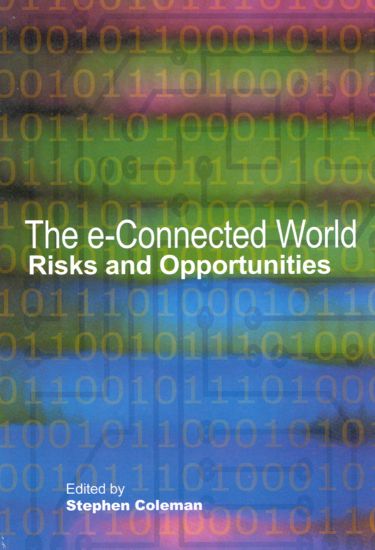
The e-Connected World

The e-Connected World

Stephen Coleman

Queen's University
2003
nidottu
Contrary to writings that herald the internet as a great liberator or see the information age as a dystopia requiring permanent surveillance, this book argues that we need to understand the changes that are taking place around us before we draw conclusions. "The e-Connected World" should be of interest to students, policy-makers and citizens seeking to look beyond the digital hype. The contributors include Richard Allan, member of the UK Parliament for Sheffield Hallam and former chairman of the Information select committee; Tom Calvert, professor and vice president for Research and External Affairs at the Technical University of British Columbia; Kevin Carey, director of HumanITy, as well as a long- standing member of the Web Accessibility Initiative (WAI) and vice-chairman of the Royal National Institute for the Blind. It also includes Stephen Coleman, professor of e-Democracy at the University of Oxford and fellow of Jesus College, Oxford; Ronald J. Deibert, assistant professor of political science at the University of Toronto; Stephen Murgatroyd, president of Lifeskills International Ltd and vice-president of the Axia Corporation; Stephanie Perrin, chief privacy officer at Zer-Knowledge Systems, Montreal, Quebec; Raymond J. Protti, president and CEO of the Canadian Bankers Association; Paul Stacey, member of the management team for the E-Learning Innovation Centre at Simon Fraser University, British Columbia; and Chris Yapp, director of the Internet Society of England and an associate of the UK think tank Demos.