

Kirjailija
Stephen Crane
Kirjat ja teokset yhdessä paikassa: 571 kirjaa, julkaisuja vuosilta 1895–2026, suosituimpiin kuuluu Maggie. Vertaile teosten hintoja ja tarkista saatavuus suomalaisista kirjakaupoista.
571 kirjaa
Kirjojen julkaisuvuodet: 1895–2026.

Hailed as one of American literature's most influential works, The Red Badge of Courage has a young recruit facing the trials and cruelties of war. Stephen Crane's 1895 novel is set in the American Civil War. Private Henry Fleming flees from battle and his battalion, considering all lost. Stumbling upon injured soldiers, he feels the shame of deserting and of not possessing the "red badge of courage", the wounds of war. But later when Henry rejoins his regiment and is ordered into a hopeless battle, he finds a chance to finally prove his courage as a man.

War is Kind, was unconventional for the time in that it was written in free verse without rhyme, meter, or even titles for individual works. They are typically short in length and although several poems, such as 'Do not weep, maiden, for war is kind', use stanzas and refrains, most do not. Crane also differed from his peers and poets of later generations in that his work contains allegory, dialectic and narrative situations. (source: Wikipedia)
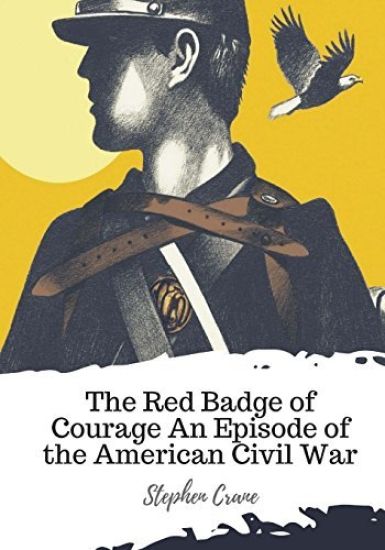
The Red Badge of Courage An Episode of the American Civil War
Stephen Crane
Createspace Independent Publishing Platform
2018
nidottu
Henry Fleming is a young private fighting for the Union Army in the American Civil War. His head filled with visions of heroic glory, Henry is eager for the battlefield, but when faced with his first real chance to fight, Henry begins to doubt his resolve and flees the battlefield. Ashamed, he soon regrets his actions, and longs to regain his honour by earning his "red badge of courage" by being wounded in service.

In the same vein as his most critically acclaimed novel, The Red Badge of Courage, this collection of short tales and sketches highlights author Stephen Crane's skill as a chronicler of war. Set in the Civil War period, these tales provide thought-provoking insight into the horrors of armed conflict while valorizing the bravery and selflessness of the soldiers and support staff who helped bring the cause to its just conclusion.

Before he succumbed to a fatal case of tuberculosis at the age of 28, author Stephen Crane penned five remarkably accomplished novels, not to mention dozens of short stories, essays, and sketches. The novel The Third Violet delves deeply into the complexities of love, viewed through the lens of the unlikely romance that blossoms between an up-and-coming artist and an aristocratic socialite.

The Monster and Other Stories
Stephen Crane
Createspace Independent Publishing Platform
2018
nidottu
The story is set in the small, fictional town of Whilomville, New York. An African-American coachman named Henry Johnson, who is employed by the town's physician, Dr. Trescott, becomes horribly disfigured after he saves Trescott's son from a fire. When Henry is branded a monster by the town's residents, Trescott vows to shelter and care for him, resulting in his family's exclusion from the community.

Maggie: A Girl of the Streets is a novella by American author Stephen Crane. It depicts a poor family in a New York neighborhood, whose parents are drunk and abusive. As the children grow up, Maggie attempts to better herself, but is defeated by her desperate surrounds and the poverty of humanity surrounding her.


When up-and-coming American author Stephen Crane died of tuberculosis at the tragically young age of 28, he left behind an uncompleted manuscript. Several years later, Canadian author Robert Barr completed the manuscript, although scholars are unsure how much writing each author contributed to the published version of the novel, a multi-generational family epic that begins in Ireland.
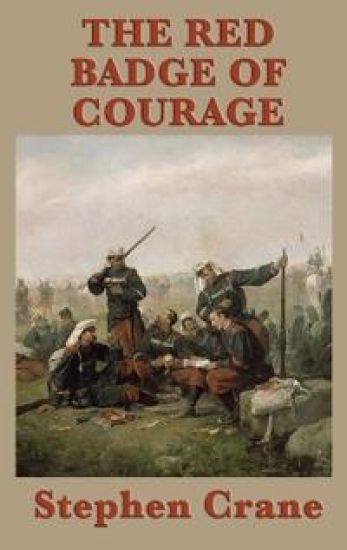
Hailed as one of American literature's most influential works, The Red Badge of Courage has a young recruit facing the trials and cruelties of war. Stephen Crane's 1895 novel is set in the American Civil War. Private Henry Fleming flees from battle and his battalion, considering all lost. Stumbling upon injured soldiers, he feels the shame of deserting and of not possessing the "red badge of courage," the wounds of war. But later when Henry rejoins his regiment and is ordered into a hopeless battle, he finds a chance to finally prove his courage as a man.


Rufus Coleman is now a respectable member of society, an editor of the New York Eclipse. He is hoping to marry Majory Wainwright despite her father's reservations. As the war between Turkey and Greece erupts we find Majory unable to return from her trip to Greece.

Rufus Coleman is now a respectable member of society, an editor of the New York Eclipse. He is hoping to marry Majory Wainwright despite her father's reservations. As the war between Turkey and Greece erupts we find Majory unable to return from her trip to Greece.

Remarkably prolific writer Stephen Crane died of tuberculosis at the tender age of 28. But in the years before his premature demise, Crane exerted a profound influence on American literature that would resonate for decades after his death. The posthumous collection Last Words brings together a series of stories, essays, sketches, and other short pieces that were among Crane's final works.

Though he is today best remembered as the author of the classic Civil War novel The Red Badge of Courage, American author Stephen Crane was widely lauded as one of the foremost practitioners of the short-story format in the early twentieth century. This fine collection brings together a number of his most highly regarded short tales, including the largely autobiographical account of the aftermath of a shipwreck, "The Open Boat."

Maggie: A Girl of the Streets is a novella by American author Stephen Crane. It depicts a poor family in a New York neighborhood, whose parents are drunk and abusive. As the children grow up, Maggie attempts to better herself, but is defeated by her desperate surrounds and the poverty of humanity surrounding her.


Great battles of the world. By: Stephen Crane: Vittoria.--The siege of Plevna.--The storming of Burkersdorf Heights.--A Swede's campaign in Germany. I
Stephen Crane
Createspace Independent Publishing Platform
2018
nidottu
Stephen Crane (November 1, 1871 - June 5, 1900) was an American poet, novelist, and short story writer. Prolific throughout his short life, he wrote notable works in the Realist tradition as well as early examples of American Naturalism and Impressionism. He is recognized by modern critics as one of the most innovative writers of his generation. The ninth surviving child of Protestant Methodist parents, Crane began writing at the age of four and had published several articles by the age of 16. Having little interest in university studies though he was active in a fraternity, he left Syracuse University in 1891 to work as a reporter and writer. Crane's first novel was the 1893 Bowery tale Maggie: A Girl of the Streets, generally considered by critics to be the first work of American literary Naturalism. He won international acclaim in 1895 for his Civil War novel The Red Badge of Courage, which he wrote without having any battle experience. In 1896, Crane endured a highly publicized scandal after appearing as a witness in the trial of a suspected prostitute, an acquaintance named Dora Clark. Late that year he accepted an offer to travel to Cuba as a war correspondent. As he waited in Jacksonville, Florida for passage, he met Cora Taylor, with whom he began a lasting relationship. En route to Cuba, Crane's vessel the SS Commodore sank off the coast of Florida, leaving him and others adrift for 30 hours in a dinghy. 1] Crane described the ordeal in "The Open Boat". During the final years of his life, he covered conflicts in Greece (accompanied by Cora, recognized as the first woman war correspondent) and later lived in England with her. He was befriended by writers such as Joseph Conrad and H. G. Wells. Plagued by financial difficulties and ill health, Crane died of tuberculosis in a Black Forest sanatorium in Germany at the age of 28. At the time of his death, Crane was considered an important figure in American literature. After he was nearly forgotten for two decades, critics revived interest in his life and work. Crane's writing is characterized by vivid intensity, distinctive dialects, and irony. Common themes involve fear, spiritual crises and social isolation. Although recognized primarily for The Red Badge of Courage, which has become an American classic, Crane is also known for his poetry, journalism, and short stories such as "The Open Boat", "The Blue Hotel", "The Bride Comes to Yellow Sky", and The Monster. His writing made a deep impression on 20th-century writers, most prominent among them Ernest Hemingway, and is thought to have inspired the Modernists and the Imagists.

Maggie, a Girl of the Streets
Stephen Crane
Createspace Independent Publishing Platform
2018
nidottu
A very little boy stood upon a heap of gravel for the honor of Rum Alley. He was throwing stones at howling urchins from Devil's Row who were circling madly about the heap and pelting at him. His infantile countenance was livid with fury. His small body was writhing in the delivery of great, crimson oaths. "Run, Jimmie, run Dey'll get yehs," screamed a retreating Rum Alley child. "Naw," responded Jimmie with a valiant roar, "dese micks can't make me run." Howls of renewed wrath went up from Devil's Row throats. Tattered gamins on the right made a furious assault on the gravel heap. On their small, convulsed faces there shone the grins of true assassins. As they charged, they threw stones and cursed in shrill chorus. The little champion of Rum Alley stumbled precipitately down the other side. His coat had been torn to shreds in a scuffle, and his hat was gone. He had bruises on twenty parts of his body, and blood was dripping from a cut in his head. His wan features wore a look of a tiny, insane demon. On the ground, children from Devil's Row closed in on their antagonist. He crooked his left arm defensively about his head and fought with cursing fury. The little boys ran to and fro, dodging, hurling stones and swearing in barbaric trebles.