Kirjailija
Stephen E. Ambrose
Kirjat ja teokset yhdessä paikassa: 40 kirjaa, julkaisuja vuosilta 1988–2024, suosituimpiin kuuluu Taistelutoverit. Vertaile teosten hintoja ja tarkista saatavuus suomalaisista kirjakaupoista.
Nimi esiintyy myös muodoissa: STEPHEN E AMBROSE
40 kirjaa
Kirjojen julkaisuvuodet: 1988–2024.
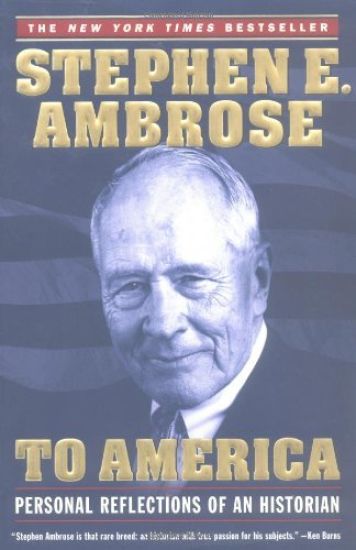
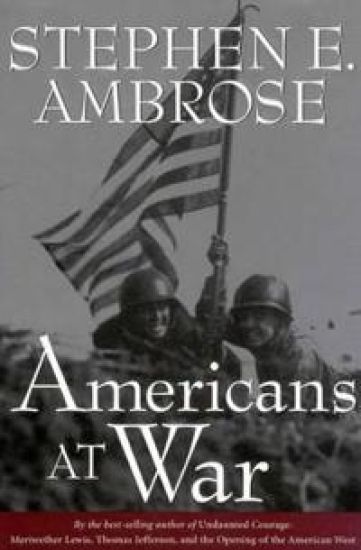
When Stephen Ambrose became interested in American history at age 18, there was much that America had done that made him proud, but there were many things he condemned as well; slavery, the treatment of Native Americans, racist Southern politicians, the Robber Barons of the transcontinental railroad, the use of the atomic bomb. All through his undergraduate and graduate years from 1953-1960, Ambrose learned such ideas from his professors and believed and then taught them himself when he became a teacher of history in 1960. But after researching and writing about the Civil War in graduate school, Eisenhower in the 60s, Crazy Horse and Custer, Lewis and Clark, Nixon, the transcontinental railroad, and World War II over the next three decades, Ambrose's views on American history changed. In his new book the renowned historian celebrates America's spirit and confronts its failures and struggles. As always in his much acclaimed work, Ambrose brings alive the men and women, famous and not, who have peopled history and made the United States the superpower it is now.
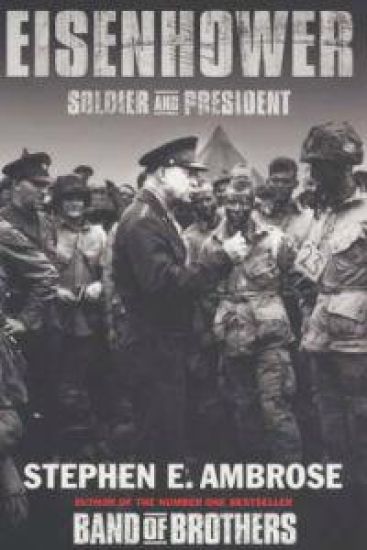
President Eisenhower was a leader who made peace in Korea and kept the peace thereafter. This biography draws from numerous interviews with Eisenhower himself, is peopled with such eminent figures as Roosevelt, Churchill, de Gaulle, Nixon and Khruschev and brings to life an incomparable leader.
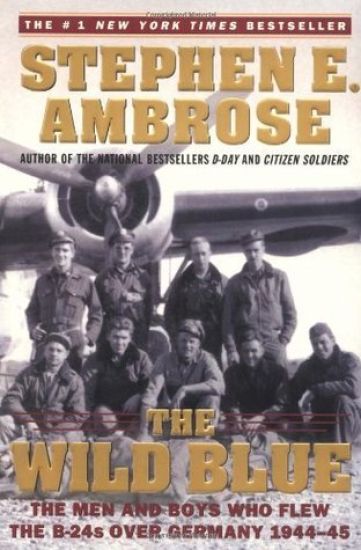
Stephen Ambrose is the acknowledged dean of the historians of World War II in Europe. In three highly acclaimed, bestselling volumes, he has told the story of the bravery, steadfastness, and ingenuity of the ordinary young men, the citizen soldiers, who fought the enemy to a standstill -- the band of brothers who endured together. The very young men who flew the B-24s over Germany in World War II against terrible odds were yet another exceptional band of brothers, and, in "The Wild Blue, " Ambrose recounts their extraordinary brand of heroism, skill, daring, and comradeship with the same vivid detail and affection. With his remarkable gift for bringing alive the action and tension of combat, Ambrose carries us along in the crowded, uncomfortable, and dangerous B-24s as their crews fought to the death through thick black smoke and deadly flak to reach their targets and destroy the German war machine.
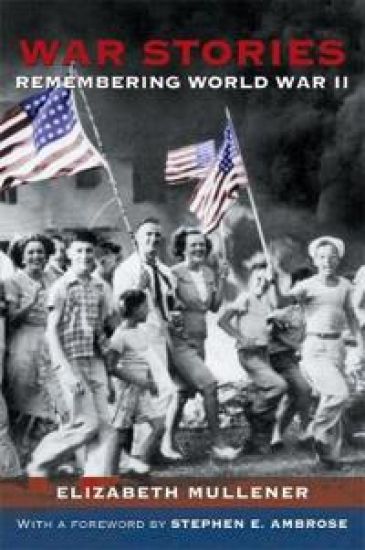
Henry Lasoski, an officer in the Polish army, was there on the first day of World War II, thrusting his bayonet awkwardly into a German soldier hours after Hitler's army invaded his homeland in 1939. And Jacques Smith was there on the last, a member of the honor guard aboard the USS Missouri in Tokyo Bay when the Japanese signed the documents of surrender in 1945. From start to finish, this chronicle of fifty-three personal testimonies illuminates the Second World War in a way no mere accumulation of facts can. In a journalistic tour de force, Elizabeth Mullener over the course of twelve years found eyewitnesses to virtually every major event of World War II, and she found them all in one American city- New Orleans. Some are natives of the city and some are not, a testament to the upheaval of war and its power to scatter people around the globe. The people she writes about are not grand heroes or prime movers. They are young men shaking in their foxholes, young women stitching up wounded soldiers, and children facing a world gone topsy-turvy. And they saw it all. They witnessed the London Blitz and the siege of Stalingrad; the attack on Pearl Harbor and the Bataan Death March; the battle of Iwo Jima and the Nuremberg trials; the Normandy invasion and parties at the USO. Their memories are powerful. Harold Eck recalls sharks grazing his legs as he treaded water for four days after the USS Indianapolis sank in the Pacific Ocean. Anthony DeLucca saw bodies stacked like cordwood at Buchenwald. Christine Strevinsky slid a knife through the neck of a Nazi commandant at the age of nine. Frank Rosato played ""The Missouri Waltz"" for Harry Truman at Potsdam. All poignantly related through Mullener's graceful and compelling prose, the episodes in War Stories provide an unusually intimate history of World War II and a direct, visceral connection to the central event of the twentieth century.
The Union had won the Civil War and abolished slavery. However, Lincoln, an early champion of railroads, would not live to see the next great achievment. The governmentpitted the Union Pacific against the Central Pacific in a race that encouraged speed over caution. Locomotives, rails, and spikes were shipped from the east through Panama, around South America, or lugged across country. The railroad was the last great building project to be done by hand. The brave men who built the American Transcontinental Railroad between 1865 and 1869 came from China, Ireland and the defeated South.
Stephen E. Ambrose's iconic New York Times bestseller about the ordinary men who became the World War II's most extraordinary soldiers: Easy Company, 506th Parachute Infantry Regiment, 101st Airborne Division, US Army. They came together, citizen soldiers, in the summer of 1942, drawn to Airborne by the $50 monthly bonus and a desire to be better than the other guy. And at its peak--in Holland and the Ardennes--Easy Company was as good a rifle company as any in the world. From the rigorous training in Georgia in 1942 to the disbanding in 1945, Stephen E. Ambrose tells the story of this remarkable company. In combat, the reward for a job well done is the next tough assignment, and as they advanced through Europe, the men of Easy kept getting the tough assignments. They parachuted into France early D-Day morning and knocked out a battery of four 105 mm cannon looking down Utah Beach; they parachuted into Holland during the Arnhem campaign; they were the Battered Bastards of the Bastion of Bastogne, brought in to hold the line, although surrounded, in the Battle of the Bulge; and then they spearheaded the counteroffensive. Finally, they captured Hitler's Bavarian outpost, his Eagle's Nest at Berchtesgaden. They were rough-and-ready guys, battered by the Depression, mistrustful and suspicious. They drank too much French wine, looted too many German cameras and watches, and fought too often with other GIs. But in training and combat they learned selflessness and found the closest brotherhood they ever knew. They discovered that in war, men who loved life would give their lives for them. This is the story of the men who fought, of the martinet they hated who trained them well, and of the captain they loved who led them. E Company was a company of men who went hungry, froze, and died for each other, a company that took 150 percent casualties, a company where the Purple Heart was not a medal--it was a badge of office.
In this very personal book Stephen Ambrose celebrates his friendships with his father and brothers, boys from his youth, his sons, and among men he found through his work as a historian; his comrades. Ambrose writes about Dwight Eisenhower's remarkable gift for genorosity and loyalty, and about many others who forged those indelible bonds, from the boy-men of World War II to the great Native-American warriors Crazy Horse and He Dog, to the intrepid explorers Lewis and Clark and his brothers, who died together at Little Big Horn. COMRADES concludes with the author's recollection of his own friendship with his father. " He was my first and always most important friend," Amborse wrItes. "I didn't learn that until the end, when he taught me the most important thing , that love the love of father-son-father-son is a continuum, just as love and friendship are expansive."
What was the experience of war for a child in bombed and ravaged Germany? In this memoir, the voice of innocence is heard.""This is great stuff,"" exclaims Stephen E. Ambrose.""I love this book.""In this gripping account, a boy and his mother are wrenched from their tranquil lives to forge a path through the storm of war and the rubble of its aftermath. In the past there has been a spectrum of books and films that share other German World War II experiences. However, told from the perspective of a ten-year-old, this book is rare. The boy and his mother must prevail over hunger and despair, or die. In the Third Reich, young Wolfgang Samuel and his family are content but alone. The father, a Luftwaffe officer, is away fighting the Allies in the West. In 1945 as Berlin and nearby communities crumble, young Wolfgang, his mother Hedy, and little sister Ingrid flee the advancing Russian army. They have no inkling of the chaos ahead. In Strasburg, a small town north of Berlin where they find refuge, Wolfgang begins to comprehend the evils the Nazi regime brought to Germany. As the Reich collapses, mother, son, and daughter flee again just ahead of the Russian charge. In the chaos of defeat they struggle to find food and shelter. Death stalks the primitive camps that are their temporary havens, and the child becomes the family provider. Under the crushing responsibility, Wolfgang becomes his mother's and sister's mainstay. When they return to Strasburg, the Communists in control are as brutal as the Nazis. In the violent atmosphere of arbitrary arrest, rape, hunger, and fear, the boy and his mother persist. Pursued by Communist police through a fierce blizzard, they escape to the West, but even in the English zone, the constant search for food, warmth, and shelter dominates their lives, and the mother's sacrifices become the boy's nightmares. Although this is a time of deepest despair, Wolfgang hangs on to the thinnest thread of hope. In June 1948 with the arrival of the Americans flying the Berlin Airlift, Wolfgang begins a new journey.
Behind this decision lay another. Whose forces would be the first to reach Berlin? General Dwight David Eisenhower, supreme commander of the British and American armies, chose to halt at the Elbe River and leave Berlin to the Red Army. Could he have beaten the Russians to Berlin? If so, why didn't he? If he had, would the Berlin question have arisen? Would Germany have been divided as it was? Would the Cold War have assumed a direction more favorable to the West? In a narrative of steady fascination, Stephen E. Ambrose describes both the political and the military aspects of the situation, sketches the key players, explains the alternatives, and considers the results. The result is a sharply focused light on an important question of the postwar world. This paperback edition features a new introduction by the author.
This new paperback edition of Stephen E. Ambrose's highly regarded history of the United States Military Academy features the original foreword by Dwight D. Eisenhower and a new afterword by former West Point superintendent Andrew J. Goodpaster.
The Victors: Eisenhower and His Boys: The Men of World War II
Stephen E. Ambrose
SIMON SCHUSTER
1999
nidottu
From America's preeminent military historian, Stephen E. Ambrose, comes the definitive telling of the war in Europe, from D-Day, June 6, 1944, to the end, eleven months later, on May 7, 1945. This authoritative narrative account is drawn by the author himself from his five acclaimed books about that conflict, most particularly from the definitive and comprehensive D-Day and Citizen Soldiers, about which the great Civil War historian James McPherson wrote, "If there is a better book about the experience of GIs who fought in Europe during World War II, I have not read it. Citizen Soldiers captures the fear and exhilaration of combat, the hunger and cold and filth of the foxholes, the small intense world of the individual rifleman as well as the big picture of the European theater in a manner that grips the reader and will not let him go. No one who has not been there can understand what combat is like but Stephen Ambrose brings us closer to an understanding than any other historian has done." The Victors also includes stories of individual battles, raids, acts of courage and suffering from Pegasus Bridge, an account of the first engagement of D-Day, when a detachment of British airborne troops stormed the German defense forces and paved the way for the Allied invasion; and from Band of Brothers, an account of an American rifle company from the 506th Parachute Infantry Regiment who fought, died, and conquered, from Utah Beach through the Bulge and on to Hitter's Eagle's Nest in Germany. Stephen Ambrose is also the author of Eisenhower, the greatest work on Dwight Eisenhower, and one of the editors of the Supreme Allied Commander's papers. He describes the momentous decisions about how and where the war was fought, and about the strategies and conduct of the generals and officers who led the invasion and the bloody drive across Europe to Berlin. But, as always with Stephen E. Ambrose, it is the ranks, the ordinary boys and men, who command his attention and his awe. The Victors tells their stories, how citizens became soldiers in the best army in the world. Ambrose draws on thousands of interviews and oral histories from government and private archives, from the high command--Eisenhower, Bradley, Patton--on down through officers and enlisted men, to re-create the last year of the Second World War when the Allied soldiers pushed the Germans out of France, chased them across Germany, and destroyed the Nazi regime.

A collection of fifteen essays from a preeminent historian offers incisive commentary and unique insights on more than one hundred years of America's wars, from Grant at Vicksburg to Nixon's bombing of Hanoi. Reissue.
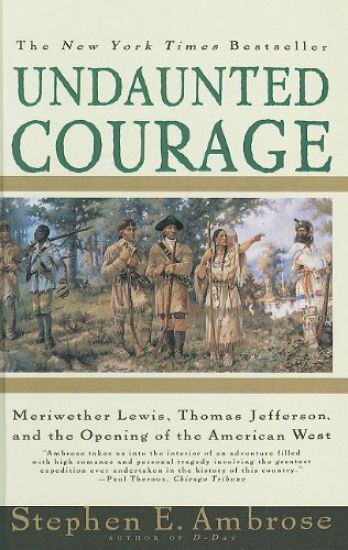
Undaunted Courage: Meriwether Lewis, Thomas Jefferson, and the Opening of the American West
Stephen E. Ambrose
Turtleback Books
1997
sidottu
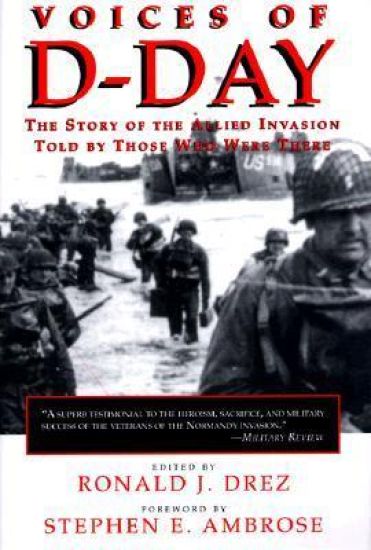
In 1983 the Eisenhower Center at the University of New Orleans began a project to record the recollections of as many people as possible -- civilians as well as soldiers -- who were involved in one of the most pivotal events of the century. Skillfully edited by Ronald J. Drez and first published on the fifty-year anniversary of D-Day, the award-winning Voices of D-Day tells the story of that momentous operation almost entirely through the words of the people who were there.
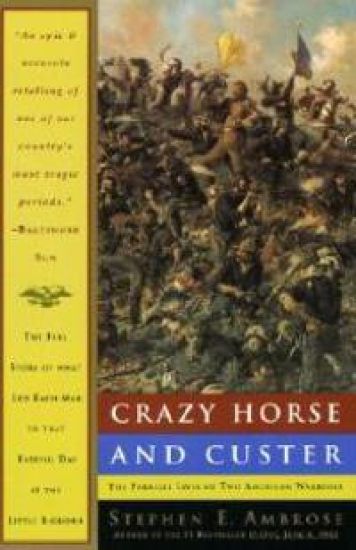
On the sparkling morning of June 25, 1876, 611 men of the United States 7th Cavalry rode toward the banks of the Little Bighorn in the Montana Territory, where 3,000 Indians stood waiting for battle. The lives of two great warriors would soon be forever linked throughout history: Crazy Horse, leader of the Oglala Sioux, and General George Armstrong Custer. Both were men of aggression and supreme courage. Both became leaders in their societies at very early ages; both were stripped of power, in disgrace, and worked to earn back the respect of their people. And to both of them, the unspoiled grandeur of the Great Plains of North America was an irresistible challenge. Their parallel lives would pave the way, in a manner unknown to either, for an inevitable clash between two nations fighting for possession of the open prairie.
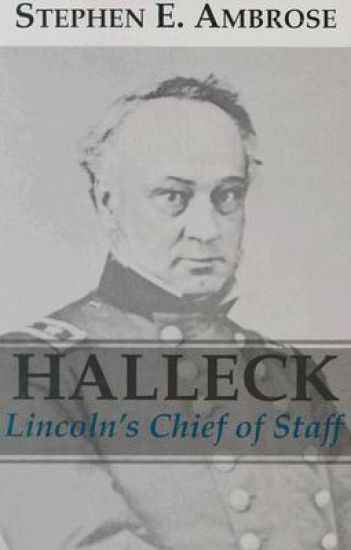
Halleck originates nothing, anticipates nothing, to assist others; takes no responsibility, plans nothing, suggests nothing, is good for nothing. Lincoln's secretary of the navy Gideon Welles's harsh words embody the stereotype into which Union General-in-Chief Henry Wager Halleck has been cast by most historians since Appomattox. In Halleck: Lincoln's Chief of Staff, originally published in 1962, Stephen Ambrose challenges the standard interpretation of this controversial figure. Ambrose argues persuasively that Halleck has been greatly underrated as a war theorist because of past writers' failure to do justice to his close involvement with movements basic to the development of the American military establishment. He concedes that ""by all the touchstones used to judge great captains of the past, Halleck was a failure,"" but maintains he was nonetheless ""the 'Old Brains' of the Union Army in the time of the testing of the nation.
D-Day: June 6, 1944: The Climactic Battle of World War II
Stephen E. Ambrose
SIMON SCHUSTER
1995
nidottu
Halvin toimitettuna 24,00 €
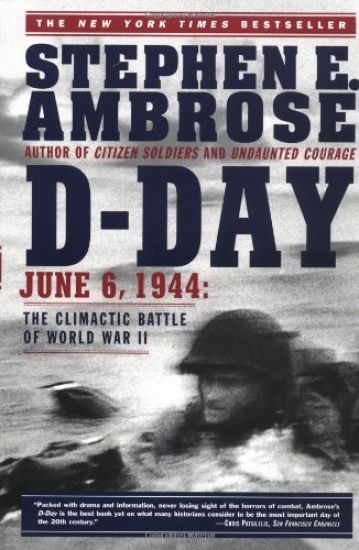
Stephen E. Ambrose's D-Day is the definitive history of World War II's most pivotal battle, a day that changed the course of history. D-Day is the epic story of men at the most demanding moment of their lives, when the horrors, complexities, and triumphs of life are laid bare. Distinguished historian Stephen E. Ambrose portrays the faces of courage and heroism, fear and determination--what Eisenhower called "the fury of an aroused democracy"--that shaped the victory of the citizen soldiers whom Hitler had disparaged. Drawing on more than 1,400 interviews with American, British, Canadian, French, and German veterans, Ambrose reveals how the original plans for the invasion had to be abandoned, and how enlisted men and junior officers acted on their own initiative when they realized that nothing was as they were told it would be. The action begins at midnight, June 5/6, when the first British and American airborne troops jumped into France. It ends at midnight June 6/7. Focusing on those pivotal twenty-four hours, it moves from the level of Supreme Commander to that of a French child, from General Omar Bradley to an American paratrooper, from Field Marshal Montgomery to a German sergeant. Ambrose's D-Day is the finest account of one of our history's most important days.
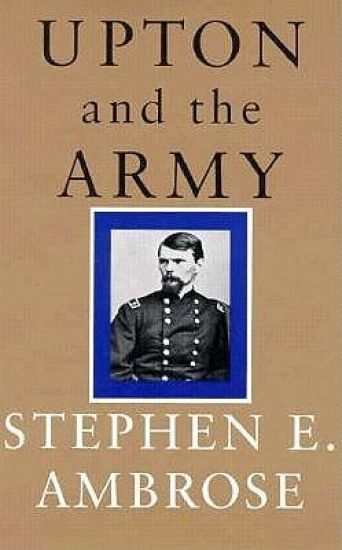
Emory Upton (1839-1881) was ""the epitome of a professional soldier,"" according to Stephen E. Ambrose. Indeed, his entire adult life was devoted to the single-minded pursuit of a military career. Upton was commissioned a second lieutenant in the Fifth United States Artillery on May 6, 1861, the day of his graduation from the United States Military Academy, and by age twenty-five he had risen to the rank of major general. He distinguished himself in battles at Spotsylvania, Sharpsburg, Fredericksburg, and Charlottesville, in Sheridan's Shenandoah Valley campaign, and in Wilson's celebrated cavalry raid through Alabama and Georgia at the end of the war. After the war, Upton traveled abroad as an observer for the army, an experience that resulted in his first book, The Armies of Asia and Europe. He also served as commandant of cadets at West Point and finally as commander of the Presidio in San Francisco. He was highly respected as a military tactician, and his Infantry Tactics became a widely used resource. Despite his successes, the ambitious Upton felt that his military talents were insufficiently recognised. His last book, The Military Policy of the United States, which advocated a number of sweeping changes in the organisation of the American military system, went unpublished at his death by suicide in 1881. The book was finally published in 1904 at the urging of Elihu Root, Theodore Roosevelt's secretary of war. First published in 1964, Ambrose's thorough and well-researched study of Emory Upton's career has proven to be an important addition to American military history as well as to the history of the Civil War.
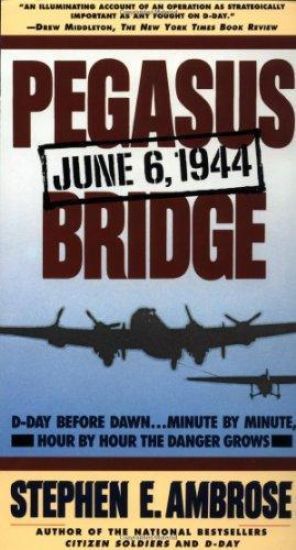
In the early morning hours of June 6, 1944, a small detachment of British airborne troops stormed the German defense forces and paved the way for the Allied invasion of Europe. Pegasus Bridge was the first engagement of D-Day, the turning point of World War II. This gripping account of it by acclaimed author Stephen Ambrose brings to life a daring mission so crucial that, had it been unsuccessful, the entire Normandy invasion might have failed. Ambrose traces each step of the preparations over many months to the minute-by-minute excitement of the hand-to-hand confrontations on the bridge. This is a story of heroism and cowardice, kindness and brutality--the stuff of all great adventures.