Kirjojen hintavertailu – 12 859 829 kirjaa ja 27 kauppaa

Kirjailija

Stephen E. Brock

Kirjat ja teokset yhdessä paikassa: 17 kirjaa, julkaisuja vuosilta 2001–2023, suosituimpiin kuuluu Identifying, Assessing, and Treating PTSD at School. Vertaile teosten hintoja ja tarkista saatavuus suomalaisista kirjakaupoista.

17 kirjaa

Kirjojen julkaisuvuodet: 2001–2023.

Identifying, Assessing, and Treating PTSD at School

Identifying, Assessing, and Treating PTSD at School

Amanda B. Nickerson; Melissa A. Reeves; Stephen E. Brock; Shane R. Jimerson

Springer-Verlag New York Inc.
2010
nidottu
By age 16, significant – one might even say “alarming” – numbers of students are demonstrating signs of posttraumatic stress disorder (PTSD). Students with PTSD are more likely to develop a range of problems, from delinquent behavior to eating disorders to substance abuse to dropping out. For the school-based professional, the ability to recognize these symptoms and warning signs is essential. Emphasizing prevention as well as intervention, Identifying, Assessing, and Treating PTSD at School clearly defines PTSD, explains its adverse affects on children’s academic and social-emotional skills, and offers expert guidance on how to recognize student needs and provide appropriate services. This volume, designed as a practical, easy-to-use reference for school psychologists and other educational professionals: (1) Makes the case for why school psychologists and their colleagues need to be more prepared, willing, and able to identify and serve students with PTSD. (2) Identifies the causes, prevalence, and associated conditions of PTSD. (3) Provides a review of screening, referral, and diagnostic assessment processes. (4) Reviews appropriate treatments for students with PTSD. Today’s youth live in an increasingly uncertain world, and school psychologists, counselors, social workers, and general and special education personnel will find Identifying, Assessing, and Treating PTSD at School an invaluable resource in their practices.
Identifying, Assessing, and Treating PTSD at School

Identifying, Assessing, and Treating PTSD at School

Amanda B. Nickerson; Melissa A. Reeves; Stephen E. Brock; Shane R. Jimerson

Springer-Verlag New York Inc.
2008
sidottu
By age 16, significant – one might even say “alarming” – numbers of students are demonstrating signs of posttraumatic stress disorder (PTSD). Students with PTSD are more likely to develop a range of problems, from delinquent behavior to eating disorders to substance abuse to dropping out. For the school-based professional, the ability to recognize these symptoms and warning signs is essential. Emphasizing prevention as well as intervention, Identifying, Assessing, and Treating PTSD at School clearly defines PTSD, explains its adverse affects on children’s academic and social-emotional skills, and offers expert guidance on how to recognize student needs and provide appropriate services. This volume, designed as a practical, easy-to-use reference for school psychologists and other educational professionals: (1) Makes the case for why school psychologists and their colleagues need to be more prepared, willing, and able to identify and serve students with PTSD. (2) Identifies the causes, prevalence, and associated conditions of PTSD. (3) Provides a review of screening, referral, and diagnostic assessment processes. (4) Reviews appropriate treatments for students with PTSD. Today’s youth live in an increasingly uncertain world, and school psychologists, counselors, social workers, and general and special education personnel will find Identifying, Assessing, and Treating PTSD at School an invaluable resource in their practices.
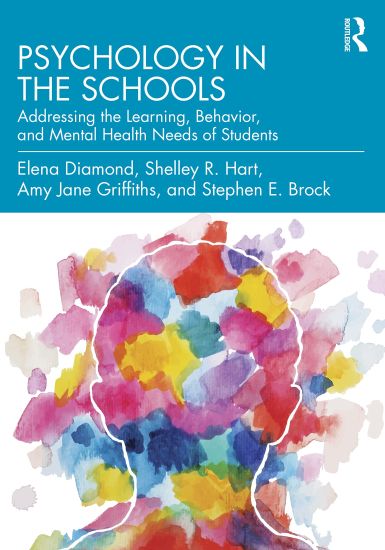
Psychology in the Schools

Psychology in the Schools

Elena Diamond; Shelley R. Hart; Amy Jane Griffiths; Stephen E. Brock

TAYLOR FRANCIS INC
2023
nidottu
This engaging and practical book addresses the multitude of ways in which school-employed psychological service providers such as school counselors, school psychologists, and school social workers, can support the learning, behavioral, and mental health needs of students in school settings. Psychology in the Schools offers vignette examples to apply content to real-world context and provides a variety of resources including worksheets and templates for practitioners to use in practice. Chapter content covers foundations in psychological services in schools (e.g., the hidden curriculum of school systems, professional standards of practice, consultation and collaboration, and assessment), an overview of social, emotional, behavioral, and academic supports across tiers of service delivery, and skills for practitioners to thrive (e.g., burnout prevention). This text is ideal for an upper-level undergraduate course or an introductory graduate-level course. Early career practitioners and supervisors alike can also benefit from the tools and resources that this book provides.
Psychology in the Schools

Psychology in the Schools

Elena Diamond; Shelley R. Hart; Amy Jane Griffiths; Stephen E. Brock

TAYLOR FRANCIS INC
2023
sidottu
This engaging and practical book addresses the multitude of ways in which school-employed psychological service providers such as school counselors, school psychologists, and school social workers, can support the learning, behavioral, and mental health needs of students in school settings. Psychology in the Schools offers vignette examples to apply content to real-world context and provides a variety of resources including worksheets and templates for practitioners to use in practice. Chapter content covers foundations in psychological services in schools (e.g., the hidden curriculum of school systems, professional standards of practice, consultation and collaboration, and assessment), an overview of social, emotional, behavioral, and academic supports across tiers of service delivery, and skills for practitioners to thrive (e.g., burnout prevention). This text is ideal for an upper-level undergraduate course or an introductory graduate-level course. Early career practitioners and supervisors alike can also benefit from the tools and resources that this book provides.
Burnout and Trauma Related Employment Stress

Burnout and Trauma Related Employment Stress

Melissa L. Holland; Stephen E. Brock; Taylor Oren; Maciel van Eckhardt

Springer Nature Switzerland AG
2022
nidottu

Halvin toimitettuna 90,40 €

Burnout and trauma related employment stress (TRES), which includes compassion fatigue, secondary traumatic stress, and vicarious trauma, are increasing in prevalence as attrition rates, mental health disturbances, and suicide rates are climbing for those in the helping professions. This book highlights the imperative for prevention and early intervention using acceptance and commitment strategies. It includes cognitive, acceptance, and mindfulness techniques to assist the individual in achieving goals through values-based living. Among the topics discussed: Definitions of Burnout and TRESPrevalence rates of burnout and TRES in the helping professionsMindfulness and acceptance practicesDefusion and cognitive techniquesValues based goal settingOrganizational responsibilities and strategiesAssessment resources Burnout and Trauma Related Employment Stress will be a valuable resource for clinicians working with those experiencing the symptoms of TRES and burnout, as well as the individuals themselves.
Burnout and Trauma Related Employment Stress

Burnout and Trauma Related Employment Stress

Melissa L. Holland; Stephen E. Brock; Taylor Oren; Maciel van Eckhardt

Springer Nature Switzerland AG
2021
sidottu
Burnout and trauma related employment stress (TRES), which includes compassion fatigue, secondary traumatic stress, and vicarious trauma, are increasing in prevalence as attrition rates, mental health disturbances, and suicide rates are climbing for those in the helping professions. This book highlights the imperative for prevention and early intervention using acceptance and commitment strategies. It includes cognitive, acceptance, and mindfulness techniques to assist the individual in achieving goals through values-based living. Among the topics discussed: Definitions of Burnout and TRESPrevalence rates of burnout and TRES in the helping professionsMindfulness and acceptance practicesDefusion and cognitive techniquesValues based goal settingOrganizational responsibilities and strategiesAssessment resources Burnout and Trauma Related Employment Stress will be a valuable resource for clinicians working with those experiencing the symptoms of TRES and burnout, as well as the individuals themselves.
Identifying, Assessing, and Treating Bipolar Disorder at School

Identifying, Assessing, and Treating Bipolar Disorder at School

Shelley R Hart; Stephen E. Brock; Ida Jeltova

Springer-Verlag New York Inc.
2016
nidottu
Identifying, Assessing, and Treating Bipolar Disorder at School presents child and education practitioners with an evidence-based framework for accurate identification, assessment, and intervention of bipolar disorder. This straightforward resource clears up misconceptions about the condition, and outlines its complex presentation in young people, where it may appear in tandem with other disorders and bring challenges to treatment. By providing information to assist in referrals, consultations, and recommendations for special education, the authors give the reader a unique vantage point for improving students' learning environment and helping to facilitate the work of fellow professionals. Among the topics:Prevalence and associated conditions. Case finding, screening, and referrals. Diagnostic and psycho-educational assessmentTreatment of bipolar disorder in children and adolescents. Plus suggested resources to assist students and their families. Identifying, Assessing, and Treating Bipolar Disorder at School is an essential reference for school psychologists and allied educational professionals, special education teachers, speech and language therapists, counselors, clinical child psychologists, and mental health practitioners.
Identifying, Assessing, and Treating Autism at School

Identifying, Assessing, and Treating Autism at School

Stephen E. Brock; Shane R. Jimerson; Robin L. Hansen

Springer-Verlag New York Inc.
2014
nidottu
As the rate of autism diagnosis continues to escalate, awareness and recognition of this developmental brain disorder – as well as a demand for services – are also mushrooming. School districts, already struggling under the weight of withering budgets and increasing enrollments, are now scrambling to strike a balance between the types of services and treatments parents want for their children and what the school system can afford to provide. Consequently, a broad cross-section of professionals and parents are searching for the means and methods by which to identify and address the wide-ranging educational needs of the children with autism spectrum disorder. Identifying, Assessing, and Treating Autism at School provides a one-stop resource that enables school psychologists to coordinate efforts between students and parents as well as other educators, administrators, and social services providers to determine which interventions are likely to be most effective in meeting the unique needs of children with autism. This volume, designed as a practical, easy-to-use reference for school psychologists and other educational professionals: Makes the case for why school psychologists and their colleagues need to be more prepared, willing, and able to identify and serve students with autism. Identifies the causes, prevalence, and associated conditions of autism spectrum disorders. Provides a review of screening, referral, and diagnostic assessment processes. Offers much-needed guidance on conducting psychoeducational assessments. Reviews appropriate treatments for students with autism. School psychologists, general and special educators, counselors, and social workers will find Identifying, Assessing, and Treating Autism at School an invaluable resource.
Identifying, Assessing, and Treating Bipolar Disorder at School

Identifying, Assessing, and Treating Bipolar Disorder at School

Shelley R Hart; Stephen E. Brock; Ida Jeltova

Springer-Verlag New York Inc.
2013
sidottu
Identifying, Assessing, and Treating Bipolar Disorder at School presents child and education practitioners with an evidence-based framework for accurate identification, assessment, and intervention of bipolar disorder. This straightforward resource clears up misconceptions about the condition, and outlines its complex presentation in young people, where it may appear in tandem with other disorders and bring challenges to treatment. By providing information to assist in referrals, consultations, and recommendations for special education, the authors give the reader a unique vantage point for improving students' learning environment and helping to facilitate the work of fellow professionals. Among the topics:Prevalence and associated conditions. Case finding, screening, and referrals. Diagnostic and psycho-educational assessmentTreatment of bipolar disorder in children and adolescents. Plus suggested resources to assist students and their families. Identifying, Assessing, and Treating Bipolar Disorder at School is an essential reference for school psychologists and allied educational professionals, special education teachers, speech and language therapists, counselors, clinical child psychologists, and mental health practitioners.
Identifying, Assessing, and Treating Self-Injury at School

Identifying, Assessing, and Treating Self-Injury at School

David N. Miller; Stephen E. Brock

Springer-Verlag New York Inc.
2011
nidottu
Nonsuicidal self-injury (NSSI) among young people—most notably in the form of forearm- or wrist-cutting—occurs across cultural groups, social strata, and developmental stages, puzzling and repelling adults. Youth engaging in NSSI behaviors are at a higher risk for suicidality as well as other mental health and academic problems. And because NSSI is often first noticed in the school setting (as is the case with many children’s disorders), school professionals are being encouraged to take a more proactive role in intervention. The first book specifically geared toward education personnel, Identifying, Assessing, and Treating Self-Injury at School clearly defines NSSI, differentiating it from suicidal, borderline, and other behaviors and analyzing the psychological contexts in which it occurs. This school-based perspective gives readers a practical framework for earlier, more accurate diagnosis; relevant consulting with parents, teachers, and colleagues; and effective, science-based treatment. Included in the coverage: an overview of causes of self-injury, current findings on prevalence and associated conditions, early screening guidelines, including risk factors and warning signs, the latest information on assessment issues and diagnostic methods, a separate chapter on psychoeducational assessment and up-to-date research on interventions for NSSI. Identifying, Assessing, and Treating Self-Injury at School offers a solid foundation for school psychologists and allied educational professionals to understand students with NSSI and address their complex needs.
Identifying, Assessing, and Treating Dyslexia at School

Identifying, Assessing, and Treating Dyslexia at School

Catherine Christo; John M. Davis; Stephen E. Brock

Springer-Verlag New York Inc.
2010
nidottu
As many as one in four children experiences problems with reading. Dyslexia, the most common learning disability leads to well-documented negative effects on school and, ultimately, adult success. Therefore, it is critical that school professionals provide early and effective assessment and intervention. Identifying, Assessing, and Treating Dyslexia at School equips practitioners with in-depth understanding of the disorder and a wealth of practical information for meeting student needs. This volume: Reviews up-to-date findings on dyslexia – causes, prevalence, and related conditions. Provides research-based tools for identifying and addressing dyslexia. Offers a detailed framework for case finding and screening, diagnostic and psychoeducational assessment as well as age- and grade-appropriate intervention. Explains the roles and responsibilities of school psychologists when it comes to identifying students with dyslexia. Focuses solely on dyslexia, unlike most other books on learning disabilities. As the duties of school psychologists and related education professionals become more complex, recognizing and providing services for students with learning disorders has become progressively more demanding. Identifying, Assessing, and Treating Dyslexia at School offers practitioners an accessible and easy-to-read reference that they will use for years to come.
Identifying, Assessing, and Treating Self-Injury at School

Identifying, Assessing, and Treating Self-Injury at School

David N. Miller; Stephen E. Brock

Springer-Verlag New York Inc.
2010
sidottu
Nonsuicidal self-injury (NSSI) among young people—most notably in the form of forearm- or wrist-cutting—occurs across cultural groups, social strata, and developmental stages, puzzling and repelling adults. Youth engaging in NSSI behaviors are at a higher risk for suicidality as well as other mental health and academic problems. And because NSSI is often first noticed in the school setting (as is the case with many children’s disorders), school professionals are being encouraged to take a more proactive role in intervention. The first book specifically geared toward education personnel, Identifying, Assessing, and Treating Self-Injury at School clearly defines NSSI, differentiating it from suicidal, borderline, and other behaviors and analyzing the psychological contexts in which it occurs. This school-based perspective gives readers a practical framework for earlier, more accurate diagnosis; relevant consulting with parents, teachers, and colleagues; and effective, science-based treatment. Included in the coverage: an overview of causes of self-injury, current findings on prevalence and associated conditions, early screening guidelines, including risk factors and warning signs, the latest information on assessment issues and diagnostic methods, a separate chapter on psychoeducational assessment and up-to-date research on interventions for NSSI. Identifying, Assessing, and Treating Self-Injury at School offers a solid foundation for school psychologists and allied educational professionals to understand students with NSSI and address their complex needs.
Identifying, Assessing, and Treating ADHD at School

Identifying, Assessing, and Treating ADHD at School

Stephen E. Brock; Shane R. Jimerson; Robin L. Hansen

Springer-Verlag New York Inc.
2009
nidottu
ADHD is the most commonly diagnosed childhood behavioral disorder. Moreover, many students receiving special education assistance are reported to have ADHD. Children with ADHD may experience significant school adjustment difficulties and achievement problems. Problem behaviors associated with attention deficits and hyperactivity often have a negative impact on the classroom, and, therefore, may compromise the learning environment for many, if not all, students. There is a critical need for school professionals to identify, assess, and treat students with ADHD. Identifying, Assessing, and Treating ADHD at School brings science to practice, providing school professionals invaluable information to meet the needs of children with ADHD. This volume, designed as a practical, easy-to-use reference for school psychologists and other mental health and educational professionals: Explains why school psychologists and their colleagues need to be prepared and able to identify and serve students with ADHD. Identifies the prevalence, influences, and associated conditions. Provides a review of screening, referral, and diagnostic assessment processes. Offers guidance on conducting psychoeducational assessments. Reviews evidence-based treatments. Offers practical guidance on setting up programs that address individual and classroom issues. School psychologists and other education and mental health professionals will find Identifying, Assessing, and Treating ADHD at School an exceptional resource in working to enhance the mental health and academic development of students.
Identifying, Assessing, and Treating ADHD at School

Identifying, Assessing, and Treating ADHD at School

Stephen E. Brock; Shane R. Jimerson; Robin L. Hansen

Springer-Verlag New York Inc.
2009
sidottu
ADHD is the most commonly diagnosed childhood behavioral disorder. Moreover, many students receiving special education assistance are reported to have ADHD. Children with ADHD may experience significant school adjustment difficulties and achievement problems. Problem behaviors associated with attention deficits and hyperactivity often have a negative impact on the classroom, and, therefore, may compromise the learning environment for many, if not all, students. There is a critical need for school professionals to identify, assess, and treat students with ADHD. Identifying, Assessing, and Treating ADHD at School brings science to practice, providing school professionals invaluable information to meet the needs of children with ADHD. This volume, designed as a practical, easy-to-use reference for school psychologists and other mental health and educational professionals: Explains why school psychologists and their colleagues need to be prepared and able to identify and serve students with ADHD. Identifies the prevalence, influences, and associated conditions. Provides a review of screening, referral, and diagnostic assessment processes. Offers guidance on conducting psychoeducational assessments. Reviews evidence-based treatments. Offers practical guidance on setting up programs that address individual and classroom issues. School psychologists and other education and mental health professionals will find Identifying, Assessing, and Treating ADHD at School an exceptional resource in working to enhance the mental health and academic development of students.
Identifying, Assessing, and Treating Dyslexia at School

Identifying, Assessing, and Treating Dyslexia at School

Catherine Christo; John M. Davis; Stephen E. Brock

Springer-Verlag New York Inc.
2009
sidottu
As many as one in four children experiences problems with reading. Dyslexia, the most common learning disability leads to well-documented negative effects on school and, ultimately, adult success. Therefore, it is critical that school professionals provide early and effective assessment and intervention. Identifying, Assessing, and Treating Dyslexia at School equips practitioners with in-depth understanding of the disorder and a wealth of practical information for meeting student needs. This volume: Reviews up-to-date findings on dyslexia – causes, prevalence, and related conditions. Provides research-based tools for identifying and addressing dyslexia. Offers a detailed framework for case finding and screening, diagnostic and psychoeducational assessment as well as age- and grade-appropriate intervention. Explains the roles and responsibilities of school psychologists when it comes to identifying students with dyslexia. Focuses solely on dyslexia, unlike most other books on learning disabilities. As the duties of school psychologists and related education professionals become more complex, recognizing and providing services for students with learning disorders has become progressively more demanding. Identifying, Assessing, and Treating Dyslexia at School offers practitioners an accessible and easy-to-read reference that they will use for years to come.
Identifying, Assessing, and Treating Autism at School

Identifying, Assessing, and Treating Autism at School

Stephen E. Brock; Shane R. Jimerson; Robin L. Hansen

Springer-Verlag New York Inc.
2006
sidottu
As the rate of autism diagnosis continues to escalate, awareness and recognition of this developmental brain disorder – as well as a demand for services – are also mushrooming. School districts, already struggling under the weight of withering budgets and increasing enrollments, are now scrambling to strike a balance between the types of services and treatments parents want for their children and what the school system can afford to provide. Consequently, a broad cross-section of professionals and parents are searching for the means and methods by which to identify and address the wide-ranging educational needs of the children with autism spectrum disorder. Identifying, Assessing, and Treating Autism at School provides a one-stop resource that enables school psychologists to coordinate efforts between students and parents as well as other educators, administrators, and social services providers to determine which interventions are likely to be most effective in meeting the unique needs of children with autism. This volume, designed as a practical, easy-to-use reference for school psychologists and other educational professionals: Makes the case for why school psychologists and their colleagues need to be more prepared, willing, and able to identify and serve students with autism. Identifies the causes, prevalence, and associated conditions of autism spectrum disorders. Provides a review of screening, referral, and diagnostic assessment processes. Offers much-needed guidance on conducting psychoeducational assessments. Reviews appropriate treatments for students with autism. School psychologists, general and special educators, counselors, and social workers will find Identifying, Assessing, and Treating Autism at School an invaluable resource.
Preparing for Crises in the Schools

Preparing for Crises in the Schools

Stephen E. Brock; Jonathan Sandoval; Sharon Lewis

John Wiley Sons Inc
2001
sidottu
A step-by-step guidebook for advance preparation and early response to school crises This Second Edition of Preparing for Crises in the Schools arrives at a critical moment. With several recent dramatic examples of school violence and other tragedies afflicting communities nationwide, the need for school districts to take proactive measures–rather than merely react to a crisis–is critical. This completely updated edition offers practical plans for laying the important groundwork to ensure that crisis response will be both immediate and thorough in the wake of tragedy. Authored by three school crisis response planning experts, it offers advice on early detection of trouble, developing plans and procedures to intervene with youths quickly and successfully, and conducting a school in-service workshop on crisis response planning and intervention. Essential for counselors, school psychologists, teachers, and administrators alike, this book helps ensure that schools are not caught by surprise when a crisis occurs.