Kirjojen hintavertailu – 12 859 819 kirjaa ja 27 kauppaa

Kirjailija

Stephen E. Flowers

Kirjat ja teokset yhdessä paikassa: 17 kirjaa, julkaisuja vuosilta 2011–2025, suosituimpiin kuuluu The Languages of Magic. Vertaile teosten hintoja ja tarkista saatavuus suomalaisista kirjakaupoista.

Nimi esiintyy myös muodoissa: Stephen E Flowers

17 kirjaa

Kirjojen julkaisuvuodet: 2011–2025.

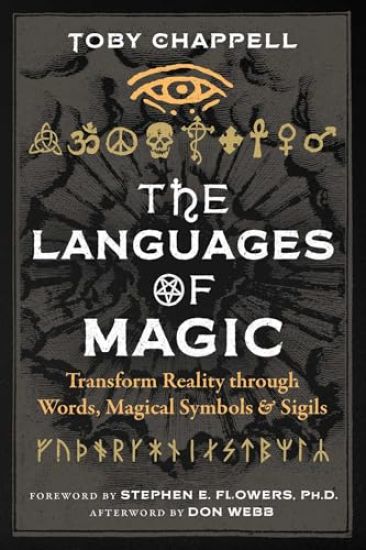
The Languages of Magic

The Languages of Magic

Toby Chappell; Stephen E. Flowers; Don Webb

INNER TRADITIONS BEAR AND COMPANY
2025
pokkari
A guide to magic as communication • Introduces key ideas in linguistics and semiotics to reveal how magic works • Reveals how to apply effective communication techniques to your magical practice • Includes case studies of magical schools, such as Hermetic magic, sigil magic, Thelema, the Church of Satan, Chaos Magic, and the Temple of Set In this illuminating and deeply informative guide, practicing magician Toby Chappell takes readers on a journey into the heart of what it means to transform reality by exploring what magic is. He explains that operative magic works because it is communication. The practitioner of magic is communicating with the unmanifest to align the outside world with their inner transformations, desires, and needs. Drawing on linguistics and the analytical techniques of semiotics, the author explores how we perceive and affect the world by treating it like a partner in communication. He shows how this notion of magical communication appears in ancient practice, looking specifically at Hermetic magic and the spells of Greek magical papyri, sigil magic, Enochian magic, and runes. He explains the symbol-building necessary to effectively transform your inner and outer reality with magical speech, signs, and sigils. The author examines the languages of magic in contemporary New Thought practices, and he also looks at magical communication in several modern and postmodern schools of magic, including Thelema and the teachings of Aleister Crowley, Thee Temple ov Psychick Youth, the Church of Satan, Chaos Magic, and the Temple of Set. Revealing how to apply techniques of effective communication to the magical realm, the author shows how you can deepen your understanding of magical practice and, ultimately, perform magic with greater success.

The Reform of Life

The Reform of Life

Stephen E. Flowers

Lodestar Books
2023
nidottu
In the German-speaking regions of Central Europe between about 1880 and 1933 there flourished a group of alternative cultural, social and artistic movements that loosely self-identified as the Lebensreformbewegungen- the Reform of Life Movements. In this book, the author outlines the broad spectrum of these movements and puts them into the general cultural and historical context of the time and place. Personalities such as Karl Wilhelm Diefenbach, Fidus, Gusto Gr ser, Rudolf Steiner, Hermann Hesse, Ernst Schertel, Magnus Hirschfeld and Friedrich Nietzsche are given special attention. Movements such as Theosophy, Anthroposophy, Ariosophy, Mazdaznan, Nudism (Freik rperkultur), dance-culture, educational reform, the Wandervogel all enjoy special treatments. Many cultural features the Anglo-American culture usually associates with the 1960s and beyond got their start in these German-speaking regions much earlier, e.g. health-food movements, vegetarianism, animal rights activism, environmentalism as well as sexology and sexual reform. Magnus Hirschfeld, the so-called Einstein of Sex, fought for gay-rights and pioneered gender studies and the concept of sexual intermediacy. Also, special attention is given to the origin of the American Hippie movement in connection with these concepts as well as the often-surprising legacy of them among the National Socialists. This book is a comprehensive introduction to a fascinating, yet overlooked, world.
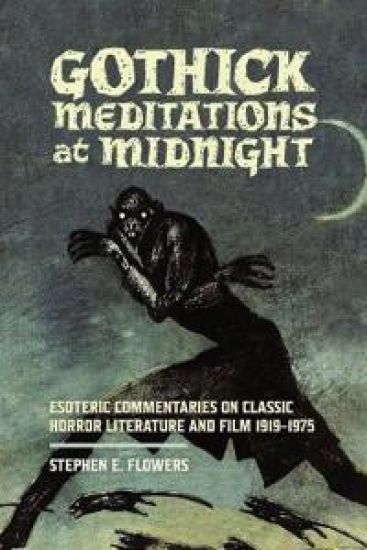
Gothick Meditations at Midnight

Gothick Meditations at Midnight

Stephen E Flowers

Lodestar Books
2023
pokkari

Halvin toimitettuna 31,60 €

This is a critical thematic study of classic horror and science-fiction films and the literature upon which much of it was based, looked at from the angle of cultural mythologies of the late 19th to early 20thcenturies. It is also in part a memoir of growing up as a Monster Kid during the cultural phase that came to be known as the Monster Craze 1958-1968. Special chapters are devoted to Dracula and Vampires, the Mummy-mythology, the Phantom of the Opera, the Wolf Man and Rites of Passage, Frankenstein, Lovecraft, Edgar A. Poe, Zombies, Cults and Covens, Hanns Heinz Ewers, the films of William Castle, Caligarism and the Trapezoidal Cinema, Ed Wood and finally a section devoted to the more specifically science fiction films of the period. Each section requires its own lens of interpretation based on mythological, psychological and esoteric theories and understandings. Each chapter reveals something ordinarily hidden from observations surrounding the history of this material. The text draws on concepts of folklore, mythology, and the history of religions, as well as psychology and personal experience. This is a hybrid work drawing on a spectrum of disciplines-it is all for fun but only in the most horrifying of ways. Aficionados of the occult, the esoteric, the mysteries of cultural history, and the history of uncanny film and literature will all find something to love in this book. Enter freely and of your own will through the Gothick archways to seek the mysteries within...
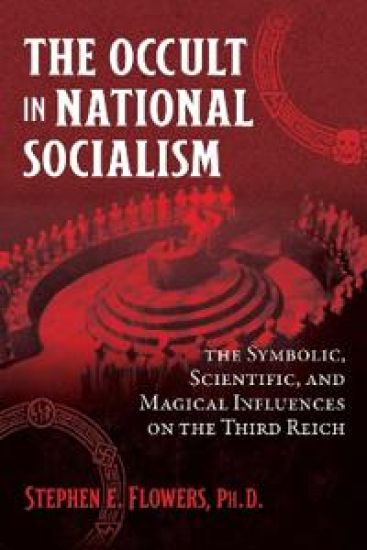
The Occult in National Socialism

The Occult in National Socialism

Stephen E. Flowers

INNER TRADITIONS BEAR AND COMPANY
2022
pokkari
A critical history of the roots of Nazi occultism and its continuing influence• Explores the occult influences on various Nazi figures, including Adolf Hitler, Albert Speer, Rudolf Hess, Alfred Rosenberg, and Heinrich Himmler• Examines the foundations of the movement laid in the 19th century and continuing in the early 20th century• Explains the rites and runology of National Socialism, the occult dimensions of Nazi science, and how many of the sensationalist descriptions of Nazi “Satanic” practices were initiated by Church propaganda after the warIn this comprehensive examination of Nazi occultism, Stephen E. Flowers, Ph. D., offers a critical history and analysis of the occult and esoteric streams of thought active in the Third Reich and the growth of occult Nazism at work in movements today. Sharing the culmination of five decades of research into primary and secondary sources, many in the original German, Flowers looks at the symbolic, occult, scientific, and magical traditions that became the foundations from which the Nazi movement would grow. He details the influences of Theosophy, Volkism, and the work of the Brothers Grimm as well as the impact of scientific culture of the time. Looking at the early 20th century, he describes the impact of Guido von List, Lanz von Liebenfels, Rudolf von Sebottendorf, Friedrich Hielscher, and others. Examining the period after the Nazi Party was established in 1919, and more especially after it took power in 1933, Flowers explores the occult influences on key Nazi figures, including Adolf Hitler, Albert Speer, Rudolf Hess, and Heinrich Himmler. He analyzes Hitler’s usually missed references to magical techniques in Mein Kampf, revealing his adoption of occult methods for creating a large body of supporters and shaping the thoughts of the masses. Flowers also explains the rites and runology of National Socialism, the occult dimensions of Nazi science, and the blossoming of Nazi Christianity. Concluding with a look at the modern mythology of Nazi occultism, Flowers critiques postwar Nazi-related literature and unveils the presence of esoteric Nazi myths in modern occult and political circles.
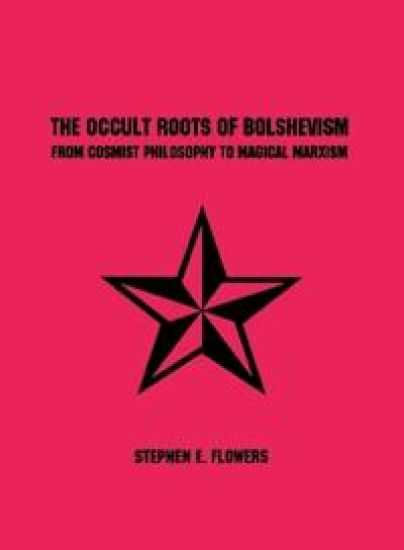
The Occult Roots of Bolshevism

The Occult Roots of Bolshevism

Stephen E Flowers

Lodestar Books
2022
pokkari
This book is an exploration of the occult dimensions of Marxism, Bolshevism and the historical influences of Russian Cosmism on these ideologies. Occultism, magic, Bolshevism and Cosmism are defined at the outset. Chapter one explores Federov's Cosmism and the theory of Marxism as an occult philosophy. Russian sects, the Narodniks and Anarchy are discussed. Chapter 2: "Before Lenin Came" delves into the Russian Silver Age its Satanic underground as well as the visionary space-age thoughts of Konstantin Tsiolkovsky. Occult aspects of Lenin's life are examined as well as those of other early Bolsheviks: V. D. Bonch-Bruyevich, Anatoly Lunacharsky, Alexander Bogdanov and Gleb Boky. Rites and rituals of early Bolshivism are outlined along with the concept of "God-Building." The occult meaning of Soviet symbols: the red star and the hammer and sickle are revealed. The surprising role of the occult in Stalin's own life are pointed out and esoteric concepts promoted by Vladimir Vernadsky and Alexander Chizhevsky. In much of this we will observe how, by politicizing science, the Soviet Union was fatally crippled in its efforts in the Cold War. Finally, a word is said about the Age of Putin and the growing popularity of neo-paganism, Rodnovery in Slavic countries. After absorbing the contents of this book, the reader will be aware of how the Red Magic works- knowledge that can either be used to master the work-place or be awakened to the effects of this sorcery working in our world today.
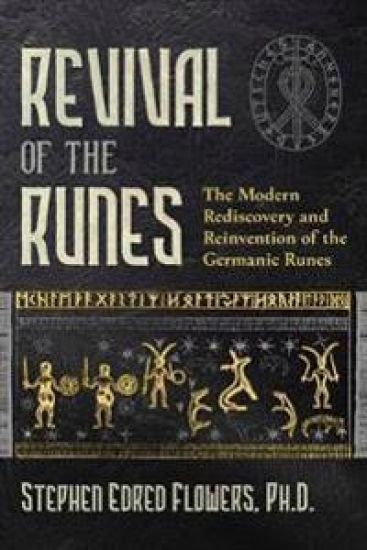
Revival of the Runes

Revival of the Runes

Stephen E. Flowers

Inner Traditions Bear and Company
2021
pokkari
The scientific and esoteric history of runic studies from the Renaissance to the modern era• Explores the five periods of runic revival: the Renaissance, the Enlightenment, the Romantic period, the early 20th century, and the late 20th century • Examines the use of runes by the foremost magicians and scholars of each era, including mystic and scholar Johannes Bureus, who developed his own integrated system of runology known as Adalruna • Reveals how the Nazi misguided use of the runes showed a lack of comprehension of what was being discovered by scientific rune scholars of the day In this exploration of the history of the runes from 1500 CE to the present day, Stephen Edred Flowers examines the five periods of runic revival: the Renaissance, the Enlightenment, the Romantic period, the early 20th century, and the late 20th century. For each period, he discusses both the scholarly studies and those focused on the esoteric mysteries of the runes--and how these two branches of study were at first intertwined yet diverged in later revivals. Focusing in particular on the first runic revival, Flowers examines the use of runes during the Renaissance by the foremost magicians and scholars of the era, including mystic and scholar Johannes Bureus, the “grandfather of integral runology,” who developed his own system known as Adalruna. In his examination of the runic reawakenings of the early and late 20th century, Flowers looks at how the runes were employed as part of a reassessment of Germanic identity, one school of which led to Nazi Germany. He explains how the Nazi use and abuse of the runes was misguided and revealed a lack of comprehension of what earlier rune scholars had discovered through their extensive studies of the past. He also offers a fresh look at the work of Guido von List and clears him of his guilt by association with the Nazis. Detailing the multilayered history of the runes, the author reveals the integrated way the predecessors of today’s rune workers thought and conceived of the runes, highlighting how their discoveries helped shape modern magical practices and scholarly studies. He calls for a return of integral runology as was practiced during the Renaissance and before. By reuniting the two branches of runic study, blending the scientific with the magical, we make way for new discoveries in runology and a chance for a full-scale reawakening of integrated runic knowledge.
Secrets of the Druids

Secrets of the Druids

Teresa Cross; Stephen E. Flowers

Inner Traditions Bear and Company
2021
pokkari
A guide to the history and practices of the Druids and the Celtic faith • Reconstructs the Druidic faith from surviving remnants, parallels with other Indo-European traditions, and dedicated study of scholarly sources • Details magical rites and ceremonies, methods for consecrating an outdoor temple, and customs for celebrating important festivals such as Beltaine and Samhain • Discusses rules for firecraft, making offerings to deities and spirits, and the ancient Coligny calendar, including the names of the months in old Gaulish Druids and their magic, lore, and rituals have fascinated all those who encounter them, from the ancient Greeks and Romans onward. Even today, the mere mention of their name evokes pictures of standing stones, mistletoe, golden sickles, white-robed priests, and powerful sorcerers. But were they really as we picture them? Drawing on comparative mythology and linguistics, archaeological evidence, and etymology, Teresa Cross offers readers a comprehensive course in the history and development of the Celtic spiritual tradition and its lore, reconstructing the Druidic faith from the remnants that have survived and dedicated study of scholarly sources. She also reveals parallels with other Indo-European traditions, such as the similarities between Celtic and Vedic Hindu beliefs and practices. She chronicles the ethics and spiritual teachings of Druidism and the Celtic faith and examines what happened to these beliefs during centuries of Christianization. Moving from history to practice, Cross details magical rites and ceremonies as practiced by modern-day followers of Druidactos. She explores the structure of the Touta, which roughly corresponds to “tribe,” methods for consecrating a nemeton, the outdoor temple that offers the optimum sacred space for the meeting of heaven and earth, and the rites and customs associated with important festivals such as Beltaine and Samhain. She also explores the rules of firecraft, the sacred art of giving to the cosmos, making offerings to deities and spirits, sacred food and beverages, and the ancient Coligny calendar, including the names of the months in old Gaulish. Offering an authentic handbook for starting your own Celtic group led by Druids, Cross reveals the meanings and metaphysics behind the Celtic and Druidic customs and traditions, reuniting the fragmentary remains of long-lost Druid culture with the still-living practices of the Celtic faith.
The Magian Tarok

The Magian Tarok

Stephen E. Flowers

Inner Traditions Bear and Company
2019
pokkari
Reveals the historical roots of the symbology of the Tarot in the Mithraic tradition of the Persian Magi and the Hermetic tradition The Tarot is a mythic map of the world and of consciousness. It offers a meta-language of signs and symbols that communicate their meaning precisely. Yet the true origins of the Tarot remain shrouded in mystery. These oracular cards have long been thought to have come from Egypt or from the “Gypsies,” but as Stephen E. Flowers reveals, their original roots lie in the Mithraic tradition of the Persian Magi. In this book, Flowers explores the historical roots and mythology of the symbolic images that became known as the Tarot. Drawing on theories first pioneered by the Swedish scholar Sigurd Agrell (1881-1937), he reveals the genesis of the Tarot’s symbolism in the great Hermetic tradition at the same time the Magical Papyri were being written in Greco-Roman Egypt. He explains how the sequencing of the Major Arcana is related to the images used in Mithraic initiation, elements of which were then integrated into existing Roman and Egyptian traditions. Exploring the Magian teachings on the Stoeicheia, an alphabet that acted as a map for understanding the order of the cosmos, he demonstrates how this alphabet of magical symbols was the template for the Tarot. The author also shows how the 22 Major Arcana cards were related to the 22 letters of the Roman alphabet used for oracular purposes in ancient times. Looking in-depth at the principles of Mithraism, the author explains how the Roman form of Mithraism, a guiding factor in the early shaping of the Tarot, was itself a synthesis of Iranian Magianism, Greek stoicism, Babylonian astrology, and Greco-Egyptian Hermeticism. Exploring the cards themselves, Flowers then looks at the original meanings of the Major Arcana using Mithraic symbolism and its offshoots. He also explains the truth behind many of the myths surrounding the Tarot, including their deep-level connections with Egypt, the Romani people, the Semitic tradition, and runes. By restoring the original mysteria to the icons of the Tarot and learning their true origins, we can better understand the insight these powerful cards impart in divination.
Infernal Geometry and the Left-Hand Path

Infernal Geometry and the Left-Hand Path

Toby Chappell; Michael A. Aquino; Stephen E. Flowers

Inner Traditions Bear and Company
2019
pokkari
A comprehensive guide to the history and practice of Angular Magic Revealing the magical uses of number and geometry as tools for introspection, self-development, and creating change in both the inner and outer worlds, Toby Chappell explores the rites, history, and potent practices of Angular Magic and Infernal Geometry, the Left-Hand Path of Sacred Geometry. Focusing on the advanced magical system of the Nine Angles, he details the system’s development by the early Church of Satan and later the Temple of Set, as well as its internal body, the Order of the Trapezoid. He shows how the system first emerged in the Ceremony of the Nine Angles, written by Michael Aquino and published in Anton Szandor LaVey’s The Satanic Rituals. He explores historical influences on Angular Magic, including Pythagorean number mysticism, John Dee’s Enochian magic, the theories of William Mortensen, and, most importantly, the writings of H. P. Lovecraft as well as other contributors to his Cthulhu mythos. The author analyzes the 3 key rites of Angular Magic: Die Elektrischen Vorspiele, the Ceremony of the Nine Angles, and the Call to Cthulhu, expanding upon them to demonstrate how readers can craft their own rituals. He examines the Nine Angles individually, detailing their keywords, powers, and related deities, and explains how each can be used in magical practices and as part of an ongoing initiatory process. He offers practical examples, including use of Angular Magic in divination, sigils, and magical symbols, and guidance on creating your own practices--a core component of the ever-evolving Left-Hand Path. Offering a self-directed path of magic and empowerment, previously unavailable to those outside the Temple of Set, Chappell shows how the Nine Angles must be worked with and experienced personally in order to effect true transformation and change.
Studia Germanica

Studia Germanica

Stephen E Flowers

Lodestar Books
2019
pokkari
This volume contians "A Semiotic Theory of Rune-Magic," "Is Sigurdr Sigmundr aptrborinn?" and other essays on heroic poetry and religious interpretation in the context of heresies of the Middle Ages and Celtic roots of heroic epic poetry in medieval Germany.
The Fraternitas Saturni

The Fraternitas Saturni

Stephen E. Flowers

Inner Traditions Bear and Company
2018
pokkari
The most in-depth work in English on the most influential secret magic group of 20th-century Germany, the Fraternitas Saturni, or Brotherhood of Saturn. • Explores the history of the Order from its founding the late 1960s • Transcribes many rituals and practices in such detail that readers will be able to undertake their own experiential work • Examines the Order’s teachings on cosmology, the Kabbalah, the Saturnian Sacraments, electrical magic, and sexual mysticism--the Yoga of the Dark Light • Includes biographies of prominent members, including founder Gregor A. Gregorius, Karl Spiesberger (Frater Eratus), and Albin Grau (Master Pacitius) The most influential magical group in Germany during the 20th century, the Fraternitas Saturni, or Brotherhood of Saturn, is still the most active and important magical society in Germany today. But from its formal beginnings in 1926 in Weimar Berlin until around 1970 it was almost totally secret. Most of what is known about the Order in the English-speaking world is fragmentary and focuses exclusively on the sensational sex-magic practices and Luciferian tendencies of this magical lodge. Presenting the most in-depth work in English on the Fraternitas Saturni, Stephen Flowers examines the history of the Order from the mid-1920s to the late 1960s when the Order was fundamentally reformed. He details their path of initiation, secret doctrines, ritual practices, and magical formulas and offers biographies of the Order’s most prominent members, including founder Gregor A. Gregorius, Karl Spiesberger (Frater Eratus), Albin Grau (Master Pacitius), and Franz Saettler (Dr. Musallam).
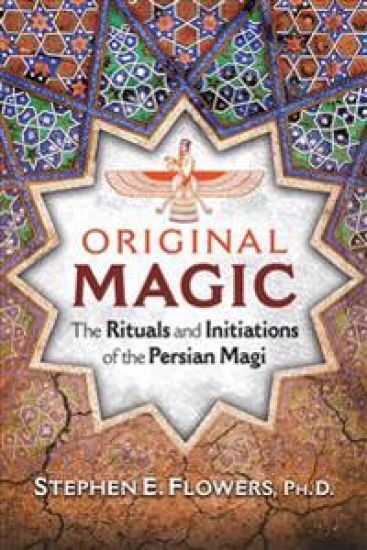
Original Magic

Original Magic

Stephen E. Flowers

Inner Traditions Bear and Company
2017
pokkari

Halvin toimitettuna 22,50 €

A complete guide to the theory, practice, and history of Mazdan magic, the first organized system of magic • Provides a complete curriculum of magical study and initiation centered on exercises keyed to the sacred Zoroastrian calendar • Details advanced magical rituals and practices based on archaic Persian formulas, including fire rituals and divine invocations Stephen Flowers explores the history, theory, practice, rituals, and initiations of the Mazdan magical system practiced by the Magi of ancient Persia, who were so skilled and famed for their effectiveness that their name came to mean what we today call “magic.” The author explains how the religious branch of the Mazdan magical system, founded by the Prophet Zarathustra, is known in the West under the name Zoroastrianism. The author reveals how all other known systems of magic have borrowed from this tradition, providing the clues that enabled him to reformulate the original Mazdan system. He reviews what the Greeks, Romans, Hebrews, Christians, and Chinese said about the Iranian-Persian tradition of the Mazdans and their invention of a magical technology. He explains how the ultimate aim of the original form of magic was not only individual wisdom, self-development, and empowerment, but also the overall betterment of the world. The author details a complete curriculum of magical study and initiation based on a series of graded exercises keyed to the sacred Zoroastrian calendar. Providing a manual for the original magical system used by the members of the Great Fellowship, this book guides you toward the comprehensive practice of the Mazdan philosophy, the ultimate outcome of which is ushta: Happiness.
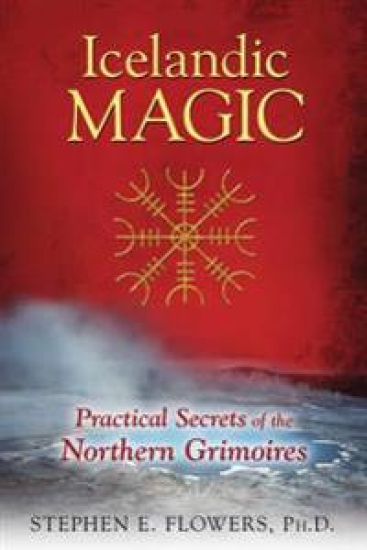
Icelandic Magic

Icelandic Magic

Stephen E. Flowers

Inner Traditions Bear and Company
2016
pokkari
During the Christianization of Europe in the Middle Ages, many books of magic were lost as the ancient pagan traditions were suppressed. But in Iceland the practice of recording magical spells in books continued in secret for centuries, on a scale not seen elsewhere. Now housed in the National Library in Reykjavík, these surviving grimoires, which represent only a hundredth of what was lost, reveal a rich magical tradition that continued to evolve into the 20th century. Drawing directly from the actual surviving Icelandic books of magic, Stephen Flowers presents a complete system of magic based on Icelandic lore and magical practices from the 16th century onward. He explores the history of magic in Iceland in pagan and early Christian times and reveals specific practical techniques and ritual templates that readers can adapt to their unique purposes. Flowers also presents an extensive catalog of actual spells and magical workings from the historical Icelandic books of magic. These examples provide ready-made forms for practical experimentation as well as an exemplary guide on how to create signs and symbols for more personalized magical work. The author also includes guidance on creating unique magical signs from the 100 mythic names of Odin, which he translates and interprets magically, and from Icelandic magical alphabets, symbols that connect Icelandic magic to the ancient runic tradition.
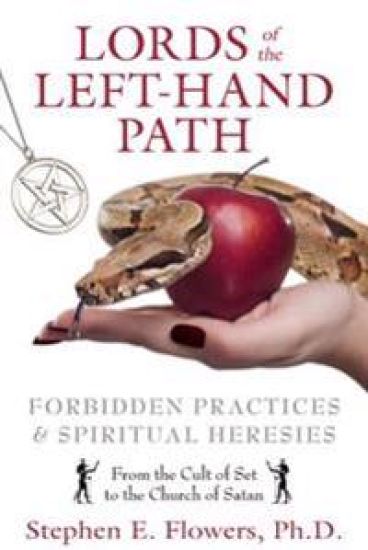
Lords of the Left-Hand Path

Lords of the Left-Hand Path

Stephen E. Flowers

Inner Traditions Bear and Company
2012
pokkari

Halvin toimitettuna 26,90 €

From black magic and Satanism to Gnostic sects and Gurdjieff's Fourth Way, the left-hand path has been linked to many practices, cults, and individuals across the ages. Stephen Flowers, Ph. D., examines the methods, teachings, and historical role of the left-hand path, from its origins in Indian tantric philosophy to its underlying influence in current world affairs, and reveals which philosophers, magicians, and occult figures throughout history can truly be called "Lords of the Left-Hand Path." Flowers explains that while the right-hand path seeks union with and thus dependence on God, the left-hand path seeks a "higher law" based on knowledge and power. It is the way of self-empowerment and true freedom. Beginning with ancient Hindu and Buddhist sects and moving Westward, he examines many alleged left-hand path groups, including the Cult of Set, the Yezidi Devil Worshippers, the Assassins, the Neoplatonists, the Hell-Fire Club, the Bolsheviks, the occult Nazis, and several heretical Sufi, Zoroastrian, Christian, and Muslim sects. Following a carefully crafted definition of a true adherent of the left-hand path based on two main principles--self-deification and challenge to the conventions of "good" and "evil"--the author analyzes many famous and infamous personalities, including H. P. Blavatsky, Faust, the Marquis de Sade, Austin Osman Spare, Aleister Crowley, Gerald Gardner, Anton LaVey, and Michael Aquino, and reveals which occult masters were Lords of the Left-Hand Path. Flowers shows that the left-hand path is not inherently evil but part of our heritage and our deep-seated desire to be free, independent, and in control of our destinies.