Kirjojen hintavertailu – 12 859 829 kirjaa ja 27 kauppaa
Kirjailija
Stephen G. Post
Kirjat ja teokset yhdessä paikassa: 17 kirjaa, julkaisuja vuosilta 2000–2025, suosituimpiin kuuluu The Heart of Religion. Vertaile teosten hintoja ja tarkista saatavuus suomalaisista kirjakaupoista.
Research has shown the important role of religious social networks in fostering benevolence, but some questions have remained: Why are people who frequently pray or attend church more generous with their time and money? Why does one religious group rather than another get involved in certain forms of outreach? Drawing on an extensive survey of 1,200 Christian men and women across the United States, as well as 120 in-depth interviews, Matthew T. Lee, Margaret M. Poloma, and Stephen G. Post offer a deeper and more nuanced study of religion and benevolence, finding that it is the experience of God as loving that activates religious networks and moves people to do good for others. Lee, Poloma and Post show that, for many Americans, love underlies both authoritative and benevolent images of God. The authors discover that encounters with God's love are frequent-eight out of ten respondents to the survey said that that they had felt God's love increasing their compassion for others-and that such experiences take on very different meanings depending on social context. These encounters can be intensely transformative, both for individuals and their communities. The book provides countless examples of how receiving God's love, loving God, and expressing this love impacted the lives of the Christians they interviewed. Some began to provide community service, others to strive for social justice, still others to seek to redefine religion and the meaning of "church " in America. Many of the interviewees discarded the judgmental image of God they knew as children in favor of a loving and accepting representation of God that is more consistent with their direct, personal, and affectively intense experiences. The Heart of Religion will be an invaluable resource for anyone interested in how perceptions of God affect communities in America.
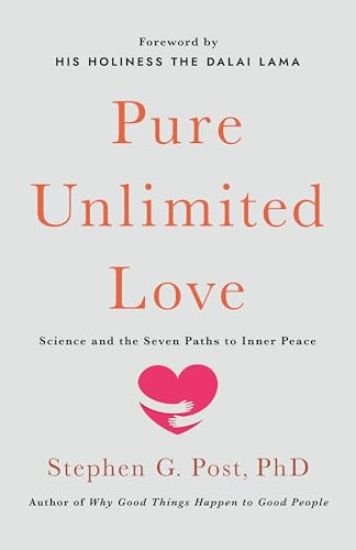
A scientific and spiritual exploration of how the healing power of love can transform mind, body, and spirit in individuals and communities, even in times of chaos. Dr. Post's goal through his life’s work is to achieve cultural transformation through a blend of the highest levels of scientific research, spiritual-philosophical reflection, and effective practice. Through more than forty years of research he has created a framework readers can use to foster pure unlimited love and find inner peace regardless of what’s going on around them. The framework consists of seven paths for generating inner peace which include: May You Give and Glow; May You Heal with Kindness; May You Follow Your Callings; May You Raise Kind Children; May You Know the One Mind; May You Cherish the Gift of Nature; May You Honor the Spirit of Freedom. By incorporating these mantras into your everyday life, you can intentionally show love and kindness in your interactions and help to create inner peace as well as peace around you. When given from the heart, pure love is unlimited and is comprised of compassion, helping, forgiveness, mirth, respect, celebration, listening, loyalty, creativity, and carefrontation. Dr. Post’s work invites readers to embrace pure unlimited love and help create a better world. "I’m pleased to see that noted author Dr. Stephen G. Post is addressing themes such as consciousness and interconnectedness in his new book about Seven Paths to Inner Peace. It is my hope that this book will contribute to the flourishing of humanity." --from the foreword by His Holiness The Dalai Lama
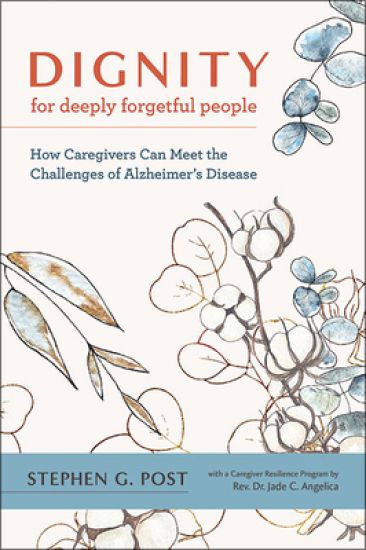
For caregivers of deeply forgetful people: a book that combines new ethics guidelines with an innovative program on how to communicate and connect with people with Alzheimer's. How do we approach a "deeply forgetful" loved one so as to notice and affirm their continuing self-identity? For three decades, Stephen G. Post has worked around the world encouraging caregivers to become more aware of—and find renewed hope in—surprising expressions of selfhood despite the challenges of cognitive decline. In this book, Post offers new perspectives on the worth and dignity of people with Alzheimer's and related disorders despite the negative influence of "hypercognitive" values that place an ethically unacceptable emphasis on human dignity as based on linear rationality and strength of memory. This bias, Post argues, is responsible for the abusive exclusion of this population from our shared humanity. With vignettes and narratives, he argues for a deeper dignity grounded in consciousness, emotional presence, creativity, interdependence, music, and a self that is not "gone" but "differently abled." Post covers key practical topics such as: • understanding the experience of dementia• noticing subtle expressions of continuing selfhood, including "paradoxical lucidity" • perspectives on ethical quandaries from diagnosis to terminal care and everything in between, as gleaned from the voices of caregivers• how to communicate optimally and use language effectively • the value of art, poetry, symbols, personalized music, and nature in revealing self-identity• the value of trained "dementia companion" dogsAt a time when medical advances to cure these conditions are still out of reach and the most recent drugs have shown limited effectiveness, Post argues that focusing discussion and resources on the relational dignity of these individuals and the respite needs of their caregivers is vital. Grounding ethics on the equal worth of all conscious human beings, he provides a cautionary perspective on preemptive assisted suicide based on cases that he has witnessed. He affirms vulnerability and interdependence as the core of the human condition and celebrates caregivers as advocates seeking social and economic justice in an American system where they and their loved ones receive only leftover scraps. Racially inclusive and grounded in diversity, Dignity for Deeply Forgetful People also includes a workshop appendix focused on communication and connection, "A Caregiver Resilience Program," by Rev. Dr. Jade C. Angelica.
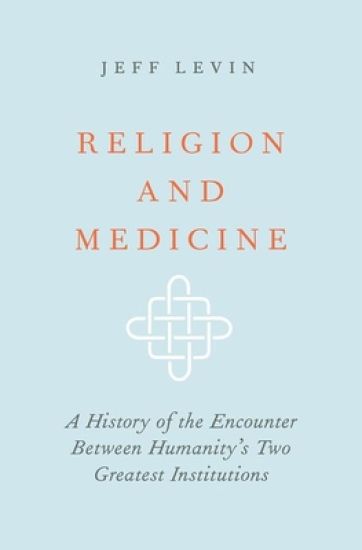
Though the current political climate might lead one to suspect that religion and medicine make for uncomfortable bedfellows, the two institutions have a long history of alliance. From religious healers and religious hospitals to religiously informed bioethics and research studies on the impact of religious and spiritual beliefs on physical and mental well-being, religion and medicine have encountered one another from antiquity through the present day. In Religion and Medicine, Dr. Jeff Levin outlines this longstanding history and the multifaceted interconnections between these two institutions. The first book to cover the full breadth of this subject, it documents religion-medicine alliances across religious traditions, throughout the world, and over the course of history. Levin summarizes a wide range of material in the most comprehensive introduction to this emerging field of scholarship to date.
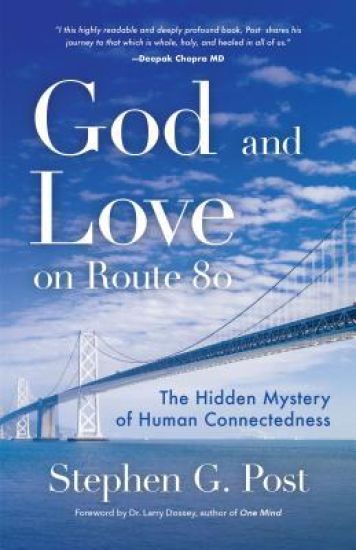
A Story of Faith, Love, and Destiny for Everyone on a Spiritual Journey “This may be the most astonishing spiritual journey book in decades.… If any journey can help reclaim your soul, this is the one.” -Rev. Gregory L. Johnson, NYC senior advisor for Family Caregiving, EmblemHealth #1 New Release in Mysticism, Miracles & Philosophy "There are no coincidences in this world: God and Love on Route 80 is the highly entertaining story of a cross-country road trip and a life-long spiritual journey that led the boy to the discovery that a powerful force carries us towards our destinies." -One Spirit Magazine Dreams, miracles, synchronicity, and a spiritual journey. This book is for dreamers and questers of any spirituality who are looking for positive meaning and purpose in life. On the road, we can find God, redemption, forgiveness, and the understanding that we are all connected. There are no coincidences in this world. Once every generation comes a book so revelatory and lucid, it reconnects us to our very souls. Stephen G. Post’s God and Love on Route 80 is such a book. Post, lead author of the bestselling When Good Things Happen to Good People, was the perfect child and A-student until he took off in the family car, compelled by a persistent vision, his “blue angel dream.” Crossing America on Route 80, his unlikely adventure culminates in a shocking encounter that sets the stage for the rest of his life, a path connected by synchronicities which Post perceived as guidance from God and proof of humanity’s fundamental oneness, Infinite Mind. Truly a story for the ages, God and Love on Route 80 touches on the essential meaning of life and the messages we may all miss unless we begin paying close attention. Readers inspired by modern classics such as Love Warrior by Glennon Doyle, Peace Like a River, Becoming Supernatural, or When God Winks at You, will love God and Love on Route 80. Also read Stephen G. Post’s Unlimited Love and Is Ultimate Reality Unlimited Love?
This book draws from previously unpublished letters and interviews with physicists, theologians, and Sir John’s close associates and family to present Sir John’s ideas on pure unlimited love. Post, who was in dialogue with Sir John for fifteen years on this topic and who had founded the Institute for Research on Unlimited Love (www.unlimitedloveinstitute.com), addresses how John Templeton arrived at his philosophy as a youth growing up in Tennessee. Post also shares how classical Presbyterian ideas came to synergize in his mind with the more Eastern influences of American transcendentalism and the Unity School of Christianity and ponders if Sir John truly believed that science and spirituality might fully converge on the same view of Ultimate Reality with their very different ways of knowing. Is Ultimate Reality Unlimited Love? presents Sir John’s hope for spiritual progress with the eventual convergence of ultimate reality and unlimited love.
The world's religions affirm it to be so and recent research across a number of disciplines tell us that "Helping others not only benefits those we assist but is good for us as well." The recent and astonishingly generous outpouring of help and donations in response to the earthquake in Haiti is a clear demonstration of this phenomenon, but what if we could be convinced to make helping others a way of life, even when times are hard? Post is author of the widely praised Why Good Things Happen to Good PeopleFilled with inspirational anecdotes about the transformative power of doing goodThe author is a leader in the study of altruism, compassion, and love as well as the President of the Institute for Research on Unlimited LoveBeautiful packaging, ideal for gift giving The Hidden Gifts of Helping Others will leave you with the unshakable feeling that the world is an essentially good place.
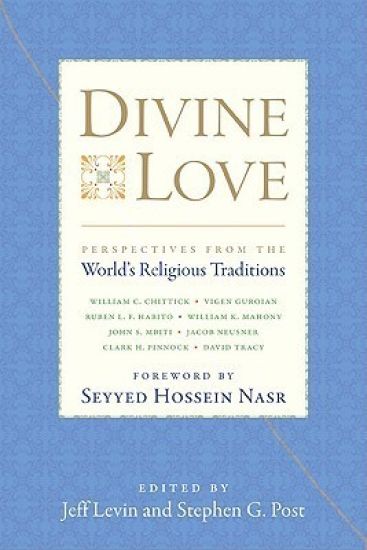
The contributors to Divine Love cover a broad spectrum of world religions, comparing and contrasting approaches among Christians of several denominations, Jews, Buddhists, Muslims, Hindus, and adherents of traditional African religions. Each chapter focuses on the definition and conceptual boundaries of divine love; its expression and experience; its instrumentality and salience; how it can become distorted, and how it has been made manifest or restored by great historic exemplars of altruism, compassion, and unlimited love. The ultimate aim for many of the world’s major faith traditions is to love and be loved by God-to live in connection with the Divine, in union with the Beloved, in reconciliation with the Ultimate. Religious scholars Jeff Levin and Stephen G. Post have termed this connection “divine love.” In their new collection of the same name, they have invited eight of the world’s preeminent religious scholars to share their perspectives on the what, how, and why of divine love. From this diverse gathering of perspectives emerges evidence that to love and to be loved by God, to enter into a mutual and covenantal relationship with the Divine, may well offer solutions to many of the current crises around the world. Only a loving relationship with the Source of being within the context of the great faith and wisdom traditions of the world can fully inform and motivate the acts of love, unity, justice, compassion, kindness, and mercy for all beings that are so desperately required to counter the toxic influences in the world. Contributors: William C. Chittick, Vigen Guroian, Ruben L. F. Habito, William K. Mahony, John S. Mbiti, Jacob Neusner, Clark H. Pinnock, and David Tracy.
In this uplifting new book, author Stephen G. Post explores the mysteries and the wonder of Godly love. This all-important love is personal, unconditional, unlimited, generative, and omnipresent. The title alludes to Isaiah 35, how Godly love is said to plant a rose in our hearts precisely when we feel like a desert with no more love to give. Post draws on his life experiences and works at the Institute for Research on Unlimited Love as he intersperses personal anecdotes with spiritual truths and research on human happiness. In the process, he defines the concept of Godly love and illustrates how important it can be in our lives-not only emotionally and spiritually but physically as well. "Godly love," he writes, "is the only foundation in the universe that we can really lean on." We all have deserts in life, so we all need Godly love. Without it, the downward slide to cynicism, hostility, and cool indifference can be too easy. These meditations on the subject will nurture our confidence in the power of a love greater than our own when we need it most.
Drawing on current research in science and religion, distinguished bioethicist Stephen G. Post provocatively argues that human beings are, by nature, inclined toward a presence in the universe that is higher than their own. In consequence, the institutions of everyday life, such as schools, the workplace, and the public square, are not justified in censoring the spiritual and religious expression that freely arises from the wellspring of the human spirit. Post believes that the privatization of religious expression, coupled with the imposition of a secular monism, is a departure from true liberal democracy in which citizens are free to assert themselves in ways that manifest their full nature. Utilizing research in the neurosciences, psychiatry, the social sciences, and evolutionary psychology, he provides scientific information supporting the idea, familiar to theories of natural law, that religious expression and freedom are essential human goods. In developing this perspective, Post also engages in a critical conversation with secular existentialism. Human Nature and the Freedom of Public Religious Expression offers an alternative to the views of political philosophers such as Richard Rorty, and educators such as John Dewey, who fail to acknowledge the unique contribution that religious language, when thoughtfully implemented, makes to the tone and content of public debate and education. Post's perspective privileges no particular religion, but rather asks that adherents to all faiths, including secularism, be allowed freely to express their core values in a civil, respectful, and public manner. Post calls for a recovery of the full meaning of liberal democracy in all domains of public life, so that we might again discover the value of freedom of expression.
What if we could prove that love heals mental illness and is vital to successful therapeutic outcomes in all areas of health care? What if we could prove that people who live more for others than for self have greater psychological well-being? In Unlimited Love, Post examines the question of what we mean by "unlimited love"; his focus is not on "falling" into love, which is "altogether natural, easy, and delusional." Rather, he focuses on the difficult learned ascent that "begins with insight into the need for tolerance of ubiquitous imperfection, and matures into unselfish concern, gratitude, and compassion." He considers social scientific and evolutionary perspectives on human altruistic motivations, and he analyzes these perspectives in a wide interdisciplinary context at the interface of science, ethics, and religion. In Unlimited Love, Stephen Post presents an argument for the creation of a new interdisciplinary field for the study of love and unlimited love, "engaging great minds and hoping to shape the human future away from endless acrimony, hatred, and violence."
Society today, writes Stephen Post, is "hypercognitive": it places inordinate emphasis on people's powers of rational thinking and memory. Thus, Alzheimer disease and other dementias, which over an extended period incrementally rob patients of exactly those functions, raise many dilemmas. How are we to view-and value-persons deprived of what some consider the most important human capacities? In the second edition of The Moral Challenge of Alzheimer Disease, Post updates his highly praised account of the major ethical issues relating to dementia care. With chapters organized to follow the progression from mild to severe and then terminal stages of dementia, Post discusses topics including the experience of dementia, family caregiving, genetic testing for Alzheimer disease, quality of life, and assisted suicide and euthanasia. New to this edition are sections dealing with end-of-life issues (especially artificial nutrition and hydration), the emerging cognitive-enhancing drugs, distributive justice, spirituality, and hospice, as well as a critique of rationalistic definitions of personhood. The last chapter is a new summary of practical solutions useful to family members and professionals.
A powerful reassertion of the social and spiritual significance of marriage and the family. Many recent social theorists maintain that marriage and the nuclear family are not particularly important to the fabric of our culture. In this powerful refutation, grounded in both Christian teaching and social-science data, Stephen G. Post asserts that the bonds of marriage and family are fundamental to our social and spiritual well-being. Unique in the field for its wide treatment of relevant issues, More Lasting Unions also takes up these important topics: the special needs of children and of aging parents; adoption as an alternative way of family building; the perils of family self-indulgence and consumerism; balancing family commitments and concern for neighbors.