Kirjojen hintavertailu – 12 859 824 kirjaa ja 27 kauppaa

Kirjailija

Stephen Games

Kirjat ja teokset yhdessä paikassa: 9 kirjaa, julkaisuja vuosilta 2007–2025, suosituimpiin kuuluu Betjeman's England. Vertaile teosten hintoja ja tarkista saatavuus suomalaisista kirjakaupoista.

9 kirjaa

Kirjojen julkaisuvuodet: 2007–2025.

Princess Brainy

Princess Brainy

Stephen Games

EnvelopeBooks
2025
nidottu
Princess Raine is a bright kid-a very bright kid. And that’s her problem. No one likes smart kids, especially when they’re unaware of the effect they have on other people. Even her Dad (that’s the king) finds her too much. To make things worse, she has two funny, silly, younger brothers-twins-both as dumb as a bar of soap-whom everyone loves. It’s not fair. So when the kingdom of Rainland is threatened by a massive and abnormal heatwave, the reason has to be a natural phenomenon, like global warming-right? It couldn’t be the arrival of some magical, mythical, firebreathing monster. Could it? The king wants Raine to go and investigate but she refuses; let him send his younger son, if he’s so sure there’s a monster: it’s always the youngest who slays the dragon in fairytales. And then something totally unexpected happens to her and everything changes. But how?
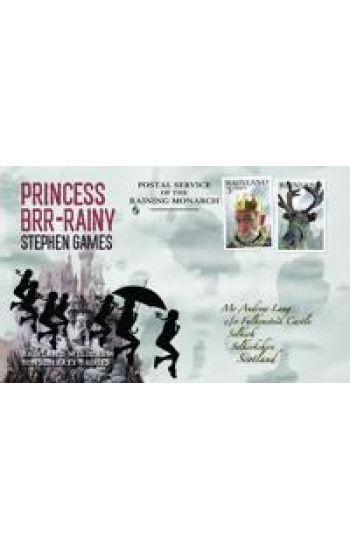
Princess Brr-Rainy

Princess Brr-Rainy

Stephen Games

EnvelopeBooks
2023
nidottu
Princess Raine is a bright kid-a very bright kid. And that’s her problem. No one likes smart kids, especially when they’re unaware of the effect they have on other people. Even her Dad (that’s the king) finds her too much. To make things worse, she has two funny, silly, younger brothers-twins-both as dumb as a bar of soap-whom everyone loves. It’s not fair. So when the kingdom of Rainland is threatened by a massive and abnormal heatwave, the reason has to be a natural phenomenon, like global warming-right? It couldn’t be the arrival of some magical, mythical, firebreathing monster. Could it? The king wants Raine to go and investigate but she refuses; let him send his younger son, if he’s so sure there’s a monster: it’s always the youngest who slays the dragon in fairytales. And then something totally unexpected happens to her and everything changes. But how?
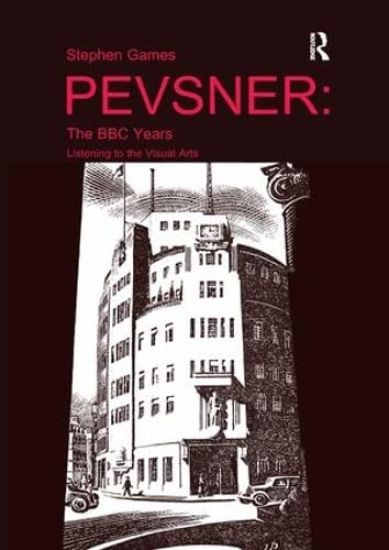
Pevsner: The BBC Years

Pevsner: The BBC Years

Stephen Games

Routledge
2017
nidottu
Pevsner: The BBC Years gives the first full account of Sir Nikolaus Pevsner’s engagement with the BBC at a time when both were the dominant institutions in their own fields -- Pevsner as the most persuasive figure in architecture and art history, the BBC as the country's sole broadcaster. A German emigré, Pevsner was not at first trusted to speak on the air, and was only invited to appear at the very end of the war, in spite of his growing eminence in academia and publishing. With the arrival of the Third Programme in 1946, however, he quickly became a broadcasting celebrity, and one whom senior BBC figures regarded as essential and novel listening. Pevsner: The BBC Years looks at the sudden rise in Pevsner’s standing at the BBC, at what he was admired for, and at the circumstances surrounding his being commissioned, in the mid-1950s, to give the first series of Reith Lectures on an arts subject -- the relationship between visual expression and national identity. The book explains the roles played by Geoffrey Grigson, Basil Taylor, Anna Kallin and Leonie Cohn in advancing Pevsner's BBC career, analyses the literary character of his broadcasting, and considers the function of his talks as an extension of European belletrism. It also demonstrates the significance of his concurrent editorship of the King Penguin series of books. In addition, Pevsner: The BBC Years documents the unravelling of Pevsner's reputation. It shows how he was caught between changing fashions in media culture and damaged by doubts about the safety of his ideas, both within the BBC and, externally, among British conservatives who found him too radical and American radicals who found him too conservative. In Pevsner: The BBC Years, correspondence from the BBC’s archives provides a case study of scholarly thought being exposed to independent scrutiny -- a process with lessons for today.

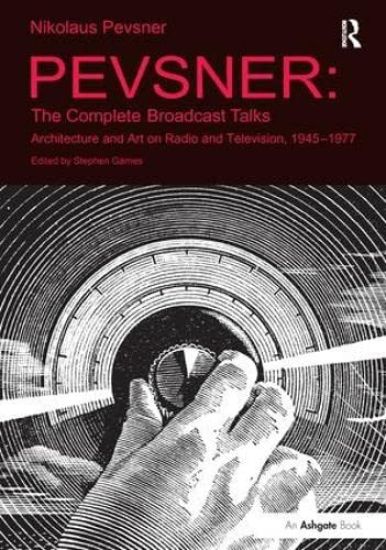
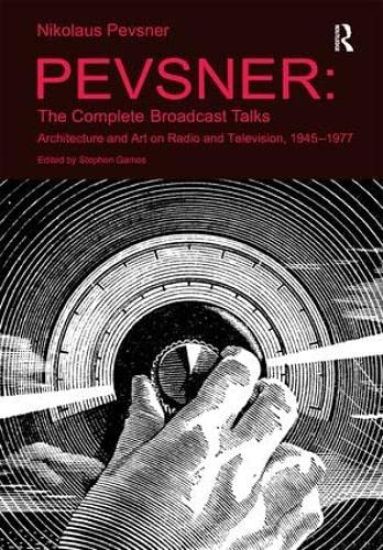
Pevsner: The Complete Broadcast Talks
This book brings together the surviving texts of the 113 talks on art and architecture that we know of, given by the art historian Sir Nikolaus Pevsner on radio and television between 1945--1977. It includes the seven texts of the 1955 Reith Lectures in their original broadcast form, as well as lectures that Pevsner gave in German (for the BBC in London and RIAS in Berlin) and on the radio in New Zealand. These talks are important as an example of the attempt by the BBC in particular to provide intellectual programming for the mass population. The talks are important for what they reveal about changing tastes in the treatment of the arts as a broadcast topic, as well as offering a case study of the development of one particular historian's approach to a subject that was gaining ground in universities as a direct result of his popularisation of it. They show what topics were thought to be central to the artistic agenda in the mid-years of the last century, whether from an academic or journalistic perspective, and reveal the mode and manner of academic engagement with the public over the period. Forty-six of these talks were published in 2002, on the centenary of Pevsner's birth, in a trade edition. At the time, his reputation as an active force in architectural thinking had long been eclipsed and interest in him had waned. Since then, there has been a turn-around in tastes and Pevsner's role within his chosen field is now being actively studied and discussed by a new generation for whom he is central to an understanding of the 20th century. There is therefore a real need for this book. In addition to containing twice the number of talks as the previous volume, it is supplemented with explanatory introductions, footnotes and citations. It also reveals, as far as this is possible, alternative versions of Pevsner’s texts, as they appeared at different stages in the original production process. As such, this edition can be relied on by academics as scholarly and
Pevsner: The BBC Years

Pevsner: The BBC Years

Stephen Games

Ashgate Publishing Limited
2015
sidottu
Pevsner: The BBC Years gives the first full account of Sir Nikolaus Pevsner’s engagement with the BBC at a time when both were the dominant institutions in their own fields -- Pevsner as the most persuasive figure in architecture and art history, the BBC as the country's sole broadcaster. A German emigré, Pevsner was not at first trusted to speak on the air, and was only invited to appear at the very end of the war, in spite of his growing eminence in academia and publishing. With the arrival of the Third Programme in 1946, however, he quickly became a broadcasting celebrity, and one whom senior BBC figures regarded as essential and novel listening. Pevsner: The BBC Years looks at the sudden rise in Pevsner’s standing at the BBC, at what he was admired for, and at the circumstances surrounding his being commissioned, in the mid-1950s, to give the first series of Reith Lectures on an arts subject -- the relationship between visual expression and national identity. The book explains the roles played by Geoffrey Grigson, Basil Taylor, Anna Kallin and Leonie Cohn in advancing Pevsner's BBC career, analyses the literary character of his broadcasting, and considers the function of his talks as an extension of European belletrism. It also demonstrates the significance of his concurrent editorship of the King Penguin series of books. In addition, Pevsner: The BBC Years documents the unravelling of Pevsner's reputation. It shows how he was caught between changing fashions in media culture and damaged by doubts about the safety of his ideas, both within the BBC and, externally, among British conservatives who found him too radical and American radicals who found him too conservative. In Pevsner: The BBC Years, correspondence from the BBC’s archives provides a case study of scholarly thought being exposed to independent scrutiny -- a process with lessons for today.
Pevsner: The Complete Broadcast Talks

Pevsner: The Complete Broadcast Talks

Stephen Games

Ashgate Publishing Limited
2014
sidottu
This book brings together the surviving texts of the 113 talks on art and architecture that we know of, given by the art historian Sir Nikolaus Pevsner on radio and television between 1945--1977. It includes the seven texts of the 1955 Reith Lectures in their original broadcast form, as well as lectures that Pevsner gave in German (for the BBC in London and RIAS in Berlin) and on the radio in New Zealand. These talks are important as an example of the attempt by the BBC in particular to provide intellectual programming for the mass population. The talks are important for what they reveal about changing tastes in the treatment of the arts as a broadcast topic, as well as offering a case study of the development of one particular historian's approach to a subject that was gaining ground in universities as a direct result of his popularisation of it. They show what topics were thought to be central to the artistic agenda in the mid-years of the last century, whether from an academic or journalistic perspective, and reveal the mode and manner of academic engagement with the public over the period. Forty-six of these talks were published in 2002, on the centenary of Pevsner's birth, in a trade edition. At the time, his reputation as an active force in architectural thinking had long been eclipsed and interest in him had waned. Since then, there has been a turn-around in tastes and Pevsner's role within his chosen field is now being actively studied and discussed by a new generation for whom he is central to an understanding of the 20th century. There is therefore a real need for this book. In addition to containing twice the number of talks as the previous volume, it is supplemented with explanatory introductions, footnotes and citations. It also reveals, as far as this is possible, alternative versions of Pevsner’s texts, as they appeared at different stages in the original production process. As such, this edition can be relied on by academics as scholarly and
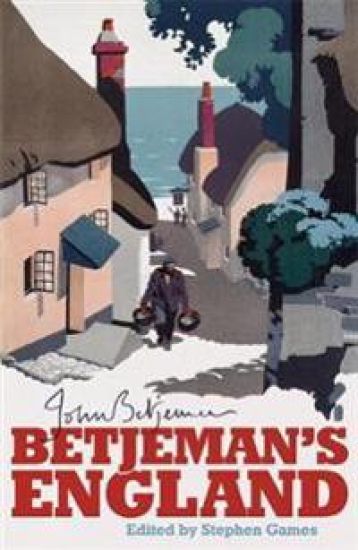
Betjeman's England

Betjeman's England

John Betjeman; Stephen Games

John Murray Publishers Ltd
2010
pokkari
For more than half a century, Betjeman's writings have awakened readers to the intimacy of English places - from the smell of gaslight in suburban churches, to the hissing of backwash on a shingle beach. Betjeman is England's greatest topologist: whether he's talking about a townhall or a teashop, he gets to the nub of what makes unexpected places unique. This new collection of his writings, arranged geographically, offers an essential gazetteer to the physical landmarks of Betjeman Country. A new addition to the popular series of Betjeman anthologies, following on from Trains and Buttered Toast and Tennis Whites and Teacakes, this is a treasure trove for any Betjeman fan and for anyone with a love for the rare, curious and unique details of English life.
Tennis Whites and Teacakes

Tennis Whites and Teacakes

John Betjeman; Stephen Games

John Murray Publishers Ltd
2008
pokkari

Halvin toimitettuna 20,90 €

Tennis Whites and Teacakes brings together the best of Betjeman's poetry, private letters, journalism and musings to present a fully rounded picture of what he stood for. From his arguments for new steel buildings to his amusement about the etiquette of village teashops, it reveals Betjeman not just as a sentimentalist but as a passionate observer with a wonderful sense of humour and an acute eye.
Trains and Buttered Toast

Trains and Buttered Toast

John Betjeman; Stephen Games

John Murray Publishers Ltd
2007
pokkari

Halvin toimitettuna 18,50 €

Eccentric, sentimental and homespun, John Betjeman's passions were mostly self-taught. He saw his country being devastated by war and progress and he waged a private war to save it. His only weapons were words - the poetry for which he is best known and, even more influential, the radio talks that first made him a phenomenon. From fervent pleas for provincial preservation to humoresques on eccentric vicars and his own personal demons, Betjeman's talks combined wit, nostalgia and criticism in a way that touched the soul of his listeners from the 1930s to the 1950s. Now collected in book form for the first time, his broadcasts represent one of the most compelling archives of twentieth-century broadcasting, reawakening the modern reader to Betjeman's unique perspective and the compelling magic of the golden age of wireless.