Kirjojen hintavertailu – 12 903 725 kirjaa ja 27 kauppaa

Kirjailija

Stephen Greenblatt

Kirjat ja teokset yhdessä paikassa: 47 kirjaa, julkaisuja vuosilta 1990–2026, suosituimpiin kuuluu Dunkle Renaissance. Vertaile teosten hintoja ja tarkista saatavuus suomalaisista kirjakaupoista.

47 kirjaa

Kirjojen julkaisuvuodet: 1990–2026.

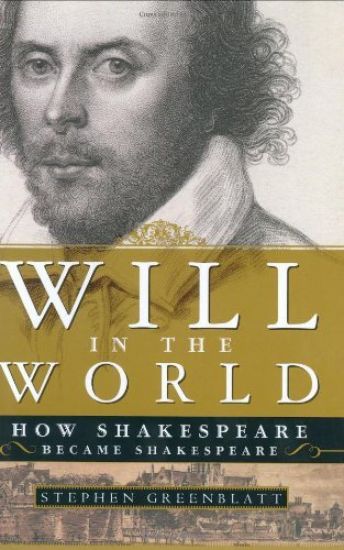
Will in the World: How Shakespeare Became Shakespeare

Will in the World: How Shakespeare Became Shakespeare

Stephen Greenblatt

W. W. Norton Company
2004
sidottu
Stephen Greenblatt, the charismatic Harvard professor who "knows more about Shakespeare than Ben Jonson or the Dark Lady did" (John Leonard, Harper's), has written a biography that enables us to see, hear, and feel how an acutely sensitive and talented boy, surrounded by the rich tapestry of Elizabethan life; full of drama and pageantry, and also cruelty and danger; could have become the world's greatest playwright. A young man from the provinces--a man without wealth, connections, or university education--moves to London. In a remarkably short time he becomes the greatest playwright not just of his age but of all time. His works appeal to urban sophisticates and first-time theatergoers; he turns politics into poetry; he recklessly mingles vulgar clowning and philosophical subtlety. How is such an achievement to be explained? Will in the World interweaves a searching account of Elizabethan England with a vivid narrative of the playwright's life. We see Shakespeare learning his craft, starting a family, and forging a career for himself in the wildly competitive London theater world, while at the same time grappling with dangerous religious and political forces that took less-agile figures to the scaffold. Above all, we never lose sight of the great works--A Midsummer Night's Dream, Romeo and Juliet, Hamlet, Macbeth, and more--that continue after four hundred years to delight and haunt audiences everywhere. The basic biographical facts of Shakespeare's life have been known for over a century, but now Stephen Greenblatt shows how this particular life history gave rise to the world's greatest writer. Bringing together little-known historical facts and little-noticed elements of Shakespeare's plays, Greenblatt makes inspired connections between the life and the works and deliver "a dazzling and subtle biography" (Richard Lacayo, Time). Readers will experience Shakespeare's vital plays again as if for the first time, but with greater understanding and appreciation of their extraordinary depth and humanity. A Best Book of the Year: The New York Times 10 Best Books of 2004; Time magazine's #1 Best Nonfiction Book; A Washington Post Book World Rave; An Economist Best Book; A San Francisco Chronicle Best Book; A Christian Science Monitor Best Book; A Chicago Tribune Best Book; A Pittsburgh Post-Gazette Best Book; NPR's Maureen Corrigan's Best.
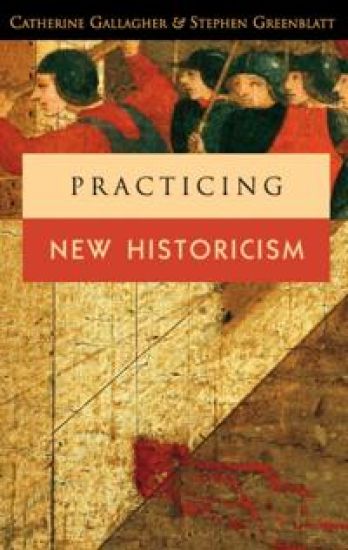
Practicing New Historicism

Practicing New Historicism

Catherine Gallagher; Stephen Greenblatt

University of Chicago Press
2001
nidottu
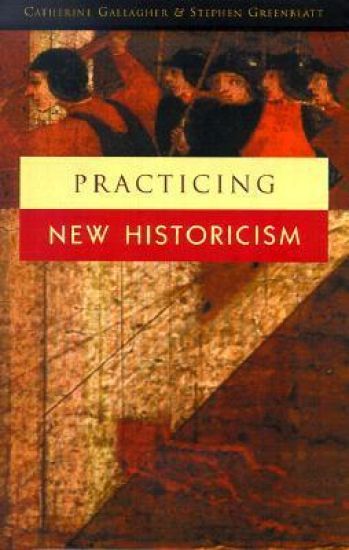
For almost 20 years, new historicism has been a highly controversial and influential force in literary and cultural studies. In "Practicing New Historicism", two of its most distinguished practitioners reflect on its surprisingly disparate sources and far-reaching effects. In lucid and jargon-free prose, Catherine Gallagher and Stephen Greenblatt focus on five central aspects of new historicism: recurrent use of anecdotes, preoccupation with the nature of representations, fascination with the history of the body, sharp focus on neglected details, and skeptical analysis of ideology. Arguing that new historicism has always been more a passionately engaged practice of questioning and analysis than an abstract theory, Gallagher and Greenblatt demonstrate this practice in a series of characteristicaly dazzling readings of works ranging from paintings by Joos van Gent and Paolo Uccello to "Hamlet" and "Great Expectations". By juxtaposing analyses of Renaissance and 19th-century topics, the authors uncover a number of unexpected contrasts and connections between the two periods. Are aspects of the dispute over the Roman Catholic doctrine of the Eucharist detectable in British political economists' hostility to the potato? How does Pip's isolation in "Great Expectations" shed light on Hamlet's doubt?
Practicing New Historicism

Practicing New Historicism

Catherine Gallagher; Stephen Greenblatt

University of Chicago Press
2000
sidottu
For almost 20 years, new historicism has been a highly controversial and influential force in literary and cultural studies. In "Practicing New Historicism", two of its most distinguished practitioners reflect on its surprisingly disparate sources and far-reaching effects. In lucid and jargon-free prose, Catherine Gallagher and Stephen Greenblatt focus on five central aspects of new historicism: recurrent use of anecdotes, preoccupation with the nature of representations, fascination with the history of the body, sharp focus on neglected details, and skeptical analysis of ideology. Arguing that new historicism has always been more a passionately engaged practice of questioning and analysis than an abstract theory, Gallagher and Greenblatt demonstrate this practice in a series of characteristicaly dazzling readings of works ranging from paintings by Joos van Gent and Paolo Uccello to "Hamlet" and "Great Expectations". By juxtaposing analyses of Renaissance and 19th-century topics, the authors uncover a number of unexpected contrasts and connections between the two periods. Are aspects of the dispute over the Roman Catholic doctrine of the Eucharist detectable in British political economists' hostility to the potato? How does Pip's isolation in "Great Expectations" shed light on Hamlet's doubt? Offering not only an insider's view of new historicism, but also a lively dialogue between a Renaissance scholar and Victorianist, "Practising New Historicism" is an illuminating and unpredictable performance by two of America's most respected literary scholars.
A New History of Early English Drama

A New History of Early English Drama

Stephen Greenblatt

Columbia University Press
1997
pokkari
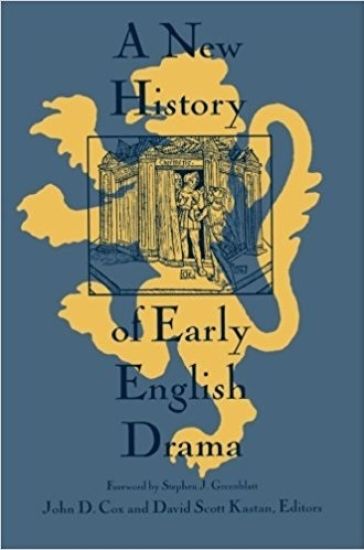
For many years the study of pre-seventeenth-century English drama was shaped largely by an understanding that everything written revolved around the individual author, either as part of the tradition that prepared the way for Shakespeare or as part of his legacy. Now twenty-five original essays by leading theorists and historians chart a paradigmatic shift within the field. In contrast to the traditional emphasis on individual authors, the contributors here explore the place of the stage within the larger society, as well as issues of performance and physical space. The essays are organized into three sections: "Early English Drama and Physical Space" examines the settings in which plays were acted; "Early English Drama and Social Space" juxtaposes the theater with such contemporary subcultures as the church, the city, and the court. Finally, "Early English Drama and Conditions of Performance and Publication" explores a wide range of material conditions and contexts, from props to printers. A major summary of contemporary scholarship and a storehouse of new theoretical and historical information, A New History of Early English Drama skillfully illustrates the complex influence of physical and social elements woven into the texts, and provides an innovative approach to literary studies and cultural history.
Marvelous Possessions

Marvelous Possessions

Stephen Greenblatt

Clarendon Press
1992
nidottu
`And there I found very many islands filled with people innumerable, and of all of them I have taken possession for their highnesses, by proclamation made and with the royal standard unfurled, and no one contradicted me' - Christopher Columbus Marvelous Possessions is a study of the ways in which Europeans of the late Middle Ages and the early modern period represented non-European peoples and took possession of their lands, in particular the New World. In a series of innovative readings of travel narratives, judicial documents, and official reports, Greenblatt shows that the experience of the marvelous, central to both art and philosophy, was cunningly yoked by Columbus and others to the service of colonial appropriation. He argues that the traditional symbolic actions and legal rituals through which European sovereignty was asserted were strained to breaking-point by the unprecedented nature of the discovery of the New World. But the book also shows that the experience of the marvelous is not necessarily an agent of empire: in writers as different as Herodotus, Jean de Léry, and Montaigne - and notably in Mandeville's Travels, the most popular travel book of the Middle Ages - wonder is the sign of a remarkably tolerant recognition of cultural difference.
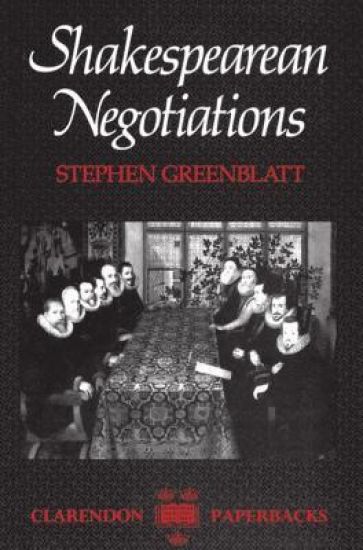
Shakespearean Negotiations

Shakespearean Negotiations

Stephen Greenblatt

Clarendon Press
1990
nidottu
Stephen Greenblatt has been at the centre of a major shift in literary interpretation towards a critical method that places cultural creation in history. In this book - a sustained and powerful exemplification of this innovative method - he asks how collective beliefs and experiences are shaped, moved from one medium to another, concentrated in manageable form, and offered to the public on the stage. As well as giving us a new way of understanding Shakespeare's achievement, the book is an original analysis of a cultural process. Shakespearean Negotiations provides significant insights into Henry IV and Henry V, Twelfth Night, King Lear, and The Tempest; it also includes fascinating analyses of such aspects of early modern culture as exorcism, cross-dressing, colonial propaganda, and martial law codes. It is, as well, a masterly example of a new critical method by its leading practitioner.