Kirjojen hintavertailu – 12 859 819 kirjaa ja 27 kauppaa

Kirjailija

Stephen Harrison

Kirjat ja teokset yhdessä paikassa: 43 kirjaa, julkaisuja vuosilta 1988–2026, suosituimpiin kuuluu PM Purple Set B Fiction (6). Vertaile teosten hintoja ja tarkista saatavuus suomalaisista kirjakaupoista.

43 kirjaa

Kirjojen julkaisuvuodet: 1988–2026.

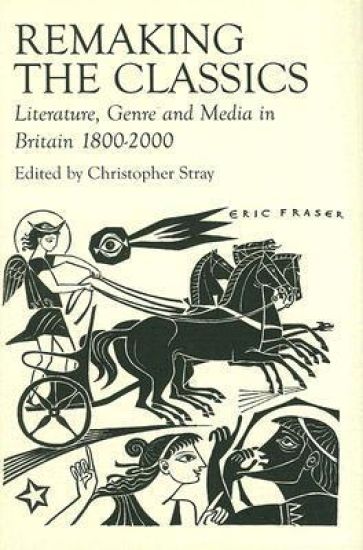
Remaking the Classics

Remaking the Classics

Lorna Hardwick; Stephen Harrison; Ruth Hazel; Leanne Hunnings; Sheila Murnaghan; Deborah Roberts; Chris Stray; Elizabeth Vandiver; Amanda Wrigley

Bristol Classical Press
2007
sidottu
This important collection of essays both contributes to the expanding field of classical reception studies and seeks to extend it. Focusing on nineteenth- and twentieth-century Britain, it looks at a range of different genres (epic, novel, lyric, tragedy, political pamphlet). Within the published texts considered, the usual range of genres dealt with elsewhere is extended by chapters on books for children, and those in which childhood and memories of childhood are informed by antiquity; and also by a multi-genre case study of a highly unusual subject, Spartacus. "Remaking the Classics" also goes beyond books to dramatic performance, and beyond the theatre to radio - a medium of enormous power and influence from the 1920s to the 1960s, whose role in the reception of classics is largely unexplored. The variety of genres and of media considered in the book is balanced both by the focus on Britain in a specific time period, and by an overlap of subject-matter between chapters: the three chapters on twentieth-century drama, for example, range from performance strategies to post-colonial contexts. The book thus combines the consolidation of a field with an attempt to push it in new and exciting directions.
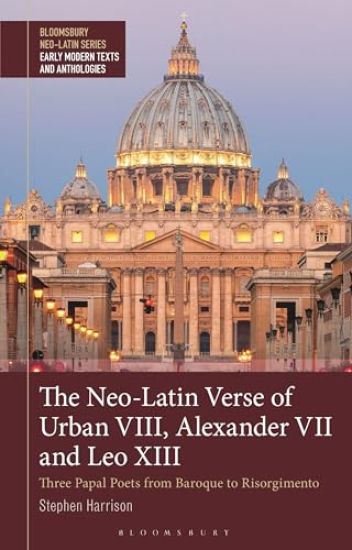
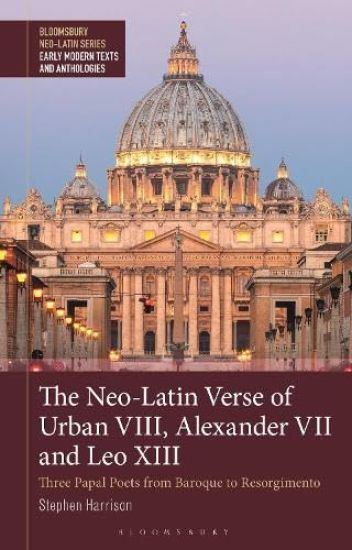
The Neo-Latin Verse of Urban VIII, Alexander VII and Leo XIII

The Neo-Latin Verse of Urban VIII, Alexander VII and Leo XIII

Stephen Harrison

BLOOMSBURY PUBLISHING PLC
2025
nidottu
A fascinating insight into the most talented Latin poets to occupy the Papal throne after Pius II Piccolomini in the 15th century, this book offers translations of and commentaries on the major poems of the three popes (all Italians): Urban VIII Barberini, Alexander VII Chigi and Leo XIII Pecci. Their highly accomplished Neo-Latin poems owe much to the major Latin poets and are significant instances of classical reception, but also cast an interesting light on their lives, times and papacies. Urban (elected pope in 1623) published a mixture of secular and religious verse, drawing on the hexameter epistles of Horace and the lyrics of Catullus and writing Horatian material in praise of Alessandro Farnese, governor of the Netherlands for Philip II of Spain, and the Spanish martyr St Laurence. Alexander (elected pope in 1655) like Urban combines secular and religious themes and often uses Horatian frameworks, writing hexameter accounts of some of the journeys he made as a papal diplomat in Germany and an Horatian ode on the fall of the Protestant stronghold of La Rochelle (1628). Leo’s poetry was mostly religious and published during his papacy (1878-1903); his Horatian ode on the new millennium of 1900 was widely read, and other works include an elegy which links a shrine of the Virgin with the Battle of Lepanto; an Horatian satire on moderate diet; and hymns to saints which combine early Christian and Horatian forms.
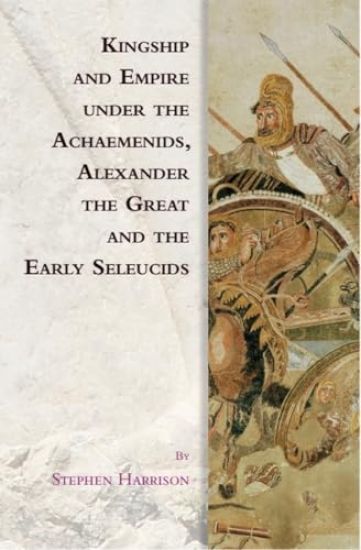
Kingship and Empire under the Achaemenids, Alexander the Great and the Early Seleucids

Kingship and Empire under the Achaemenids, Alexander the Great and the Early Seleucids

Stephen Harrison

EDINBURGH UNIVERSITY PRESS
2025
sidottu

Halvin toimitettuna 155,80 €

This book offers the first systematic, comparative analysis of the ideology of kingship and empire under the Achaemenids, Alexander the Great and the early Seleucids. It explores key issues thematically such as legitimation, representations of empire and royal space. Through this method, Stephen Harrison breaks traditional periodisation offering new insights into long-term trends. The book challenges existing narratives about the relationship between the Achaemenids and their successors. Rather than focusing on the mere facts of continuity and change, the study advocates for a more complex understanding of the Achaemenids' impact on monarchical ideology under Alexander and the Seleucids. Harrison's comparative approach brings the three empires into dialogue with one another and thus treats them all equally through this lens. The methodology highlights the uniqueness of particular strategies deployed by different rulers and isolate ideas which were distinctively 'Achaemenid', 'Alexandrine' or 'Seleucid' as opposed merely to identifying monarchical commonalities.
Roman Readings: Latin Poetry from Lucretius to Ovid
This volume collects seventeen pieces on the classical Latin poetry of the late Republican and Augustan period written and published since 2000. They share a common interest in the close reading of poems, with a particular focus on the issues of genre, intertextuality, poetic unity, political allusion, imagery and literary history. Topics treated include the proem to Lucretius I and its relation to Ennian models, issues of unity and interpretation in five poems of Catullus. On Vergil there are two studies of the similes of the Aeneid, one of Aeneas’ narrative in Aeneid 2, one of Aeneid 6 as a journey into the epic past, one of Sibylline elements in the Aeneid and one of the language used by the Aeneid’s gods, plus a new contribution to the old issue of the identity of the child in Eclogue 4. On Propertius, there are accounts of 4.9 and its contemporary political significance, and of how some other elegies in Book 4 function as expanded epigrams. The chapter on Ovid looks at the chronology and shape of his literary career. Taken together, these pieces seek to present these central texts of Roman poetry for modern literary study by scholars and advanced students.
Horatian Readings: Poetic and Literary Texture
This volume collects eighteen pieces on Horace written over the last two decades. They share a common interest in the close reading of Horace’s poems, especially of the Odes, and are intended to stand alongside the more formal analyses in my commentary on Odes 2 (2017) and the readings of Horatian poems in my monograph on generic enrichment (2007). These pieces share a number of particular concerns linked to issues prominent in classical scholarship over the period: literary career criticism, intratextuality, intertextual interaction with other poets and genres, while a further topic is the perennial question of Horace’s negotiation of the major political issues of his time and the nature of his engagement with the Augustan regime. Like all the Augustan poets, Horace was writing for a Roman readership which had been sharply divided by the internecine wars of the 40s and 30s BCE, and his work can express the perspective of the defeated as well as that of the victors, just as Vergil’s does in the Aeneid. The volume emphasises the original cultural context (and readers) of the poems, and seeks to present Horace’s poetry with the apparatus needed for its modern literary study by scholars and advanced students.
Alexander the Great

Alexander the Great

Stephen Harrison

REAKTION BOOKS
2025
sidottu

Halvin toimitettuna 24,70 €

This book offers a fresh perspective on the reign of Alexander the Great. It re-examines Alexander’s military victories and personality, while also exploring the impact of his campaigns on the people he conquered. Alexander’s story, Stephen Harrison argues, is one that includes the vital roles that other figures played in historical events. By considering the social and intellectual currents of the last two decades, Harrison highlights how changing contemporary experiences shape historical interpretations. Moving beyond polarized debates about Alexander, he provides a nuanced discussion of Alexander’s achievements and impact. The book presents an Alexander for the twenty-first century, offering new insights into how and why historical interpretations of him have changed.
The Editors

The Editors

Stephen Harrison

Inkshares
2024
nidottu
"Strikingly relevant" Taylor Lorenz], The Editors is unnervingly familiar to anyone who has googled, scrolled, or browsed online in the past decade. Aim for Neutrality. We Need Better Sources. Anonymity is Fundamental. Keep Developing. The editors know these principles. The editors follow them every day - usually. The editors may not be recognized on the street, but they craft the information that is seen on nearly every internet search. Through Infopendium, a global, crowd-sourced internet encyclopedia, the editors influence the world. Freelance journalist Morgan Wentworth, recently laid off from PopFeed News, attends the Global Infopendium Conference in New York expecting a straightforward story to help pay the rent. But the so-called "pendium people" are full of surprises. PhDs rub shoulders with high school students, all quoting the project's rules and regulations like a second language. Sure, millions of people see the facts curated by these editors, but who really cares about the free encyclopedia? When a hacker attacks the conference and posts a cryptic message, it becomes clear that somebody does. And Morgan decides to find out who. But the path through an online information war is far from clear. Foreign governments, billionaires, and a global virus threaten to sway the truth on Infopendium. And far from Morgan's sight, in places as different as Beijing and Kansas, some of the editors have plans of their own . . .
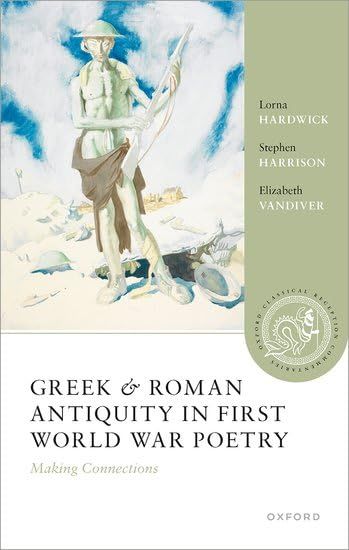
Greek and Roman Antiquity in First World War Poetry

Greek and Roman Antiquity in First World War Poetry

Lorna Hardwick; Stephen Harrison; Elizabeth Vandiver

Oxford University Press
2024
nidottu
Rupert Brooke, Wilfred Owen, Isaac Rosenberg, and Charles Sorley all died in the First Word War. They came from diverse social, educational, and cultural backgrounds, but for all of the writers, engagement with Greek and Roman antiquity was decisive in shaping their war poetry. The world views and cultural hinterlands of Brooke and Sorley were framed by the Greek and Latin texts they had studied at school, whereas for Owen, who struggled with Latin, classical texts were a part of his aspirational literary imagination. Rosenberg's education was limited but he encountered some Greek and Roman literature through translations, and through mediations in English literature. The various ways in which the poets engaged with classical literature are analysed in the commentaries, which are designed to be accessible to classicists and to users from other subject areas. The extensive range of connections made by the poets and by subsequent readers is explained in the Introduction to the volume. The commentaries illuminate relationships between the poems and attitudes to the war at the time, in the immediate post-war years, and subsequently. They also probe how individual poems reveal various facets of the poetry of unease, the poetry of survival, and the poetics of war and ecology.
Rupert Brooke, Charles Sorley, Isaac Rosenberg, and Wilfred Owen

Rupert Brooke, Charles Sorley, Isaac Rosenberg, and Wilfred Owen

Lorna Hardwick; Stephen Harrison; Elizabeth Vandiver

Oxford University Press
2024
sidottu
Rupert Brooke, Wilfred Owen, Isaac Rosenberg, and Charles Sorley all died in the First Word War. They came from diverse social, educational, and cultural backgrounds, but for all of the writers, engagement with Greek and Roman antiquity was decisive in shaping their war poetry. The world views and cultural hinterlands of Brooke and Sorley were framed by the Greek and Latin texts they had studied at school, whereas for Owen, who struggled with Latin, classical texts were a part of his aspirational literary imagination. Rosenberg's education was limited but he encountered some Greek and Roman literature through translations, and through mediations in English literature. The various ways in which the poets engaged with classical literature are analysed in the commentaries, which are designed to be accessible to classicists and to users from other subject areas. The extensive range of connections made by the poets and by subsequent readers is explained in the Introduction to the volume. The commentaries illuminate relationships between the poems and attitudes to the war at the time, in the immediate post-war years, and subsequently. They also probe how individual poems reveal various facets of the poetry of unease, the poetry of survival, and the poetics of war and ecology. References to the accompanying online Oxford Classical Receptions Commentaries will enable readers to follow up their special interests. This volume differs from the shorter volume Greek and Roman Antiquity in First World War Poetry: Making Connections in that it covers the whole output of the four poets, and not just their war poems.
Greek and Roman Antiquity in First World War Poetry

Greek and Roman Antiquity in First World War Poetry

Lorna Hardwick; Stephen Harrison; Elizabeth Vandiver

Oxford University Press
2024
sidottu
Rupert Brooke, Wilfred Owen, Isaac Rosenberg, and Charles Sorley all died in the First Word War. They came from diverse social, educational, and cultural backgrounds, but for all of the writers, engagement with Greek and Roman antiquity was decisive in shaping their war poetry. The world views and cultural hinterlands of Brooke and Sorley were framed by the Greek and Latin texts they had studied at school, whereas for Owen, who struggled with Latin, classical texts were a part of his aspirational literary imagination. Rosenberg's education was limited but he encountered some Greek and Roman literature through translations, and through mediations in English literature. The various ways in which the poets engaged with classical literature are analysed in the commentaries, which are designed to be accessible to classicists and to users from other subject areas. The extensive range of connections made by the poets and by subsequent readers is explained in the Introduction to the volume. The commentaries illuminate relationships between the poems and attitudes to the war at the time, in the immediate post-war years, and subsequently. They also probe how individual poems reveal various facets of the poetry of unease, the poetry of survival, and the poetics of war and ecology.
The Neo-Latin Verse of Urban VIII, Alexander VII and Leo XIII

The Neo-Latin Verse of Urban VIII, Alexander VII and Leo XIII

Stephen Harrison

BLOOMSBURY PUBLISHING PLC
2024
sidottu
A fascinating insight into the most talented Latin poets to occupy the Papal throne after Pius II Piccolomini in the 15th century, this book offers translations of and commentaries on the major poems of the three popes (all Italians): Urban VIII Barberini, Alexander VII Chigi and Leo XIII Pecci. Their highly accomplished Neo-Latin poems owe much to the major Latin poets and are significant instances of classical reception, but also cast an interesting light on their lives, times and papacies. Urban (elected pope in 1623) published a mixture of secular and religious verse, drawing on the hexameter epistles of Horace and the lyrics of Catullus and writing Horatian material in praise of Alessandro Farnese, governor of the Netherlands for Philip II of Spain, and the Spanish martyr St Laurence. Alexander (elected pope in 1655) like Urban combines secular and religious themes and often uses Horatian frameworks, writing hexameter accounts of some of the journeys he made as a papal diplomat in Germany and an Horatian ode on the fall of the Protestant stronghold of La Rochelle (1628). Leo’s poetry was mostly religious and published during his papacy (1878-1903); his Horatian ode on the new millennium of 1900 was widely read, and other works include an elegy which links a shrine of the Virgin with the Battle of Lepanto; an Horatian satire on moderate diet; and hymns to saints which combine early Christian and Horatian forms.
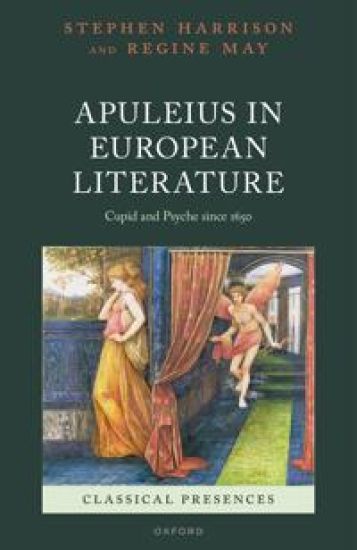
Apuleius in European Literature

Apuleius in European Literature

Stephen Harrison; Regine May

Oxford University Press
2024
sidottu
The story of Cupid and Psyche is first known through the Latin novel Metamorphoses or The Golden Ass by the second-century AD writer Apuleius--one of the few Latin fictions from Roman antiquity to have survived in its entirety. Apuleius in European Literature: Cupid and Psyche since 1650 examines the reception of the long two-book romantic story of Cupid and Psyche in European literature from 1650 to the present day, with some attention also devoted to fine art and opera across this period. Stephen Harrison and Regine May argue that Cupid and Psyche had a broad and profound influence on certain important and specific areas of European culture; it was appropriated and adapted to suit particular cultural and generic contexts, especially the development of the fairy tale. This constitutes an important strand of the more general reception of the ancient novel, since the tale of Cupid and Psyche is arguably the most famous section of any fiction from Greece or Rome. Apuleius' story has enjoyed an extraordinarily rich reception throughout the five centuries from its rediscovery in the Renaissance to the present day. Previous studies of this reception have focused on the tale's prominence in Renaissance art and literature, or otherwise on its status in the German Romantic period. This book goes further and wider, ranging across literary genres in English, French, German and Dutch, encompassing poetry and drama as well as prose fiction, and covering all the key elements of the tale's reception from 1650 to the present. We hereby rediscover a tale that today remains as relevant and ripe for appropriation as ever.