Kirjojen hintavertailu – 12 903 735 kirjaa ja 27 kauppaa

Kirjailija

Stephen Hutchings

Kirjat ja teokset yhdessä paikassa: 9 kirjaa, julkaisuja vuosilta 2004–2024, suosituimpiin kuuluu Russian Literary Culture in the Camera Age. Vertaile teosten hintoja ja tarkista saatavuus suomalaisista kirjakaupoista.

9 kirjaa

Kirjojen julkaisuvuodet: 2004–2024.

Russia, Disinformation, and the Liberal Order

Russia, Disinformation, and the Liberal Order

Stephen Hutchings; Vera Tolz; Precious Chatterje-Doody; Rhys Crilley; Marie Gillespie

CORNELL UNIVERSITY PRESS
2024
sidottu

Halvin toimitettuna 58,70 €

Through the prism of the first comprehensive account of RT, the Kremlin's primary tool of foreign propaganda, Russia, Disinformation and the Liberal Order sheds new light on the provenance and nature of disinformation's threat to democracy. Interrogating the communications strategies pursued by authoritarian states and grassroots populist movements, the book reveals the interlinked nature of today's global media-politics pathologies. Stephen Hutchings, Vera Tolz, Precious Chatterje-Doody, Rhys Crilley, and Marie Gillespie provide a systematic investigation into RT's history, institutional culture, and journalistic ethos; its activities across multiple languages and media platforms; its audience-targeting strategies and audiences' engagements with it; and its response to the war in Ukraine and associated bans on the network. The authors' analysis challenges commonplace notions of disinformation as something that Russia brings to the West, where passive publics are duped by the Kremlin's communications machine, and reveals the reciprocal processes through which Russia and disinformation infiltrate and challenge the liberal order. Russia, Disinformation and the Liberal Order provides provocative insights into the nature and extent of the challenge that Russia's propaganda operation poses to the West. The authors contend that the challenge will be met only if liberals reflect on liberalism's own internal tensions and blind spots and defend the values of open-minded impartiality. Open access edition funded by UKRI and the University of Manchester.
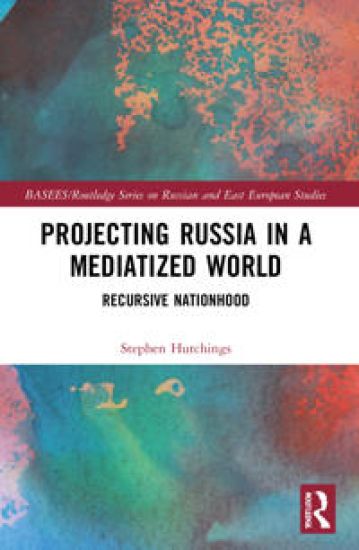
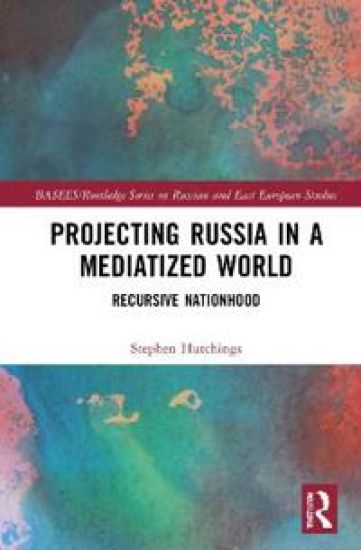
Projecting Russia in a Mediatized World

Projecting Russia in a Mediatized World

Stephen Hutchings

TAYLOR FRANCIS LTD
2023
nidottu
This book presents a new perspective on how Russia projects itself to the world. Distancing itself from familiar, agency-driven International Relations accounts that focus on what ‘the Kremlin’ is up to and why, it argues for the need to pay attention to deeper, trans-state processes over which the Kremlin exerts much less control. Especially important in this context is mediatization, defined as the process by which contemporary social and political practices adopt a media form and follow media-driven logics. In particular, the book emphasizes the logic of the feedback loop or ‘recursion’, showing how it drives multiple Russian performances of national belonging and nation projection in the digital era. It applies this theory to recent issues, events, and scandals that have played out in international arenas ranging from television, through theatre, film, and performance art, to warfare. The Open Access version of this book, available at http://www.taylorfrancis.com, has been made available under a Creative Commons Attribution-Non Commercial-No Derivatives 4.0 license.
Projecting Russia in a Mediatized World

Projecting Russia in a Mediatized World

Stephen Hutchings

TAYLOR FRANCIS LTD
2022
sidottu
This book presents a new perspective on how Russia projects itself to the world. Distancing itself from familiar, agency-driven International Relations accounts that focus on what ‘the Kremlin’ is up to and why, it argues for the need to pay attention to deeper, trans-state processes over which the Kremlin exerts much less control. Especially important in this context is mediatization, defined as the process by which contemporary social and political practices adopt a media form and follow media-driven logics. In particular, the book emphasizes the logic of the feedback loop or ‘recursion’, showing how it drives multiple Russian performances of national belonging and nation projection in the digital era. It applies this theory to recent issues, events, and scandals that have played out in international arenas ranging from television, through theatre, film, and performance art, to warfare. The Open Access version of this book, available at http://www.taylorfrancis.com, has been made available under a Creative Commons Attribution-Non Commercial-No Derivatives 4.0 license.
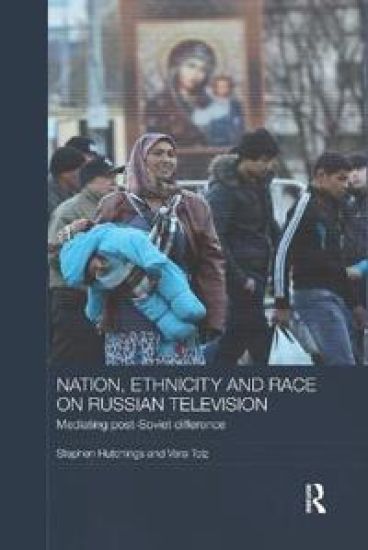
Nation, Ethnicity and Race on Russian Television

Nation, Ethnicity and Race on Russian Television

Stephen Hutchings; Vera Tolz

CRC Press Inc
2017
nidottu
Russia, one of the most ethno-culturally diverse countries in the world, provides a rich case study on how globalisation and associated international trends are disrupting, and causing the radical rethinking of approaches to, inter-ethnic cohesion. The book highlights the importance of television broadcasting in shaping national discourse and the place of ethno-cultural diversity within it. It argues that television’s role here has been reinforced, rather than diminished, by the rise of new media technologies. Through an analysis of a wide range of news and other television programmes, the book shows how the covert meanings of discourse on a particular issue can diverge from the overt significance attributed to it, just as the impact of that discourse may not conform with the original aims of the broadcasters. The book discusses the tension between the imperative to maintain security through centralised government and overall national cohesion that Russia shares with other European states, and the need to remain sensitive to, and to accommodate, the needs and perspectives of ethnic minorities and labour migrants. It compares the increasingly isolationist popular ethnonationalism in Russia, which harks back to "old-fashioned" values, with the similar rise of the Tea Party in the United States and the UK Independence Party in Britain. Throughout, this extremely rich, well-argued book complicates and challenges received wisdom on Russia’s recent descent into authoritarianism. It points to a regime struggling to negotiate the dilemmas it faces, given its Soviet legacy of ethnic particularism, weak civil society, large native Muslim population and overbearing, yet far from entirely effective, state control of the media.
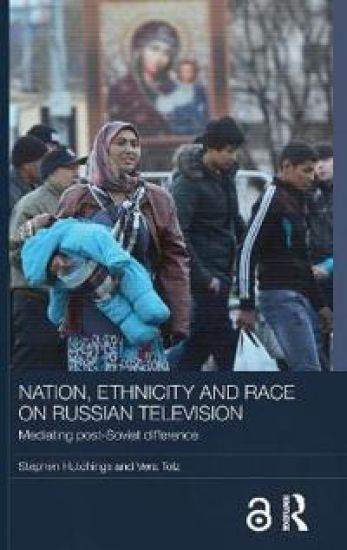
Nation, Ethnicity and Race on Russian Television

Nation, Ethnicity and Race on Russian Television

Stephen Hutchings; Vera Tolz

Routledge
2015
sidottu
Russia, one of the most ethno-culturally diverse countries in the world, provides a rich case study on how globalisation and associated international trends are disrupting, and causing the radical rethinking of approaches to, inter-ethnic cohesion. The book highlights the importance of television broadcasting in shaping national discourse and the place of ethno-cultural diversity within it. It argues that television’s role here has been reinforced, rather than diminished, by the rise of new media technologies. Through an analysis of a wide range of news and other television programmes, the book shows how the covert meanings of discourse on a particular issue can diverge from the overt significance attributed to it, just as the impact of that discourse may not conform with the original aims of the broadcasters. The book discusses the tension between the imperative to maintain security through centralised government and overall national cohesion that Russia shares with other European states, and the need to remain sensitive to, and to accommodate, the needs and perspectives of ethnic minorities and labour migrants. It compares the increasingly isolationist popular ethnonationalism in Russia, which harks back to "old-fashioned" values, with the similar rise of the Tea Party in the United States and the UK Independence Party in Britain. Throughout, this extremely rich, well-argued book complicates and challenges received wisdom on Russia’s recent descent into authoritarianism. It points to a regime struggling to negotiate the dilemmas it faces, given its Soviet legacy of ethnic particularism, weak civil society, large native Muslim population and overbearing, yet far from entirely effective, state control of the media.
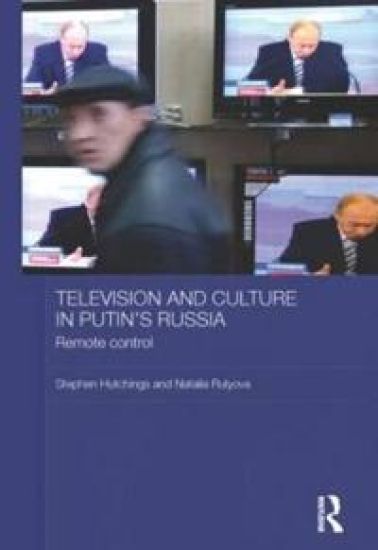
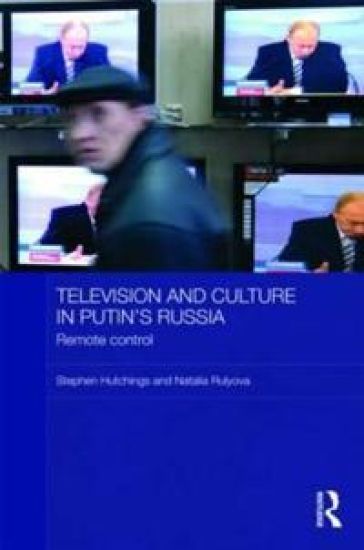
Television and Culture in Putin's Russia

Television and Culture in Putin's Russia

Stephen Hutchings; Natalia Rulyova

Routledge
2010
nidottu
This book examines television culture in Russia under the government of Vladimir Putin. In recent years, the growing influx into Russian television of globally mediated genres and formats has coincided with a decline in media freedom and a ratcheting up of government control over the content style of television programmes. All three national channels (First, Russia, NTV) have fallen victim to Putin’s power-obsessed regime. Journalists critical of his Chechnya policy have been subject to harassment and arrest; programmes courting political controversy, such as Savik Shuster’s Freedom of Speech (Svoboda slova) have been taken off the air; coverage of national holidays like Victory Day has witnessed a return of Soviet-style bombast; and reporting on crises, such as the Beslan tragedy, is severely curtailed. The book demonstrates how broadcasters have been enlisted in support of a transparent effort to install a latter-day version of imperial pride in Russian military achievements at the centre of a national identity project over which, from the depths of the Kremlin, Putin’s government exerts a form of remote control. However, central to the book's argument is the notion that because of the changes wrought upon Russian society after 1985, a blanket return to the totalitarianism of the Soviet media has, notwithstanding the tenor of much western reporting on the issue, not occurred. Despite the fact that television is nominally under state control, that control remains remote and less than wholly effective, as amply demonstrated in the audience research conducted for the book, and in analysis of contradictions at the textual level. Overall, this book provides a fascinating account of the role of television under President Putin, and will be of interest to all those wishing to understand contemporary Russian society.
Russian Literary Culture in the Camera Age
This book explores how one of the world's most literary-oriented societies entered the modern visual era, beginning with the advent of photography in the nineteenth century, focusing then on literature's role in helping to shape cinema as a tool of official totalitarian culture during the Soviet period, and concluding with an examination of post-Soviet Russia's encounter with global television. As well as pioneering the exploration of this important new area in Slavic Studies, the book illuminates aspects of cultural theory by investigating how the Russian case affects general notions of literature's fate within post-literate culture, the ramifications of communism's fall for media globalization, and the applicability of text/image models to problems of intercultural change.
Television and Culture in Putin's Russia

Television and Culture in Putin's Russia

Stephen Hutchings; Natalia Rulyova

Routledge
2009
sidottu
This book examines television culture in Russia under the government of Vladimir Putin. In recent years, the growing influx into Russian television of globally mediated genres and formats has coincided with a decline in media freedom and a ratcheting up of government control over the content style of television programmes. All three national channels (First, Russia, NTV) have fallen victim to Putin’s power-obsessed regime. Journalists critical of his Chechnya policy have been subject to harassment and arrest; programmes courting political controversy, such as Savik Shuster’s Freedom of Speech (Svoboda slova) have been taken off the air; coverage of national holidays like Victory Day has witnessed a return of Soviet-style bombast; and reporting on crises, such as the Beslan tragedy, is severely curtailed. The book demonstrates how broadcasters have been enlisted in support of a transparent effort to install a latter-day version of imperial pride in Russian military achievements at the centre of a national identity project over which, from the depths of the Kremlin, Putin’s government exerts a form of remote control. However, central to the book's argument is the notion that because of the changes wrought upon Russian society after 1985, a blanket return to the totalitarianism of the Soviet media has, notwithstanding the tenor of much western reporting on the issue, not occurred. Despite the fact that television is nominally under state control, that control remains remote and less than wholly effective, as amply demonstrated in the audience research conducted for the book, and in analysis of contradictions at the textual level. Overall, this book provides a fascinating account of the role of television under President Putin, and will be of interest to all those wishing to understand contemporary Russian society.
Russian Literary Culture in the Camera Age
This book explores how one of the world's most literary-oriented societies entered the modern visual era, beginning with the advent of photography in the nineteenth century, focusing then on literature's role in helping to shape cinema as a tool of official totalitarian culture during the Soviet period, and concluding with an examination of post-Soviet Russia's encounter with global television. As well as pioneering the exploration of this important new area in Slavic Studies, the book illuminates aspects of cultural theory by investigating how the Russian case affects general notions of literature's fate within post-literate culture, the ramifications of communism's fall for media globalization, and the applicability of text/image models to problems of intercultural change.