Kirjailija
Stephen J. Ball
Kirjat ja teokset yhdessä paikassa: 34 kirjaa, julkaisuja vuosilta 1981–2026, suosituimpiin kuuluu Against School. Vertaile teosten hintoja ja tarkista saatavuus suomalaisista kirjakaupoista.
Nimi esiintyy myös muodoissa: Stephen J Ball
34 kirjaa
Kirjojen julkaisuvuodet: 1981–2026.
Do private and philanthropic solutions to the problems of education signal the end of state education in its ‘welfare’ form? Education policy is being reformed and re-worked on a global scale. Policies are flowing and converging to produce a singular vision of ‘best practice’ based on the methods and tenets of the ‘neo-liberal imaginary’. Philanthropy, business and the governments are coming together in new networks and sites of policy outside of the framework of the nation state. This book is a first step in recording, mapping and making sense of the most important aspects of these new relations and dynamics of policy. Using the approach of ‘policy sociology’ and the methods of social network analysis, Global Education Inc. explores the policy activities of edu-businesses, neo-liberal advocacy networks and policy entrepreneurs, and of social enterprises and ‘new’ philanthropy. It also addresses the ways in which education and education policy itself are now being exported and bought and sold as profitable commodities and how entrenched problems of educational development and educational quality and access are now being addressed through ‘market solutions’. That is, by the involvement of private providers in the delivery of educational services, both independently and on behalf of the state. Universities, schools and education services are being acquired as assets by private equity companies. Private storefront schools are being set-up by local entrepreneurs and through franchising arrangements, funded through microloans. School chains funded by philanthropy and run by multi-national edu-businesses are being harnessed to the attempts of developing societies in an attempt to achieve their Millennium Development Goals and provide mass access to basic education. Curriculum materials and pedagogy software and policy ideas such as inspections, leadership, school choice and accountability are being retailed by western ‘knowledge companies’ and consultants across the globe. This book argues that these new forms of policy and policy-making require new concepts and methods of policy analysis, with chapters including: Networks, Neo-liberalism and Policy Mobilities New’ Philanthropy, Social Capitalism and Education Policy Policy as Profit: Selling and Exporting Policy Money, Meaning and Policy Connections Global Education Inc. is a crucial book that will be of great interest to students of social and education policy and social and education policy analysts and researchers.
Over the last 20 years, international attempts to raise educational standards and improve opportunities for all children have accelerated and proliferated. This has generated a state of constant change and an unrelenting flood of initiatives, changes and reforms that need to be ‘implemented’ by schools. In response to this, a great deal of attention has been given to evaluating ‘how well’ policies are realised in practice – implemented! Less attention has been paid to understanding how schools actually deal with these multiple, and sometimes contradictory, policy demands; creatively working to interpret policy texts and translate these into practices, in real material conditions and varying resources – how they are enacted! Based on a long-term qualitative study of four ‘ordinary’ secondary schools, and working on the interface of theory with data, this book explores how schools enact, rather than implement, policy. It focuses on: contexts of ‘policy work’ in schools; teachers as policy subjects; teachers as policy actors; policy texts, artefacts and events; standards, behaviour and learning policies. This book offers an original and very grounded analysis of how schools and teachers do policy. It will be of interest to undergraduate and postgraduate students of education, education policy and social policy, as well as school leaders, in the UK and beyond.
How Schools Do Policy
Stephen J Ball; Meg Maguire; Annette Braun
Routledge
2011
nidottu
Halvin toimitettuna 62,00 €
Over the last 20 years, international attempts to raise educational standards and improve opportunities for all children have accelerated and proliferated. This has generated a state of constant change and an unrelenting flood of initiatives, changes and reforms that need to be ‘implemented’ by schools. In response to this, a great deal of attention has been given to evaluating ‘how well’ policies are realised in practice – implemented! Less attention has been paid to understanding how schools actually deal with these multiple, and sometimes contradictory, policy demands; creatively working to interpret policy texts and translate these into practices, in real material conditions and varying resources – how they are enacted! Based on a long-term qualitative study of four ‘ordinary’ secondary schools, and working on the interface of theory with data, this book explores how schools enact, rather than implement, policy. It focuses on: contexts of ‘policy work’ in schools; teachers as policy subjects; teachers as policy actors; policy texts, artefacts and events; standards, behaviour and learning policies. This book offers an original and very grounded analysis of how schools and teachers do policy. It will be of interest to undergraduate and postgraduate students of education, education policy and social policy, as well as school leaders, in the UK and beyond.
Based on interviews with key actors in the policy-making process, this book maps the changes in education policy and policy making in the Thatcherite decade. The focus of the book is the 1988 Education Reform Act, its origins, purposes and effects, and it looks behind the scenes at the priorities of the politicians, civil servants and government advisers who were influential in making changes. Using direct quotations from senior civil servants and former secretaries of state it provides a fascinating insight into the way in which policy is made. The book focuses on real-life political conflicts, examining the way in which education policy was related to the ideal of society projected by Thatcherism. It looks in detail at the New Right government advisers and think tanks; the industrial lobby, addressing issues such as the National Curriculum, national testing and City Technical Colleges. The author sets these important issues within a clear theoretical framework which illuminates the whole process of policy making.
Stephen Ball’s micro-political theory of school organization is a radical departure from traditional theories. He rejects a prescriptive ‘top down’ approach and directly addresses the interest and concerns of teachers and current problems facing schools. In doing so he raises question about the adequacy and appropriateness of the existing forms of organizational control in schools. Through case studies and interviews with teachers, the book captures the flavour of real conflicts in schools – particularly in times of falling rolls, change of leadership or amalgamations – when teachers’ autonomy seems to be at stake.
Is the privatisation of state education defendable? Did the public sector ever provide a fair education for all learners? In Education plc, Stephen Ball provides a comprehensive, analytic and empirical account of the privatisation of education. He questions the kind of future we want for education and what role privatisation and the private sector may have in that future. Using policy sociology to describe and critically analyse changes in policy, policy technologies and policy regimes, he looks at the ethical and democratic impacts of these changes and raises the following questions:Is there a legitimacy for privatisation based on the convergence of interests between business and the ‘third way’ state? Is the extent and value of private participation in public education misunderstood? How is the selling of private company services linked to the remodelling of schools? Why have the technical and political issues of privatisation been considered but ethical issues almost totally neglected? What is happening here, beyond mere technical changes in the form of public service delivery? Is education policy being spoken by new voices? Drawing upon extensive documentary research and interviews with senior executives from the leading ‘education services industry’ companies, the author challenges preconceptions about privatisation. He concludes that blanket defence of the public sector as it was, over and against the inroads of privatisation, is untenable, and that there is no going back to a past in which the public sector as a whole worked well and worked fairly in the interests of all learners, because there was no such past. This book breaks new ground and builds on Stephen Ball’s previous work on education policy. It should appeal to those researching and studying in the fields of social policy, policy analysis, sociology of education, education research and social economics.
Childcare is a topic that is frequently in the media spotlight and continues to spark heated debate in the UK and around the world. This book presents an in-depth study of childcare policy and practice, examining middle class parents’ choice of childcare within the wider contexts of social class and class fractions, social reproduction, gendered responsibilities and conceptions of ‘good’ parenting. Drawing on the results of a qualitative empirical study of two groups of middle class parents living in two London localities, this book:takes into account key theoretical frameworks in childcare policy, setting them in broader social, political and economic contextsconsiders the development of the UK government’s childcare strategy from its birth in 1998 to the present dayhighlights the critical debates surrounding middle class families and their choice of childcareexplores parents’ experiences of childcare and their relationships with carers. This important study comes to a number of thought-provoking conclusions and offers valuable insights into a complex subject. It is essential reading for all those working in or studying early years provision and policy as well as students of sociology, class, gender and work.
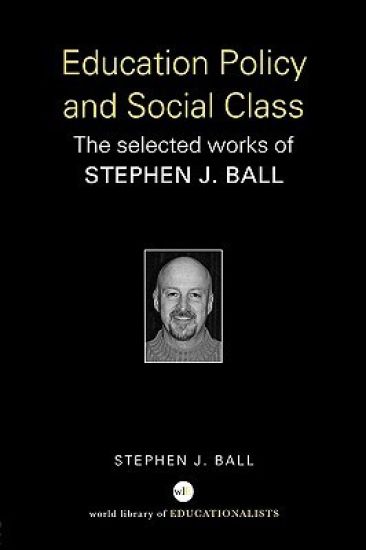
Bringing together twenty years of research and writing, this book provides an overview of Stephen Ball’s career and shows not only the development of his most important ideas but also the long-lasting contributions he has made to the field of educational policy analysis. This volume contains sixteen key essays divided into three sections:perspectives on policy researchpolicy technologies and policy analysissocial class and education policy. Each chapter presents innovative ways of thinking about public policy, asking probing questions about what policy is, how policy is influenced and what effects intentional and unintentional policies have. As a body of work, this collection raises issues of ethics and social justice which are often neglected in the mass of policies that now affect every aspect of our education systems.
Class Strategies and the Education Market examines the ways in which the middle classes maintain and improve their social advantages in and through education. Drawing on an extensive series of interviews with parents and children, this book identifies key moments of decision making in the construction of the educational trajectories of middle class children. Stephen J. Ball organises his analysis around the key concepts of social closure, social capital, values and principles and risk, while bringing a broad range of up-to-date sociological theory to bear upon his subject. From this thorough analysis, valuable and thought-provoking insights emerge into the assiduous care and considerable effort and expenditure which goes into ensuring the educational success of the middle class childThe middle classes are a sociological enigma, presenting the social researcher with considerable analytic and theoretical difficulties. Class Strategies and the Education Market provides a set of working tools for class analysis and the examination of class practices. Above all, it offers new ways of thinking about class theory and the relationships between classes in late modern society.
This important account of the experiences of schooling of the pupils in a single comprehensive school is based on three years' field work which Stephen J. Ball spent as participant observer at 'Beachside Comprehensive'. First published in 1981, it is an institutional study in the tradition of Colin Lacey's Hightown Grammar and David Hargreaves' Social Relations in a Secondary School, and provides a deep and dynamic portrayal of a school in the process of radical change. Dr Ball raises important questions about the practice of comprehensive education through a detailed examination of the processes of selection and socialsation experienced by two cohorts of pupils moving through the school, one banded and the other taught in mixed-ability classes. This also reveals the way in which teachers confronted the problems of teaching mixed-ability classes and illustrates the enormous gap which existed between the rhetoric and the reality of comprehensive education. The book will be of interest to teachers and students of sociology and education, to school teachers and others concerned about the organisation of schools and educational policy.