Kirjojen hintavertailu – 12 903 739 kirjaa ja 27 kauppaa

Kirjailija

Stephen J. Cimbala

Kirjat ja teokset yhdessä paikassa: 49 kirjaa, julkaisuja vuosilta 1986–2026, suosituimpiin kuuluu US National Security. Vertaile teosten hintoja ja tarkista saatavuus suomalaisista kirjakaupoista.

Nimi esiintyy myös muodoissa: Stephen J Cimbala

49 kirjaa

Kirjojen julkaisuvuodet: 1986–2026.

Nuclear Weapons and Cooperative Security in the 21st Century
This book looks at the prospects for international cooperation over nuclear weapons proliferation in the 21st century. Nuclear weapons served as stabilizing forces during the Cold War, or the First Nuclear Age, on account of their capability for destruction, the fear that this created among politicians and publics, and the domination of the nuclear world order by two superpowers: the United States and the Soviet Union. The end of the Cold War, the dissolution of the Soviet Union, and the potential for nuclear weapons acquisition among revisionist states, or even non-state actors including terrorists, creates the possibility of a 'wolves eat dogs' phenomenon in the present century. In the 21st century, three forces threaten to undo or weaken the long nuclear peace and fast-forward states into a new and more dangerous situation: the existence of large US and Russian nuclear weapons arsenals; the potential for new technologies, including missile defenses and long-range, precision conventional weapons, and a collapse or atrophy of the nuclear nonproliferation regime, and the opening of the door for nuclear weapons to spread among more than the currently acknowledged nuclear states. This book explains how these three 'weakening' forces interact with one another and with US and Russian policy-making in order to create an environment of large possibilities for cooperative security - but also of considerable danger. Instead, the choices made by military planners and policy-makers will create an early twenty-first century story privileging nuclear stability or chaos. The US and Russia can, and should, make incremental progress in arms control and nonproliferation. This book will be of much interest to students of nuclear proliferation and arms control, strategic studies, international security and IR in general. Stephen J. Cimbala is Distinguished Professor of Political Science at Pennsylvania State University. He is the author of numerous works in the fields of international security, defense studies, nuclear arms control and other topics. He has consulted for various US government agencies and defense contractors.
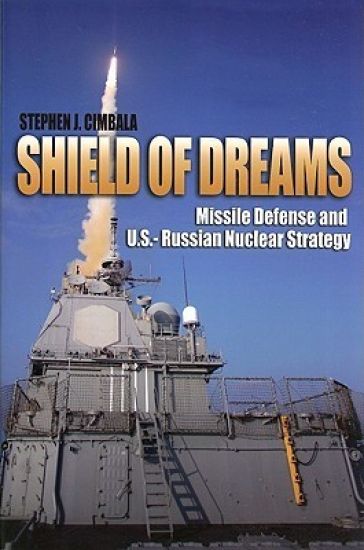
Shield of Dreams

Shield of Dreams

Stephen J. Cimbala

Naval Institute Press
2009
nidottu
This book considers the implications of deploying missile defences, primarily nationwide missile defences or NMD, by the United States and/or Russia within the current and next decade. The US has already begun the process of limited ballistic missile defense (BMD) deployments and in 2007 announced plans to locate parts of the global BMD system in Eastern Europe. This prospect of a European-based BMD system, in turn, alarmed Russian President Vladimir Putin and contributed to a deterioration in U. S.-Russian relations. The run-up to the American and Russian Presidential campaigns of 2008 witnessed a flurry of diplomatic demarches and military exchanges between the two states. The post-Bush and post-Putin era beginning in 2009 would open the door, either to improved détente between Moscow and Washington, or to increased acrimony over a number of issues left over from 2008. The analysis in this book considers how stable the US-Russian nuclear deterrence and arms control relationship could be once these SORT levels have been reached. In addition, it considers whether the two states could reduce their numbers of deployed weapons below SORT levels, even to the level of “minimum deterrence” forces with hundreds instead of thousands of deployed weapons. If so, movement in the direction of smaller, but still highly competent, Russian and American nuclear forces could persuade other nuclear powers to reduce their inventories proportionately, making for a safer world. The study offers a unique combination of quantitative and qualitative policy analysis with implications for military strategy and nuclear arms control in the present, and looking ahead to the period 2015– 2020.
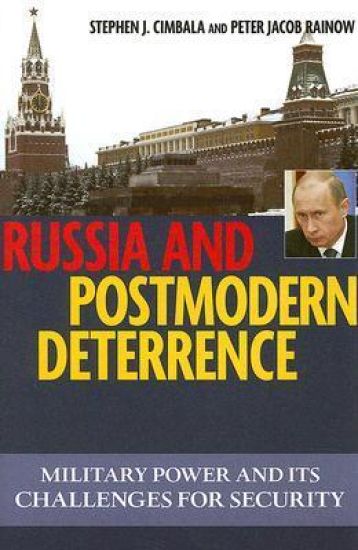
Russia and Postmodern Deterrence

Russia and Postmodern Deterrence

Stephen J. Cimbala; Peter Rainow

Potomac Books Inc
2007
sidottu
Russia is a post-communist country struggling to adapt to the modern world economically and politically. In the twenty-first century, Russia faces postmodern social, cultural, and political problems with its old policy of deterrence. For Russia's political leaders and military planners, three scenarios define their postmodern setting: 1) the world's leading military and economic powers, with the exception of China, are market-based economies and political democracies; 2) the revolution in military affairs, based on advances in information, electronics, and communications, is driving both civil and military technology innovation; and 3) the Cold War's fundamental war-fighting premises, such as deterrence based on nuclear weapons and on conventional armed forces organized and trained for massive wars of attrition, have changed radically. These points' implications for future Russian strategy are profound, Stephen J. Cimbala and Peter Rainow argue. Russia faces an increased presence of its former adversary, the United States, in adjacent territories; an increasingly assertive NATO, which includes many of Moscow's former allies; and continued fighting in Chechnya. Ominously, China aspires to overtake Russia as the world's second-ranked military power and establish its hegemony over the Pacific basin. In short, Russia confronts a radically new political and military world order that demands adapting to postmodern thinking about deterrence and defense. The danger is that Russia, realizing that it lags behind in leveraging modern technology for military purposes and that it must scrap its dependence on conscription, now relies on nuclear weapons as its first line of deterrence against either nuclear or conventional attack.
Nuclear Weapons and Strategy

Nuclear Weapons and Strategy

Stephen J. Cimbala

Routledge
2005
sidottu
Nuclear weapons, once thought to have been marginalized by the end of the Cold War, have returned with a vengeance to the centre of US security concerns and to a world bereft of the old certainties of deterrence. This is a major analysis of these new strategic realities. The George W. Bush administration, having deposed the regime of Saddam Hussein in Iraq, now points to a new nuclear "Axis of Evil": Iran and North Korea. These nations and other rogue states, as well as terrorists, may pose key threats because they are "beyond deterrence", which was based on the credible fear of retaliation after attack. This new study places these and other developments, such as the clear potential for a new nuclear arms race in Asia, within the context of evolving US security policy. Detailing the important milestones in the development of US nuclear strategy and considering the present and future security dilemmas related to nuclear weapons this is a major new contribution to our understanding of the present international climate and the future. Individual chapters are devoted to the key issues of missile defenses, nuclear proliferation and Israel’s nuclear deterrent. This book will be of great interest to all students and scholars of strategic studies, international relations and US foreign policy.
The US, NATO and Military Burden-Sharing

The US, NATO and Military Burden-Sharing

Stephen J. Cimbala; Peter Forster

Routledge
2004
sidottu
This study establishes that the political, economic and military-technological changes that transform the international system also alter the way in which a state views its and others' responsibilities and burdens for responding to international crises. It assesses the distribution of the costs of raising and supporting arms of service, the risks of deploying them overseas and using them in combat or peace operations, and the extent to which members have a responsibility for maintaining international order in the context of three instances of multinational military intervention: the Multinational Force deployment in Lebanon in 1982-83; the first Persian Gulf War in 1990-91; and the UN and NATO intervention in Bosnia-Herzegovina.
Military Persuasion in War and Policy

Military Persuasion in War and Policy

Stephen J. Cimbala

Praeger Publishers Inc
2002
sidottu
Cimbala analyzes military persuasion—the art of using armed force to support diplomacy, deterrence, crisis management, unconventional conflicts, peace operations, and other military activities short of major conventional war. As he shows, military persuasion requires that policy makers and diplomats understand the subtle interaction between force and diplomacy; each supports, or destroys, the other, depending upon the situation. Even conventional wars have aspects of armed persuasion. The Powell doctrine that calls for overwhelming force in case of any U. S. military intervention was not even employed by then Chairman of the Joint Chiefs of Staff Colin Powell in the Gulf War of 1991, despite the popular impression to the contrary. Since U. S. policy is not based on imperial policing, but on constructive engagement with the object of supporting democratic regimes and market economies, the use of deterrence and limited military commitments of highly trained, specialized warrior-diplomats will be typical of 21st century-conflicts. As Cimbala shows in his various case studies, armed forces are used most of the time for coercion, not for mass destruction. Yet much professional military thinking, expert lay opinion, and U. S. government analysis presupposes that there is a clear dividing line between all-out peace and all-out war. In addition, U. S. political culture is insensitive to the requirement for matching the political objective to the military means available, as opposed to clamoring for a psychologically satisfying form of victory. Despite these apparent obstacles, Cimbala maintains that the United States must master military persuasion because its resources for defense are limited and its commitments are ubiquitous. This book will be of particular interest to scholars, students, and professionals involved with defense, security, and foreign policy studies.
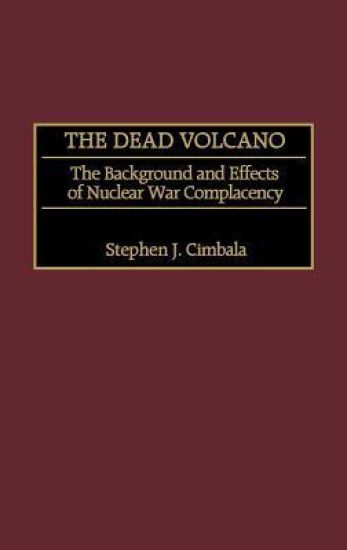
The Dead Volcano

The Dead Volcano

Stephen J. Cimbala

Praeger Publishers Inc
2002
sidottu
Cimbala argues that nuclear complacency is based on a misreading of history and on unsound political and military analysis. The stability factors built into the Cold War international system are now missing. The spread of nuclear weapons after the Cold War moved toward regional actors outside of Europe, some with religious or national scores to settle. Technology transfer of ballistic missiles and other delivery systems for weapons of mass destruction, including biological and chemical as well as nuclear weapons, brings the danger of nuclear eruption closer to reality. Finally, the mechanism of deterrence that seemed so dependable as a means of war prevention from 1947 to 1991 only seems so by virtue of nostalgia. The early decades of the Cold War were made somewhat unpredictable by uncertain U. S.-Soviet political relations, by nuclear force building based on worst-case estimates, and by rickety command and control systems that could have failed both sides in a crisis. The Soviets and Americans gradually improved their relationship and stabilized Cold War competition, including nuclear rivalry, but they had more than 40 years to practice and no immediate territorial disputes. As Cimbala makes clear, it cannot be assumed that the Soviet-American nonbelligerence of the Cold War is transferable into a multipolar, post-Cold War international system marked by spreading weapons and trigger-sensitive control systems. This provocative analysis will be of interest to all scholars, students, and policy makers involved with defense, security, and foreign policy studies.
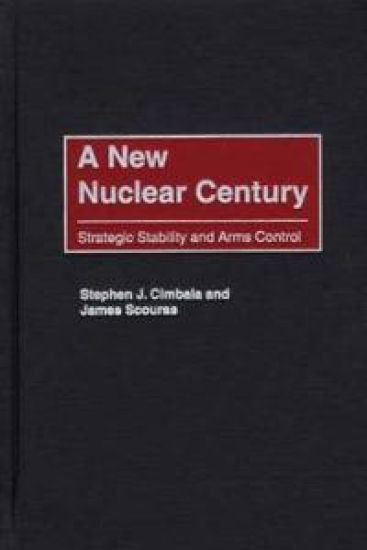
A New Nuclear Century

A New Nuclear Century

Stephen J. Cimbala; James Scouras

Praeger Publishers Inc
2002
sidottu
Cimbala and Scouras examine the issues related to the control of nuclear weapons in the early 21st century. These issues are both technical and policy oriented; science and values are commingled. This means that arguments about nuclear strategy, arms control, and proliferation are apt to be contentious and confusing. The authors seek to provide readers with a fuller, more accurate understanding of the issues involved. They begin by analyzing the crazy mathematics of nuclear arms races and arms control that preoccupied analysts and policymakers during the Cold War. After examining stability modeling, they argue for a more comprehensive definition of strategic stability and they relate this more inclusive concept to the current relationship between the United States and Russia—one characterized by cooperation as well as competition. They then use the concept of friction to analyze how the gap between theory and practice might influence nuclear force operations and arms control. The problem of nuclear weapons spread or proliferation is then considered from the vantage point of both theory and policy. They conclude with an analysis of whether the United States might get by in the 21st century with fewer legs of its strategic nuclear triplet than weapons based on land, at sea, and airborne. A provocative analysis for arms control policymakers, strategists, and students, scholars, and other researchers involved with nuclear weapons issues.
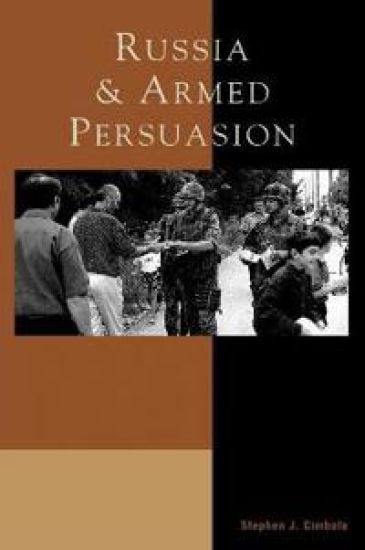
Russia and Armed Persuasion

Russia and Armed Persuasion

Stephen J. Cimbala

Rowman Littlefield Publishers
2001
nidottu
In Russia and Armed Persuasion, Stephen J. Cimbala argues that Russia's war planners and political leaders must make painful adjustments in their thinking about the relationship between military art and policy in the twenty-first century. Russia must master the use of force for persuasion, not just destruction. As the author shows, military persuasion requires that Russian leaders master the politico-military complexity of crisis management, deterrence and arms control, and the limitation of ends and means in war. Russia now has scarce resources to devote to defense and can no longer afford the stick-only diplomacy and strategy that have characterized some of its recent past. Russian and Soviet military thinking historically emphasized the blunderbuss and total war: overwhelming mass, firepower, and conflicts of annihilation or prolonged attrition. However, historical experience also forced Russia and the Soviet Union to come to grips with crisis management and with limited aims and means in the conduct of war. On the one hand, Russia failed the test of military persuasion in its management of the July 1914 crisis that plunged Europe into World War I. On the other hand, the Soviet Union did adjust to the requirements of the nuclear age for crisis management, deterrence, and limited war. Using this mixed record of Russian and Soviet success and failure in twentieth century experience, Cimbala argues that Russia can, and must, improve in the twenty-first century. According to the author, the first decades of this century will pose at least three immediate challenges to Russia's military persuasion. Russia must continue to pursue strategic nuclear arms control and arms reductions, with the United States and avoid re-starting the Cold War by means of an ill-considered race in missile defenses. Second, Russia must maintain a surer grip on the military information revolution, especially as it pertains to the management of Russia's nuclear deterrent. Third, Russia must develop forces that are more flexible in small wars and peace operations: its recent experiences in Chechnya show that it has a long way to go in using economy of force as a military persuader. Cimbala's original analysis demonstrates the similar features in apparently dissimilar, or even opposite, events and processes. For example, he shows how the problem of military persuasion applies equally to the challenge of managing a nuclear crisis and the problem of low-intensity war. In each case, the dilemma is calibrating the military means to the political ends. Controversially, the author argues against both military and academic traditionalists, contending that the complexity of the force-policy relationship in the next century will reward the subtle users of military power and that others will be subject to a 'Gulliver effect' of diminishing returns.
Through a Glass Darkly

Through a Glass Darkly

Stephen J. Cimbala

Praeger Publishers Inc
2001
sidottu
Cimbala shows why the prevention, management, and concluding of war all require an understanding of the subjective aspects of decision making as well as the hardware and tactics of military operations. A review of past cases of U. S. security policy decision making and a preview of some future problems are combined to distill important lessons about coping with conflict in the post-Cold War world. These lessons include the awareness that some conflicts are unnecessarily provoked or prolonged on account of the gap between the perspectives and experiences of civilian policy makers and the views of the armed forces leadership. Another important lesson is that, in resolving or managing conflicts, perceptions, and expectations of leaders filter out alternatives that might have led to preferred solutions had they been attempted in good time. Of particular interest to policy makers, military professionals, and researchers involved with contemporary military issues.
Deterrence and Nuclear Proliferation in the Twenty-First Century
This edited collection considers the future of nuclear weapons in world politics in terms of security issues that are important for U. S. and other policy makers. The spread of nuclear weapons also is related to the equally dangerous proliferation of other weapons of mass destruction, including chemical and biological weapons, and of ballistic missiles of medium and longer ranges. Cold War studies of nuclear weapons emphasized the U. S.-Soviet relationship, deterrence, and bilateral arms control. A less structured post-Cold War world will require more nuanced appreciation of the diversity of roles that nuclear weapons might play in the hands of new nuclear states or non-state actors. As the essays suggest as well, the possibility of terrorism by means of nuclear or other weapons of mass destruction introduces other uncertainties into military and policy planning. An important analysis for scholars, students, and researchers involved with defense, security, and foreign policy studies.
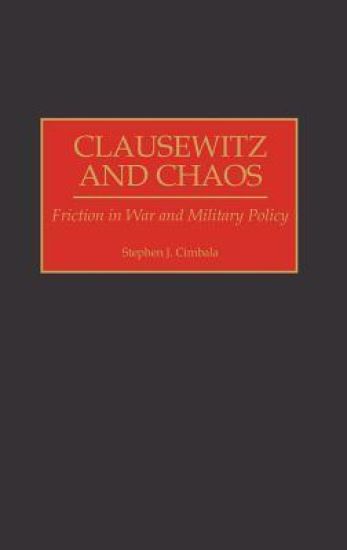
Clausewitz and Chaos

Clausewitz and Chaos

Stephen J. Cimbala

Praeger Publishers Inc
2000
sidottu
The great Prussian military theorist Carl von Clausewitz, in his classic On War, introduced the idea of friction in war. Friction was one of the most important ideas that Clausewitz put forward. His application of the term is generally taken to be limited to events on the field of battle. But had Clausewitz lived to the end of the 20th century, he undoubtedly would have broadened his understanding of friction to include the nexus between war and policy making. He would have done so because his most fundamental insight, apart from the significance of friction in war, was his insistence upon the priority of policy over war. Cimbala applies the concept of friction to a number of 20th century cases of war and policy making. He also applies it to some plausible scenarios for the next century. Although many U. S. military planners and policy makers appear to place their faith in technology as the sine qua non of success in security and defense policy, technology can be self defeating and myopic if political and strategic vision are lacking. For example, the mindless pursuit of information warfare in all its varieties may convince potential U. S. opponents that infowar is a cost effective way of negating U. S. military power. A provocative analysis for scholars, students, military professionals and other policy makers involved with strategy and military policy issues.
Nuclear Strategy in the Twenty-First Century

Nuclear Strategy in the Twenty-First Century

Stephen J. Cimbala

Praeger Publishers Inc
2000
sidottu
The future of nuclear weapons and nuclear strategy in the 21st century is not entirely predictable from the Cold War past. Nor is it easy to foresee on the basis of what has happened since the Soviet Union collapsed in 1991. Cimbala contends that nuclear weapons and the psychology of nuclear deterrence will remain important after 2000, but the character of that importance will change. No longer will nuclear weapons be the dominators of military technology. Instead, advanced technology conventional weapons, based on information and electronics, will supplant nuclear weapons as the instruments of military supremacy in the 21st century. What, Cimbala asks, can be expected of nuclear weapons in the 21st century, given what we have learned from previous experience in the Cold War and in the 1990s? Cimbala expects that nuclear weapons will spread among currently non-nuclear states, and states with regional grievances or hegemonic aspirations will seek to deploy small nuclear forces as deterrents against neighbors or against outside intervention by the United States in regional conflicts. Regional rogue states may also obtain nuclear weapons. Nonetheless, as Cimbala explains, the international balance of power is unlikely to change. As he makes clear, power will be less dependent on deployed military platforms and more dependent on information warfare. A thoughtful and provocative analysis that will be of particular interest to policy makers, scholars, and other researchers involved with arms control, security studies, and international relations.
Coercive Military Strategy

Coercive Military Strategy

Stephen J. Cimbala

Texas A M University Press
1999
sidottu
In Coercive Military Strategy, Stephen J. Cimbala shows that coercive military strategy is a necessary part of any diplomatic-strategic recipe for success. Few wars are total wars, fought to annihilation, and military power is inherently political, employed for political purpose, in order to advance the public agenda of a state, so in any war there comes a time when a diplomatic resolution may be possible. To that end, coercive strategy should be flexible, for there are as many variations to it as there are variations in wars and warfare. Cimbala shows that although coercive strategy is a remedy for neither the ailments of U. S. national security nor world conflict, it will become more important in peace, crisis, and even war in the next century, when winning with the minimum of force or without force will become more important than winning by means of maximum firepower.
The Past and Future of Nuclear Deterrence

The Past and Future of Nuclear Deterrence

Stephen J. Cimbala

Praeger Publishers Inc
1998
sidottu
As proven by the recent discovery of ongoing research and tests in India and Pakistan, the nuclear age is not dead. Nuclear weapons, deployed in plentiful numbers during the Cold War by the Americans and Soviets, and, in lesser numbers, by others, were nevertheless controlled in their use by the essential equivalence, of U. S. and Soviet strategic power and by the ability of the U. S. and the Soviet Union to dominate the international security environment by means of their global military power. Now the setting within which nuclear weapons exist has been transformed. Now that the Cold War has ended, and the Soviet Union has vanished, states seeking nuclear weapons operate under decision making rules that are sometimes opaque to Western observers. If the end of the Cold War leads to the unrestrained spread of nuclear weapons, Cimbala stresses that a combination of military hubris and arms control insolvency could lead to new nuclear crises or worse. The author provides a provocative analysis for policy makers and professional military staff as well as scholars and researchers involved with international relations, security studies, and arms control.
Force and Diplomacy in the Future

Force and Diplomacy in the Future

Stephen J. Cimbala

Praeger Publishers Inc
1992
sidottu
This study is an initial effort to assess the post-Cold War international environment in terms of its implications for the relationship between force and policy. This relationship between force and policy in the future, based on a retrospective look at U. S., allied NATO, and Soviet doctrine strategy is one of uncertain fidelity and potentially destabilizing content. Assuming that informed speculation about the post-Cold War world requires a sense of connection to the historical past, Cimbala sees that issues with which Europe was forced to deal prior to the Second World War will reappear in the aftermath of a socially reconstructed Soviet Union, a defunct Warsaw Pact, and a newly reunited Germany. He finds that nationalism and economic competition will contend for the attention of policymakers along with traditional security issues for the remainder of the 1990s and thereafter. The peace and stability provided for more than forty years by U. S.-Soviet strategic nuclear bipolarity and the bloc politics of the Cold War will no longer be taken for granted. Cimbala sees that opportunities exist for collaboration between Washington and Moscow, and among other major powers, toward the development of a systems consciousness in favor of international peace and stability. Military security was not only the cause of peace in post-World War II Europe it was also the product of political stability made possible by economic prosperity. The economic prosperity of Western Europe eventually proved too embarrassing for the regimes of Eastern Europe to maintain their political legitimacy and the demise of communism in part came from the process of transformation from an industrial to a post-industrial age. This work will interest students and scholars in security and international studies, as well as policy analysts and policy makers concerned with world affairs.
Controlling and Ending Conflict

Controlling and Ending Conflict

Stephen J. Cimbala; Sidney Waldman

Praeger Publishers Inc
1991
sidottu
Knowing how to end war and to prevent the escalation of conflict is of paramount importance today when weapons of mass destruction have spread beyond the control of major powers and democratically accountable governments, and when regional and global stability have become more precarious. Stephen Cimbala and Sidney Waldman have drawn together prominent analysts with different perspectives to discuss key issues before and after the Cold War. This authoritative and provocative study assesses military and political strategies of serious concern to military historians and professionals, political scientists, academics, and policymakers. The book covers all the major aspects of conflict termination before and after the Cold War and defines the basic concepts and principles involved. Noted contributors offer insights into how military and political strategies to end and limit various types of conflict must adapt to political change, to nationalism, irredentism, and boundary disputes. Chapters deal with deterrence, Soviet military doctrine, an American-Soviet war, the changing role of nuclear weapons, behavioral and institutional factors, the maritime component, civil wars, coalition war, nuclear deterrence and political hostility. The book ends with new determinations about the major issues and points to future research agendas.
Strategy After Deterrence

Strategy After Deterrence

Stephen J. Cimbala

Praeger Publishers Inc
1991
sidottu
The profound political changes in the USSR and Eastern Europe during 1989 have forced the United States and its Western European allies to reevaluate both their long held military strategy of nuclear deterrence and the traditional role of NATO in European affairs. In this volume, Stephen Cimbala considers the ways in which American military priorities will have to change now that the tangible threat to Europe has been removed, exploring the options available to America and NATO given the new political and economic realities in Europe and the Soviet Union. Drawing upon a rich literature of Soviet and American defense strategy, Cimbala examines the structure and effectiveness of deterrence as a military strategy, the relationship between conventional and nuclear weapons, the likely course of future conflicts, and alternative military strategies. Following an introductory chapter which defines the concepts of deterrence and dissuasion and offers an overview of the changing character of European politics, Cimbala reviews the political context for the development of military strategy in Europe. Subsequent chapters consider the relationship between military stability and the likelihood of winning wars in their initial stages, analyze the issue of deterrence during war, discuss the potential for atypical wars in the future, and investigate the linkages between deception and deterrence. A separate chapter addresses the attempt to substitute non-nuclear dissuasion for nuclear deterrence, in the form of anti-nuclear strategic defenses which could defeat nuclear offenses. In the final chapter, Cimbala summarizes his conclusions and makes some additional observations about the implications of our new view of NATO and deterrence. Students of international relations, foreign policy, and military studies will find Cimbala's work enlightening and provocative reading.