Kirjojen hintavertailu – 12 859 828 kirjaa ja 27 kauppaa
Kirjailija
Stephen J. Patterson
Kirjat ja teokset yhdessä paikassa: 12 kirjaa, julkaisuja vuosilta 1998–2018, suosituimpiin kuuluu Profiles of Jesus. Vertaile teosten hintoja ja tarkista saatavuus suomalaisista kirjakaupoista.
Robert W. Funk; Roy W. Hoover; Marcus Borg; Kathleen E. Corley; John Dominic Crossan; Arthur J. Dewey; Robert T. Fortna; Lane C. McGaughy; Stephen J. Patterson; James M. Robinson
Can the authentic words and deed of Jesus identified by the Jesus Seminar furnish a sufficient basis for a credible profile of the Jesus of history? That is the challenge faced by the contributors to this volume. Their efforts have resulted in a unique collection of studied impressions of Jesus. Here readers will see not Jesus the icon of myth and creed, but a provocative young man of first-century Palestine whose vision and determination to live the vision gave birth to a new form of faith and changed the course of history.
Arthur J. Dewey; Roy W. Hoover; Stephen J. Patterson; Lane C. McGaughy; Joe Bessler-Northcutt; Hal Taussig; Glenna S. Jackson; Charles W. Hedrick; Francis A. Macnab
What difference does scholarship on the historical Jesus make for the way we think about the meaning of Christian faith in the twenty-first century? In The Historical Jesus Goes To Church, biblical scholars--Fellows of the Jesus Seminar--speak directly to the ways in which new knowledge of the Jesus of history requires and enables us to think differently about the significance of Jesus and about the reliability and authority of the Bible. They also imagine what these new understandings imply for public worship, preaching, prayer and practice, and life in community. These articles evoke the spirit of Paul, Christianity's first theologian, who like us found himself standing at the intersection of two eras and knew that he had to let go of his past if he hoped to have a future.
Long before the followers of Jesus declared him to be the Son of God, Jesus taught his followers that they too were the children of God. This ancient creed, now all but forgotten, is recorded still within the folds of a letter of Paul the Apostle. Paul did not create this creed, nor did he fully embrace it, but he quoted it and thus preserved it for a time when it might become important once again. This ancient creed said nothing about God or Christ or salvation. Its claims were about the whole human race: there is no race, there is no class, there is no gender. This is the story of that first, forgotten creed, and the world of its begetting, a world in which foreigners were feared, slaves were human chattel, and men questioned whether women were really human after all. Into this world the followers of Jesus proclaimed: "You are all children of God. There is no Jew or Greek, no slave or free, no male and female, for you are all one." Where did this remarkable statement of human solidarity come from, and what, finally, happened to it? How did Christianity become a Gentile religion that despised Jews, condoned slavery as the will of God, and championed patriarchy? Christian theologians would one day argue about the nature of Christ, the being of God, and the mechanics of salvation. But before this, in the days when Jesus was still fresh in the memory of those who knew him, the argument was a different one: how can human beings overcome the ways by which we divide ourselves one from another? Is solidarity possible beyond race, class, and gender?
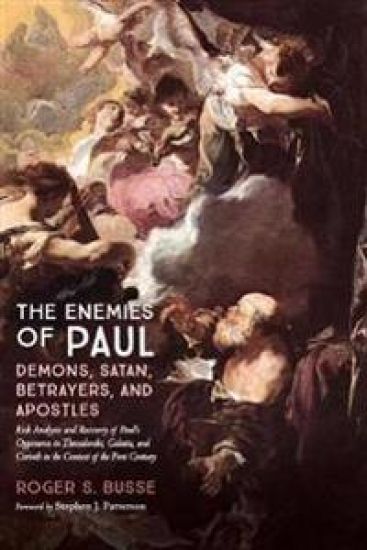
Paul's conflict with viscous enemies, human and otherwise, led him to employ efficacious powers, charismata (charismatic powers), and controversial and sometimes illegal practices that are only coherent when placed in context of the first century Hellenistic-Roman world. These included soul and spirit transportation, possession, and exorcisms, special techniques to repel demonic attack, as well as what was considered the darkest of black magic in the ancient world--the casting of death curses, which called on Satan to infect, harm, and even kill his enemies. All of these can be recovered in striking detail using risk analysis of his undisputed writings and comparing them with contemporary sources, papyri, and documents independent of the New Testament. The results demonstrate that Paul's letters are so much more than simply intellectual and rhetorical correspondences--they are infused with dangerous mystical and charismatic powers feared in an ancient world that was saturated with prevalent, active dark forces and multi-layered human and supernatural conflicts; of angels and demons at war; of charismata and anathemata (deadly curses); and Paul's expectation of the hemera kuriou, ""Day of the Lord,"" that would defeat Satan and the curse of death via pistis (faith) in the efficacious euangelion (gospel) of agape (love). ""This work represents a new approach to the problem of Paul's opponents. If you are willing to hear what an intelligent, attentive, risk expert and sojourner has to say about these texts we know as familiar, and yet are still strange, I recommend this work and its author to you."" --Stephen J. Patterson, Willamette University ""Busse has an extensive background and expertise in the application of risk analysis. This new approach evaluates responses to risk evidenced in ancient texts when placed in their contemporary setting. I recommend this study and author to you."" --Paul Slovic, University of Oregon, President, Decision Research ""It happens rarely that someone who is well educated in a completely different field makes a serious effort to engage in Bible scholarship from the perspective of one's own discipline. Extending his use of risk assessment methods to the historical Jesus in his previous book, Busse now applies them to the problem of understanding Paul and his enemies. Offering a rich, textured reading of the historical Paul in his first century background, Busse succeeds in presenting Paul and the early church in their complexity."" --Loren Crow, PhD Roger S. Busse is a recognized specialist in risk analysis, and a graduate of Reed College and Harvard Divinty School. His awarded career has spanned over forty years, from CEO of a nationally recognized institution to SVP of risk administration. Busse is a certified management consultant, adjunct professor, and author of two industry texts, The Essentials of Commercial Lending and Business Profiles, and two books on risk analysis and Christian origins, To be Near the Fire and Jesus, Resurrected.
Paul's conflict with viscous enemies, human and otherwise, led him to employ efficacious powers, charismata (charismatic powers), and controversial and sometimes illegal practices that are only coherent when placed in context of the first century Hellenistic-Roman world. These included soul and spirit transportation, possession, and exorcisms, special techniques to repel demonic attack, as well as what was considered the darkest of black magic in the ancient world--the casting of death curses, which called on Satan to infect, harm, and even kill his enemies. All of these can be recovered in striking detail using risk analysis of his undisputed writings and comparing them with contemporary sources, papyri, and documents independent of the New Testament. The results demonstrate that Paul's letters are so much more than simply intellectual and rhetorical correspondences--they are infused with dangerous mystical and charismatic powers feared in an ancient world that was saturated with prevalent, active dark forces and multi-layered human and supernatural conflicts; of angels and demons at war; of charismata and anathemata (deadly curses); and Paul's expectation of the hemera kuriou, ""Day of the Lord,"" that would defeat Satan and the curse of death via pistis (faith) in the efficacious euangelion (gospel) of agape (love). ""This work represents a new approach to the problem of Paul's opponents. If you are willing to hear what an intelligent, attentive, risk expert and sojourner has to say about these texts we know as familiar, and yet are still strange, I recommend this work and its author to you."" --Stephen J. Patterson, Willamette University ""Busse has an extensive background and expertise in the application of risk analysis. This new approach evaluates responses to risk evidenced in ancient texts when placed in their contemporary setting. I recommend this study and author to you."" --Paul Slovic, University of Oregon, President, Decision Research ""It happens rarely that someone who is well educated in a completely different field makes a serious effort to engage in Bible scholarship from the perspective of one's own discipline. Extending his use of risk assessment methods to the historical Jesus in his previous book, Busse now applies them to the problem of understanding Paul and his enemies. Offering a rich, textured reading of the historical Paul in his first century background, Busse succeeds in presenting Paul and the early church in their complexity."" --Loren Crow, PhD Roger S. Busse is a recognized specialist in risk analysis, and a graduate of Reed College and Harvard Divinty School. His awarded career has spanned over forty years, from CEO of a nationally recognized institution to SVP of risk administration. Busse is a certified management consultant, adjunct professor, and author of two industry texts, The Essentials of Commercial Lending and Business Profiles, and two books on risk analysis and Christian origins, To be Near the Fire and Jesus, Resurrected.
The best text and the best translation are presented in this classic introductory book to the "Gospel of Thomas". In December 1945, at the base of cliffs that run along the Nile River near the modern-day town of Nag Hammadi, an Egyptian farmer discovered a sealed jar containing thirteen ancient Coptic codices. This discovery represented arguably the most significant manuscript discovery of the twentieth century for the study of the New Testament and Christian origins. Of all the texts found none has been more important than the "Gospel of Thomas" for our understanding of early Christianity. This classic book presents the best text and the best translation of Thomas in user-friendly form. Additional chapters provide a general introduction to the "Gospel of Thomas" and tell the fascinating story of that discovery itself by one who was directly involved in bringing this new Gospel to light. An annotated list 'for further reading' completes the volume. This new edition features updated material which takes account of recent research on the "Gospel of Thomas". The translation has been refined at points, and the bibliographical material updated.
For most Christian believers, what is truly remarkable and important about Jesus is not his life, but his resurrection from the dead. They may believe that Jesus' death is significant not as the end of Jesus' life, but as the first half of the saving event that comprises the Christian gospel: the death and resurrection of Jesus. For Christians, this great divine cosmic event, around which all of human history pivots, is what saves us from our sins. Apart from this, the death of Jesus would simply be the meaningless end to an interesting but insignificant life. In this lively and provocative work, Patterson reconstructs early Christian assessments of Jesus' significance and also questions basic assumptions about modern interpretations of Jesus' death. He emphasizes the importance of Jesus' life in relation to his death and resurrection. And he challenges individualistic notions of how Jesus' death relates to Christian ethics.
In December 1945, at the base of cliffs that run along the Nile River near the modern-day town of Nag Hammadi, an Egyptian farmer discovered, in a sealed jar, thirteen ancient Coptic codices containing more than fifty separate tracts. This discovery represented arguably the most significant manuscript discovery of the twentieth century for the study of the New Testament and Christian origins. Of all the texts in this Nag Hammadi Library, none has been more celebrated than the Gospel of Thomas a Gospel that has played a crucial role in the newly emerging view of early Christianity as a very diverse phenomenon and in the recent revival of historical Jesus studies. Now, after more than fifty years of study, the best text and the best translation of Thomas are presented here in user-friendly form by the Berlin Working Group for Coptic Gnostic Writings, with Stephen J. Patterson and James M. Robinson. In addition, two essays have been included for persons who may be unfamiliar with this new Gospel or with events that led to its discovery and publication. The first, by Patterson, is a general introduction to the Gospel of Thomas as it appears fifty years after its discovery. The second, by Robinson, tells the fascinating story of that discovery itself by one who was directly involved in bringing this new Gospel to light. An annotated list "for further reading" completes the volume. Stephen J. Patterson is Associate Professor of New Testament at Eden Theological Seminary and author of The God of Jesus: The Historical Jesus and the Search for Meaning (Trinity Press). James M. Robinson is the former director of the Institute for Antiquity and Christianity, Professor Emeritus at The Claremont Graduate School, and editor of The Nag Hammadi Library.
This book's title conveys its general premise, that is, that the quest for the historical Jesus has always been closely related to the Christian search for God. The author says that this is both good and necessary, provided that one properly understands the relationship between history and theology ("the Jesus of history" and "the Christ of faith") and does not confuse the two. An opening chapter explains the history of the quest for the historical Jesus and how it has always been related to the search for God. It also proposes a scheme for understanding the relationship between history and theology. The remaining chapters focus on various aspects of Jesus' life and teachings, related in large measure to the work of the Jesus Seminar. Patterson also develops a theology that might properly be called a "Jesus theology," and it is here that his input to the discussions of and about Jesus makes its most distinctive contribution. The accessible style of writing in the book makes it useful for lay study groups. It is also suitable for college and seminary classrooms as a beginning book on the historical Jesus. Stephen J. Patterson is Associate Professor of New Testament at Eden Theological Seminary and author of The Gospel of Thomas and Jesus.>