Kirjojen hintavertailu – 12 903 733 kirjaa ja 27 kauppaa

Kirjailija

Stephen J. Pyne

Kirjat ja teokset yhdessä paikassa: 44 kirjaa, julkaisuja vuosilta 1995–2026, suosituimpiin kuuluu Wild Visions. Vertaile teosten hintoja ja tarkista saatavuus suomalaisista kirjakaupoista.

44 kirjaa

Kirjojen julkaisuvuodet: 1995–2026.

Here and There

Here and There

Stephen J. Pyne

University of Arizona Press
2018
nidottu
Fire is special. Even among the ancient elements, fire is different because it alone is a reaction. It synthesizes its surroundings; it takes its character from its context. It varies by place, by culture, and by time. It has no single expression. There is no single way to understand it. The latest book in the To the Last Smoke series, Here and There explores how singular moments create prisms by which to understand fire. In this collection of essays, historian and renowned fire expert Stephen J. Pyne offers his reflections on national and global wildland fire management, explains how fire policy has changed within the United States and how it differs from other countries, muses on the next wave of fire research, explains the history of one of the most famous fire paintings of all time, and distills the long saga of fire on Earth and its role in underwriting an Anthropocene that might equally be called a Pyrocene. Presented through a mixture of journalism, history, and literary imagination, Here and There moves the discussion of fire beyond the usual formations of science and policy within a national narrative to one of thoughtful interpretation, analysis, and commentary. Centered on the unique complexities of fire management in a global world, Here and There offers a punctuation point to our understanding of wildfire.
The Interior West

The Interior West

Stephen J. Pyne

University of Arizona Press
2018
nidottu
Its fires help give to the Interior West a peculiar character, fundamental both to its natural and human histories. While a general aridity unites the region, defined here as the states of Nevada, Utah, and western Colorado, its fires illuminate the ways its various parts show profoundly different landscapes, biotas, and human settlement experiences. In this book, fire historian Stephen J. Pyne explains the relevance of the region to the national fire scene. The Interior West offered the first scientific inquiry into landscape fire in the United States, including a map of Utah burns published in 1878 as part of John Wesley Powell’s arid lands report. Then its significance faded and by the 20th century, the region had become the hole in the national donut of fire management. Pyne discusses the region’s more recent return to prominence due to fires along its front ranges; to invasive species, both exotics like cheatgrass and unleashed natives like mountain pine beetle; and to its fatality fires, notably at South Canyon in 1994. The Interior West shows the variety of fire issues in the region and their significance to the country overall through thoughtful framing and lively essays.
The Great Plains

The Great Plains

Stephen J. Pyne

University of Arizona Press
2017
nidottu
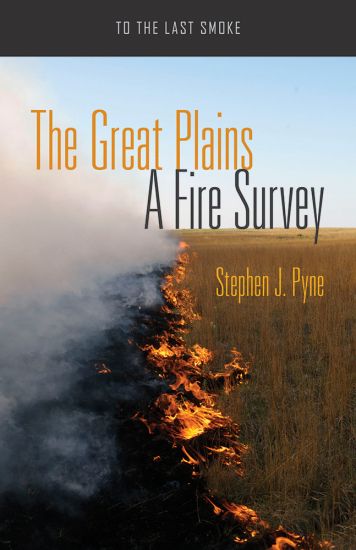
Early descriptions of the Great Plains often focus on a vast, grassy expanse that was either burnt or burning. The scene continued to burn until the land was plowed under or grazed away and broken by innumerable roads and towns. Yet, where the original landscape has persisted, so has fire, and where people have sought to restore something of that original setting, they have had to reinstate fire. This has required the persistence or creation of a fire culture, which in turn inspired schools of science and art that make the Great Plains today a regional hearth for American fire. Volume 5 of To the Last Smoke introduces a region that once lay at the geographic heart of American fire and today promises to reclaim something of that heritage. After all these years, the Great Plains continue to bear witness to how fires can shape contemporary life, and vice versa. In this collection of essays, Stephen J. Pyne explores how this once most regularly and widely burned province of North America, composed of various sub-regions and peoples, has been shaped by the flames contained within it and what fire, both tame and feral, might mean for the future of its landscapes. Included in this volume:How wildland and rural fire have changed from the 19th century to the 21st centuryHow fire is managed in the nation’s historic tallgrass prairies, from Texas to South Dakota, from Illinois to NebraskaHow fire connects with other themes of Great Plains life and cultureHow and why Texas has returned to the national narrative of landscape fire
The Southwest

The Southwest

Stephen J. Pyne

University of Arizona Press
2016
nidottu
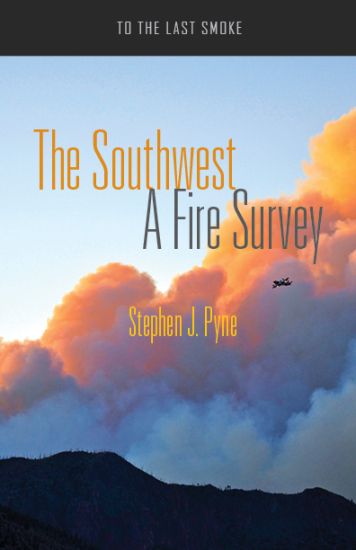
With its scattered mountains and high rims, its dry air and summer lightning, its rising tier of biomes from desert grasses to alpine conifers, and its aggressive exurban sprawl, something in The Southwest is ready to burn each year and some high-value assets seem ever in their path. But the past 20 years have witnessed an uptake in savagery, as routine surface burns have mutated into megafires and overrun nearly a quarter of the region’s forests. What happened, and what does it mean for the rest of the country? Through a mixture of journalism, history, and literary imagination, fire expert Stephen J. Pyne provides a lively survey of what makes this region distinctive, moving us beyond the usual conversations of science and policy. Pyne explores The Southwest’s sacred mountains, including the Jemez, Mogollon, Huachucas, and Kaibab; its sky islands, among them the Chiricahuas, Mount Graham, and Tanque Verde; and its famous rims and borders. Together, the essays provide a cross-section of how landscape fire looks in the early years of the 21st century, what is being done to manage it, and how fire connects with other themes of southwestern life and culture.
The Northern Rockies

The Northern Rockies

Stephen J. Pyne

University of Arizona Press
2016
nidottu
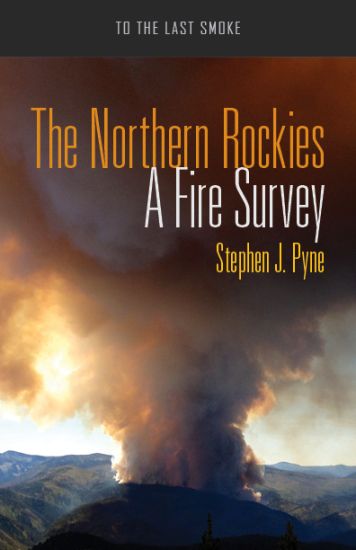
It’s a place of big skies and big fires, big burns like those of 1910 and 1988 that riveted national attention. Conflagrations like those of 1934 and 2007 that reformed national policy. Blowups like that in Mann Gulch that shaped the literature of American fire. Big fires mostly hidden in the backcountry like the Fitz Creek and Howler fires that inspired the practice of managed wildfires. Until the fire revolution of the 1960s, no region so shaped the American way of fire. The Northern Rockies remain one of three major hearths for America’s fire culture. They hold a major fire laboratory, an equipment development center, an aerial fire depot, and a social engagement with fire—even a literature. Missoula is to fire in the big backcountry what Tallahassee is to prescribed burning and what Southern California is to urban-wildland hybrids. On its margins, Boise hosts the National Interagency Fire Center. In this structured collection of essays on the region, Stephen J. Pyne explores what makes The Northern Rockies distinctive and what sets it apart from other regions of the country. Surprisingly, perhaps, the story is equally one of big bureaucracies and of generations that encounter the region’s majestic landscapes through flame.
Florida

Florida

Stephen J. Pyne

University of Arizona Press
2016
nidottu
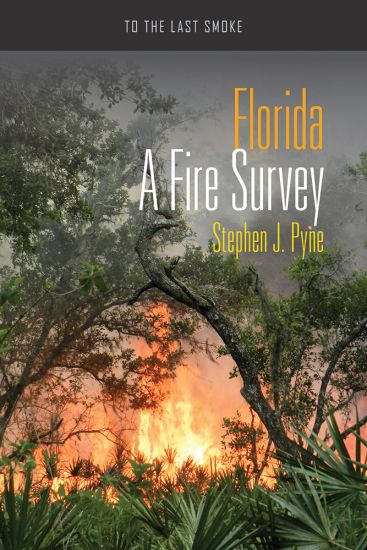
In Florida, fire season is plural, and it is most often a verb. Something can always burn. Fires burn longleaf, slash, and sand pine. They burn wiregrass, sawgrass, and palmetto. The lush growth, the dry winters, the widely cast sparks—Florida is built to burn. In this important new collection of essays on the region, Stephen J. Pyne colorfully explores the ways the region has approached fire management. Florida has long resisted national models of fire suppression in favor of prescribed burning, for which it has ideal environmental conditions and a robust culture. Out of this heritage the fire community has created institutions to match. The Tallahassee region became the ignition point for the national fire revolution of the 1960s. Today, it remains the Silicon Valley of prescription burning. How and why this happened is the topic of a fire reconnaissance that begins in the panhandle and follows Floridian fire south to the Everglades. Florida is the first book in a multivolume series describing the nation's fire scene region by region. The volumes in To the Last Smoke will also cover California, the Northern Rockies, the Great Plains, the Southwest, and several other critical fire regions. The series serves as an important punctuation point to Pyne's fifty-year career with wildland fire—both as a firefighter and a fire scholar. These unique surveys of regional pyrogeography are Pyne's way of ""keeping with it to the end,"" encompassing the directive from his rookie season to stay with every fire ""to the last smoke.
California

California

Stephen J. Pyne

University of Arizona Press
2016
nidottu
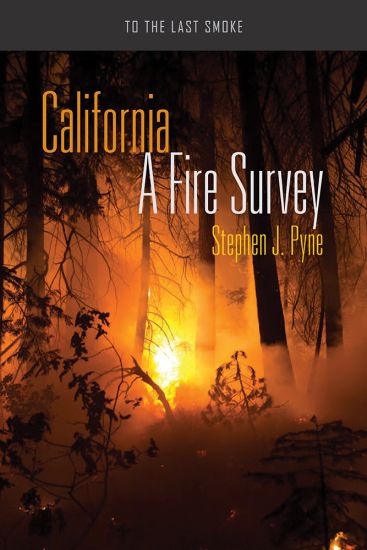
The coastal sage and shrublands of California burn. The mountain-encrusting chaparral burns. The conifer forests of the Sierra Nevada, Cascades, and Trinity Alps burn. The rain-shadowed deserts after watering by El Niño cloudbursts and the thick forests of the rumpled Coast Range—all burn according to local rhythms of wetting and drying. Fire season, so the saying goes, lasts 13 months. In this collection of essays on the region, Stephen J. Pyne colorfully explores the ways the region has approached fire management and what sets it apart from other parts of the country. Pyne writes that what makes California's fire scene unique is how its dramatically distinctive biomes have been yoked to a common system, ultimately committed to suppression, and how its fires burn with a character and on a scale commensurate with the state's size and political power. California has not only a ferocity of flame but a cultural intensity that few places can match. California's fires are instantly and hugely broadcast. They shape national institutions, and they have repeatedly defined the discourse of fire's history. No other place has so sculpted the American way of fire. California is part of the multivolume series describing the nation's fire scene region by region. The volumes in To the Last Smoke also cover Florida, the Northern Rockies, the Great Plains, the Southwest, and several other critical fire regions. The series serves as an important punctuation point to Pyne's fifty-year career with wildland fire—both as a firefighter and a fire scholar. These unique surveys of regional pyrogeography are Pyne's way of ""keeping with it to the end,"" encompassing the directive from his rookie season to stay with every fire ""to the last smoke.
Between Two Fires

Between Two Fires

Stephen J. Pyne

University of Arizona Press
2015
nidottu
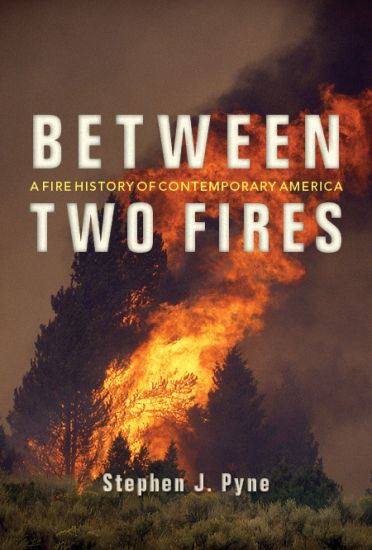
From a fire policy of prevention at all costs to today's restored burning, Between Two Fires is America's history channeled through the story of wildland fire management. Stephen J. Pyne tells of a fire revolution that began in the 1960s as simple suppression and then was replaced with more enlightened programs of fire management. It then explains the counterrevolution in the 1980s that stalled the movement, and finally describes the fire scene that has evolved since then. Pyne is uniquely qualified to tell America's fire story. The author of more than a score of books, he has told fire's history in the United States, Australia, Canada, Europe, and the Earth overall. In his earlier life, he spent fifteen seasons with the North Rim Longshots at Grand Canyon National Park. In Between Two Fires, Pyne recounts how, after the Great Fires of 1910, a policy of fire suppression spread from America's founding corps of foresters into a national policy that manifested itself as a costly all-out war on fire. After fifty years of attempted fire suppression, a revolution in thinking led to a more pluralistic strategy for fire's restoration. The revolution succeeded in displacing suppression as a sole strategy, but it has failed to fully integrate fire and land management and has fallen short of its goals. Today, the nation's backcountry and increasingly its exurban fringe are threatened by larger and more damaging burns, fire agencies are scrambling for funds, firefighters continue to die, and the country seems unable to come to grips with the fundamentals behind a rising tide of megafires. Pyne has once again constructed a history of record that will shape our next century of fire management. Between Two Fires is a story of ideas, institutions, and fires . It's Americas story told through thenation's flames.
The Last Lost World: Ice Ages, Human Origins, and the Invention of the Pleistocene
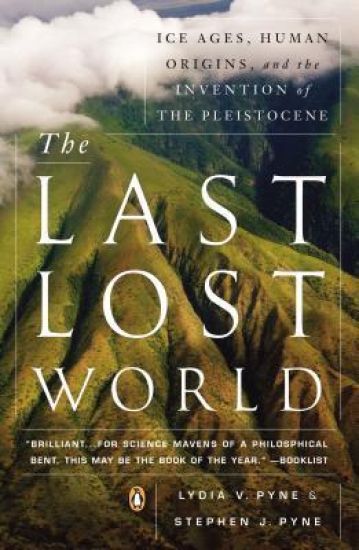
An enthralling scientific and cultural exploration of the Ice Age from the author of How the Canyon Became GrandFrom a remarkable father-daughter team comes a dramatic synthesis of science and environmental history an exploration of the geologic time scale and evolution twinned with the story of how, eventually, we have come to understand our own past. The Pleistocene is the epoch of geologic time closest to our own. The Last Lost World is an inquiry into the conditions that made it, the themes that define it, and the creature that emerged dominant from it. At the same time, it tells the story of how we came to discover and understand this crucial period in the Earth s history and what meanings it has for today."
Reconstructing the View

Reconstructing the View

Rebecca A. Senf; Stephen J. Pyne

University of California Press
2012
sidottu
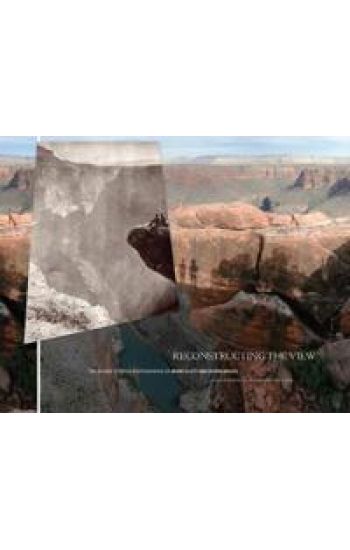
Using landscape photography to reflect on broader notions of culture, the passage of time, and the construction of perception, photographers Mark Klett and Byron Wolfe spent five years exploring the Grand Canyon for their most recent project, "Reconstructing the View". The team's landscape photographs are based on the practice of rephotography, in which they identify sites of historic photographs and make new photographs of those precise locations. Klett and Wolfe referenced a wealth of images of the canyon, ranging from historical photographs and drawings by William Bell and William Henry Holmes, to well-known artworks by Edward Weston and Ansel Adams, and from souvenir postcards to contemporary digital images drawn from Flickr. The pair then employed digital postproduction methods to bring the original images into dialogue with their own. The result is this stunning volume, illustrated with a wealth of full-color illustrations that attest to the role photographers - both anonymous and great - have played in picturing American places. Rebecca Senf's compelling essay traces the photographers' process and methodology, conveying the complexity of their collaboration. Stephen J. Pyne provides a conceptual framework for understanding the history of the canyon, offering an overview of its discovery by Europeans and its subsequent treatment in writing, photography, and graphic arts.
Voice and Vision

Voice and Vision

Stephen J. Pyne

Harvard University Press
2011
nidottu
It has become commonplace these days to speak of “unpacking” texts. Voice and Vision is a book about packing that prose in the first place. While history is scholarship, it is also art—that is, literature. And while it has no need to emulate fiction, slump into memoir, or become self-referential text, its composition does need to be conscious and informed. Voice and Vision is for those who wish to understand the ways in which literary considerations can enhance nonfiction writing. At issue is not whether writing is scholarly or popular, narrative or analytical, but whether it is good. Fiction has guidebooks galore; journalism has shelves stocked with manuals; certain hybrids such as creative nonfiction and the new journalism have evolved standards, esthetics, and justifications for how to transfer the dominant modes of fiction to topics in nonfiction. But history and other serious or scholarly nonfiction have nothing comparable. Now this curious omission is addressed by Stephen Pyne as he analyzes and teaches the craft that undergirds whole realms of nonfiction and book-based academic disciplines. With eminent good sense concerning the unique problems posed by research-based writing and with a wealth of examples from accomplished writers, Pyne, an experienced and skilled writer himself, explores the many ways to understand what makes good nonfiction, and explains how to achieve it. His counsel and guidance will be invaluable to experts as well as novices in the art of writing serious and scholarly nonfiction.
Awful Splendour

Awful Splendour

Stephen J. Pyne

University of British Columbia Press
2008
pokkari
Fire is a defining element in Canadian land and life. With few exceptions, Canada's forests and prairies have evolved with fire. Its peoples have exploited fire and sought to protect themselves from its excesses, and since Confederation, the country has devised various institutions to connect fire and society. The choices Canadians have made says a great deal about their national character. Awful Splendour narrates the history of this grand saga. It will interest geographers, historians, and members of the fire community.
Awful Splendour

Awful Splendour

Stephen J. Pyne

University of British Columbia Press
2007
sidottu
Fire is a defining element in Canadian land and life. With few exceptions, Canada's forests and prairies have evolved with fire. Its peoples have exploited fire and sought to protect themselves from its excesses, and since Confederation, the country has devised various institutions to connect fire and society. The choices Canadians have made says a great deal about their national character. Awful Splendour narrates the history of this grand saga. It will interest geographers, historians, and members of the fire community.
Grove Karl Gilbert

Grove Karl Gilbert

Stephen J. Pyne

University of Iowa Press
2007
nidottu
The life of Grove Karl Gilbert, first chief geologist of the U. S. Geological Survey, spanned the heroic age of American geology during the time that this young earth science was being intellectually and institutionally defined. By the time of Gilbert's death in 1918 at age seventy-five, geology ranked as one of the outstanding traditions in American science, with a magnificent history of exploration. As Stephen Pyne reveals in his biography, few other scientists can match Gilbert's range of talents. A premier explorer of the American West who made major contributions to the cascade of new discoveries about the earth, Gilbert described two novel forms of mountain building, invented the concept of the graded stream, inaugurated modern theories of lunar origin, helped found the science of geomorphology, and added to the canon of conservation literature. Gilbert knew most of geology's grand figures - including John Wesley Powell, Clarence Dutton, and Clarence King - and Pyne's chronicle of the imperturbable, quietly unconventional Gilbert is counterpointed with sketches of these prominent scientists. The man who wrote that ""happiness is sitting under a tent with walls uplifted, just after a brief shower,"" created answers to the larger questions of the earth in ways that have become classics of his science. Stephen Pyne's clear explication of these scientific complexities and attention to the idiosyncratic details that make up a life form a compelling biography of America's greatest geologist.
Smokechasing

Smokechasing

Stephen J. Pyne

University of Arizona Press
2003
nidottu
Painting, architecture, politics, even gardening and golf&#151all have their critics and commentators, observes Stephen Pyne. ""Fire does not."" Aside from news reports on fire disasters, most writing about fire appears in government reports and scientific papers and in journalism that has more in common with the sports page than the editorial page. Smokechasing presents commentaries by one of America's leading fire scholars, who analyzes fire the way another might an election campaign or a literary work. ""Smokechasing"" is an American coinage describing the practice of sending firefighters into the wild to track down the source of reported smoke. Now a self-described ""friendly fire critic"" tracks down more of the history and lore of fire in a collection that focuses on wildland fire and its management. Building on and complementing a previous anthology, World Fire, this new collection features thirty-two original articles and substantial revisions of works that have previously appeared in print. Pyne addresses many issues that have sparked public concern in the wake of disastrous wildfires in the West, such as fire ecology, federal fire management, and questions relating to fire suppression. He observes that the mistake in fire policy has been not that wildfires are suppressed but that controlled fires are no longer ignited; yet the attempted forced reintroduction of fire through prescribed burning has proved difficult, and sometimes damaging. There are, Pyne argues, many fire problems; some have technical solutions, some not. But there is no evading humanity's unique power and responsibility: what we don't do may be as ecologically powerful as what we do. Throughout the collection, Pyne makes it clear that humans and fire interact at particular places and times to profoundly shape the world, and that understanding the contexts in which fire occurs can tell us much about the world's natural and cultural landscapes. Fire's context gives it its meaning, and Smokechasing not only helps illuminate those contexts but also shows us how to devise new contexts for tomorrow's fires.
Vestal Fire

Vestal Fire

Stephen J. Pyne

University of Washington Press
2000
pokkari
Stephen Pyne has been described as having a consciousness "composed of equal parts historian, ecologist, philosopher, critic, poet, and sociologist." At this time in history when many people are trying to understand their true relationship with the natural environment, this book offers a remarkable contribution--breathtaking in the scope of its research and exhilarating to read. Pyne takes the reader on a journey through time, exploring the terrain of Europe and the uses and abuses of its lands as well as, through migration and conquest, many parts of the rest of the world. Whether he is discussing the Mediterranean region, Russia, Scandinavia, the British Isles, central Europe, or colonized islands; whether he is considering the impact of agriculture, forestry, or Enlightenment thinking, the author brings an unmatched insight to his subject. Vestal Fire takes its title from Vesta, Roman goddess of the hearth and keeper of the sacred fire on Mount Olympus. But the book's title also suggests the strengths and limitations of Europe's peculiar conception of fire, and through fire, of its relationship to nature. Between the untamed fire of the wilderness and the tended fire of the hearth lies a never-ending dialectic in which human beings struggle to control natural forces and processes that in fact can sometimes be directed but never wholly dominated or contained.
How the Canyon Became Grand

How the Canyon Became Grand

Stephen J. Pyne

Penguin Putnam Inc
1999
pokkari
Dismissed by the first Spanish explorers as a wasteland, the Grand Canyon lay virtually unnoticed for three centuries until nineteenth- century America rediscovered it and seized it as a national emblem. This extraordinary work of intellectual and environmental history tells two tales of the Canyon: the discovery and exploration of the physical Canyon and the invention and evolution of the cultural Canyon--how we learned to endow it with mythic significance. Acclaimed historian Stephen Pyne examines the major shifts in Western attitudes toward nature, and recounts the achievements of explorers, geologists, artists, and writers, from John Wesley Powell to Wallace Stegner, and how they transformed the Canyon into a fixture of national identity. This groundbreaking book takes us on a completely original journey through the Canyon toward a new understanding of its niche in the American psyche, a journey that mirrors the making of the nation itself.
Burning Bush

Burning Bush

Stephen J. Pyne

University of Washington Press
1998
pokkari
Pyne traces the impact of fire in Australia, from its influence on vegetation to its use by Aborigines and European settlers." Mr. Pyne, showing what a historian deeply schooled in environmental science can contribute to our awareness of nature and culture, has produced a provocative work that is a major contribution to the literature of environmental studies."—New York Times Book Review