Kirjailija
Stephen Jay Gould
Kirjat ja teokset yhdessä paikassa: 31 kirjaa, julkaisuja vuosilta 1982–2007, suosituimpiin kuuluu An Urchin in the Storm. Vertaile teosten hintoja ja tarkista saatavuus suomalaisista kirjakaupoista.
31 kirjaa
Kirjojen julkaisuvuodet: 1982–2007.
Stephen Jay Gould's writings on history - both of the natural world and of the study of that natural world - had made him a household name by the time of his death in 2002. This work contains a selection of Gould's writing, including some of the most famous of his essays and extracts from his major books.
In 1972 Stephen Jay Gould took the scientific world by storm with his paper on punctuated equilibrium, written with Niles Eldredge. Challenging a core assumption of Darwin's theory of evolution, it launched the career of one of the most influential evolutionary biologists of our time--perhaps the best known since Darwin. Now, thirty-five years later, and five years after his untimely death, Punctuated Equilibrium (originally published as the central chapter of Gould's masterwork, The Structure of Evolutionary Theory) offers his only book-length testament on an idea he fiercely promoted, repeatedly refined, and tirelessly defended. Punctuated equilibrium holds that the great majority of species originate in geological moments (punctuations) and persist in stasis. The idea was hotly debated because it forced biologists to rethink entrenched ideas about evolutionary patterns and processes. But as Gould shows here in his typically exhaustive coverage, the idea has become the foundation of a new view of hierarchical selection and macroevolution. What emerges strikingly from this book is that punctuated equilibrium represents a much broader paradigm about the nature of change--a worldview that may be judged as a distinctive and important movement within recent intellectual history. Indeed we may now be living within a punctuation, and our awareness of what this means may be the enduring legacy of one of America's best-loved scientists.
For millennia the animals that populated the earth had four toes on each foot, or six. If evolution had taken a tiny shift - if our ancestors had inherited a couple of genes in a different form - our canonical number, based on our fingers and toes, might be eight instead of ten. This book deploys this, which is one of the oddities of history.
Science meets sport in this vibrant collection of baseball essays by the late evolutionary biologist. Among Stephen Jay Gould's many gifts was his ability to write eloquently about baseball, his great passion. Through the years, the renowned paleontologist published numerous essays on the sport; these have now been collected in a volume alive with the candor and insight that characterized all of Gould's writing. Here are his thoughts on the complexities of childhood streetball and the joys of opening day; tributes to Mickey Mantle, Babe Ruth, and lesser-knowns such as deaf-mute centerfielder "Dummy" Hoy; and a frank admission of the contradictions inherent in being a lifelong Yankees fan with Red Sox season tickets. Gould also deftly applies the tools of evolutionary theory to the demise of the .400 hitter, the Abner Doubleday creation myth, and the improbability of Joe DiMaggio's 56-game hitting streak. This book is a delight, an essential addition to Gould's remarkable legacy, and a fitting tribute to his love for the game.
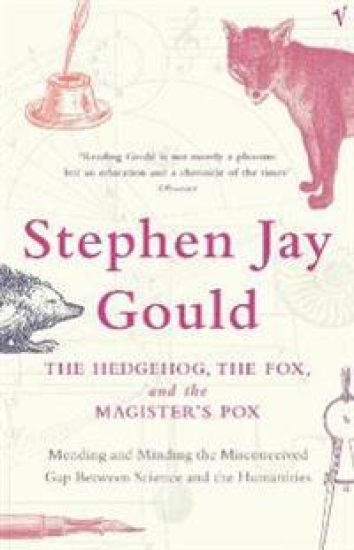
This title, completed shortly before the author's death, uses the centuries-old conflict between science and the humanities - between the notion of relying solely on experiment and that of reason and imagination - to delve into burning scientific issues of the past and present.
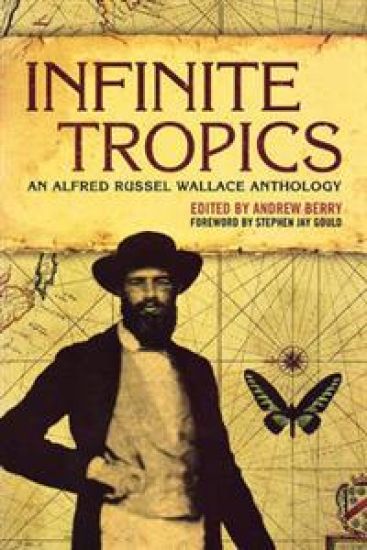
Alfred Russel Wallace's reputation has been based on the fact that, at age thirty-five and stricken with malaria in the Moluccan Islands, he stumbled independently upon on the theory of natural selection. Andrew Berry's anthology rescue's Wallace's legacy, showing Wallace to be far more than just the co-discoverer of natural selection. Wallace was a brilliant and wide-ranging scientist, a passionate social reformer and a gifted writer. The eloquence that has made his The Malay Archipelago a classic of travel writing is a prominent feature too of his extraordinarily forward-thinking writing on socialism, imperialism and pacifism. Wallace's opinions on women's suffrage, on land reform, on the roles of the church and aristocracy in a parliamentary democracy, on publicly funded education-to name a few of the issues he addressed-remain as fresh and as topical today as they were when they were written.
Stephen Jay Gould's writing remains the modern standard by which popular science writing is judged. Throughout his work Gould has developed a distinctive and personal form of essay to treat great scientific issues in the context of biography.
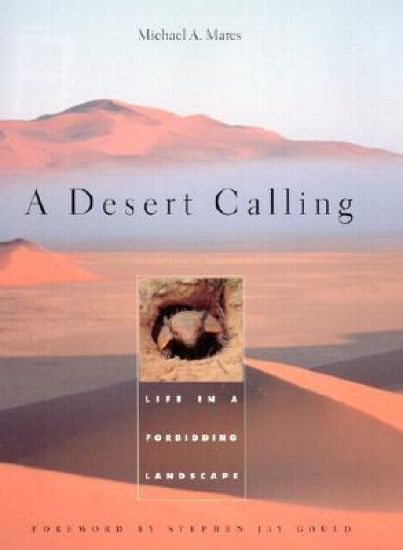
For most of us the word "desert" conjures up images of barren wasteland, vast, dry stretches inimical to life. But for a great array of creatures, perhaps even more plentiful than those who inhabit tropical rainforests, the desert is a haven and a home. Travel with Michael Mares into the deserts of Argentina, Iran, Egypt, and the American Southwest and you will encounter a rich and memorable variety of these small, tenacious animals, many of them first discovered by Mares in areas never before studied. Accompanying Mares on his forays into these hostile habitats, we observe the remarkable behavioral, physiological, and ecological adaptations that have allowed such little-known species of rodents, bats, and other small mammals to persist in an arid world. At the same time, we see firsthand the perils and pitfalls that await biologists who venture into the field to investigate new habitats, discover new species, and add to our knowledge of the diversity of life. Filled with the seductions and trials that such adventures entail, A Desert Calling affords an intimate understanding of the biologist's vocation. As he astonishes us with the range and variety of knowledge to be acquired through the determined investigation of little-known habitats, Mares opens a window on his own uncommon life, as well as on the uncommon life of the remote and mysterious corners of our planet.
The world's most revered and eloquent interpreter of evolutionary ideas offers here a work of explanatory force unprecedented in our time--a landmark publication, both for its historical sweep and for its scientific vision. With characteristic attention to detail, Stephen Jay Gould first describes the content and discusses the history and origins of the three core commitments of classical Darwinism: that natural selection works on organisms, not genes or species; that it is almost exclusively the mechanism of adaptive evolutionary change; and that these changes are incremental, not drastic. Next, he examines the three critiques that currently challenge this classic Darwinian edifice: that selection operates on multiple levels, from the gene to the group; that evolution proceeds by a variety of mechanisms, not just natural selection; and that causes operating at broader scales, including catastrophes, have figured prominently in the course of evolution. Then, in a stunning tour de force that will likely stimulate discussion and debate for decades, Gould proposes his own system for integrating these classical commitments and contemporary critiques into a new structure of evolutionary thought. In 2001 the Library of Congress named Stephen Jay Gould one of America's eighty-three Living Legends--people who embody the "quintessentially American ideal of individual creativity, conviction, dedication, and exuberance." Each of these qualities finds full expression in this peerless work, the likes of which the scientific world has not seen--and may not see again--for well over a century.
In elaborating and exploring his thought-provoking concept, Gould delves into the history of science with stories of figures as Galileo and Darwin, and concludes that science defines the natural world, and religion our moral world.
Rocks of Ages: Science and Religion in the Fullness of Life
Stephen Jay Gould
Ballantine Books
2002
nidottu
Writing with bracing intelligence and clarity, internationally renowned evolutionist and bestselling author Stephen Jay Gould sheds new light on a dilemma that has plagued thinking people since the Renaissance: the rift between science and religion. Instead of choosing them, Gould asks, why not opt for a golden mean that accords dignity and distinction to each realm? In his distinctively elegant style, Gould offers a lucid, contemporary principle that allows science and religion to coexist peacefully in a position of respectful noninterference. Science defines the natural world; religion our moral world in recognition of their separate spheres of influence. In exploring this thought-provoking concept, Gould delves into the history of science, sketching affecting portraits of scientists and moral leaders wrestling with matters of faith and reason. Stories of seminal figures such as Galileo, Darwin, and Thomas Henry Huxley make vivid his argument that individuals and cultures must cultivate both a life of the spirit and a life of rational inquiry in order to experience the fullness of being human. In Rocks of Ages, Gould's passionate humanism, ethical discernment, and erudition are fused to create a dazzling gem of contemporary cultural philosophy.
In this new collection of essays, Gould has once again applied biographical perspectives to the illumination of key scientific concepts and their history, ranging from the origins of palaeontology to modern eugenics and genetic engineering.
In this book Stephen Jay Gould explores what the Burgess Shale might tell us about evolution and the nature of history. The Darwinian theory of evolution is a well-known, well-explored area.
Stephen Jay Gould examines the phenomenon of the millennium. He looks at the origins of the term in the Biblical prophecies of the Book of Revelation - if the six ages of man date from 4000BC, will 2000AD signify the end of time? Gould describes how the meaning of the word has evolved to its present day usage and tackles the debate over whether the millennium ends in 1999 or at the end of 2000AD. He also questions the human compulsion to impose our time-schemes on the universe and wonders how far can we go in applying our mathematical principles to nature. Existing methods of calculating time are all flawed to some extent and yet the complexities of lunar months, leap years, and the calculation of dates such as Easter, are part and parcel of our fascination with calendrics as both a hobby and an occupation.
In his characteristically iconoclastic and original way, Stephen Jay Gould argues that progress and increasing complexity are not inevitable features of the evolution of life on Earth.
Exposes the fatal flaws in the ranking of people according to their supposed gifts and limits by discussing the development of the theory of limits and by reanalyzing the data on which it is based
The Strange Case of the Spotted Mice and Other Classic Essays on Science
Peter Medawar; Stephen Jay Gould
Oxford University Press
1996
nidottu
Sir Peter Medawar was not only a Nobel prize-winning immunologist but also a wonderful writer about science and scientists. Described by the Washington Post as a `genuinely brilliant popularizer' of science, his essays are remarkable for their clarity and wit. This entertaining selection presents the very best of his writing with a new Foreword by Stephen Jay Gould, one of his greatest admirers. The wide range of subjects include Howard Florey and penicillin, J. B. S. Haldane, whom he describes as a `with-knobs-on variant of us all', and, in the title essay, scientific fraud involving laboratory mice. There is Medawar's defence of James Watson against the storm of criticism that greeted the publication of The Double Helix. A merciless debunker of myths, he reveals the nonsense to be discovered in psychoanalytic interpretations of Darwin's illness and launches devastating attacks on Arthur Koestler, IQ psychologists, and, most notably, Teilhard de Chardin. He raises questions about the nature of scientific endeavour - he famously defined science as the art of the soluble - and a common theme is his desire to communicate the importance of science to the widest possible audience.
Over a century after Darwin published the Origin of Species, Darwinian theory is in a "vibrantly healthy state," writes Stephen Jay Gould, its most engaging and illuminating exponent. Exploring the "peculiar and mysterious particulars of nature," Gould introduces the reader to some of the many and wonderful manifestations of evolutionary biology.
If Stephen Jay Gould did not exist it would hardly be possible to invent him. Who else among scientists who write reaches so far or grasps so surely the "pretty pebbles" that together make up the amplitude of life? Eight Little Piggies is the sixth volume in a series of essays, begun in 1974 in the pages of Natural History under the rubric "This View of Life." Now numbering more than 200 in an unbroken string, they comprise a unique achievement in the annals of literature. And they will continue, vows the author, until the millennium, in January 2001. So Stephen Jay Gould's readers, numbering in the millions around the world, have not only this present pleasure but also much to look forward to. Eight Little Piggies is a special book in several ways. In all of Gould's work, this is the most contemplative and personal, speaking often of the importance of unbroken connections within our own lives and to our ancestral generations, "a theme of supreme importance to evolutionists who study a world in which extinction is the ultimate fate of all and prolonged persistence the only meaningful measure of success." This personal view leads naturally to an area that has become, for Gould, of major importance - environmental deterioration and the massive extinction of species on our present earth. He chooses, typically, unusual and telling examples: the demise of the land snail Partula from Moorea (the Bali Hai of South Pacific) and why the battle that raged over the Mount Graham red squirrel of Arizona was worth fighting. There are, in addition, more than thirty of those pretty pebbles that make Gould's work unique, opening to us the mysteries of fish tails and frog calls, of the coloration ofpigeons and the eye tissue of completely bind mole rats. Along the way, we learn what story lies behind the bent tail of an ichthyosaur and how hearing bones evolved and how, probably, we with our five fingers and toes (subject of the title essay) evolved from ancestors that had six

With sales of well over one million copies in North America alone, the commercial success of Gould's books now matches their critical acclaim. The Panda's Thumb will introduce a new generation of readers to this unique writer, who has taken the art of the scientific essay to new heights. Were dinosaurs really dumber than lizards? Why, after all, are roughly the same number of men and women born into the world? What led the famous Dr. Down to his theory of mongolism, and its racist residue? What do the panda's magical "thumb" and the sea turtle's perilous migration tell us about imperfections that prove the evolutionary rule? The wonders and mysteries of evolutionary biology are elegantly explored in these and other essays by the celebrated natural history writer Stephen Jay Gould.