Kirjojen hintavertailu – 12 903 725 kirjaa ja 27 kauppaa

Kirjailija

Stephen Kern

Kirjat ja teokset yhdessä paikassa: 13 kirjaa, julkaisuja vuosilta 1996–2026, suosituimpiin kuuluu Hilma af Klint: The art of seeing the invisible. Vertaile teosten hintoja ja tarkista saatavuus suomalaisista kirjakaupoista.

13 kirjaa

Kirjojen julkaisuvuodet: 1996–2026.

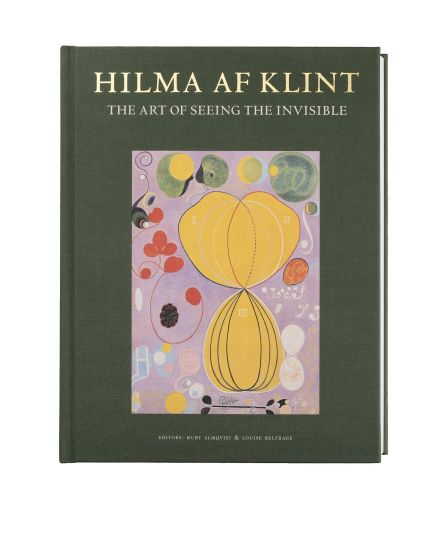
Hilma af Klint: The art of seeing the invisible

Hilma af Klint: The art of seeing the invisible

Briony Fer; Stephen Kern; Wouter J. Hanegraff; Helmut Zander; Raphael Rosenberg; Marco Pasi; Christoph Wagner; Marty Bax; Tessel M. Bauduin; Victoria Ferentinou; Iris Müller-Westermann

Stolpe Publishing
2021
sidottu

Halvin toimitettuna 37,70 €

In this thorough critical appraisal, 20 specialists on modern art, art history, philosophy and religious studies examine the unique art, the cultural circumstances and art-historical positioning of Swedish abstractionist Hilma af Klint. Topics explored range from early abstract art and the impact of Darwinism to Goethe’s colour theory, as well as the importance of occult religious movements such as theosophy and anthroposophy that influenced the early modernists, and discussions of af Klint’s own personal diary notes and research. The book is based on the seminars that were held in conjunction with the exhibition Hilma af Klint: A Pioneer of Abstraction in 2013. This extremely successful exhibition attracted a record number of visitors to the Moderna Museet in Stockholm, after which it continued to the Hamburger Bahnhof Museum in Berlin and the Louisiana Museum of Modern Art in Denmark.

Origins and Foundations in the Modernist Age

Origins and Foundations in the Modernist Age

Stephen Kern

EDINBURGH UNIVERSITY PRESS
2026
nidottu
In contrast to recent modernist studies that find evidence of modernism well before and after the period from 1890 to 1930, Stephen Kern concentrates on these key forty years to examine two fundamental ideas: origins and foundations. Analysing this period of exceptional cultural achievement in a wide range of fields including physics, cosmology, geology, biology, anthropology, psychology, psychiatry, philosophy, religion, literature and art, Kern contrasts the achievements of the modernist period, from 1890 to 1930, against the background of the Victorian period. Origins and Foundations in the Modernist Age surveys historically distinctive ideas about chronological origins as well as theoretical, ontological, functional and formal foundations and argues that modernists probed deeper into origins and foundations than the Victorians, especially in the physical and social sciences, and developed distinctive new foundational techniques in literature and art.
Origins and Foundations in the Modernist Age

Origins and Foundations in the Modernist Age

Stephen Kern

EDINBURGH UNIVERSITY PRESS
2026
sidottu
In contrast to recent modernist studies that find evidence of modernism well before and after the period from 1890 to 1930, Stephen Kern concentrates on these key forty years to examine two fundamental ideas: origins and foundations. Analysing this period of exceptional cultural achievement in a wide range of fields including physics, cosmology, geology, biology, anthropology, psychology, psychiatry, philosophy, religion, literature and art, Kern contrasts the achievements of the modernist period, from 1890 to 1930, against the background of the Victorian period. Origins and Foundations in the Modernist Age surveys historically distinctive ideas about chronological origins as well as theoretical, ontological, functional and formal foundations and argues that modernists probed deeper into origins and foundations than the Victorians, especially in the physical and social sciences, and developed distinctive new foundational techniques in literature and art.
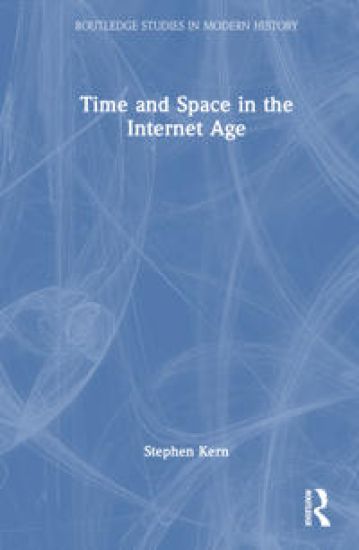
Time and Space in the Internet Age

Time and Space in the Internet Age

Stephen Kern

TAYLOR FRANCIS LTD
2024
sidottu
This book analyzes how new technologies transformed life and thought between two periods, 1880-1920 and 1980-2020, with a focus on temporal experiences of past, present, future and the spatial experiences of form, distance, and direction. The signature contrast is between experiences of time and space transformed by the telephone in the earlier period and the Internet in the later period along with other sharp contrasts: the sinking of the Lusitania in 1915 and the attack on the World Trade Center on 9/11, World War I and the Gulf Wars, gravity bombs and smart bombs, the pandemics of 1918 and 2020, assembly lines and flexible production, Farmer’s Almanacs and computer-based weather predictions, cash transactions and one-click ordering, decolonization and globalization, internationalism and planetarity. The book also makes three interpretive arguments: the Epistemological Argument covers how greater knowledge introduced uncertainties; the Ethical Argument tracks how new technologies prompted ethical judgments about their value; and the Re-hierarchizing Argument tracks the erosion of spatial hierarchies most notably in religion, society, and politics with the increasing progress of secularization, social mobility, and democratization. Time and Space in the Internet Age is a thought-provoking study for academics and general readers interested in the history of technology and science.
Time and Space in the Internet Age

Time and Space in the Internet Age

Stephen Kern

TAYLOR FRANCIS LTD
2024
nidottu
This book analyzes how new technologies transformed life and thought between two periods, 1880-1920 and 1980-2020, with a focus on temporal experiences of past, present, future and the spatial experiences of form, distance, and direction. The signature contrast is between experiences of time and space transformed by the telephone in the earlier period and the Internet in the later period along with other sharp contrasts: the sinking of the Lusitania in 1915 and the attack on the World Trade Center on 9/11, World War I and the Gulf Wars, gravity bombs and smart bombs, the pandemics of 1918 and 2020, assembly lines and flexible production, Farmer’s Almanacs and computer-based weather predictions, cash transactions and one-click ordering, decolonization and globalization, internationalism and planetarity. The book also makes three interpretive arguments: the Epistemological Argument covers how greater knowledge introduced uncertainties; the Ethical Argument tracks how new technologies prompted ethical judgments about their value; and the Re-hierarchizing Argument tracks the erosion of spatial hierarchies most notably in religion, society, and politics with the increasing progress of secularization, social mobility, and democratization. Time and Space in the Internet Age is a thought-provoking study for academics and general readers interested in the history of technology and science.
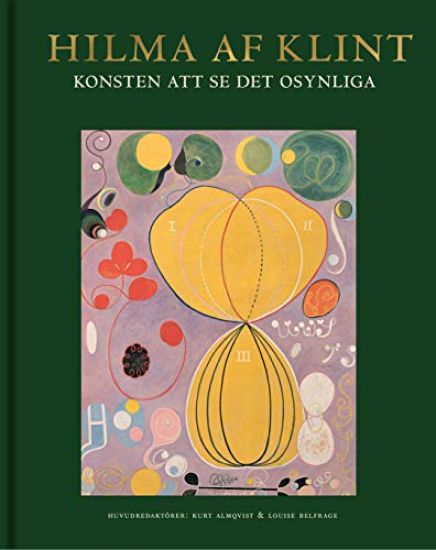
Hilma af Klint : konsten att se det osynliga

Hilma af Klint : konsten att se det osynliga

Kurt Almqvist; Daniel Birnbaum; Tessel M. Baudin; Briony Fer; Wouter J. Hanegraaff; Stephen Kern; Gary Lachman; Marco Pasi; Gertrud Sandqvist; Helmut Zander

Bokförlaget Stolpe
2020
sidottu
I den mest uttömmande boken om Hilma af Klint som hittills getts ut, skriver 20 specialister inom modern konst, konsthistoria, idéhistoria och religionshistoria utifrån sin unika utgångspunkt och ger sin syn på af Klints konstnärskap. Ämnena rör sig från tidig abstrakt konst och inflytandet av Darwin och Goethes färglära till betydelsen av ockulta religiösa rörelser som teosofi och antroposofi, som även influerade de tidiga modernisterna. Här finns också inslag från Hilma af Klints personliga anteckningar och efterforskningar. Boken baseras på det seminarium som hölls i samband med den häpnadsväckande framgångsrika utställningen Hilma af Klint A Pioneer of Abstraction på Moderna Museet i Stockholm 2013. Detta är en nyutgåva som innehåller ett nyskrivet bidrag av Kurt Almqvist, Hilma af Klints hemliga lära, budskap och livsåskådning, utifrån tidigare ej nyttjat källmaterial. Det bearbetar en del av historien som tidigare inte behandlats närmare: bakgrunden till Hilma af Klints lära och livsåskådning, samt utvecklingen efter hennes död 1944 och fram till bildandet av Stiftelsen Hilma af Klints verk 1972, och om den ende arvtagaren till Hilma af Klints verk, dess skapare och ende donator, antroposofen Viceamiral Erik af Klint (1901-1981). Boken har ett efterord av Daniel Birnbaum.
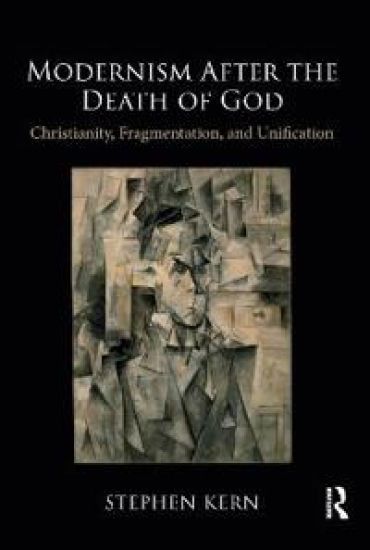
Modernism After the Death of God

Modernism After the Death of God

Stephen Kern

Routledge
2017
nidottu
Modernism After the Death of God explores the work of seven influential modernists. Friedrich Nietzsche, James Joyce, D. H. Lawrence, André Gide, and Martin Heidegger criticized the destructive impact that they believed Christian sexual morality had had or threatened to have on their love life. Although not a Christian, Freud criticized the negative effect that Christian sexual morality had on his clinical subjects and on Western civilization, while Virginia Woolf condemned how her society was sanctioned by a patriarchal Christian authority. All seven worked to replace the loss or absence of Christian unity with non-Christian unifying projects in their respective fields of philosophy, psychiatry, or literature. The basic structure of their main contributions to modernist culture was a dynamic interaction of radical fragmentation necessitating radical unification that was always in process and never complete.
Modernism After the Death of God

Modernism After the Death of God

Stephen Kern

Routledge
2017
sidottu
Modernism After the Death of God explores the work of seven influential modernists. Friedrich Nietzsche, James Joyce, D. H. Lawrence, André Gide, and Martin Heidegger criticized the destructive impact that they believed Christian sexual morality had had or threatened to have on their love life. Although not a Christian, Freud criticized the negative effect that Christian sexual morality had on his clinical subjects and on Western civilization, while Virginia Woolf condemned how her society was sanctioned by a patriarchal Christian authority. All seven worked to replace the loss or absence of Christian unity with non-Christian unifying projects in their respective fields of philosophy, psychiatry, or literature. The basic structure of their main contributions to modernist culture was a dynamic interaction of radical fragmentation necessitating radical unification that was always in process and never complete.
The Modernist Novel

The Modernist Novel

Stephen Kern

Cambridge University Press
2011
sidottu
Leading scholar Stephen Kern offers a probing analysis of the modernist novel, encompassing American, British and European works. Organized thematically, the book offers a comprehensive analysis of the stunningly original formal innovations in novels by Conrad, Joyce, Woolf, Proust, Gide, Faulkner, Dos Passos, Kafka, Musil and others. Kern contextualizes and explains how formal innovations captured the dynamic history of the period, reconstructed as ten master narratives. He also draws briefly on poetry and painting of the first half of the twentieth century. The Modernist Novel is set to become a fundamental source for discussions of the genre and a useful introduction to the subject for students and scholars of modernism and twentieth-century literature.
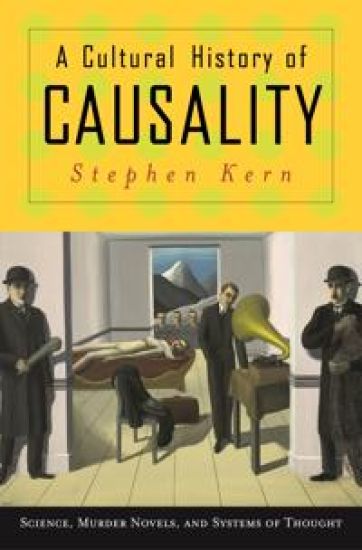
A Cultural History of Causality

A Cultural History of Causality

Stephen Kern

Princeton University Press
2006
pokkari
This pioneering work is the first to trace how our understanding of the causes of human behavior has changed radically over the course of European and American cultural history since 1830. Focusing on the act of murder, as documented vividly by more than a hundred novels including Crime and Punishment, An American Tragedy, The Trial, and Lolita, Stephen Kern devotes each chapter of A Cultural History of Causality to examining a specific causal factor or motive for murder--ancestry, childhood, language, sexuality, emotion, mind, society, and ideology. In addition to drawing on particular novels, each chapter considers the sciences (genetics, endocrinology, physiology, neuroscience) and systems of thought (psychoanalysis, linguistics, sociology, forensic psychiatry, and existential philosophy) most germane to each causal factor or motive. Kern identifies five shifts in thinking about causality, shifts toward increasing specificity, multiplicity, complexity, probability, and uncertainty. He argues that the more researchers learned about the causes of human behavior, the more they realized how much more there was to know and how little they knew about what they thought they knew. The book closes by considering the revolutionary impact of quantum theory, which, though it influenced novelists only marginally, shattered the model of causal understanding that had dominated Western thought since the seventeenth century. Others have addressed changing ideas about causality in specific areas, but no one has tackled a broad cultural history of this concept as does Stephen Kern in this engagingly written and lucidly argued book.
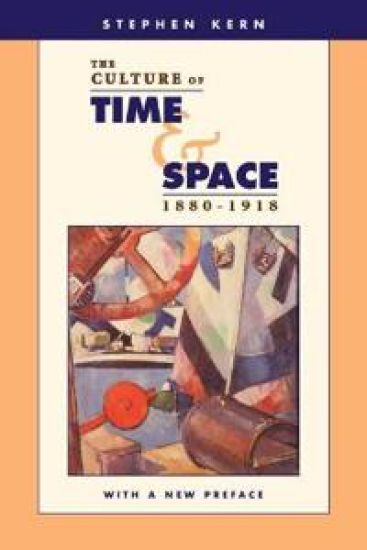
The Culture of Time and Space, 1880–1918

The Culture of Time and Space, 1880–1918

Stephen Kern

Harvard University Press
2003
nidottu

Halvin toimitettuna 41,20 €

Stephen Kern writes about the sweeping changes in technology and culture between 1880 and World War I that created new modes of understanding and experiencing time and space. To mark the book’s twentieth anniversary, Kern provides an illuminating new preface about the breakthrough in interpretive approach that has made this a seminal work in interdisciplinary studies.
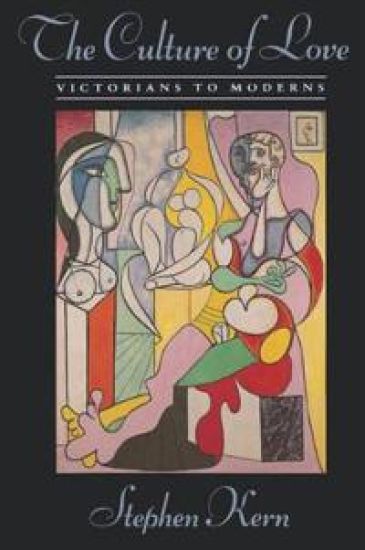
The Culture of Love

The Culture of Love

Stephen Kern

Harvard University Press
1998
nidottu
The Culture of Love interprets the sweeping change in loving that spanned a period when scientific discoveries reduced the terrors and dangers of sex, when new laws gave married women control over their earnings and their bodies, when bold novelists and artists shook off the prudishness and hypocrisy that so paralyzed the Victorians. As public opinion, family pressure, and religious conviction loosened, men and women took charge of their love. Stephen Kern argues that, in contrast to modern sex, Victorian sex was anatomically constricted, spatially confined, morally suspect, deadly serious, and abruptly over. Kern divides love into its elements and traces profound changes in each: from waiting for love to ending it. Most revealing are the daring ways moderns began to talk about their current lovemaking as well as past lovers. While Victorians viewed jealousy as a "foreign devil," moderns began to acknowledge responsibility for it. Desire lost its close tie with mortal sin and became the engine of artistic creation; women's response to the marriage proposal shifted from mere consent to active choice. There were even new possibilities of kissing, beyond the sudden, blind, disembodied, and censored Victorian meeting of lips. Kern's evidence is mainly literature and art, including classic novels by the Brontës, Flaubert, Hugo, Eliot, Hardy, Forster, Colette, Proust, Mann, Joyce, Woolf, Lawrence, Hemingway, Fitzgerald, and Musil as well as the paintings and sculptures of Millais, Courbet, Gérôme, Rodin, Munch, Klimt, Schiele, Valadon, Chagall, Kandinsky, Kokoschka, Picasso, Matisse, and Brancusi. The book's conceptual foundation comes from Heidegger's existential philosophy, in particular his authentic-inauthentic distinction, which Kern adapts to make his overall interpretation and concluding affirmation of the value of authenticity: "The moderns may have lost some of the Victorians' delicacy and poignancy, perhaps even some of their heroism, but in exchange became more reflective of what it means to be a human being in love and hence better able to make that loving more their very own."
Eyes of Love

Eyes of Love

Stephen Kern

New York University Press
1996
sidottu
Stephen Kern has discovered in Pre-Raphaelite and impressionist art a recurring pattern for arranging the sexes: a profiled man gazing at a woman who looks away from him and toward the viewer, while she ponders an apparent offer. Kern draws on such images to challenge the claim of some feminist critics and historians that gazing men monopolize subjectivity and turn women into sex objects. So intent are these writers on viewing women as victims, who in fact reveal a commanding subjectivity. Compared with the eyes of men, women's eyes are more visible, consider more varied thoughts, and convey more profound, if not more intense, emotions. An authoritative and highly original survey of European art and literature, Eyes of Love also challenges another widely held belief - that a double standard has clearly governed how society judged the sexes. Kern supports these startling interpretations of Renoir, Manet, Degas, Rossetti, Gauguin, Millais, Hunt, Burne-Jones, and Tissot with every evidence from novels by Hugo, Flaubert, Zola, Dickens, C. Bronte, Gaskell, Eliot, Hardy, and H. James.