Kirjojen hintavertailu – 12 903 729 kirjaa ja 27 kauppaa

Kirjailija

Stephen Kotkin

Kirjat ja teokset yhdessä paikassa: 20 kirjaa, julkaisuja vuosilta 1992–2026, suosituimpiin kuuluu Empires of Faith. Vertaile teosten hintoja ja tarkista saatavuus suomalaisista kirjakaupoista.

20 kirjaa

Kirjojen julkaisuvuodet: 1992–2026.

Empires of Faith

Empires of Faith

Raina Abouzeid; Jon B. Alterman; Ali M. Ansari; James Barr; Ali Fathollah-Nejad; Peter Frankopan; Chaim Gans; Amber Gartrell; Kim Ghattas; Andrew S. Gilmour; Martin Goodman; Sir John Jenkins; Halil M. Karaveli; Elisabeth Kendall; Hugh Kennedy; Stephen Kotkin; Nelly Lahoud; Göran Larsson; Gabriel Martinez-Gros; General Sir Simon Mayall; Yossef Rapoport; Mark Ronan; Stefanie Rudolf; Peter Sarris; Nathan Shachar; Brendan Simms; Selena Wisnom

Bokförlaget Stolpe
2026
sidottu
Mellanöstern har alltid varit en central plats för handel och erövringar. Läget har medfört enorma rikedomar, kulturellt utbyte och intellektuell vitalitet – men också konflikter, instabilitet och ihållande geopolitiska spänningar. Att förstå regionens förflutna är avgörande för att förstå dess nutid. Antologin Empires of Faith utforskar Mellanösterns långa historia – från Mesopotamien, de persiska kungarikena och Alexander den store till kristendomens och islams uppkomst, det bysantinska och ottomanska riket, och 1900-talets dramatiska omvandling av regionen. Hur har religion, civilisation och imperialistiska ambitioner format regionen? Vilka arv lämnade de stora imperierna efter sig och hur påverkade de lagstiftning, kultur, styre och undersåtarnas vardagsliv? Och i vilken utsträckning är historiens efterverkningar fortfarande synliga i dagens politiska och religiösa landskap? Boken utkommer även på svenska våren 2027.
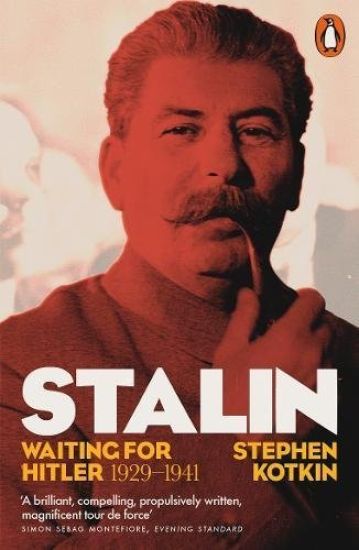
Stalin: Waiting for Hitler, 1929-1941

Stalin: Waiting for Hitler, 1929-1941

Stephen Kotkin

PENGUIN BOOKS
2018
nidottu

Halvin toimitettuna 27,20 €

"Monumental." --The New York Times Book Review Pulitzer Prize-finalist Stephen Kotkin has written the definitive biography of Joseph Stalin, from collectivization and the Great Terror to the conflict with Hitler's Germany that is the signal event of modern world history In 1929, Joseph Stalin, having already achieved dictatorial power over the vast Soviet Empire, formally ordered the systematic conversion of the world's largest peasant economy into "socialist modernity," otherwise known as collectivization, regardless of the cost. What it cost, and what Stalin ruthlessly enacted, transformed the country and its ruler in profound and enduring ways. Building and running a dictatorship, with life and death power over hundreds of millions, made Stalin into the uncanny figure he became. Stephen Kotkin's Stalin: Waiting for Hitler, 1929-1941 is the story of how a political system forged an unparalleled personality and vice versa. The wholesale collectivization of some 120 million peasants necessitated levels of coercion that were extreme even for Russia, and the resulting mass starvation elicited criticism inside the party even from those Communists committed to the eradication of capitalism. But Stalin did not flinch. By 1934, when the Soviet Union had stabilized and socialism had been implanted in the countryside, praise for his stunning anti-capitalist success came from all quarters. Stalin, however, never forgave and never forgot, with shocking consequences as he strove to consolidate the state with a brand new elite of young strivers like himself. Stalin's obsessions drove him to execute nearly a million people, including the military leadership, diplomatic and intelligence officials, and innumerable leading lights in culture. While Stalin revived a great power, building a formidable industrialized military, the Soviet Union was effectively alone and surrounded by perceived enemies. The quest for security would bring Soviet Communism to a shocking and improbable pact with Nazi Germany. But that bargain would not unfold as envisioned. The lives of Stalin and Hitler, and the fates of their respective dictatorships, drew ever closer to collision, as the world hung in the balance. Stalin: Waiting for Hitler, 1929-1941 is a history of the world during the build-up to its most fateful hour, from the vantage point of Stalin's seat of power. It is a landmark achievement in the annals of historical scholarship, and in the art of biography.
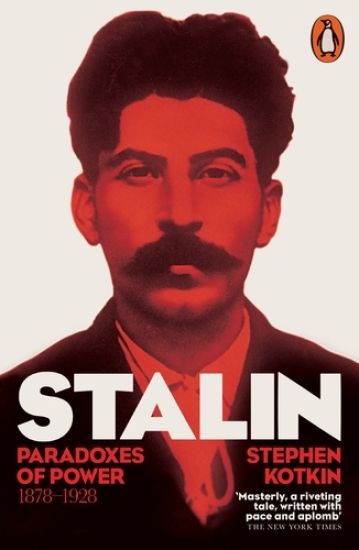
Stalin, Vol. II

Stalin, Vol. II

Stephen Kotkin

Penguin Books Ltd
2018
pokkari

Halvin toimitettuna 23,60 €

A SUNDAY TIMES HISTORY BOOK OF THE YEAR 2017'A brilliant, compelling, propulsively written, magnificent tour de force' Simon Sebag Montefiore, Evening Standard'The second volume of what will surely rank as one of the greatest historical achievements of our age ... The War and Peace of history: a book you fear you will never finish, but just cannot put down' Dominic Sandbrook, Sunday Times Well before 1929, Stalin had achieved dictatorial power over the Soviet empire, but now he decided that the largest peasant economy in the world would be transformed into socialist modernity, whatever it took. What it took, and what Stalin managed to force through, transformed the country and its ruler in profound and enduring ways. Rather than a tale of a deformed or paranoid personality creating a political system, this is a story of a political system shaping a personality. Building and running a dictatorship, with power of life or death over hundreds of millions, in conditions of capitalist self-encirclement, made Stalin the person he became. Wholesale collectivization of agriculture, some 120 million peasants, necessitated levels of coercion that were extreme even for Russia, but Stalin did not flinch; the resulting mass starvation and death elicited criticism inside the party even from those Communists committed to the eradication of capitalism. By 1934, when the situation had stabilized and socialism had been built in the countryside too, the internal praise came for his uncanny success in anticapitalist terms. But Stalin never forgot and never forgave, with bloody consequences as he strove to consolidate the state with a brand new elite. Stalin had revived a great power with a formidable industrialized military. But the Soviet Union was effectively alone, with no allies and enemies perceived everywhere. The quest to find security would bring Soviet Communism into an improbable pact with Nazi Germany. But that bargain did not work out as envisioned. The lives of Stalin and Hitler, and the fates of their respective countries, drew ever closer to collision. Stalin: Waiting for Hitler: 1929-1941 is, like its predecessor Stalin: Paradoxes of Power: 1878-1928, nothing less than a history of the world from Stalin's desk. It is also, like its predecessor, a landmark achievement in the annals of the biographer's art. Kotkin's portrait captures the vast structures moving global events, and the intimate details of decision-making.
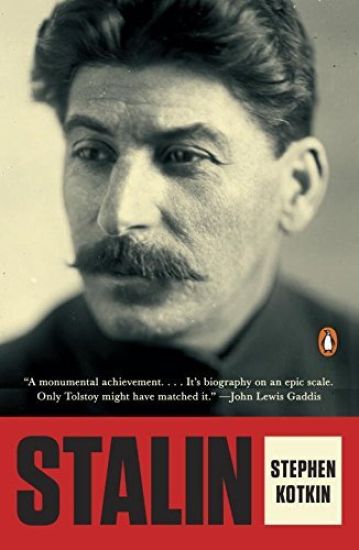
Stalin, Vol. I

Stalin, Vol. I

Stephen Kotkin

Penguin Books Ltd
2015
pokkari

Halvin toimitettuna 23,60 €

In January 1928 Stalin, the ruler of the largest country in the world, boarded a train bound for Siberia where he would embark upon the greatest gamble of his political life. He was about to begin uprooting and collectivization of agriculture and industry across the entire Soviet Union. Millions would die, and many more would suffer. Where did such great, monstrous power come from? The first of three volumes, the product of a decade of intrepid research, this landmark book offers the most convincing explanation yet of Stalin's power.
Stalin: Paradoxes of Power, 1878-1928

Stalin: Paradoxes of Power, 1878-1928

Stephen Kotkin

PENGUIN BOOKS
2015
nidottu

Halvin toimitettuna 30,30 €

A magnificent new biography that revolutionizes our understanding of Stalin and his world The product of a decade of intrepid research, Stalin is a landmark achievement. Stephen Kotkin offers a biography that, at long last, is equal to this shrewd, sociopathic, charismatic dictator in all his dimensions. We see a man inclined to despotism who could be utterly charming; a pragmatic ideologue; a leader who obsessed over slights yet was a precocious geostrategic thinker--unique among Bolsheviks--and yet who made egregious strategic blunders. Through it all, we see Stalin's unflinching persistence, his sheer force of will--perhaps the ultimate key to understanding his indelible mark on history. Drawing on Kotkin's exhaustive study of Soviet archival materials as well as vast scholarly literature, Stalin recasts the way we think about the Soviet Union, revolution, dictatorship, the twentieth century, and indeed the art of history itself.
The Communist Manifesto

The Communist Manifesto

Karl Marx; Friedrich Engels; Stephen Kotkin

Signet
2011
pokkari

Halvin toimitettuna 13,10 €

Featuring an extensive, provocative introduction by historian Martin Malia, this authorized English translation of The Communist Manifesto, edited and annotated by Engels, with prefaces to editions published between 1872 and 1888, provides a new opportunity to examine the document that shook the world. In 1848, two young men published what would become one of the defining documents of modern history, The Communist Manifesto. It rapidly realigned political faultlines all over the world and its aftershock resonates to this day. In the many years since its publication, no other social program has inspired such divisive and violent debate. Ever since the collapse of the Soviet Union, the world's first regime to adopt the Manifesto's tenets, historians have debated its intent and its impact. In the current era of market democracy in Russia and Eastern Europe, nationalism on every continent, and an ever tightening global economy, does the specter of Communism still haunt the world? Were the seeds of Communism's ultimate destruction already planted in 1848? Is there anything to be learned from Marx's envisioned utopia? With an Introduction by Martin Maliaand an Afterword by Stephen Kotkin
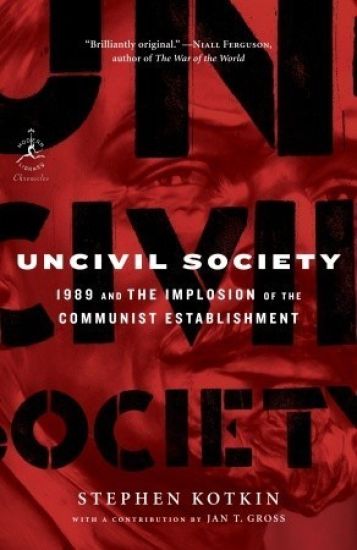
Uncivil Society

Uncivil Society

Stephen Kotkin

Modern Library Inc
2010
pokkari

Halvin toimitettuna 20,90 €

Twenty years ago, the Berlin Wall fell. In one of modern history's most miraculous occurrences, communism imploded-and not with a bang, but with a whimper. Now two of the foremost scholars of East European and Soviet affairs, Stephen Kotkin and Jan T. Gross, drawing upon two decades of reflection, revisit this crash. In a crisp, concise, unsentimental narrative, they employ three case studies-East Germany, Romania, and Poland-to illuminate what led Communist regimes to surrender, or to be swept away in political bank runs. This is less a story of dissidents, so-called civil society, than of the bankruptcy of a ruling class-communism's establishment, or "uncivil society." The Communists borrowed from the West like drunken sailors to buy mass consumer goods, then were unable to pay back the hard-currency debts and so borrowed even more. In Eastern Europe, communism came to resemble a Ponzi scheme, one whose implosion carries enduring lessons. From East Germany's pseudotechnocracy to Romania's megalomaniacal dystopia, from Communist Poland's cult of Mary to the Kremlin's surprise restraint, Kotkin and Gross pull back the curtain on the fraud and decadence that cashiered the would-be alternative to the market and democracy, an outcome that opened up to a deeper global integration that has proved destabilizing.
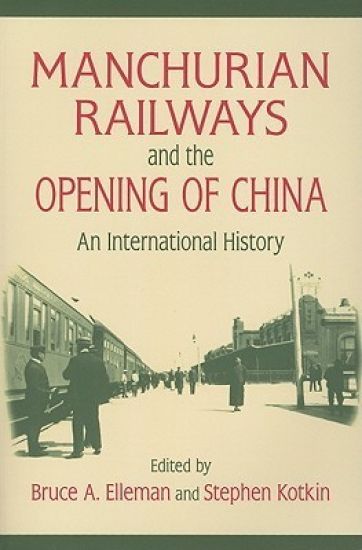
Manchurian Railways and the Opening of China: An International History
The railways of Manchuria offer an intriguing vantage point for an international history of northeast Asia. Before the completion of the Trans-Siberian railway in 1916, the only rail route from the Imperial Russian capital of St. Petersburg to the Pacific port of Vladivostok transited Manchuria. A spur line from the Manchurian city of Harbin led south to ice-free Port Arthur. Control of these two rail lines gave Imperial Russia military, economic, and political advantages that excited rivalry on the part of Japan and unease on the part of weak and divided China. Meanwhile, the effort to defend and retain that strategic hold against rising Japanese power strained distant Moscow. Control of the Manchurian railways was contested in the Russo-Japanese War of 1904-5; Japan's 1931 invasion and establishment of the puppet state of Manchukuo; the second Sino-Japanese War and World War II in Asia; and, the Chinese civil war that culminated in the Communist victory over the Nationalists. Today, the railways are critical to plans for development of China's sparsely populated interior. This volume brings together an international group of scholars to explore this fascinating history.
A Un Passo Dall'apocalisse: Il Collasso Sovietico, 1970-2000
Durante la Guerra Fredda nessuno avrebbe immaginato che il crollo dell'Unione Sovietica sarebbe stato scatenato da dinamiche interne, e nemmeno che sarebbe avvenuto in relativa calma, senza grandi conflitti. > Il lavoro di Stephen Kotkin mostra che la prima causa del collasso sovietico non e stata la competizione militare ma, paradossalmente, il nucleo ideale dell'ideologia comunista: il sogno di un socialismo dal volto umano capace di migliorare la vita dei cittadini senza rinunciare ai principi di giustizia e uguaglianza. Le riforme neo-liberali non sono mai state davvero messe in atto nella Russia post-sovietica, ne avrebbero potuto esserlo, considerato il fardello dell'eredita sovietica in ambito istituzionale, politico, economico e sociale. > Il libro ricostruisce in modo chiaro e conciso il dramma di una superpotenza di 285 milioni di abitanti che si e sgretolata pur avendo a disposizione un immenso esercito, sostanzialmente fedele allo Stato, e uno spaventoso arsenale di armi nucleari e chimiche. E lo ha fatto evitando non solo l'Apocalisse, ma anche esplosioni di violenza potenzialmente destabilizzanti per l'intero scenario geopolitico internazionale. >
Manchurian Railways and the Opening of China: An International History
The railways of Manchuria offer an intriguing vantage point for an international history of northeast Asia. Before the completion of the Trans-Siberian railway in 1916, the only rail route from the Imperial Russian capital of St. Petersburg to the Pacific port of Vladivostok transited Manchuria. A spur line from the Manchurian city of Harbin led south to ice-free Port Arthur. Control of these two rail lines gave Imperial Russia military, economic, and political advantages that excited rivalry on the part of Japan and unease on the part of weak and divided China. Meanwhile, the effort to defend and retain that strategic hold against rising Japanese power strained distant Moscow. Control of the Manchurian railways was contested in the Russo-Japanese War of 1904-5; Japan's 1931 invasion and establishment of the puppet state of Manchukuo; the second Sino-Japanese War and World War II in Asia; and, the Chinese civil war that culminated in the Communist victory over the Nationalists. Today, the railways are critical to plans for development of China's sparsely populated interior. This volume brings together an international group of scholars to explore this fascinating history.
Armageddon Averted

Armageddon Averted

Stephen Kotkin

Oxford University Press Inc
2009
sidottu
Featuring extensive revisions to the text as well as a new introduction and epilogue-bringing the book completely up to date on the tumultuous politics of the previous decade and the long-term implications of the Soviet collapse-this compact, original, and engaging book offers the definitive account of one of the great historical events of the last fifty years. Combining historical and geopolitical analysis with an absorbing narrative, Kotkin draws upon extensive research, including memoirs by dozens of insiders and senior figures, to illuminate the factors that led to the demise of Communism and the USSR. The new edition puts the collapse in the context of the global economic and political changes from the 1970s to the present day. Kotkin creates a compelling profile of post Soviet Russia and he reminds us, with chilling immediacy, of what could not have been predicted-that the world's largest police state, with several million troops, a doomsday arsenal, and an appalling record of violence, would liquidate itself with barely a whimper. Throughout the book, Kotkin also paints vivid portraits of key personalities. Using recently released archive materials, for example, he offers a fascinating picture of Gorbachev, describing this virtuoso tactician and resolutely committed reformer as "flabbergasted by the fact that his socialist renewal was leading to the system's liquidation"-and more or less going along with it. At once authoritative and provocative, Armageddon Averted illuminates the collapse of the Soviet Union, revealing how "principled restraint and scheming self interest brought a deadly system to meek dissolution." Acclaim for the First Edition: "The clearest picture we have to date of the post-Soviet landscape." --The New Yorker "A triumph of the art of contemporary history. In fewer than 200 pagesKotkin elucidates the implosion of the Soviet empire-the most important and startling series of international events of the past fifty years-and clearly spells out why, thanks almost entirely to the 'principal restraint' of the Soviet leadership, that collapse didn't result in a cataclysmic war, as all experts had long forecasted." --The Atlantic Monthly "Concise and persuasive The mystery, for Kotkin, is not so much why the Soviet Union collapsed as why it did so with so little collateral damage." --The New York Review of Books
Armageddon Averted

Armageddon Averted

Stephen Kotkin

Oxford University Press Inc
2008
nidottu

Halvin toimitettuna 22,10 €

Featuring extensive revisions to the text as well as a new introduction and epilogue-bringing the book completely up to date on the tumultuous politics of the previous decade and the long-term implications of the Soviet collapse-this compact, original, and engaging book offers the definitive account of one of the great historical events of the last fifty years. Combining historical and geopolitical analysis with an absorbing narrative, Kotkin draws upon extensive research, including memoirs by dozens of insiders and senior figures, to illuminate the factors that led to the demise of Communism and the USSR. The new edition puts the collapse in the context of the global economic and political changes from the 1970s to the present day. Kotkin creates a compelling profile of post Soviet Russia and he reminds us, with chilling immediacy, of what could not have been predicted-that the world's largest police state, with several million troops, a doomsday arsenal, and an appalling record of violence, would liquidate itself with barely a whimper. Throughout the book, Kotkin also paints vivid portraits of key personalities. Using recently released archive materials, for example, he offers a fascinating picture of Gorbachev, describing this virtuoso tactician and resolutely committed reformer as "flabbergasted by the fact that his socialist renewal was leading to the system's liquidation"-and more or less going along with it. At once authoritative and provocative, Armageddon Averted illuminates the collapse of the Soviet Union, revealing how "principled restraint and scheming self interest brought a deadly system to meek dissolution." Acclaim for the First Edition: "The clearest picture we have to date of the post-Soviet landscape." --The New Yorker "A triumph of the art of contemporary history. In fewer than 200 pagesKotkin elucidates the implosion of the Soviet empire-the most important and startling series of international events of the past fifty years-and clearly spells out why, thanks almost entirely to the 'principal restraint' of the Soviet leadership, that collapse didn't result in a cataclysmic war, as all experts had long forecasted." -The Atlantic Monthly "Concise and persuasive The mystery, for Kotkin, is not so much why the Soviet Union collapsed as why it did so with so little collateral damage." --The New York Review of Books
Korea at the Center: Dynamics of Regionalism in Northeast Asia

Korea at the Center: Dynamics of Regionalism in Northeast Asia

Charles K. Armstrong; Gilbert Rozman; Samuel S. Kim; Stephen Kotkin

Routledge
2006
sidottu
The common images of Korea view the peninsula as a long-standing battleground for outside powers and the Cold War's last divided state. But, Korea's location at the very center of Northeast Asia gives it a pivotal role in the economic integration of the region and the dynamic development of its more powerful neighbors. A great wave of economic expansion, driven first by the Japanese miracle and then by the ascent of China, has made South Korea - an economic powerhouse in its own right - the hub of the region once again, a natural corridor for railroads and energy pipelines linking Asiatic Russia to China and Japan. And, over the horizon, an opening of North Korea, with multilateral support, would add another major push toward regional integration. Illuminating the role of the Korean peninsula in three modern historical periods, the eminent international contributors to this volume offer a fresh and stimulating appraisal of Korea as the key to the coalescence of a broad, open Northeast Asian regionalism in the twenty-fifth century.
Korea at the Center: Dynamics of Regionalism in Northeast Asia

Korea at the Center: Dynamics of Regionalism in Northeast Asia

Charles K. Armstrong; Gilbert Rozman; Samuel S. Kim; Stephen Kotkin

Routledge
2005
nidottu
The common images of Korea view the peninsula as a long-standing battleground for outside powers and the Cold War's last divided state. But, Korea's location at the very center of Northeast Asia gives it a pivotal role in the economic integration of the region and the dynamic development of its more powerful neighbors. A great wave of economic expansion, driven first by the Japanese miracle and then by the ascent of China, has made South Korea - an economic powerhouse in its own right - the hub of the region once again, a natural corridor for railroads and energy pipelines linking Asiatic Russia to China and Japan. And, over the horizon, an opening of North Korea, with multilateral support, would add another major push toward regional integration. Illuminating the role of the Korean peninsula in three modern historical periods, the eminent international contributors to this volume offer a fresh and stimulating appraisal of Korea as the key to the coalescence of a broad, open Northeast Asian regionalism in the twenty-fifth century.
Mongolia in the Twentieth Century

Mongolia in the Twentieth Century

Stephen Kotkin; Bruce Allen Elleman

Routledge
2000
nidottu
The remote vastness of Mongolia has remained somewhat of a mystery to most Westerners - no less so in the 20th century. Homeland of the legendary conqueror Chingiz Khan, in modern times Mongolia itself has been the object of imperial rivalry. For most of the 20th century it was under Soviet domination. Mikhail Gorbachev began the withdrawal of Soviet troops from Mongolia in 1989, a process completed in 1992. By 1996 a coalition of opposition parties triumphed in national elections, and Mongolia launched itself on a new course. It is perhaps the most intriguing of the post-community "transition" societies. This volume examines Mongol history over the past century, embracing not only Mongolia proper but also Mongol communities in Russia and China. Contributions, based on new archival research and the latest fieldwork, are from the world's top experts in the field - including four authors from Mongolia and others from Japan, Russia, Taiwan, Great Britain and the United States. Stephen Kotkin's introductory chapter is an overview of Mongol studies. The essays in part 1 examine Sino-Russian competition over Outer Mongolia. Part 2 looks at international diplomacy in Mongolia, including the role of Japan. Part 3 focuses on contemporary issues ranging from economic and cultural change to emergent elites. A concluding essay surveys Mongolian foreign policy.
Mongolia in the Twentieth Century

Mongolia in the Twentieth Century

Stephen Kotkin; Bruce Allen Elleman

Routledge
1999
sidottu
The remote vastness of Mongolia has remained somewhat of a mystery to most Westerners - no less so in the 20th century. Homeland of the legendary conqueror Chingiz Khan, in modern times Mongolia itself has been the object of imperial rivalry. For most of the 20th century it was under Soviet domination. Mikhail Gorbachev began the withdrawal of Soviet troops from Mongolia in 1989, a process completed in 1992. By 1996 a coalition of opposition parties triumphed in national elections, and Mongolia launched itself on a new course. It is perhaps the most intriguing of the post-community "transition" societies. This volume examines Mongol history over the past century, embracing not only Mongolia proper but also Mongol communities in Russia and China. Contributions, based on new archival research and the latest fieldwork, are from the world's top experts in the field - including four authors from Mongolia and others from Japan, Russia, Taiwan, Great Britain and the United States. Stephen Kotkin's introductory chapter is an overview of Mongol studies. The essays in part 1 examine Sino-Russian competition over Outer Mongolia. Part 2 looks at international diplomacy in Mongolia, including the role of Japan. Part 3 focuses on contemporary issues ranging from economic and cultural change to emergent elites. A concluding essay surveys Mongolian foreign policy.
Magnetic Mountain

Magnetic Mountain

Stephen Kotkin

University of California Press
1997
pokkari

Halvin toimitettuna 38,30 €

The city of Magnitogorsk was built in response to Stalin's decision to transform the predominately agricultural nation into a "country of metal". With access to archives and interviews, Stephen Kotkin presents an account of the impact of industrialization on a single urban community.
Rediscovering Russia in Asia

Rediscovering Russia in Asia

Stephen Kotkin; David Wolff

M.E. Sharpe
1995
sidottu
This work presents a trans-Siberian expedition to rediscover the peoples, cultures and riches of Russia's eastern frontiers. It addresses such questions as: who are the people of the region?; have they a distinct culture?; and does the area have a future as part of the Pacific Rim?
Rediscovering Russia in Asia

Rediscovering Russia in Asia

Stephen Kotkin; David Wolff

M.E. Sharpe
1995
nidottu
This work presents a trans-Siberian expedition to rediscover the peoples, cultures and riches of Russia's eastern frontiers. It addresses such questions as: who are the people of the region?; have they a distinct culture?; and does the area have a future as part of the Pacific Rim?
Steeltown, USSR

Steeltown, USSR

Stephen Kotkin

University of California Press
1992
pokkari
No one, not even Mikhail Gorbachev, anticipated what was in store when the Soviet Union embarked in the 1980s on a radical course of long-overdue structural reform. The consequences of that momentous decision, which set in motion a transformation eventually affecting the entire postwar world order, are here chronicled from inside a previously forbidden Soviet city, Magnitogorsk. Built under Stalin and championed by him as a showcase of socialism, the city remained closed to Western scrutiny until four years ago, when Stephen Kotkin became the first American to live there in nearly half a century. An uncommonly perceptive observer, a gifted writer, and a first-rate social scientist, Kotkin offers the reader an unsurpassed portrait of daily life in the Gorbachev era. From the formation of 'informal' political groups to the start-up of fledgling businesses in the new cooperative sector, from the no-holds-barred investigative reporting of a former Communist party mouthpiece to a freewheeling multicandidate election campaign, the author conveys the texture of contemporary Soviet society in the throes of an upheaval not seen since the 1930s. Magnitogorsk, a planned 'garden city' in the Ural Mountains, serves as Kotkin's laboratory for observing the revolutionary changes occurring in the Soviet Union today. Dominated by a self-perpetuating Communist party machine, choked by industrial pollution, and haunted by a suppressed past, this once-proud city now faces an uncertain future, as do the more than one thousand other industrial cities throughout the Soviet Union. Kotkin made his remarkable first visit in 1987 and returned in 1989. On both occasions, steelworkers and schoolteachers, bus drivers and housewives, intellectuals and former victims of oppression - all willingly stepped forward to voice long-suppressed grievances and aspirations. Their words animate this moving narrative, the first to examine the impact and contradictions of perestroika in a single community. Like no other Soviet city, Magnitogorsk provides a window onto the desperate struggle to overcome the heavy burden of Stalin's legacy.